 4fa80ce74c
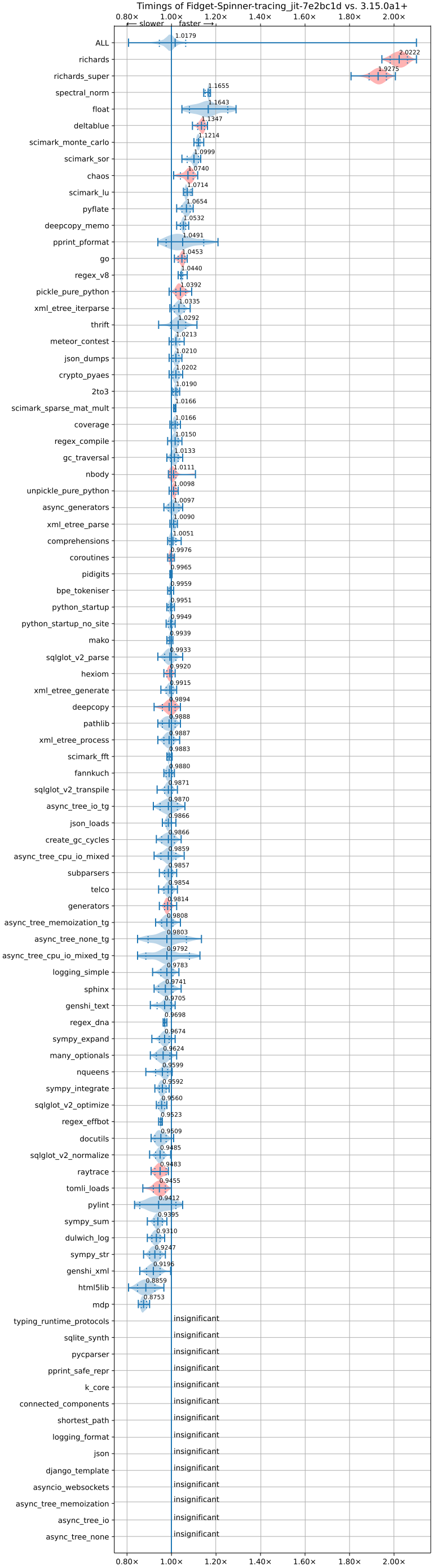
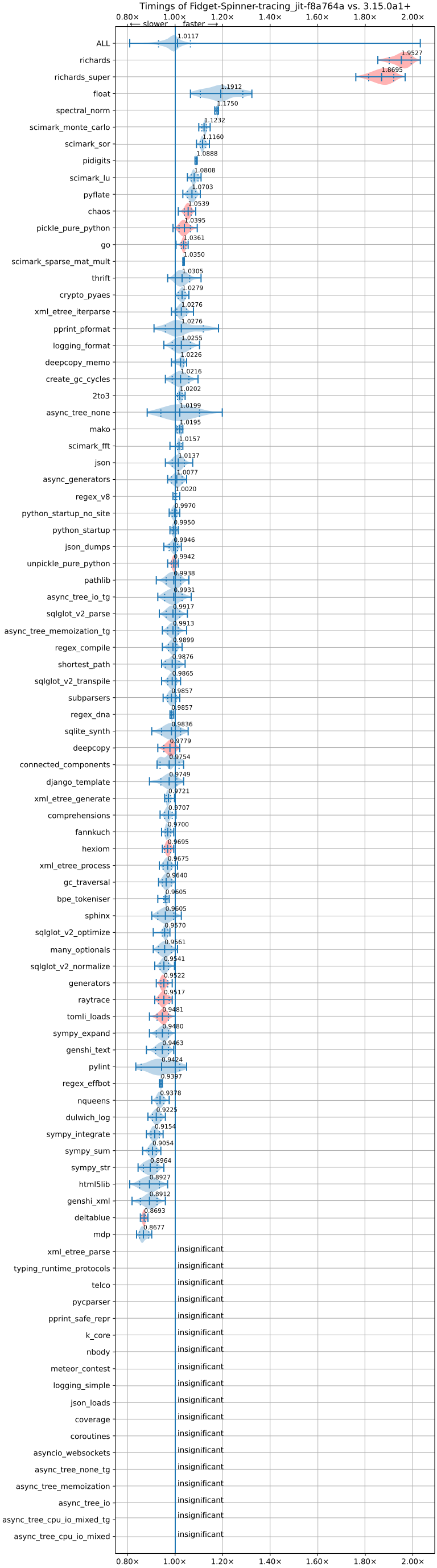
This PR changes the current JIT model from trace projection to trace recording. Benchmarking: better pyperformance (about 1.7% overall) geomean versus current https://raw.githubusercontent.com/facebookexperimental/free-threading-benchmarking/refs/heads/main/results/bm-20251108-3.15.0a1%2B-7e2bc1d-JIT/bm-20251108-vultr-x86_64-Fidget%252dSpinner-tracing_jit-3.15.0a1%2B-7e2bc1d-vs-base.svg, 100% faster Richards on the most improved benchmark versus the current JIT. Slowdown of about 10-15% on the worst benchmark versus the current JIT. **Note: the fastest version isn't the one merged, as it relies on fixing bugs in the specializing interpreter, which is left to another PR**. The speedup in the merged version is about 1.1%. https://raw.githubusercontent.com/facebookexperimental/free-threading-benchmarking/refs/heads/main/results/bm-20251112-3.15.0a1%2B-f8a764a-JIT/bm-20251112-vultr-x86_64-Fidget%252dSpinner-tracing_jit-3.15.0a1%2B-f8a764a-vs-base.svg

Stats: 50% more uops executed, 30% more traces entered the last time we ran them. It also suggests our trace lengths for a real trace recording JIT are too short, as a lot of trace too long aborts https://github.com/facebookexperimental/free-threading-benchmarking/blob/main/results/bm-20251023-3.15.0a1%2B-eb73378-CLANG%2CJIT/bm-20251023-vultr-x86_64-Fidget%252dSpinner-tracing_jit-3.15.0a1%2B-eb73378-pystats-vs-base.md .

This new JIT frontend is already able to record/execute significantly more instructions than the previous JIT frontend. In this PR, we are now able to record through custom dunders, simple object creation, generators, etc. None of these were done by the old JIT frontend. Some custom dunders uops were discovered to be broken as part of this work gh-140277

The optimizer stack space check is disabled, as it's no longer valid to deal with underflow.

Pros:
* Ignoring the generated tracer code as it's automatically created, this is only additional 1k lines of code. The maintenance burden is handled by the DSL and code generator.
* `optimizer.c` is now significantly simpler, as we don't have to do strange things to recover the bytecode from a trace.
* The new JIT frontend is able to handle a lot more control-flow than the old one.
* Tracing is very low overhead. We use the tail calling interpreter/computed goto interpreter to switch between tracing mode and non-tracing mode. I call this mechanism dual dispatch, as we have two dispatch tables dispatching to each other. Specialization is still enabled while tracing.
* Better handling of polymorphism. We leverage the specializing interpreter for this.

Cons:
* (For now) requires tail calling interpreter or computed gotos. This means no Windows JIT for now :(. Not to fret, tail calling is coming soon to Windows though https://github.com/python/cpython/pull/139962

Design:
* After each instruction, the `record_previous_inst` function/label is executed. This does as the name suggests.
* The tracing interpreter lowers bytecode to uops directly so that it can obtain "fresh" values at the point of lowering.
* The tracing version behaves nearly identical to the normal interpreter, in fact it even has specialization! This allows it to run without much of a slowdown when tracing. The actual cost of tracing is only a function call and writes to memory.
* The tracing interpreter uses the specializing interpreter's deopt to naturally form the side exit chains. This allows it to side exit chain effectively, without repeating much code. We force a re-specializing when tracing a deopt.
* The tracing interpreter can even handle goto errors/exceptions, but I chose to disable them for now as it's not tested.
* Because we do not share interpreter dispatch, there is should be no significant slowdown to the original specializing interpreter on tailcall and computed got with JIT disabled. With JIT enabled, there might be a slowdown in the form of the JIT trying to trace.
* Things that could have dynamic instruction pointer effects are guarded on. The guard deopts to a new instruction --- `_DYNAMIC_EXIT`.
3734 lines
114 KiB
C
3734 lines
114 KiB
C
/* Execute compiled code */
|
|
|
|
#define _PY_INTERPRETER
|
|
|
|
#include "Python.h"
|
|
#include "pycore_abstract.h" // _PyIndex_Check()
|
|
#include "pycore_audit.h" // _PySys_Audit()
|
|
#include "pycore_backoff.h"
|
|
#include "pycore_call.h" // _PyObject_CallNoArgs()
|
|
#include "pycore_cell.h" // PyCell_GetRef()
|
|
#include "pycore_ceval.h" // SPECIAL___ENTER__
|
|
#include "pycore_code.h"
|
|
#include "pycore_dict.h"
|
|
#include "pycore_emscripten_signal.h" // _Py_CHECK_EMSCRIPTEN_SIGNALS
|
|
#include "pycore_floatobject.h" // _PyFloat_ExactDealloc()
|
|
#include "pycore_frame.h"
|
|
#include "pycore_function.h"
|
|
#include "pycore_genobject.h" // _PyCoro_GetAwaitableIter()
|
|
#include "pycore_import.h" // _PyImport_IsDefaultImportFunc()
|
|
#include "pycore_instruments.h"
|
|
#include "pycore_interpframe.h" // _PyFrame_SetStackPointer()
|
|
#include "pycore_interpolation.h" // _PyInterpolation_Build()
|
|
#include "pycore_intrinsics.h"
|
|
#include "pycore_jit.h"
|
|
#include "pycore_list.h" // _PyList_GetItemRef()
|
|
#include "pycore_long.h" // _PyLong_GetZero()
|
|
#include "pycore_moduleobject.h" // PyModuleObject
|
|
#include "pycore_object.h" // _PyObject_GC_TRACK()
|
|
#include "pycore_opcode_metadata.h" // EXTRA_CASES
|
|
#include "pycore_opcode_utils.h" // MAKE_FUNCTION_*
|
|
#include "pycore_optimizer.h" // _PyUOpExecutor_Type
|
|
#include "pycore_pyatomic_ft_wrappers.h" // FT_ATOMIC_*
|
|
#include "pycore_pyerrors.h" // _PyErr_GetRaisedException()
|
|
#include "pycore_pystate.h" // _PyInterpreterState_GET()
|
|
#include "pycore_range.h" // _PyRangeIterObject
|
|
#include "pycore_setobject.h" // _PySet_Update()
|
|
#include "pycore_sliceobject.h" // _PyBuildSlice_ConsumeRefs
|
|
#include "pycore_sysmodule.h" // _PySys_GetOptionalAttrString()
|
|
#include "pycore_template.h" // _PyTemplate_Build()
|
|
#include "pycore_traceback.h" // _PyTraceBack_FromFrame
|
|
#include "pycore_tuple.h" // _PyTuple_ITEMS()
|
|
#include "pycore_uop_ids.h" // Uops
|
|
|
|
#include "dictobject.h"
|
|
#include "frameobject.h" // _PyInterpreterFrame_GetLine
|
|
#include "opcode.h"
|
|
#include "pydtrace.h"
|
|
#include "setobject.h"
|
|
#include "pycore_stackref.h"
|
|
|
|
#include <stdbool.h> // bool
|
|
|
|
#if !defined(Py_BUILD_CORE)
|
|
# error "ceval.c must be build with Py_BUILD_CORE define for best performance"
|
|
#endif
|
|
|
|
#if !defined(Py_DEBUG) && !defined(Py_TRACE_REFS)
|
|
// GH-89279: The MSVC compiler does not inline these static inline functions
|
|
// in PGO build in _PyEval_EvalFrameDefault(), because this function is over
|
|
// the limit of PGO, and that limit cannot be configured.
|
|
// Define them as macros to make sure that they are always inlined by the
|
|
// preprocessor.
|
|
|
|
#undef Py_IS_TYPE
|
|
#define Py_IS_TYPE(ob, type) \
|
|
(_PyObject_CAST(ob)->ob_type == (type))
|
|
|
|
#undef Py_XDECREF
|
|
#define Py_XDECREF(arg) \
|
|
do { \
|
|
PyObject *xop = _PyObject_CAST(arg); \
|
|
if (xop != NULL) { \
|
|
Py_DECREF(xop); \
|
|
} \
|
|
} while (0)
|
|
|
|
#ifndef Py_GIL_DISABLED
|
|
|
|
#undef Py_DECREF
|
|
#define Py_DECREF(arg) \
|
|
do { \
|
|
PyObject *op = _PyObject_CAST(arg); \
|
|
if (_Py_IsImmortal(op)) { \
|
|
_Py_DECREF_IMMORTAL_STAT_INC(); \
|
|
break; \
|
|
} \
|
|
_Py_DECREF_STAT_INC(); \
|
|
if (--op->ob_refcnt == 0) { \
|
|
_PyReftracerTrack(op, PyRefTracer_DESTROY); \
|
|
destructor dealloc = Py_TYPE(op)->tp_dealloc; \
|
|
(*dealloc)(op); \
|
|
} \
|
|
} while (0)
|
|
|
|
#undef _Py_DECREF_SPECIALIZED
|
|
#define _Py_DECREF_SPECIALIZED(arg, dealloc) \
|
|
do { \
|
|
PyObject *op = _PyObject_CAST(arg); \
|
|
if (_Py_IsImmortal(op)) { \
|
|
_Py_DECREF_IMMORTAL_STAT_INC(); \
|
|
break; \
|
|
} \
|
|
_Py_DECREF_STAT_INC(); \
|
|
if (--op->ob_refcnt == 0) { \
|
|
_PyReftracerTrack(op, PyRefTracer_DESTROY); \
|
|
destructor d = (destructor)(dealloc); \
|
|
d(op); \
|
|
} \
|
|
} while (0)
|
|
|
|
#else // Py_GIL_DISABLED
|
|
|
|
#undef Py_DECREF
|
|
#define Py_DECREF(arg) \
|
|
do { \
|
|
PyObject *op = _PyObject_CAST(arg); \
|
|
uint32_t local = _Py_atomic_load_uint32_relaxed(&op->ob_ref_local); \
|
|
if (local == _Py_IMMORTAL_REFCNT_LOCAL) { \
|
|
_Py_DECREF_IMMORTAL_STAT_INC(); \
|
|
break; \
|
|
} \
|
|
_Py_DECREF_STAT_INC(); \
|
|
if (_Py_IsOwnedByCurrentThread(op)) { \
|
|
local--; \
|
|
_Py_atomic_store_uint32_relaxed(&op->ob_ref_local, local); \
|
|
if (local == 0) { \
|
|
_Py_MergeZeroLocalRefcount(op); \
|
|
} \
|
|
} \
|
|
else { \
|
|
_Py_DecRefShared(op); \
|
|
} \
|
|
} while (0)
|
|
|
|
#undef _Py_DECREF_SPECIALIZED
|
|
#define _Py_DECREF_SPECIALIZED(arg, dealloc) Py_DECREF(arg)
|
|
|
|
#endif
|
|
#endif
|
|
|
|
|
|
static void
|
|
check_invalid_reentrancy(void)
|
|
{
|
|
#if defined(Py_DEBUG) && defined(Py_GIL_DISABLED)
|
|
// In the free-threaded build, the interpreter must not be re-entered if
|
|
// the world-is-stopped. If so, that's a bug somewhere (quite likely in
|
|
// the painfully complex typeobject code).
|
|
PyInterpreterState *interp = _PyInterpreterState_GET();
|
|
assert(!interp->stoptheworld.world_stopped);
|
|
#endif
|
|
}
|
|
|
|
|
|
#ifdef Py_DEBUG
|
|
static void
|
|
dump_item(_PyStackRef item)
|
|
{
|
|
if (PyStackRef_IsNull(item)) {
|
|
printf("<NULL>");
|
|
return;
|
|
}
|
|
if (PyStackRef_IsMalformed(item)) {
|
|
printf("<INVALID>");
|
|
return;
|
|
}
|
|
if (PyStackRef_IsTaggedInt(item)) {
|
|
printf("%" PRId64, (int64_t)PyStackRef_UntagInt(item));
|
|
return;
|
|
}
|
|
PyObject *obj = PyStackRef_AsPyObjectBorrow(item);
|
|
if (obj == NULL) {
|
|
printf("<nil>");
|
|
return;
|
|
}
|
|
// Don't call __repr__(), it might recurse into the interpreter.
|
|
printf("<%s at %p>", Py_TYPE(obj)->tp_name, (void *)obj);
|
|
}
|
|
|
|
static void
|
|
dump_stack(_PyInterpreterFrame *frame, _PyStackRef *stack_pointer)
|
|
{
|
|
_PyFrame_SetStackPointer(frame, stack_pointer);
|
|
_PyStackRef *locals_base = _PyFrame_GetLocalsArray(frame);
|
|
_PyStackRef *stack_base = _PyFrame_Stackbase(frame);
|
|
PyObject *exc = PyErr_GetRaisedException();
|
|
printf(" locals=[");
|
|
for (_PyStackRef *ptr = locals_base; ptr < stack_base; ptr++) {
|
|
if (ptr != locals_base) {
|
|
printf(", ");
|
|
}
|
|
dump_item(*ptr);
|
|
}
|
|
printf("]\n");
|
|
if (stack_pointer < stack_base) {
|
|
printf(" stack=%d\n", (int)(stack_pointer-stack_base));
|
|
}
|
|
else {
|
|
printf(" stack=[");
|
|
for (_PyStackRef *ptr = stack_base; ptr < stack_pointer; ptr++) {
|
|
if (ptr != stack_base) {
|
|
printf(", ");
|
|
}
|
|
dump_item(*ptr);
|
|
}
|
|
printf("]\n");
|
|
}
|
|
fflush(stdout);
|
|
PyErr_SetRaisedException(exc);
|
|
_PyFrame_GetStackPointer(frame);
|
|
}
|
|
|
|
static void
|
|
lltrace_instruction(_PyInterpreterFrame *frame,
|
|
_PyStackRef *stack_pointer,
|
|
_Py_CODEUNIT *next_instr,
|
|
int opcode,
|
|
int oparg)
|
|
{
|
|
int offset = 0;
|
|
if (frame->owner < FRAME_OWNED_BY_INTERPRETER) {
|
|
dump_stack(frame, stack_pointer);
|
|
offset = (int)(next_instr - _PyFrame_GetBytecode(frame));
|
|
}
|
|
const char *opname = _PyOpcode_OpName[opcode];
|
|
assert(opname != NULL);
|
|
if (OPCODE_HAS_ARG((int)_PyOpcode_Deopt[opcode])) {
|
|
printf("%d: %s %d\n", offset * 2, opname, oparg);
|
|
}
|
|
else {
|
|
printf("%d: %s\n", offset * 2, opname);
|
|
}
|
|
fflush(stdout);
|
|
}
|
|
|
|
static void
|
|
lltrace_resume_frame(_PyInterpreterFrame *frame)
|
|
{
|
|
PyObject *fobj = PyStackRef_AsPyObjectBorrow(frame->f_funcobj);
|
|
if (!PyStackRef_CodeCheck(frame->f_executable) ||
|
|
fobj == NULL ||
|
|
!PyFunction_Check(fobj)
|
|
) {
|
|
printf("\nResuming frame.\n");
|
|
return;
|
|
}
|
|
PyFunctionObject *f = (PyFunctionObject *)fobj;
|
|
PyObject *exc = PyErr_GetRaisedException();
|
|
PyObject *name = f->func_qualname;
|
|
if (name == NULL) {
|
|
name = f->func_name;
|
|
}
|
|
printf("\nResuming frame");
|
|
if (name) {
|
|
printf(" for ");
|
|
if (PyObject_Print(name, stdout, 0) < 0) {
|
|
PyErr_Clear();
|
|
}
|
|
}
|
|
if (f->func_module) {
|
|
printf(" in module ");
|
|
if (PyObject_Print(f->func_module, stdout, 0) < 0) {
|
|
PyErr_Clear();
|
|
}
|
|
}
|
|
printf("\n");
|
|
fflush(stdout);
|
|
PyErr_SetRaisedException(exc);
|
|
}
|
|
|
|
static int
|
|
maybe_lltrace_resume_frame(_PyInterpreterFrame *frame, PyObject *globals)
|
|
{
|
|
if (globals == NULL) {
|
|
return 0;
|
|
}
|
|
if (frame->owner >= FRAME_OWNED_BY_INTERPRETER) {
|
|
return 0;
|
|
}
|
|
int r = PyDict_Contains(globals, &_Py_ID(__lltrace__));
|
|
if (r < 0) {
|
|
PyErr_Clear();
|
|
return 0;
|
|
}
|
|
int lltrace = r * 5; // Levels 1-4 only trace uops
|
|
if (!lltrace) {
|
|
// Can also be controlled by environment variable
|
|
char *python_lltrace = Py_GETENV("PYTHON_LLTRACE");
|
|
if (python_lltrace != NULL && *python_lltrace >= '0') {
|
|
lltrace = *python_lltrace - '0'; // TODO: Parse an int and all that
|
|
}
|
|
}
|
|
if (lltrace >= 5) {
|
|
lltrace_resume_frame(frame);
|
|
}
|
|
return lltrace;
|
|
}
|
|
|
|
#endif
|
|
|
|
static void monitor_reraise(PyThreadState *tstate,
|
|
_PyInterpreterFrame *frame,
|
|
_Py_CODEUNIT *instr);
|
|
static int monitor_stop_iteration(PyThreadState *tstate,
|
|
_PyInterpreterFrame *frame,
|
|
_Py_CODEUNIT *instr,
|
|
PyObject *value);
|
|
static void monitor_unwind(PyThreadState *tstate,
|
|
_PyInterpreterFrame *frame,
|
|
_Py_CODEUNIT *instr);
|
|
static int monitor_handled(PyThreadState *tstate,
|
|
_PyInterpreterFrame *frame,
|
|
_Py_CODEUNIT *instr, PyObject *exc);
|
|
static void monitor_throw(PyThreadState *tstate,
|
|
_PyInterpreterFrame *frame,
|
|
_Py_CODEUNIT *instr);
|
|
|
|
static int get_exception_handler(PyCodeObject *, int, int*, int*, int*);
|
|
static _PyInterpreterFrame *
|
|
_PyEvalFramePushAndInit_Ex(PyThreadState *tstate, _PyStackRef func,
|
|
PyObject *locals, Py_ssize_t nargs, PyObject *callargs, PyObject *kwargs, _PyInterpreterFrame *previous);
|
|
|
|
#ifdef HAVE_ERRNO_H
|
|
#include <errno.h>
|
|
#endif
|
|
|
|
int
|
|
Py_GetRecursionLimit(void)
|
|
{
|
|
PyInterpreterState *interp = _PyInterpreterState_GET();
|
|
return interp->ceval.recursion_limit;
|
|
}
|
|
|
|
void
|
|
Py_SetRecursionLimit(int new_limit)
|
|
{
|
|
PyInterpreterState *interp = _PyInterpreterState_GET();
|
|
_PyEval_StopTheWorld(interp);
|
|
interp->ceval.recursion_limit = new_limit;
|
|
_Py_FOR_EACH_TSTATE_BEGIN(interp, p) {
|
|
int depth = p->py_recursion_limit - p->py_recursion_remaining;
|
|
p->py_recursion_limit = new_limit;
|
|
p->py_recursion_remaining = new_limit - depth;
|
|
}
|
|
_Py_FOR_EACH_TSTATE_END(interp);
|
|
_PyEval_StartTheWorld(interp);
|
|
}
|
|
|
|
int
|
|
_Py_ReachedRecursionLimitWithMargin(PyThreadState *tstate, int margin_count)
|
|
{
|
|
uintptr_t here_addr = _Py_get_machine_stack_pointer();
|
|
_PyThreadStateImpl *_tstate = (_PyThreadStateImpl *)tstate;
|
|
if (here_addr > _tstate->c_stack_soft_limit + margin_count * _PyOS_STACK_MARGIN_BYTES) {
|
|
return 0;
|
|
}
|
|
if (_tstate->c_stack_hard_limit == 0) {
|
|
_Py_InitializeRecursionLimits(tstate);
|
|
}
|
|
return here_addr <= _tstate->c_stack_soft_limit + margin_count * _PyOS_STACK_MARGIN_BYTES;
|
|
}
|
|
|
|
void
|
|
_Py_EnterRecursiveCallUnchecked(PyThreadState *tstate)
|
|
{
|
|
uintptr_t here_addr = _Py_get_machine_stack_pointer();
|
|
_PyThreadStateImpl *_tstate = (_PyThreadStateImpl *)tstate;
|
|
if (here_addr < _tstate->c_stack_hard_limit) {
|
|
Py_FatalError("Unchecked stack overflow.");
|
|
}
|
|
}
|
|
|
|
#if defined(__s390x__)
|
|
# define Py_C_STACK_SIZE 320000
|
|
#elif defined(_WIN32)
|
|
// Don't define Py_C_STACK_SIZE, ask the O/S
|
|
#elif defined(__ANDROID__)
|
|
# define Py_C_STACK_SIZE 1200000
|
|
#elif defined(__sparc__)
|
|
# define Py_C_STACK_SIZE 1600000
|
|
#elif defined(__hppa__) || defined(__powerpc64__)
|
|
# define Py_C_STACK_SIZE 2000000
|
|
#else
|
|
# define Py_C_STACK_SIZE 4000000
|
|
#endif
|
|
|
|
#if defined(__EMSCRIPTEN__)
|
|
|
|
// Temporary workaround to make `pthread_getattr_np` work on Emscripten.
|
|
// Emscripten 4.0.6 will contain a fix:
|
|
// https://github.com/emscripten-core/emscripten/pull/23887
|
|
|
|
#include "emscripten/stack.h"
|
|
|
|
#define pthread_attr_t workaround_pthread_attr_t
|
|
#define pthread_getattr_np workaround_pthread_getattr_np
|
|
#define pthread_attr_getguardsize workaround_pthread_attr_getguardsize
|
|
#define pthread_attr_getstack workaround_pthread_attr_getstack
|
|
#define pthread_attr_destroy workaround_pthread_attr_destroy
|
|
|
|
typedef struct {
|
|
void *_a_stackaddr;
|
|
size_t _a_stacksize, _a_guardsize;
|
|
} pthread_attr_t;
|
|
|
|
extern __attribute__((__visibility__("hidden"))) unsigned __default_guardsize;
|
|
|
|
// Modified version of pthread_getattr_np from the upstream PR.
|
|
|
|
int pthread_getattr_np(pthread_t thread, pthread_attr_t *attr) {
|
|
attr->_a_stackaddr = (void*)emscripten_stack_get_base();
|
|
attr->_a_stacksize = emscripten_stack_get_base() - emscripten_stack_get_end();
|
|
attr->_a_guardsize = __default_guardsize;
|
|
return 0;
|
|
}
|
|
|
|
// These three functions copied without any changes from Emscripten libc.
|
|
|
|
int pthread_attr_getguardsize(const pthread_attr_t *restrict a, size_t *restrict size)
|
|
{
|
|
*size = a->_a_guardsize;
|
|
return 0;
|
|
}
|
|
|
|
int pthread_attr_getstack(const pthread_attr_t *restrict a, void **restrict addr, size_t *restrict size)
|
|
{
|
|
/// XXX musl is not standard-conforming? It should not report EINVAL if _a_stackaddr is zero, and it should
|
|
/// report EINVAL if a is null: http://pubs.opengroup.org/onlinepubs/009695399/functions/pthread_attr_getstack.html
|
|
if (!a) return EINVAL;
|
|
// if (!a->_a_stackaddr)
|
|
// return EINVAL;
|
|
|
|
*size = a->_a_stacksize;
|
|
*addr = (void *)(a->_a_stackaddr - *size);
|
|
return 0;
|
|
}
|
|
|
|
int pthread_attr_destroy(pthread_attr_t *a)
|
|
{
|
|
return 0;
|
|
}
|
|
|
|
#endif
|
|
|
|
static void
|
|
hardware_stack_limits(uintptr_t *base, uintptr_t *top)
|
|
{
|
|
#ifdef WIN32
|
|
ULONG_PTR low, high;
|
|
GetCurrentThreadStackLimits(&low, &high);
|
|
*top = (uintptr_t)high;
|
|
ULONG guarantee = 0;
|
|
SetThreadStackGuarantee(&guarantee);
|
|
*base = (uintptr_t)low + guarantee;
|
|
#elif defined(__APPLE__)
|
|
pthread_t this_thread = pthread_self();
|
|
void *stack_addr = pthread_get_stackaddr_np(this_thread); // top of the stack
|
|
size_t stack_size = pthread_get_stacksize_np(this_thread);
|
|
*top = (uintptr_t)stack_addr;
|
|
*base = ((uintptr_t)stack_addr) - stack_size;
|
|
#else
|
|
/// XXX musl supports HAVE_PTHRED_GETATTR_NP, but the resulting stack size
|
|
/// (on alpine at least) is much smaller than expected and imposes undue limits
|
|
/// compared to the old stack size estimation. (We assume musl is not glibc.)
|
|
# if defined(HAVE_PTHREAD_GETATTR_NP) && !defined(_AIX) && \
|
|
!defined(__NetBSD__) && (defined(__GLIBC__) || !defined(__linux__))
|
|
size_t stack_size, guard_size;
|
|
void *stack_addr;
|
|
pthread_attr_t attr;
|
|
int err = pthread_getattr_np(pthread_self(), &attr);
|
|
if (err == 0) {
|
|
err = pthread_attr_getguardsize(&attr, &guard_size);
|
|
err |= pthread_attr_getstack(&attr, &stack_addr, &stack_size);
|
|
err |= pthread_attr_destroy(&attr);
|
|
}
|
|
if (err == 0) {
|
|
*base = ((uintptr_t)stack_addr) + guard_size;
|
|
*top = (uintptr_t)stack_addr + stack_size;
|
|
return;
|
|
}
|
|
# endif
|
|
uintptr_t here_addr = _Py_get_machine_stack_pointer();
|
|
uintptr_t top_addr = _Py_SIZE_ROUND_UP(here_addr, 4096);
|
|
*top = top_addr;
|
|
*base = top_addr - Py_C_STACK_SIZE;
|
|
#endif
|
|
}
|
|
|
|
static void
|
|
tstate_set_stack(PyThreadState *tstate,
|
|
uintptr_t base, uintptr_t top)
|
|
{
|
|
assert(base < top);
|
|
assert((top - base) >= _PyOS_MIN_STACK_SIZE);
|
|
|
|
#ifdef _Py_THREAD_SANITIZER
|
|
// Thread sanitizer crashes if we use more than half the stack.
|
|
uintptr_t stacksize = top - base;
|
|
base += stacksize / 2;
|
|
#endif
|
|
_PyThreadStateImpl *_tstate = (_PyThreadStateImpl *)tstate;
|
|
_tstate->c_stack_top = top;
|
|
_tstate->c_stack_hard_limit = base + _PyOS_STACK_MARGIN_BYTES;
|
|
_tstate->c_stack_soft_limit = base + _PyOS_STACK_MARGIN_BYTES * 2;
|
|
|
|
#ifndef NDEBUG
|
|
// Sanity checks
|
|
_PyThreadStateImpl *ts = (_PyThreadStateImpl *)tstate;
|
|
assert(ts->c_stack_hard_limit <= ts->c_stack_soft_limit);
|
|
assert(ts->c_stack_soft_limit < ts->c_stack_top);
|
|
#endif
|
|
}
|
|
|
|
|
|
void
|
|
_Py_InitializeRecursionLimits(PyThreadState *tstate)
|
|
{
|
|
uintptr_t base, top;
|
|
hardware_stack_limits(&base, &top);
|
|
assert(top != 0);
|
|
|
|
tstate_set_stack(tstate, base, top);
|
|
_PyThreadStateImpl *ts = (_PyThreadStateImpl *)tstate;
|
|
ts->c_stack_init_base = base;
|
|
ts->c_stack_init_top = top;
|
|
|
|
// Test the stack pointer
|
|
#if !defined(NDEBUG) && !defined(__wasi__)
|
|
uintptr_t here_addr = _Py_get_machine_stack_pointer();
|
|
assert(ts->c_stack_soft_limit < here_addr);
|
|
assert(here_addr < ts->c_stack_top);
|
|
#endif
|
|
}
|
|
|
|
|
|
int
|
|
PyUnstable_ThreadState_SetStackProtection(PyThreadState *tstate,
|
|
void *stack_start_addr, size_t stack_size)
|
|
{
|
|
if (stack_size < _PyOS_MIN_STACK_SIZE) {
|
|
PyErr_Format(PyExc_ValueError,
|
|
"stack_size must be at least %zu bytes",
|
|
_PyOS_MIN_STACK_SIZE);
|
|
return -1;
|
|
}
|
|
|
|
uintptr_t base = (uintptr_t)stack_start_addr;
|
|
uintptr_t top = base + stack_size;
|
|
tstate_set_stack(tstate, base, top);
|
|
return 0;
|
|
}
|
|
|
|
|
|
void
|
|
PyUnstable_ThreadState_ResetStackProtection(PyThreadState *tstate)
|
|
{
|
|
_PyThreadStateImpl *ts = (_PyThreadStateImpl *)tstate;
|
|
if (ts->c_stack_init_top != 0) {
|
|
tstate_set_stack(tstate,
|
|
ts->c_stack_init_base,
|
|
ts->c_stack_init_top);
|
|
return;
|
|
}
|
|
|
|
_Py_InitializeRecursionLimits(tstate);
|
|
}
|
|
|
|
|
|
/* The function _Py_EnterRecursiveCallTstate() only calls _Py_CheckRecursiveCall()
|
|
if the recursion_depth reaches recursion_limit. */
|
|
int
|
|
_Py_CheckRecursiveCall(PyThreadState *tstate, const char *where)
|
|
{
|
|
_PyThreadStateImpl *_tstate = (_PyThreadStateImpl *)tstate;
|
|
uintptr_t here_addr = _Py_get_machine_stack_pointer();
|
|
assert(_tstate->c_stack_soft_limit != 0);
|
|
assert(_tstate->c_stack_hard_limit != 0);
|
|
if (here_addr < _tstate->c_stack_hard_limit) {
|
|
/* Overflowing while handling an overflow. Give up. */
|
|
int kbytes_used = (int)(_tstate->c_stack_top - here_addr)/1024;
|
|
char buffer[80];
|
|
snprintf(buffer, 80, "Unrecoverable stack overflow (used %d kB)%s", kbytes_used, where);
|
|
Py_FatalError(buffer);
|
|
}
|
|
if (tstate->recursion_headroom) {
|
|
return 0;
|
|
}
|
|
else {
|
|
int kbytes_used = (int)(_tstate->c_stack_top - here_addr)/1024;
|
|
tstate->recursion_headroom++;
|
|
_PyErr_Format(tstate, PyExc_RecursionError,
|
|
"Stack overflow (used %d kB)%s",
|
|
kbytes_used,
|
|
where);
|
|
tstate->recursion_headroom--;
|
|
return -1;
|
|
}
|
|
}
|
|
|
|
|
|
const binaryfunc _PyEval_BinaryOps[] = {
|
|
[NB_ADD] = PyNumber_Add,
|
|
[NB_AND] = PyNumber_And,
|
|
[NB_FLOOR_DIVIDE] = PyNumber_FloorDivide,
|
|
[NB_LSHIFT] = PyNumber_Lshift,
|
|
[NB_MATRIX_MULTIPLY] = PyNumber_MatrixMultiply,
|
|
[NB_MULTIPLY] = PyNumber_Multiply,
|
|
[NB_REMAINDER] = PyNumber_Remainder,
|
|
[NB_OR] = PyNumber_Or,
|
|
[NB_POWER] = _PyNumber_PowerNoMod,
|
|
[NB_RSHIFT] = PyNumber_Rshift,
|
|
[NB_SUBTRACT] = PyNumber_Subtract,
|
|
[NB_TRUE_DIVIDE] = PyNumber_TrueDivide,
|
|
[NB_XOR] = PyNumber_Xor,
|
|
[NB_INPLACE_ADD] = PyNumber_InPlaceAdd,
|
|
[NB_INPLACE_AND] = PyNumber_InPlaceAnd,
|
|
[NB_INPLACE_FLOOR_DIVIDE] = PyNumber_InPlaceFloorDivide,
|
|
[NB_INPLACE_LSHIFT] = PyNumber_InPlaceLshift,
|
|
[NB_INPLACE_MATRIX_MULTIPLY] = PyNumber_InPlaceMatrixMultiply,
|
|
[NB_INPLACE_MULTIPLY] = PyNumber_InPlaceMultiply,
|
|
[NB_INPLACE_REMAINDER] = PyNumber_InPlaceRemainder,
|
|
[NB_INPLACE_OR] = PyNumber_InPlaceOr,
|
|
[NB_INPLACE_POWER] = _PyNumber_InPlacePowerNoMod,
|
|
[NB_INPLACE_RSHIFT] = PyNumber_InPlaceRshift,
|
|
[NB_INPLACE_SUBTRACT] = PyNumber_InPlaceSubtract,
|
|
[NB_INPLACE_TRUE_DIVIDE] = PyNumber_InPlaceTrueDivide,
|
|
[NB_INPLACE_XOR] = PyNumber_InPlaceXor,
|
|
[NB_SUBSCR] = PyObject_GetItem,
|
|
};
|
|
|
|
const conversion_func _PyEval_ConversionFuncs[4] = {
|
|
[FVC_STR] = PyObject_Str,
|
|
[FVC_REPR] = PyObject_Repr,
|
|
[FVC_ASCII] = PyObject_ASCII
|
|
};
|
|
|
|
const _Py_SpecialMethod _Py_SpecialMethods[] = {
|
|
[SPECIAL___ENTER__] = {
|
|
.name = &_Py_ID(__enter__),
|
|
.error = (
|
|
"'%T' object does not support the context manager protocol "
|
|
"(missed __enter__ method)"
|
|
),
|
|
.error_suggestion = (
|
|
"'%T' object does not support the context manager protocol "
|
|
"(missed __enter__ method) but it supports the asynchronous "
|
|
"context manager protocol. Did you mean to use 'async with'?"
|
|
)
|
|
},
|
|
[SPECIAL___EXIT__] = {
|
|
.name = &_Py_ID(__exit__),
|
|
.error = (
|
|
"'%T' object does not support the context manager protocol "
|
|
"(missed __exit__ method)"
|
|
),
|
|
.error_suggestion = (
|
|
"'%T' object does not support the context manager protocol "
|
|
"(missed __exit__ method) but it supports the asynchronous "
|
|
"context manager protocol. Did you mean to use 'async with'?"
|
|
)
|
|
},
|
|
[SPECIAL___AENTER__] = {
|
|
.name = &_Py_ID(__aenter__),
|
|
.error = (
|
|
"'%T' object does not support the asynchronous "
|
|
"context manager protocol (missed __aenter__ method)"
|
|
),
|
|
.error_suggestion = (
|
|
"'%T' object does not support the asynchronous context manager "
|
|
"protocol (missed __aenter__ method) but it supports the context "
|
|
"manager protocol. Did you mean to use 'with'?"
|
|
)
|
|
},
|
|
[SPECIAL___AEXIT__] = {
|
|
.name = &_Py_ID(__aexit__),
|
|
.error = (
|
|
"'%T' object does not support the asynchronous "
|
|
"context manager protocol (missed __aexit__ method)"
|
|
),
|
|
.error_suggestion = (
|
|
"'%T' object does not support the asynchronous context manager "
|
|
"protocol (missed __aexit__ method) but it supports the context "
|
|
"manager protocol. Did you mean to use 'with'?"
|
|
)
|
|
}
|
|
};
|
|
|
|
const size_t _Py_FunctionAttributeOffsets[] = {
|
|
[MAKE_FUNCTION_CLOSURE] = offsetof(PyFunctionObject, func_closure),
|
|
[MAKE_FUNCTION_ANNOTATIONS] = offsetof(PyFunctionObject, func_annotations),
|
|
[MAKE_FUNCTION_KWDEFAULTS] = offsetof(PyFunctionObject, func_kwdefaults),
|
|
[MAKE_FUNCTION_DEFAULTS] = offsetof(PyFunctionObject, func_defaults),
|
|
[MAKE_FUNCTION_ANNOTATE] = offsetof(PyFunctionObject, func_annotate),
|
|
};
|
|
|
|
// PEP 634: Structural Pattern Matching
|
|
|
|
|
|
// Return a tuple of values corresponding to keys, with error checks for
|
|
// duplicate/missing keys.
|
|
PyObject *
|
|
_PyEval_MatchKeys(PyThreadState *tstate, PyObject *map, PyObject *keys)
|
|
{
|
|
assert(PyTuple_CheckExact(keys));
|
|
Py_ssize_t nkeys = PyTuple_GET_SIZE(keys);
|
|
if (!nkeys) {
|
|
// No keys means no items.
|
|
return PyTuple_New(0);
|
|
}
|
|
PyObject *seen = NULL;
|
|
PyObject *dummy = NULL;
|
|
PyObject *values = NULL;
|
|
// We use the two argument form of map.get(key, default) for two reasons:
|
|
// - Atomically check for a key and get its value without error handling.
|
|
// - Don't cause key creation or resizing in dict subclasses like
|
|
// collections.defaultdict that define __missing__ (or similar).
|
|
_PyCStackRef cref;
|
|
_PyThreadState_PushCStackRef(tstate, &cref);
|
|
int meth_found = _PyObject_GetMethodStackRef(tstate, map, &_Py_ID(get), &cref.ref);
|
|
PyObject *get = PyStackRef_AsPyObjectBorrow(cref.ref);
|
|
if (get == NULL) {
|
|
goto fail;
|
|
}
|
|
seen = PySet_New(NULL);
|
|
if (seen == NULL) {
|
|
goto fail;
|
|
}
|
|
// dummy = object()
|
|
dummy = _PyObject_CallNoArgs((PyObject *)&PyBaseObject_Type);
|
|
if (dummy == NULL) {
|
|
goto fail;
|
|
}
|
|
values = PyTuple_New(nkeys);
|
|
if (values == NULL) {
|
|
goto fail;
|
|
}
|
|
for (Py_ssize_t i = 0; i < nkeys; i++) {
|
|
PyObject *key = PyTuple_GET_ITEM(keys, i);
|
|
if (PySet_Contains(seen, key) || PySet_Add(seen, key)) {
|
|
if (!_PyErr_Occurred(tstate)) {
|
|
// Seen it before!
|
|
_PyErr_Format(tstate, PyExc_ValueError,
|
|
"mapping pattern checks duplicate key (%R)", key);
|
|
}
|
|
goto fail;
|
|
}
|
|
PyObject *args[] = { map, key, dummy };
|
|
PyObject *value = NULL;
|
|
if (meth_found) {
|
|
value = PyObject_Vectorcall(get, args, 3, NULL);
|
|
}
|
|
else {
|
|
value = PyObject_Vectorcall(get, &args[1], 2, NULL);
|
|
}
|
|
if (value == NULL) {
|
|
goto fail;
|
|
}
|
|
if (value == dummy) {
|
|
// key not in map!
|
|
Py_DECREF(value);
|
|
Py_DECREF(values);
|
|
// Return None:
|
|
values = Py_NewRef(Py_None);
|
|
goto done;
|
|
}
|
|
PyTuple_SET_ITEM(values, i, value);
|
|
}
|
|
// Success:
|
|
done:
|
|
_PyThreadState_PopCStackRef(tstate, &cref);
|
|
Py_DECREF(seen);
|
|
Py_DECREF(dummy);
|
|
return values;
|
|
fail:
|
|
_PyThreadState_PopCStackRef(tstate, &cref);
|
|
Py_XDECREF(seen);
|
|
Py_XDECREF(dummy);
|
|
Py_XDECREF(values);
|
|
return NULL;
|
|
}
|
|
|
|
// Extract a named attribute from the subject, with additional bookkeeping to
|
|
// raise TypeErrors for repeated lookups. On failure, return NULL (with no
|
|
// error set). Use _PyErr_Occurred(tstate) to disambiguate.
|
|
static PyObject *
|
|
match_class_attr(PyThreadState *tstate, PyObject *subject, PyObject *type,
|
|
PyObject *name, PyObject *seen)
|
|
{
|
|
assert(PyUnicode_CheckExact(name));
|
|
assert(PySet_CheckExact(seen));
|
|
if (PySet_Contains(seen, name) || PySet_Add(seen, name)) {
|
|
if (!_PyErr_Occurred(tstate)) {
|
|
// Seen it before!
|
|
_PyErr_Format(tstate, PyExc_TypeError,
|
|
"%s() got multiple sub-patterns for attribute %R",
|
|
((PyTypeObject*)type)->tp_name, name);
|
|
}
|
|
return NULL;
|
|
}
|
|
PyObject *attr;
|
|
(void)PyObject_GetOptionalAttr(subject, name, &attr);
|
|
return attr;
|
|
}
|
|
|
|
// On success (match), return a tuple of extracted attributes. On failure (no
|
|
// match), return NULL. Use _PyErr_Occurred(tstate) to disambiguate.
|
|
PyObject*
|
|
_PyEval_MatchClass(PyThreadState *tstate, PyObject *subject, PyObject *type,
|
|
Py_ssize_t nargs, PyObject *kwargs)
|
|
{
|
|
if (!PyType_Check(type)) {
|
|
const char *e = "called match pattern must be a class";
|
|
_PyErr_Format(tstate, PyExc_TypeError, e);
|
|
return NULL;
|
|
}
|
|
assert(PyTuple_CheckExact(kwargs));
|
|
// First, an isinstance check:
|
|
if (PyObject_IsInstance(subject, type) <= 0) {
|
|
return NULL;
|
|
}
|
|
// So far so good:
|
|
PyObject *seen = PySet_New(NULL);
|
|
if (seen == NULL) {
|
|
return NULL;
|
|
}
|
|
PyObject *attrs = PyList_New(0);
|
|
if (attrs == NULL) {
|
|
Py_DECREF(seen);
|
|
return NULL;
|
|
}
|
|
// NOTE: From this point on, goto fail on failure:
|
|
PyObject *match_args = NULL;
|
|
// First, the positional subpatterns:
|
|
if (nargs) {
|
|
int match_self = 0;
|
|
if (PyObject_GetOptionalAttr(type, &_Py_ID(__match_args__), &match_args) < 0) {
|
|
goto fail;
|
|
}
|
|
if (match_args) {
|
|
if (!PyTuple_CheckExact(match_args)) {
|
|
const char *e = "%s.__match_args__ must be a tuple (got %s)";
|
|
_PyErr_Format(tstate, PyExc_TypeError, e,
|
|
((PyTypeObject *)type)->tp_name,
|
|
Py_TYPE(match_args)->tp_name);
|
|
goto fail;
|
|
}
|
|
}
|
|
else {
|
|
// _Py_TPFLAGS_MATCH_SELF is only acknowledged if the type does not
|
|
// define __match_args__. This is natural behavior for subclasses:
|
|
// it's as if __match_args__ is some "magic" value that is lost as
|
|
// soon as they redefine it.
|
|
match_args = PyTuple_New(0);
|
|
match_self = PyType_HasFeature((PyTypeObject*)type,
|
|
_Py_TPFLAGS_MATCH_SELF);
|
|
}
|
|
assert(PyTuple_CheckExact(match_args));
|
|
Py_ssize_t allowed = match_self ? 1 : PyTuple_GET_SIZE(match_args);
|
|
if (allowed < nargs) {
|
|
const char *plural = (allowed == 1) ? "" : "s";
|
|
_PyErr_Format(tstate, PyExc_TypeError,
|
|
"%s() accepts %d positional sub-pattern%s (%d given)",
|
|
((PyTypeObject*)type)->tp_name,
|
|
allowed, plural, nargs);
|
|
goto fail;
|
|
}
|
|
if (match_self) {
|
|
// Easy. Copy the subject itself, and move on to kwargs.
|
|
if (PyList_Append(attrs, subject) < 0) {
|
|
goto fail;
|
|
}
|
|
}
|
|
else {
|
|
for (Py_ssize_t i = 0; i < nargs; i++) {
|
|
PyObject *name = PyTuple_GET_ITEM(match_args, i);
|
|
if (!PyUnicode_CheckExact(name)) {
|
|
_PyErr_Format(tstate, PyExc_TypeError,
|
|
"__match_args__ elements must be strings "
|
|
"(got %s)", Py_TYPE(name)->tp_name);
|
|
goto fail;
|
|
}
|
|
PyObject *attr = match_class_attr(tstate, subject, type, name,
|
|
seen);
|
|
if (attr == NULL) {
|
|
goto fail;
|
|
}
|
|
if (PyList_Append(attrs, attr) < 0) {
|
|
Py_DECREF(attr);
|
|
goto fail;
|
|
}
|
|
Py_DECREF(attr);
|
|
}
|
|
}
|
|
Py_CLEAR(match_args);
|
|
}
|
|
// Finally, the keyword subpatterns:
|
|
for (Py_ssize_t i = 0; i < PyTuple_GET_SIZE(kwargs); i++) {
|
|
PyObject *name = PyTuple_GET_ITEM(kwargs, i);
|
|
PyObject *attr = match_class_attr(tstate, subject, type, name, seen);
|
|
if (attr == NULL) {
|
|
goto fail;
|
|
}
|
|
if (PyList_Append(attrs, attr) < 0) {
|
|
Py_DECREF(attr);
|
|
goto fail;
|
|
}
|
|
Py_DECREF(attr);
|
|
}
|
|
Py_SETREF(attrs, PyList_AsTuple(attrs));
|
|
Py_DECREF(seen);
|
|
return attrs;
|
|
fail:
|
|
// We really don't care whether an error was raised or not... that's our
|
|
// caller's problem. All we know is that the match failed.
|
|
Py_XDECREF(match_args);
|
|
Py_DECREF(seen);
|
|
Py_DECREF(attrs);
|
|
return NULL;
|
|
}
|
|
|
|
|
|
static int do_raise(PyThreadState *tstate, PyObject *exc, PyObject *cause);
|
|
|
|
PyObject *
|
|
PyEval_EvalCode(PyObject *co, PyObject *globals, PyObject *locals)
|
|
{
|
|
PyThreadState *tstate = _PyThreadState_GET();
|
|
if (locals == NULL) {
|
|
locals = globals;
|
|
}
|
|
PyObject *builtins = _PyDict_LoadBuiltinsFromGlobals(globals);
|
|
if (builtins == NULL) {
|
|
return NULL;
|
|
}
|
|
PyFrameConstructor desc = {
|
|
.fc_globals = globals,
|
|
.fc_builtins = builtins,
|
|
.fc_name = ((PyCodeObject *)co)->co_name,
|
|
.fc_qualname = ((PyCodeObject *)co)->co_name,
|
|
.fc_code = co,
|
|
.fc_defaults = NULL,
|
|
.fc_kwdefaults = NULL,
|
|
.fc_closure = NULL
|
|
};
|
|
PyFunctionObject *func = _PyFunction_FromConstructor(&desc);
|
|
_Py_DECREF_BUILTINS(builtins);
|
|
if (func == NULL) {
|
|
return NULL;
|
|
}
|
|
EVAL_CALL_STAT_INC(EVAL_CALL_LEGACY);
|
|
PyObject *res = _PyEval_Vector(tstate, func, locals, NULL, 0, NULL);
|
|
Py_DECREF(func);
|
|
return res;
|
|
}
|
|
|
|
|
|
/* Interpreter main loop */
|
|
|
|
PyObject *
|
|
PyEval_EvalFrame(PyFrameObject *f)
|
|
{
|
|
/* Function kept for backward compatibility */
|
|
PyThreadState *tstate = _PyThreadState_GET();
|
|
return _PyEval_EvalFrame(tstate, f->f_frame, 0);
|
|
}
|
|
|
|
PyObject *
|
|
PyEval_EvalFrameEx(PyFrameObject *f, int throwflag)
|
|
{
|
|
PyThreadState *tstate = _PyThreadState_GET();
|
|
return _PyEval_EvalFrame(tstate, f->f_frame, throwflag);
|
|
}
|
|
|
|
#include "ceval_macros.h"
|
|
|
|
int _Py_CheckRecursiveCallPy(
|
|
PyThreadState *tstate)
|
|
{
|
|
if (tstate->recursion_headroom) {
|
|
if (tstate->py_recursion_remaining < -50) {
|
|
/* Overflowing while handling an overflow. Give up. */
|
|
Py_FatalError("Cannot recover from Python stack overflow.");
|
|
}
|
|
}
|
|
else {
|
|
if (tstate->py_recursion_remaining <= 0) {
|
|
tstate->recursion_headroom++;
|
|
_PyErr_Format(tstate, PyExc_RecursionError,
|
|
"maximum recursion depth exceeded");
|
|
tstate->recursion_headroom--;
|
|
return -1;
|
|
}
|
|
}
|
|
return 0;
|
|
}
|
|
|
|
static const _Py_CODEUNIT _Py_INTERPRETER_TRAMPOLINE_INSTRUCTIONS[] = {
|
|
/* Put a NOP at the start, so that the IP points into
|
|
* the code, rather than before it */
|
|
{ .op.code = NOP, .op.arg = 0 },
|
|
{ .op.code = INTERPRETER_EXIT, .op.arg = 0 }, /* reached on return */
|
|
{ .op.code = NOP, .op.arg = 0 },
|
|
{ .op.code = INTERPRETER_EXIT, .op.arg = 0 }, /* reached on yield */
|
|
{ .op.code = RESUME, .op.arg = RESUME_OPARG_DEPTH1_MASK | RESUME_AT_FUNC_START }
|
|
};
|
|
|
|
const _Py_CODEUNIT *_Py_INTERPRETER_TRAMPOLINE_INSTRUCTIONS_PTR = (_Py_CODEUNIT*)&_Py_INTERPRETER_TRAMPOLINE_INSTRUCTIONS;
|
|
|
|
#ifdef Py_DEBUG
|
|
extern void _PyUOpPrint(const _PyUOpInstruction *uop);
|
|
#endif
|
|
|
|
|
|
/* Disable unused label warnings. They are handy for debugging, even
|
|
if computed gotos aren't used. */
|
|
|
|
/* TBD - what about other compilers? */
|
|
#if defined(__GNUC__) || defined(__clang__)
|
|
# pragma GCC diagnostic push
|
|
# pragma GCC diagnostic ignored "-Wunused-label"
|
|
#elif defined(_MSC_VER) /* MS_WINDOWS */
|
|
# pragma warning(push)
|
|
# pragma warning(disable:4102)
|
|
#endif
|
|
|
|
|
|
PyObject **
|
|
_PyObjectArray_FromStackRefArray(_PyStackRef *input, Py_ssize_t nargs, PyObject **scratch)
|
|
{
|
|
PyObject **result;
|
|
if (nargs > MAX_STACKREF_SCRATCH) {
|
|
// +1 in case PY_VECTORCALL_ARGUMENTS_OFFSET is set.
|
|
result = PyMem_Malloc((nargs + 1) * sizeof(PyObject *));
|
|
if (result == NULL) {
|
|
return NULL;
|
|
}
|
|
result++;
|
|
}
|
|
else {
|
|
result = scratch;
|
|
}
|
|
for (int i = 0; i < nargs; i++) {
|
|
result[i] = PyStackRef_AsPyObjectBorrow(input[i]);
|
|
}
|
|
return result;
|
|
}
|
|
|
|
void
|
|
_PyObjectArray_Free(PyObject **array, PyObject **scratch)
|
|
{
|
|
if (array != scratch) {
|
|
PyMem_Free(array);
|
|
}
|
|
}
|
|
|
|
#if _Py_TIER2
|
|
// 0 for success, -1 for error.
|
|
static int
|
|
stop_tracing_and_jit(PyThreadState *tstate, _PyInterpreterFrame *frame)
|
|
{
|
|
int _is_sys_tracing = (tstate->c_tracefunc != NULL) || (tstate->c_profilefunc != NULL);
|
|
int err = 0;
|
|
if (!_PyErr_Occurred(tstate) && !_is_sys_tracing) {
|
|
err = _PyOptimizer_Optimize(frame, tstate);
|
|
}
|
|
_PyThreadStateImpl *_tstate = (_PyThreadStateImpl *)tstate;
|
|
// Deal with backoffs
|
|
_PyExitData *exit = _tstate->jit_tracer_state.initial_state.exit;
|
|
if (exit == NULL) {
|
|
// We hold a strong reference to the code object, so the instruction won't be freed.
|
|
if (err <= 0) {
|
|
_Py_BackoffCounter counter = _tstate->jit_tracer_state.initial_state.jump_backward_instr[1].counter;
|
|
_tstate->jit_tracer_state.initial_state.jump_backward_instr[1].counter = restart_backoff_counter(counter);
|
|
}
|
|
else {
|
|
_tstate->jit_tracer_state.initial_state.jump_backward_instr[1].counter = initial_jump_backoff_counter();
|
|
}
|
|
}
|
|
else {
|
|
// Likewise, we hold a strong reference to the executor containing this exit, so the exit is guaranteed
|
|
// to be valid to access.
|
|
if (err <= 0) {
|
|
exit->temperature = restart_backoff_counter(exit->temperature);
|
|
}
|
|
else {
|
|
exit->temperature = initial_temperature_backoff_counter();
|
|
}
|
|
}
|
|
_PyJit_FinalizeTracing(tstate);
|
|
return err;
|
|
}
|
|
#endif
|
|
|
|
/* _PyEval_EvalFrameDefault is too large to optimize for speed with PGO on MSVC.
|
|
*/
|
|
#if (defined(_MSC_VER) && \
|
|
(_MSC_VER < 1943) && \
|
|
defined(_Py_USING_PGO))
|
|
#define DO_NOT_OPTIMIZE_INTERP_LOOP
|
|
#endif
|
|
|
|
#ifdef DO_NOT_OPTIMIZE_INTERP_LOOP
|
|
# pragma optimize("t", off)
|
|
/* This setting is reversed below following _PyEval_EvalFrameDefault */
|
|
#endif
|
|
|
|
#if _Py_TAIL_CALL_INTERP
|
|
#include "opcode_targets.h"
|
|
#include "generated_cases.c.h"
|
|
#endif
|
|
|
|
#if (defined(__GNUC__) && __GNUC__ >= 10 && !defined(__clang__)) && defined(__x86_64__)
|
|
/*
|
|
* gh-129987: The SLP autovectorizer can cause poor code generation for
|
|
* opcode dispatch in some GCC versions (observed in GCCs 12 through 15,
|
|
* probably caused by https://gcc.gnu.org/bugzilla/show_bug.cgi?id=115777),
|
|
* negating any benefit we get from vectorization elsewhere in the
|
|
* interpreter loop. Disabling it significantly affected older GCC versions
|
|
* (prior to GCC 9, 40% performance drop), so we have to selectively disable
|
|
* it.
|
|
*/
|
|
#define DONT_SLP_VECTORIZE __attribute__((optimize ("no-tree-slp-vectorize")))
|
|
#else
|
|
#define DONT_SLP_VECTORIZE
|
|
#endif
|
|
|
|
typedef struct {
|
|
_PyInterpreterFrame frame;
|
|
_PyStackRef stack[1];
|
|
} _PyEntryFrame;
|
|
|
|
PyObject* _Py_HOT_FUNCTION DONT_SLP_VECTORIZE
|
|
_PyEval_EvalFrameDefault(PyThreadState *tstate, _PyInterpreterFrame *frame, int throwflag)
|
|
{
|
|
_Py_EnsureTstateNotNULL(tstate);
|
|
check_invalid_reentrancy();
|
|
CALL_STAT_INC(pyeval_calls);
|
|
|
|
#if USE_COMPUTED_GOTOS && !_Py_TAIL_CALL_INTERP
|
|
/* Import the static jump table */
|
|
#include "opcode_targets.h"
|
|
void **opcode_targets = opcode_targets_table;
|
|
#endif
|
|
|
|
#ifdef Py_STATS
|
|
int lastopcode = 0;
|
|
#endif
|
|
#if !_Py_TAIL_CALL_INTERP
|
|
uint8_t opcode; /* Current opcode */
|
|
int oparg; /* Current opcode argument, if any */
|
|
assert(tstate->current_frame == NULL || tstate->current_frame->stackpointer != NULL);
|
|
#endif
|
|
_PyEntryFrame entry;
|
|
|
|
if (_Py_EnterRecursiveCallTstate(tstate, "")) {
|
|
assert(frame->owner != FRAME_OWNED_BY_INTERPRETER);
|
|
_PyEval_FrameClearAndPop(tstate, frame);
|
|
return NULL;
|
|
}
|
|
|
|
/* Local "register" variables.
|
|
* These are cached values from the frame and code object. */
|
|
_Py_CODEUNIT *next_instr;
|
|
_PyStackRef *stack_pointer;
|
|
entry.stack[0] = PyStackRef_NULL;
|
|
#ifdef Py_STACKREF_DEBUG
|
|
entry.frame.f_funcobj = PyStackRef_None;
|
|
#elif defined(Py_DEBUG)
|
|
/* Set these to invalid but identifiable values for debugging. */
|
|
entry.frame.f_funcobj = (_PyStackRef){.bits = 0xaaa0};
|
|
entry.frame.f_locals = (PyObject*)0xaaa1;
|
|
entry.frame.frame_obj = (PyFrameObject*)0xaaa2;
|
|
entry.frame.f_globals = (PyObject*)0xaaa3;
|
|
entry.frame.f_builtins = (PyObject*)0xaaa4;
|
|
#endif
|
|
entry.frame.f_executable = PyStackRef_None;
|
|
entry.frame.instr_ptr = (_Py_CODEUNIT *)_Py_INTERPRETER_TRAMPOLINE_INSTRUCTIONS + 1;
|
|
entry.frame.stackpointer = entry.stack;
|
|
entry.frame.owner = FRAME_OWNED_BY_INTERPRETER;
|
|
entry.frame.visited = 0;
|
|
entry.frame.return_offset = 0;
|
|
#ifdef Py_DEBUG
|
|
entry.frame.lltrace = 0;
|
|
#endif
|
|
/* Push frame */
|
|
entry.frame.previous = tstate->current_frame;
|
|
frame->previous = &entry.frame;
|
|
tstate->current_frame = frame;
|
|
entry.frame.localsplus[0] = PyStackRef_NULL;
|
|
#ifdef _Py_TIER2
|
|
if (tstate->current_executor != NULL) {
|
|
entry.frame.localsplus[0] = PyStackRef_FromPyObjectNew(tstate->current_executor);
|
|
tstate->current_executor = NULL;
|
|
}
|
|
#endif
|
|
|
|
/* support for generator.throw() */
|
|
if (throwflag) {
|
|
if (_Py_EnterRecursivePy(tstate)) {
|
|
goto early_exit;
|
|
}
|
|
#ifdef Py_GIL_DISABLED
|
|
/* Load thread-local bytecode */
|
|
if (frame->tlbc_index != ((_PyThreadStateImpl *)tstate)->tlbc_index) {
|
|
_Py_CODEUNIT *bytecode =
|
|
_PyEval_GetExecutableCode(tstate, _PyFrame_GetCode(frame));
|
|
if (bytecode == NULL) {
|
|
goto early_exit;
|
|
}
|
|
ptrdiff_t off = frame->instr_ptr - _PyFrame_GetBytecode(frame);
|
|
frame->tlbc_index = ((_PyThreadStateImpl *)tstate)->tlbc_index;
|
|
frame->instr_ptr = bytecode + off;
|
|
}
|
|
#endif
|
|
/* Because this avoids the RESUME, we need to update instrumentation */
|
|
_Py_Instrument(_PyFrame_GetCode(frame), tstate->interp);
|
|
next_instr = frame->instr_ptr;
|
|
monitor_throw(tstate, frame, next_instr);
|
|
stack_pointer = _PyFrame_GetStackPointer(frame);
|
|
#if _Py_TAIL_CALL_INTERP
|
|
# if Py_STATS
|
|
return _TAIL_CALL_error(frame, stack_pointer, tstate, next_instr, instruction_funcptr_handler_table, 0, lastopcode);
|
|
# else
|
|
return _TAIL_CALL_error(frame, stack_pointer, tstate, next_instr, instruction_funcptr_handler_table, 0);
|
|
# endif
|
|
#else
|
|
goto error;
|
|
#endif
|
|
}
|
|
|
|
#if _Py_TAIL_CALL_INTERP
|
|
# if Py_STATS
|
|
return _TAIL_CALL_start_frame(frame, NULL, tstate, NULL, instruction_funcptr_handler_table, 0, lastopcode);
|
|
# else
|
|
return _TAIL_CALL_start_frame(frame, NULL, tstate, NULL, instruction_funcptr_handler_table, 0);
|
|
# endif
|
|
#else
|
|
goto start_frame;
|
|
# include "generated_cases.c.h"
|
|
#endif
|
|
|
|
|
|
early_exit:
|
|
assert(_PyErr_Occurred(tstate));
|
|
_Py_LeaveRecursiveCallPy(tstate);
|
|
assert(frame->owner != FRAME_OWNED_BY_INTERPRETER);
|
|
// GH-99729: We need to unlink the frame *before* clearing it:
|
|
_PyInterpreterFrame *dying = frame;
|
|
frame = tstate->current_frame = dying->previous;
|
|
_PyEval_FrameClearAndPop(tstate, dying);
|
|
frame->return_offset = 0;
|
|
assert(frame->owner == FRAME_OWNED_BY_INTERPRETER);
|
|
/* Restore previous frame and exit */
|
|
tstate->current_frame = frame->previous;
|
|
return NULL;
|
|
}
|
|
#ifdef _Py_TIER2
|
|
#ifdef _Py_JIT
|
|
_PyJitEntryFuncPtr _Py_jit_entry = _Py_LazyJitTrampoline;
|
|
#else
|
|
_PyJitEntryFuncPtr _Py_jit_entry = _PyTier2Interpreter;
|
|
#endif
|
|
#endif
|
|
|
|
#if defined(_Py_TIER2) && !defined(_Py_JIT)
|
|
|
|
_Py_CODEUNIT *
|
|
_PyTier2Interpreter(
|
|
_PyExecutorObject *current_executor, _PyInterpreterFrame *frame,
|
|
_PyStackRef *stack_pointer, PyThreadState *tstate
|
|
) {
|
|
const _PyUOpInstruction *next_uop;
|
|
int oparg;
|
|
tier2_start:
|
|
|
|
next_uop = current_executor->trace;
|
|
assert(next_uop->opcode == _START_EXECUTOR ||
|
|
next_uop->opcode == _COLD_EXIT ||
|
|
next_uop->opcode == _COLD_DYNAMIC_EXIT);
|
|
|
|
#undef LOAD_IP
|
|
#define LOAD_IP(UNUSED) (void)0
|
|
|
|
#ifdef Py_STATS
|
|
// Disable these macros that apply to Tier 1 stats when we are in Tier 2
|
|
#undef STAT_INC
|
|
#define STAT_INC(opname, name) ((void)0)
|
|
#undef STAT_DEC
|
|
#define STAT_DEC(opname, name) ((void)0)
|
|
#endif
|
|
|
|
#undef ENABLE_SPECIALIZATION
|
|
#define ENABLE_SPECIALIZATION 0
|
|
#undef ENABLE_SPECIALIZATION_FT
|
|
#define ENABLE_SPECIALIZATION_FT 0
|
|
|
|
uint16_t uopcode;
|
|
#ifdef Py_STATS
|
|
int lastuop = 0;
|
|
uint64_t trace_uop_execution_counter = 0;
|
|
#endif
|
|
|
|
assert(next_uop->opcode == _START_EXECUTOR ||
|
|
next_uop->opcode == _COLD_EXIT ||
|
|
next_uop->opcode == _COLD_DYNAMIC_EXIT);
|
|
tier2_dispatch:
|
|
for (;;) {
|
|
uopcode = next_uop->opcode;
|
|
#ifdef Py_DEBUG
|
|
if (frame->lltrace >= 3) {
|
|
dump_stack(frame, stack_pointer);
|
|
if (next_uop->opcode == _START_EXECUTOR) {
|
|
printf("%4d uop: ", 0);
|
|
}
|
|
else {
|
|
printf("%4d uop: ", (int)(next_uop - current_executor->trace));
|
|
}
|
|
_PyUOpPrint(next_uop);
|
|
printf("\n");
|
|
}
|
|
#endif
|
|
next_uop++;
|
|
OPT_STAT_INC(uops_executed);
|
|
UOP_STAT_INC(uopcode, execution_count);
|
|
UOP_PAIR_INC(uopcode, lastuop);
|
|
#ifdef Py_STATS
|
|
trace_uop_execution_counter++;
|
|
((_PyUOpInstruction *)next_uop)[-1].execution_count++;
|
|
#endif
|
|
|
|
switch (uopcode) {
|
|
|
|
#include "executor_cases.c.h"
|
|
|
|
default:
|
|
#ifdef Py_DEBUG
|
|
{
|
|
printf("Unknown uop: ");
|
|
_PyUOpPrint(&next_uop[-1]);
|
|
printf(" @ %d\n", (int)(next_uop - current_executor->trace - 1));
|
|
Py_FatalError("Unknown uop");
|
|
}
|
|
#else
|
|
Py_UNREACHABLE();
|
|
#endif
|
|
|
|
}
|
|
}
|
|
|
|
jump_to_error_target:
|
|
#ifdef Py_DEBUG
|
|
if (frame->lltrace >= 2) {
|
|
printf("Error: [UOp ");
|
|
_PyUOpPrint(&next_uop[-1]);
|
|
printf(" @ %d -> %s]\n",
|
|
(int)(next_uop - current_executor->trace - 1),
|
|
_PyOpcode_OpName[frame->instr_ptr->op.code]);
|
|
fflush(stdout);
|
|
}
|
|
#endif
|
|
assert(next_uop[-1].format == UOP_FORMAT_JUMP);
|
|
uint16_t target = uop_get_error_target(&next_uop[-1]);
|
|
next_uop = current_executor->trace + target;
|
|
goto tier2_dispatch;
|
|
|
|
jump_to_jump_target:
|
|
assert(next_uop[-1].format == UOP_FORMAT_JUMP);
|
|
target = uop_get_jump_target(&next_uop[-1]);
|
|
next_uop = current_executor->trace + target;
|
|
goto tier2_dispatch;
|
|
|
|
}
|
|
#endif // _Py_TIER2
|
|
|
|
|
|
#ifdef DO_NOT_OPTIMIZE_INTERP_LOOP
|
|
# pragma optimize("", on)
|
|
#endif
|
|
|
|
#if defined(__GNUC__) || defined(__clang__)
|
|
# pragma GCC diagnostic pop
|
|
#elif defined(_MSC_VER) /* MS_WINDOWS */
|
|
# pragma warning(pop)
|
|
#endif
|
|
|
|
static void
|
|
format_missing(PyThreadState *tstate, const char *kind,
|
|
PyCodeObject *co, PyObject *names, PyObject *qualname)
|
|
{
|
|
int err;
|
|
Py_ssize_t len = PyList_GET_SIZE(names);
|
|
PyObject *name_str, *comma, *tail, *tmp;
|
|
|
|
assert(PyList_CheckExact(names));
|
|
assert(len >= 1);
|
|
/* Deal with the joys of natural language. */
|
|
switch (len) {
|
|
case 1:
|
|
name_str = PyList_GET_ITEM(names, 0);
|
|
Py_INCREF(name_str);
|
|
break;
|
|
case 2:
|
|
name_str = PyUnicode_FromFormat("%U and %U",
|
|
PyList_GET_ITEM(names, len - 2),
|
|
PyList_GET_ITEM(names, len - 1));
|
|
break;
|
|
default:
|
|
tail = PyUnicode_FromFormat(", %U, and %U",
|
|
PyList_GET_ITEM(names, len - 2),
|
|
PyList_GET_ITEM(names, len - 1));
|
|
if (tail == NULL)
|
|
return;
|
|
/* Chop off the last two objects in the list. This shouldn't actually
|
|
fail, but we can't be too careful. */
|
|
err = PyList_SetSlice(names, len - 2, len, NULL);
|
|
if (err == -1) {
|
|
Py_DECREF(tail);
|
|
return;
|
|
}
|
|
/* Stitch everything up into a nice comma-separated list. */
|
|
comma = PyUnicode_FromString(", ");
|
|
if (comma == NULL) {
|
|
Py_DECREF(tail);
|
|
return;
|
|
}
|
|
tmp = PyUnicode_Join(comma, names);
|
|
Py_DECREF(comma);
|
|
if (tmp == NULL) {
|
|
Py_DECREF(tail);
|
|
return;
|
|
}
|
|
name_str = PyUnicode_Concat(tmp, tail);
|
|
Py_DECREF(tmp);
|
|
Py_DECREF(tail);
|
|
break;
|
|
}
|
|
if (name_str == NULL)
|
|
return;
|
|
_PyErr_Format(tstate, PyExc_TypeError,
|
|
"%U() missing %i required %s argument%s: %U",
|
|
qualname,
|
|
len,
|
|
kind,
|
|
len == 1 ? "" : "s",
|
|
name_str);
|
|
Py_DECREF(name_str);
|
|
}
|
|
|
|
static void
|
|
missing_arguments(PyThreadState *tstate, PyCodeObject *co,
|
|
Py_ssize_t missing, Py_ssize_t defcount,
|
|
_PyStackRef *localsplus, PyObject *qualname)
|
|
{
|
|
Py_ssize_t i, j = 0;
|
|
Py_ssize_t start, end;
|
|
int positional = (defcount != -1);
|
|
const char *kind = positional ? "positional" : "keyword-only";
|
|
PyObject *missing_names;
|
|
|
|
/* Compute the names of the arguments that are missing. */
|
|
missing_names = PyList_New(missing);
|
|
if (missing_names == NULL)
|
|
return;
|
|
if (positional) {
|
|
start = 0;
|
|
end = co->co_argcount - defcount;
|
|
}
|
|
else {
|
|
start = co->co_argcount;
|
|
end = start + co->co_kwonlyargcount;
|
|
}
|
|
for (i = start; i < end; i++) {
|
|
if (PyStackRef_IsNull(localsplus[i])) {
|
|
PyObject *raw = PyTuple_GET_ITEM(co->co_localsplusnames, i);
|
|
PyObject *name = PyObject_Repr(raw);
|
|
if (name == NULL) {
|
|
Py_DECREF(missing_names);
|
|
return;
|
|
}
|
|
PyList_SET_ITEM(missing_names, j++, name);
|
|
}
|
|
}
|
|
assert(j == missing);
|
|
format_missing(tstate, kind, co, missing_names, qualname);
|
|
Py_DECREF(missing_names);
|
|
}
|
|
|
|
static void
|
|
too_many_positional(PyThreadState *tstate, PyCodeObject *co,
|
|
Py_ssize_t given, PyObject *defaults,
|
|
_PyStackRef *localsplus, PyObject *qualname)
|
|
{
|
|
int plural;
|
|
Py_ssize_t kwonly_given = 0;
|
|
Py_ssize_t i;
|
|
PyObject *sig, *kwonly_sig;
|
|
Py_ssize_t co_argcount = co->co_argcount;
|
|
|
|
assert((co->co_flags & CO_VARARGS) == 0);
|
|
/* Count missing keyword-only args. */
|
|
for (i = co_argcount; i < co_argcount + co->co_kwonlyargcount; i++) {
|
|
if (PyStackRef_AsPyObjectBorrow(localsplus[i]) != NULL) {
|
|
kwonly_given++;
|
|
}
|
|
}
|
|
Py_ssize_t defcount = defaults == NULL ? 0 : PyTuple_GET_SIZE(defaults);
|
|
if (defcount) {
|
|
Py_ssize_t atleast = co_argcount - defcount;
|
|
plural = 1;
|
|
sig = PyUnicode_FromFormat("from %zd to %zd", atleast, co_argcount);
|
|
}
|
|
else {
|
|
plural = (co_argcount != 1);
|
|
sig = PyUnicode_FromFormat("%zd", co_argcount);
|
|
}
|
|
if (sig == NULL)
|
|
return;
|
|
if (kwonly_given) {
|
|
const char *format = " positional argument%s (and %zd keyword-only argument%s)";
|
|
kwonly_sig = PyUnicode_FromFormat(format,
|
|
given != 1 ? "s" : "",
|
|
kwonly_given,
|
|
kwonly_given != 1 ? "s" : "");
|
|
if (kwonly_sig == NULL) {
|
|
Py_DECREF(sig);
|
|
return;
|
|
}
|
|
}
|
|
else {
|
|
/* This will not fail. */
|
|
kwonly_sig = Py_GetConstant(Py_CONSTANT_EMPTY_STR);
|
|
assert(kwonly_sig != NULL);
|
|
}
|
|
_PyErr_Format(tstate, PyExc_TypeError,
|
|
"%U() takes %U positional argument%s but %zd%U %s given",
|
|
qualname,
|
|
sig,
|
|
plural ? "s" : "",
|
|
given,
|
|
kwonly_sig,
|
|
given == 1 && !kwonly_given ? "was" : "were");
|
|
Py_DECREF(sig);
|
|
Py_DECREF(kwonly_sig);
|
|
}
|
|
|
|
static int
|
|
positional_only_passed_as_keyword(PyThreadState *tstate, PyCodeObject *co,
|
|
Py_ssize_t kwcount, PyObject* kwnames,
|
|
PyObject *qualname)
|
|
{
|
|
int posonly_conflicts = 0;
|
|
PyObject* posonly_names = PyList_New(0);
|
|
if (posonly_names == NULL) {
|
|
goto fail;
|
|
}
|
|
for(int k=0; k < co->co_posonlyargcount; k++){
|
|
PyObject* posonly_name = PyTuple_GET_ITEM(co->co_localsplusnames, k);
|
|
|
|
for (int k2=0; k2<kwcount; k2++){
|
|
/* Compare the pointers first and fallback to PyObject_RichCompareBool*/
|
|
PyObject* kwname = PyTuple_GET_ITEM(kwnames, k2);
|
|
if (kwname == posonly_name){
|
|
if(PyList_Append(posonly_names, kwname) != 0) {
|
|
goto fail;
|
|
}
|
|
posonly_conflicts++;
|
|
continue;
|
|
}
|
|
|
|
int cmp = PyObject_RichCompareBool(posonly_name, kwname, Py_EQ);
|
|
|
|
if ( cmp > 0) {
|
|
if(PyList_Append(posonly_names, kwname) != 0) {
|
|
goto fail;
|
|
}
|
|
posonly_conflicts++;
|
|
} else if (cmp < 0) {
|
|
goto fail;
|
|
}
|
|
|
|
}
|
|
}
|
|
if (posonly_conflicts) {
|
|
PyObject* comma = PyUnicode_FromString(", ");
|
|
if (comma == NULL) {
|
|
goto fail;
|
|
}
|
|
PyObject* error_names = PyUnicode_Join(comma, posonly_names);
|
|
Py_DECREF(comma);
|
|
if (error_names == NULL) {
|
|
goto fail;
|
|
}
|
|
_PyErr_Format(tstate, PyExc_TypeError,
|
|
"%U() got some positional-only arguments passed"
|
|
" as keyword arguments: '%U'",
|
|
qualname, error_names);
|
|
Py_DECREF(error_names);
|
|
goto fail;
|
|
}
|
|
|
|
Py_DECREF(posonly_names);
|
|
return 0;
|
|
|
|
fail:
|
|
Py_XDECREF(posonly_names);
|
|
return 1;
|
|
|
|
}
|
|
|
|
|
|
static inline unsigned char *
|
|
scan_back_to_entry_start(unsigned char *p) {
|
|
for (; (p[0]&128) == 0; p--);
|
|
return p;
|
|
}
|
|
|
|
static inline unsigned char *
|
|
skip_to_next_entry(unsigned char *p, unsigned char *end) {
|
|
while (p < end && ((p[0] & 128) == 0)) {
|
|
p++;
|
|
}
|
|
return p;
|
|
}
|
|
|
|
|
|
#define MAX_LINEAR_SEARCH 40
|
|
|
|
static Py_NO_INLINE int
|
|
get_exception_handler(PyCodeObject *code, int index, int *level, int *handler, int *lasti)
|
|
{
|
|
unsigned char *start = (unsigned char *)PyBytes_AS_STRING(code->co_exceptiontable);
|
|
unsigned char *end = start + PyBytes_GET_SIZE(code->co_exceptiontable);
|
|
/* Invariants:
|
|
* start_table == end_table OR
|
|
* start_table points to a legal entry and end_table points
|
|
* beyond the table or to a legal entry that is after index.
|
|
*/
|
|
if (end - start > MAX_LINEAR_SEARCH) {
|
|
int offset;
|
|
parse_varint(start, &offset);
|
|
if (offset > index) {
|
|
return 0;
|
|
}
|
|
do {
|
|
unsigned char * mid = start + ((end-start)>>1);
|
|
mid = scan_back_to_entry_start(mid);
|
|
parse_varint(mid, &offset);
|
|
if (offset > index) {
|
|
end = mid;
|
|
}
|
|
else {
|
|
start = mid;
|
|
}
|
|
|
|
} while (end - start > MAX_LINEAR_SEARCH);
|
|
}
|
|
unsigned char *scan = start;
|
|
while (scan < end) {
|
|
int start_offset, size;
|
|
scan = parse_varint(scan, &start_offset);
|
|
if (start_offset > index) {
|
|
break;
|
|
}
|
|
scan = parse_varint(scan, &size);
|
|
if (start_offset + size > index) {
|
|
scan = parse_varint(scan, handler);
|
|
int depth_and_lasti;
|
|
parse_varint(scan, &depth_and_lasti);
|
|
*level = depth_and_lasti >> 1;
|
|
*lasti = depth_and_lasti & 1;
|
|
return 1;
|
|
}
|
|
scan = skip_to_next_entry(scan, end);
|
|
}
|
|
return 0;
|
|
}
|
|
|
|
static int
|
|
initialize_locals(PyThreadState *tstate, PyFunctionObject *func,
|
|
_PyStackRef *localsplus, _PyStackRef const *args,
|
|
Py_ssize_t argcount, PyObject *kwnames)
|
|
{
|
|
PyCodeObject *co = (PyCodeObject*)func->func_code;
|
|
const Py_ssize_t total_args = co->co_argcount + co->co_kwonlyargcount;
|
|
/* Create a dictionary for keyword parameters (**kwags) */
|
|
PyObject *kwdict;
|
|
Py_ssize_t i;
|
|
if (co->co_flags & CO_VARKEYWORDS) {
|
|
kwdict = PyDict_New();
|
|
if (kwdict == NULL) {
|
|
goto fail_pre_positional;
|
|
}
|
|
i = total_args;
|
|
if (co->co_flags & CO_VARARGS) {
|
|
i++;
|
|
}
|
|
assert(PyStackRef_IsNull(localsplus[i]));
|
|
localsplus[i] = PyStackRef_FromPyObjectSteal(kwdict);
|
|
}
|
|
else {
|
|
kwdict = NULL;
|
|
}
|
|
|
|
/* Copy all positional arguments into local variables */
|
|
Py_ssize_t j, n;
|
|
if (argcount > co->co_argcount) {
|
|
n = co->co_argcount;
|
|
}
|
|
else {
|
|
n = argcount;
|
|
}
|
|
for (j = 0; j < n; j++) {
|
|
assert(PyStackRef_IsNull(localsplus[j]));
|
|
localsplus[j] = args[j];
|
|
}
|
|
|
|
/* Pack other positional arguments into the *args argument */
|
|
if (co->co_flags & CO_VARARGS) {
|
|
PyObject *u = NULL;
|
|
if (argcount == n) {
|
|
u = (PyObject *)&_Py_SINGLETON(tuple_empty);
|
|
}
|
|
else {
|
|
u = _PyTuple_FromStackRefStealOnSuccess(args + n, argcount - n);
|
|
if (u == NULL) {
|
|
for (Py_ssize_t i = n; i < argcount; i++) {
|
|
PyStackRef_CLOSE(args[i]);
|
|
}
|
|
}
|
|
}
|
|
if (u == NULL) {
|
|
goto fail_post_positional;
|
|
}
|
|
assert(PyStackRef_AsPyObjectBorrow(localsplus[total_args]) == NULL);
|
|
localsplus[total_args] = PyStackRef_FromPyObjectSteal(u);
|
|
}
|
|
else if (argcount > n) {
|
|
/* Too many positional args. Error is reported later */
|
|
for (j = n; j < argcount; j++) {
|
|
PyStackRef_CLOSE(args[j]);
|
|
}
|
|
}
|
|
|
|
/* Handle keyword arguments */
|
|
if (kwnames != NULL) {
|
|
Py_ssize_t kwcount = PyTuple_GET_SIZE(kwnames);
|
|
for (i = 0; i < kwcount; i++) {
|
|
PyObject **co_varnames;
|
|
PyObject *keyword = PyTuple_GET_ITEM(kwnames, i);
|
|
_PyStackRef value_stackref = args[i+argcount];
|
|
Py_ssize_t j;
|
|
|
|
if (keyword == NULL || !PyUnicode_Check(keyword)) {
|
|
_PyErr_Format(tstate, PyExc_TypeError,
|
|
"%U() keywords must be strings",
|
|
func->func_qualname);
|
|
goto kw_fail;
|
|
}
|
|
|
|
/* Speed hack: do raw pointer compares. As names are
|
|
normally interned this should almost always hit. */
|
|
co_varnames = ((PyTupleObject *)(co->co_localsplusnames))->ob_item;
|
|
for (j = co->co_posonlyargcount; j < total_args; j++) {
|
|
PyObject *varname = co_varnames[j];
|
|
if (varname == keyword) {
|
|
goto kw_found;
|
|
}
|
|
}
|
|
|
|
/* Slow fallback, just in case */
|
|
for (j = co->co_posonlyargcount; j < total_args; j++) {
|
|
PyObject *varname = co_varnames[j];
|
|
int cmp = PyObject_RichCompareBool( keyword, varname, Py_EQ);
|
|
if (cmp > 0) {
|
|
goto kw_found;
|
|
}
|
|
else if (cmp < 0) {
|
|
goto kw_fail;
|
|
}
|
|
}
|
|
|
|
assert(j >= total_args);
|
|
if (kwdict == NULL) {
|
|
|
|
if (co->co_posonlyargcount
|
|
&& positional_only_passed_as_keyword(tstate, co,
|
|
kwcount, kwnames,
|
|
func->func_qualname))
|
|
{
|
|
goto kw_fail;
|
|
}
|
|
|
|
PyObject* suggestion_keyword = NULL;
|
|
if (total_args > co->co_posonlyargcount) {
|
|
PyObject* possible_keywords = PyList_New(total_args - co->co_posonlyargcount);
|
|
|
|
if (!possible_keywords) {
|
|
PyErr_Clear();
|
|
} else {
|
|
for (Py_ssize_t k = co->co_posonlyargcount; k < total_args; k++) {
|
|
PyList_SET_ITEM(possible_keywords, k - co->co_posonlyargcount, co_varnames[k]);
|
|
}
|
|
|
|
suggestion_keyword = _Py_CalculateSuggestions(possible_keywords, keyword);
|
|
Py_DECREF(possible_keywords);
|
|
}
|
|
}
|
|
|
|
if (suggestion_keyword) {
|
|
_PyErr_Format(tstate, PyExc_TypeError,
|
|
"%U() got an unexpected keyword argument '%S'. Did you mean '%S'?",
|
|
func->func_qualname, keyword, suggestion_keyword);
|
|
Py_DECREF(suggestion_keyword);
|
|
} else {
|
|
_PyErr_Format(tstate, PyExc_TypeError,
|
|
"%U() got an unexpected keyword argument '%S'",
|
|
func->func_qualname, keyword);
|
|
}
|
|
|
|
goto kw_fail;
|
|
}
|
|
|
|
if (PyDict_SetItem(kwdict, keyword, PyStackRef_AsPyObjectBorrow(value_stackref)) == -1) {
|
|
goto kw_fail;
|
|
}
|
|
PyStackRef_CLOSE(value_stackref);
|
|
continue;
|
|
|
|
kw_fail:
|
|
for (;i < kwcount; i++) {
|
|
PyStackRef_CLOSE(args[i+argcount]);
|
|
}
|
|
goto fail_post_args;
|
|
|
|
kw_found:
|
|
if (PyStackRef_AsPyObjectBorrow(localsplus[j]) != NULL) {
|
|
_PyErr_Format(tstate, PyExc_TypeError,
|
|
"%U() got multiple values for argument '%S'",
|
|
func->func_qualname, keyword);
|
|
goto kw_fail;
|
|
}
|
|
localsplus[j] = value_stackref;
|
|
}
|
|
}
|
|
|
|
/* Check the number of positional arguments */
|
|
if ((argcount > co->co_argcount) && !(co->co_flags & CO_VARARGS)) {
|
|
too_many_positional(tstate, co, argcount, func->func_defaults, localsplus,
|
|
func->func_qualname);
|
|
goto fail_post_args;
|
|
}
|
|
|
|
/* Add missing positional arguments (copy default values from defs) */
|
|
if (argcount < co->co_argcount) {
|
|
Py_ssize_t defcount = func->func_defaults == NULL ? 0 : PyTuple_GET_SIZE(func->func_defaults);
|
|
Py_ssize_t m = co->co_argcount - defcount;
|
|
Py_ssize_t missing = 0;
|
|
for (i = argcount; i < m; i++) {
|
|
if (PyStackRef_IsNull(localsplus[i])) {
|
|
missing++;
|
|
}
|
|
}
|
|
if (missing) {
|
|
missing_arguments(tstate, co, missing, defcount, localsplus,
|
|
func->func_qualname);
|
|
goto fail_post_args;
|
|
}
|
|
if (n > m)
|
|
i = n - m;
|
|
else
|
|
i = 0;
|
|
if (defcount) {
|
|
PyObject **defs = &PyTuple_GET_ITEM(func->func_defaults, 0);
|
|
for (; i < defcount; i++) {
|
|
if (PyStackRef_AsPyObjectBorrow(localsplus[m+i]) == NULL) {
|
|
PyObject *def = defs[i];
|
|
localsplus[m+i] = PyStackRef_FromPyObjectNew(def);
|
|
}
|
|
}
|
|
}
|
|
}
|
|
|
|
/* Add missing keyword arguments (copy default values from kwdefs) */
|
|
if (co->co_kwonlyargcount > 0) {
|
|
Py_ssize_t missing = 0;
|
|
for (i = co->co_argcount; i < total_args; i++) {
|
|
if (PyStackRef_AsPyObjectBorrow(localsplus[i]) != NULL)
|
|
continue;
|
|
PyObject *varname = PyTuple_GET_ITEM(co->co_localsplusnames, i);
|
|
if (func->func_kwdefaults != NULL) {
|
|
PyObject *def;
|
|
if (PyDict_GetItemRef(func->func_kwdefaults, varname, &def) < 0) {
|
|
goto fail_post_args;
|
|
}
|
|
if (def) {
|
|
localsplus[i] = PyStackRef_FromPyObjectSteal(def);
|
|
continue;
|
|
}
|
|
}
|
|
missing++;
|
|
}
|
|
if (missing) {
|
|
missing_arguments(tstate, co, missing, -1, localsplus,
|
|
func->func_qualname);
|
|
goto fail_post_args;
|
|
}
|
|
}
|
|
return 0;
|
|
|
|
fail_pre_positional:
|
|
for (j = 0; j < argcount; j++) {
|
|
PyStackRef_CLOSE(args[j]);
|
|
}
|
|
/* fall through */
|
|
fail_post_positional:
|
|
if (kwnames) {
|
|
Py_ssize_t kwcount = PyTuple_GET_SIZE(kwnames);
|
|
for (j = argcount; j < argcount+kwcount; j++) {
|
|
PyStackRef_CLOSE(args[j]);
|
|
}
|
|
}
|
|
/* fall through */
|
|
fail_post_args:
|
|
return -1;
|
|
}
|
|
|
|
static void
|
|
clear_thread_frame(PyThreadState *tstate, _PyInterpreterFrame * frame)
|
|
{
|
|
assert(frame->owner == FRAME_OWNED_BY_THREAD);
|
|
// Make sure that this is, indeed, the top frame. We can't check this in
|
|
// _PyThreadState_PopFrame, since f_code is already cleared at that point:
|
|
assert((PyObject **)frame + _PyFrame_GetCode(frame)->co_framesize ==
|
|
tstate->datastack_top);
|
|
assert(frame->frame_obj == NULL || frame->frame_obj->f_frame == frame);
|
|
_PyFrame_ClearExceptCode(frame);
|
|
PyStackRef_CLEAR(frame->f_executable);
|
|
_PyThreadState_PopFrame(tstate, frame);
|
|
}
|
|
|
|
static void
|
|
clear_gen_frame(PyThreadState *tstate, _PyInterpreterFrame * frame)
|
|
{
|
|
assert(frame->owner == FRAME_OWNED_BY_GENERATOR);
|
|
PyGenObject *gen = _PyGen_GetGeneratorFromFrame(frame);
|
|
gen->gi_frame_state = FRAME_CLEARED;
|
|
assert(tstate->exc_info == &gen->gi_exc_state);
|
|
tstate->exc_info = gen->gi_exc_state.previous_item;
|
|
gen->gi_exc_state.previous_item = NULL;
|
|
assert(frame->frame_obj == NULL || frame->frame_obj->f_frame == frame);
|
|
_PyFrame_ClearExceptCode(frame);
|
|
_PyErr_ClearExcState(&gen->gi_exc_state);
|
|
frame->previous = NULL;
|
|
}
|
|
|
|
void
|
|
_PyEval_FrameClearAndPop(PyThreadState *tstate, _PyInterpreterFrame * frame)
|
|
{
|
|
if (frame->owner == FRAME_OWNED_BY_THREAD) {
|
|
clear_thread_frame(tstate, frame);
|
|
}
|
|
else {
|
|
clear_gen_frame(tstate, frame);
|
|
}
|
|
}
|
|
|
|
/* Consumes references to func, locals and all the args */
|
|
_PyInterpreterFrame *
|
|
_PyEvalFramePushAndInit(PyThreadState *tstate, _PyStackRef func,
|
|
PyObject *locals, _PyStackRef const* args,
|
|
size_t argcount, PyObject *kwnames, _PyInterpreterFrame *previous)
|
|
{
|
|
PyFunctionObject *func_obj = (PyFunctionObject *)PyStackRef_AsPyObjectBorrow(func);
|
|
PyCodeObject * code = (PyCodeObject *)func_obj->func_code;
|
|
CALL_STAT_INC(frames_pushed);
|
|
_PyInterpreterFrame *frame = _PyThreadState_PushFrame(tstate, code->co_framesize);
|
|
if (frame == NULL) {
|
|
goto fail;
|
|
}
|
|
_PyFrame_Initialize(tstate, frame, func, locals, code, 0, previous);
|
|
if (initialize_locals(tstate, func_obj, frame->localsplus, args, argcount, kwnames)) {
|
|
assert(frame->owner == FRAME_OWNED_BY_THREAD);
|
|
clear_thread_frame(tstate, frame);
|
|
return NULL;
|
|
}
|
|
return frame;
|
|
fail:
|
|
/* Consume the references */
|
|
PyStackRef_CLOSE(func);
|
|
Py_XDECREF(locals);
|
|
for (size_t i = 0; i < argcount; i++) {
|
|
PyStackRef_CLOSE(args[i]);
|
|
}
|
|
if (kwnames) {
|
|
Py_ssize_t kwcount = PyTuple_GET_SIZE(kwnames);
|
|
for (Py_ssize_t i = 0; i < kwcount; i++) {
|
|
PyStackRef_CLOSE(args[i+argcount]);
|
|
}
|
|
}
|
|
PyErr_NoMemory();
|
|
return NULL;
|
|
}
|
|
|
|
/* Same as _PyEvalFramePushAndInit but takes an args tuple and kwargs dict.
|
|
Steals references to func, callargs and kwargs.
|
|
*/
|
|
static _PyInterpreterFrame *
|
|
_PyEvalFramePushAndInit_Ex(PyThreadState *tstate, _PyStackRef func,
|
|
PyObject *locals, Py_ssize_t nargs, PyObject *callargs, PyObject *kwargs, _PyInterpreterFrame *previous)
|
|
{
|
|
bool has_dict = (kwargs != NULL && PyDict_GET_SIZE(kwargs) > 0);
|
|
PyObject *kwnames = NULL;
|
|
_PyStackRef *newargs;
|
|
PyObject *const *object_array = NULL;
|
|
_PyStackRef stack_array[8];
|
|
if (has_dict) {
|
|
object_array = _PyStack_UnpackDict(tstate, _PyTuple_ITEMS(callargs), nargs, kwargs, &kwnames);
|
|
if (object_array == NULL) {
|
|
PyStackRef_CLOSE(func);
|
|
goto error;
|
|
}
|
|
size_t total_args = nargs + PyDict_GET_SIZE(kwargs);
|
|
assert(sizeof(PyObject *) == sizeof(_PyStackRef));
|
|
newargs = (_PyStackRef *)object_array;
|
|
for (size_t i = 0; i < total_args; i++) {
|
|
newargs[i] = PyStackRef_FromPyObjectSteal(object_array[i]);
|
|
}
|
|
}
|
|
else {
|
|
if (nargs <= 8) {
|
|
newargs = stack_array;
|
|
}
|
|
else {
|
|
newargs = PyMem_Malloc(sizeof(_PyStackRef) *nargs);
|
|
if (newargs == NULL) {
|
|
PyErr_NoMemory();
|
|
PyStackRef_CLOSE(func);
|
|
goto error;
|
|
}
|
|
}
|
|
/* We need to create a new reference for all our args since the new frame steals them. */
|
|
for (Py_ssize_t i = 0; i < nargs; i++) {
|
|
newargs[i] = PyStackRef_FromPyObjectNew(PyTuple_GET_ITEM(callargs, i));
|
|
}
|
|
}
|
|
_PyInterpreterFrame *new_frame = _PyEvalFramePushAndInit(
|
|
tstate, func, locals,
|
|
newargs, nargs, kwnames, previous
|
|
);
|
|
if (has_dict) {
|
|
_PyStack_UnpackDict_FreeNoDecRef(object_array, kwnames);
|
|
}
|
|
else if (nargs > 8) {
|
|
PyMem_Free((void *)newargs);
|
|
}
|
|
/* No need to decref func here because the reference has been stolen by
|
|
_PyEvalFramePushAndInit.
|
|
*/
|
|
Py_DECREF(callargs);
|
|
Py_XDECREF(kwargs);
|
|
return new_frame;
|
|
error:
|
|
Py_DECREF(callargs);
|
|
Py_XDECREF(kwargs);
|
|
return NULL;
|
|
}
|
|
|
|
PyObject *
|
|
_PyEval_Vector(PyThreadState *tstate, PyFunctionObject *func,
|
|
PyObject *locals,
|
|
PyObject* const* args, size_t argcount,
|
|
PyObject *kwnames)
|
|
{
|
|
size_t total_args = argcount;
|
|
if (kwnames) {
|
|
total_args += PyTuple_GET_SIZE(kwnames);
|
|
}
|
|
_PyStackRef stack_array[8];
|
|
_PyStackRef *arguments;
|
|
if (total_args <= 8) {
|
|
arguments = stack_array;
|
|
}
|
|
else {
|
|
arguments = PyMem_Malloc(sizeof(_PyStackRef) * total_args);
|
|
if (arguments == NULL) {
|
|
return PyErr_NoMemory();
|
|
}
|
|
}
|
|
/* _PyEvalFramePushAndInit consumes the references
|
|
* to func, locals and all its arguments */
|
|
Py_XINCREF(locals);
|
|
for (size_t i = 0; i < argcount; i++) {
|
|
arguments[i] = PyStackRef_FromPyObjectNew(args[i]);
|
|
}
|
|
if (kwnames) {
|
|
Py_ssize_t kwcount = PyTuple_GET_SIZE(kwnames);
|
|
for (Py_ssize_t i = 0; i < kwcount; i++) {
|
|
arguments[i+argcount] = PyStackRef_FromPyObjectNew(args[i+argcount]);
|
|
}
|
|
}
|
|
_PyInterpreterFrame *frame = _PyEvalFramePushAndInit(
|
|
tstate, PyStackRef_FromPyObjectNew(func), locals,
|
|
arguments, argcount, kwnames, NULL);
|
|
if (total_args > 8) {
|
|
PyMem_Free(arguments);
|
|
}
|
|
if (frame == NULL) {
|
|
return NULL;
|
|
}
|
|
EVAL_CALL_STAT_INC(EVAL_CALL_VECTOR);
|
|
return _PyEval_EvalFrame(tstate, frame, 0);
|
|
}
|
|
|
|
/* Legacy API */
|
|
PyObject *
|
|
PyEval_EvalCodeEx(PyObject *_co, PyObject *globals, PyObject *locals,
|
|
PyObject *const *args, int argcount,
|
|
PyObject *const *kws, int kwcount,
|
|
PyObject *const *defs, int defcount,
|
|
PyObject *kwdefs, PyObject *closure)
|
|
{
|
|
PyThreadState *tstate = _PyThreadState_GET();
|
|
PyObject *res = NULL;
|
|
PyObject *defaults = PyTuple_FromArray(defs, defcount);
|
|
if (defaults == NULL) {
|
|
return NULL;
|
|
}
|
|
PyObject *builtins = _PyDict_LoadBuiltinsFromGlobals(globals);
|
|
if (builtins == NULL) {
|
|
Py_DECREF(defaults);
|
|
return NULL;
|
|
}
|
|
if (locals == NULL) {
|
|
locals = globals;
|
|
}
|
|
PyObject *kwnames = NULL;
|
|
PyObject *const *allargs;
|
|
PyObject **newargs = NULL;
|
|
PyFunctionObject *func = NULL;
|
|
if (kwcount == 0) {
|
|
allargs = args;
|
|
}
|
|
else {
|
|
kwnames = PyTuple_New(kwcount);
|
|
if (kwnames == NULL) {
|
|
goto fail;
|
|
}
|
|
newargs = PyMem_Malloc(sizeof(PyObject *)*(kwcount+argcount));
|
|
if (newargs == NULL) {
|
|
goto fail;
|
|
}
|
|
for (int i = 0; i < argcount; i++) {
|
|
newargs[i] = args[i];
|
|
}
|
|
for (int i = 0; i < kwcount; i++) {
|
|
PyTuple_SET_ITEM(kwnames, i, Py_NewRef(kws[2*i]));
|
|
newargs[argcount+i] = kws[2*i+1];
|
|
}
|
|
allargs = newargs;
|
|
}
|
|
PyFrameConstructor constr = {
|
|
.fc_globals = globals,
|
|
.fc_builtins = builtins,
|
|
.fc_name = ((PyCodeObject *)_co)->co_name,
|
|
.fc_qualname = ((PyCodeObject *)_co)->co_name,
|
|
.fc_code = _co,
|
|
.fc_defaults = defaults,
|
|
.fc_kwdefaults = kwdefs,
|
|
.fc_closure = closure
|
|
};
|
|
func = _PyFunction_FromConstructor(&constr);
|
|
if (func == NULL) {
|
|
goto fail;
|
|
}
|
|
EVAL_CALL_STAT_INC(EVAL_CALL_LEGACY);
|
|
res = _PyEval_Vector(tstate, func, locals,
|
|
allargs, argcount,
|
|
kwnames);
|
|
fail:
|
|
Py_XDECREF(func);
|
|
Py_XDECREF(kwnames);
|
|
PyMem_Free(newargs);
|
|
_Py_DECREF_BUILTINS(builtins);
|
|
Py_DECREF(defaults);
|
|
return res;
|
|
}
|
|
|
|
|
|
/* Logic for the raise statement (too complicated for inlining).
|
|
This *consumes* a reference count to each of its arguments. */
|
|
static int
|
|
do_raise(PyThreadState *tstate, PyObject *exc, PyObject *cause)
|
|
{
|
|
PyObject *type = NULL, *value = NULL;
|
|
|
|
if (exc == NULL) {
|
|
/* Reraise */
|
|
_PyErr_StackItem *exc_info = _PyErr_GetTopmostException(tstate);
|
|
exc = exc_info->exc_value;
|
|
if (Py_IsNone(exc) || exc == NULL) {
|
|
_PyErr_SetString(tstate, PyExc_RuntimeError,
|
|
"No active exception to reraise");
|
|
return 0;
|
|
}
|
|
Py_INCREF(exc);
|
|
assert(PyExceptionInstance_Check(exc));
|
|
_PyErr_SetRaisedException(tstate, exc);
|
|
return 1;
|
|
}
|
|
|
|
/* We support the following forms of raise:
|
|
raise
|
|
raise <instance>
|
|
raise <type> */
|
|
|
|
if (PyExceptionClass_Check(exc)) {
|
|
type = exc;
|
|
value = _PyObject_CallNoArgs(exc);
|
|
if (value == NULL)
|
|
goto raise_error;
|
|
if (!PyExceptionInstance_Check(value)) {
|
|
_PyErr_Format(tstate, PyExc_TypeError,
|
|
"calling %R should have returned an instance of "
|
|
"BaseException, not %R",
|
|
type, Py_TYPE(value));
|
|
goto raise_error;
|
|
}
|
|
}
|
|
else if (PyExceptionInstance_Check(exc)) {
|
|
value = exc;
|
|
type = PyExceptionInstance_Class(exc);
|
|
Py_INCREF(type);
|
|
}
|
|
else {
|
|
/* Not something you can raise. You get an exception
|
|
anyway, just not what you specified :-) */
|
|
Py_DECREF(exc);
|
|
_PyErr_SetString(tstate, PyExc_TypeError,
|
|
"exceptions must derive from BaseException");
|
|
goto raise_error;
|
|
}
|
|
|
|
assert(type != NULL);
|
|
assert(value != NULL);
|
|
|
|
if (cause) {
|
|
PyObject *fixed_cause;
|
|
if (PyExceptionClass_Check(cause)) {
|
|
fixed_cause = _PyObject_CallNoArgs(cause);
|
|
if (fixed_cause == NULL)
|
|
goto raise_error;
|
|
if (!PyExceptionInstance_Check(fixed_cause)) {
|
|
_PyErr_Format(tstate, PyExc_TypeError,
|
|
"calling %R should have returned an instance of "
|
|
"BaseException, not %R",
|
|
cause, Py_TYPE(fixed_cause));
|
|
Py_DECREF(fixed_cause);
|
|
goto raise_error;
|
|
}
|
|
Py_DECREF(cause);
|
|
}
|
|
else if (PyExceptionInstance_Check(cause)) {
|
|
fixed_cause = cause;
|
|
}
|
|
else if (Py_IsNone(cause)) {
|
|
Py_DECREF(cause);
|
|
fixed_cause = NULL;
|
|
}
|
|
else {
|
|
_PyErr_SetString(tstate, PyExc_TypeError,
|
|
"exception causes must derive from "
|
|
"BaseException");
|
|
goto raise_error;
|
|
}
|
|
PyException_SetCause(value, fixed_cause);
|
|
}
|
|
|
|
_PyErr_SetObject(tstate, type, value);
|
|
/* _PyErr_SetObject incref's its arguments */
|
|
Py_DECREF(value);
|
|
Py_DECREF(type);
|
|
return 0;
|
|
|
|
raise_error:
|
|
Py_XDECREF(value);
|
|
Py_XDECREF(type);
|
|
Py_XDECREF(cause);
|
|
return 0;
|
|
}
|
|
|
|
/* Logic for matching an exception in an except* clause (too
|
|
complicated for inlining).
|
|
*/
|
|
|
|
int
|
|
_PyEval_ExceptionGroupMatch(_PyInterpreterFrame *frame, PyObject* exc_value,
|
|
PyObject *match_type, PyObject **match, PyObject **rest)
|
|
{
|
|
if (Py_IsNone(exc_value)) {
|
|
*match = Py_NewRef(Py_None);
|
|
*rest = Py_NewRef(Py_None);
|
|
return 0;
|
|
}
|
|
assert(PyExceptionInstance_Check(exc_value));
|
|
|
|
if (PyErr_GivenExceptionMatches(exc_value, match_type)) {
|
|
/* Full match of exc itself */
|
|
bool is_eg = _PyBaseExceptionGroup_Check(exc_value);
|
|
if (is_eg) {
|
|
*match = Py_NewRef(exc_value);
|
|
}
|
|
else {
|
|
/* naked exception - wrap it */
|
|
PyObject *excs = PyTuple_Pack(1, exc_value);
|
|
if (excs == NULL) {
|
|
return -1;
|
|
}
|
|
PyObject *wrapped = _PyExc_CreateExceptionGroup("", excs);
|
|
Py_DECREF(excs);
|
|
if (wrapped == NULL) {
|
|
return -1;
|
|
}
|
|
PyFrameObject *f = _PyFrame_GetFrameObject(frame);
|
|
if (f != NULL) {
|
|
PyObject *tb = _PyTraceBack_FromFrame(NULL, f);
|
|
if (tb == NULL) {
|
|
return -1;
|
|
}
|
|
PyException_SetTraceback(wrapped, tb);
|
|
Py_DECREF(tb);
|
|
}
|
|
*match = wrapped;
|
|
}
|
|
*rest = Py_NewRef(Py_None);
|
|
return 0;
|
|
}
|
|
|
|
/* exc_value does not match match_type.
|
|
* Check for partial match if it's an exception group.
|
|
*/
|
|
if (_PyBaseExceptionGroup_Check(exc_value)) {
|
|
PyObject *pair = PyObject_CallMethod(exc_value, "split", "(O)",
|
|
match_type);
|
|
if (pair == NULL) {
|
|
return -1;
|
|
}
|
|
|
|
if (!PyTuple_CheckExact(pair)) {
|
|
PyErr_Format(PyExc_TypeError,
|
|
"%.200s.split must return a tuple, not %.200s",
|
|
Py_TYPE(exc_value)->tp_name, Py_TYPE(pair)->tp_name);
|
|
Py_DECREF(pair);
|
|
return -1;
|
|
}
|
|
|
|
// allow tuples of length > 2 for backwards compatibility
|
|
if (PyTuple_GET_SIZE(pair) < 2) {
|
|
PyErr_Format(PyExc_TypeError,
|
|
"%.200s.split must return a 2-tuple, "
|
|
"got tuple of size %zd",
|
|
Py_TYPE(exc_value)->tp_name, PyTuple_GET_SIZE(pair));
|
|
Py_DECREF(pair);
|
|
return -1;
|
|
}
|
|
|
|
*match = Py_NewRef(PyTuple_GET_ITEM(pair, 0));
|
|
*rest = Py_NewRef(PyTuple_GET_ITEM(pair, 1));
|
|
Py_DECREF(pair);
|
|
return 0;
|
|
}
|
|
/* no match */
|
|
*match = Py_NewRef(Py_None);
|
|
*rest = Py_NewRef(exc_value);
|
|
return 0;
|
|
}
|
|
|
|
/* Iterate v argcnt times and store the results on the stack (via decreasing
|
|
sp). Return 1 for success, 0 if error.
|
|
|
|
If argcntafter == -1, do a simple unpack. If it is >= 0, do an unpack
|
|
with a variable target.
|
|
*/
|
|
|
|
int
|
|
_PyEval_UnpackIterableStackRef(PyThreadState *tstate, PyObject *v,
|
|
int argcnt, int argcntafter, _PyStackRef *sp)
|
|
{
|
|
int i = 0, j = 0;
|
|
Py_ssize_t ll = 0;
|
|
PyObject *it; /* iter(v) */
|
|
PyObject *w;
|
|
PyObject *l = NULL; /* variable list */
|
|
assert(v != NULL);
|
|
|
|
it = PyObject_GetIter(v);
|
|
if (it == NULL) {
|
|
if (_PyErr_ExceptionMatches(tstate, PyExc_TypeError) &&
|
|
Py_TYPE(v)->tp_iter == NULL && !PySequence_Check(v))
|
|
{
|
|
_PyErr_Format(tstate, PyExc_TypeError,
|
|
"cannot unpack non-iterable %.200s object",
|
|
Py_TYPE(v)->tp_name);
|
|
}
|
|
return 0;
|
|
}
|
|
|
|
for (; i < argcnt; i++) {
|
|
w = PyIter_Next(it);
|
|
if (w == NULL) {
|
|
/* Iterator done, via error or exhaustion. */
|
|
if (!_PyErr_Occurred(tstate)) {
|
|
if (argcntafter == -1) {
|
|
_PyErr_Format(tstate, PyExc_ValueError,
|
|
"not enough values to unpack "
|
|
"(expected %d, got %d)",
|
|
argcnt, i);
|
|
}
|
|
else {
|
|
_PyErr_Format(tstate, PyExc_ValueError,
|
|
"not enough values to unpack "
|
|
"(expected at least %d, got %d)",
|
|
argcnt + argcntafter, i);
|
|
}
|
|
}
|
|
goto Error;
|
|
}
|
|
*--sp = PyStackRef_FromPyObjectSteal(w);
|
|
}
|
|
|
|
if (argcntafter == -1) {
|
|
/* We better have exhausted the iterator now. */
|
|
w = PyIter_Next(it);
|
|
if (w == NULL) {
|
|
if (_PyErr_Occurred(tstate))
|
|
goto Error;
|
|
Py_DECREF(it);
|
|
return 1;
|
|
}
|
|
Py_DECREF(w);
|
|
|
|
if (PyList_CheckExact(v) || PyTuple_CheckExact(v)
|
|
|| PyDict_CheckExact(v)) {
|
|
ll = PyDict_CheckExact(v) ? PyDict_Size(v) : Py_SIZE(v);
|
|
if (ll > argcnt) {
|
|
_PyErr_Format(tstate, PyExc_ValueError,
|
|
"too many values to unpack (expected %d, got %zd)",
|
|
argcnt, ll);
|
|
goto Error;
|
|
}
|
|
}
|
|
_PyErr_Format(tstate, PyExc_ValueError,
|
|
"too many values to unpack (expected %d)",
|
|
argcnt);
|
|
goto Error;
|
|
}
|
|
|
|
l = PySequence_List(it);
|
|
if (l == NULL)
|
|
goto Error;
|
|
*--sp = PyStackRef_FromPyObjectSteal(l);
|
|
i++;
|
|
|
|
ll = PyList_GET_SIZE(l);
|
|
if (ll < argcntafter) {
|
|
_PyErr_Format(tstate, PyExc_ValueError,
|
|
"not enough values to unpack (expected at least %d, got %zd)",
|
|
argcnt + argcntafter, argcnt + ll);
|
|
goto Error;
|
|
}
|
|
|
|
/* Pop the "after-variable" args off the list. */
|
|
for (j = argcntafter; j > 0; j--, i++) {
|
|
*--sp = PyStackRef_FromPyObjectSteal(PyList_GET_ITEM(l, ll - j));
|
|
}
|
|
/* Resize the list. */
|
|
Py_SET_SIZE(l, ll - argcntafter);
|
|
Py_DECREF(it);
|
|
return 1;
|
|
|
|
Error:
|
|
for (; i > 0; i--, sp++) {
|
|
PyStackRef_CLOSE(*sp);
|
|
}
|
|
Py_XDECREF(it);
|
|
return 0;
|
|
}
|
|
|
|
static int
|
|
do_monitor_exc(PyThreadState *tstate, _PyInterpreterFrame *frame,
|
|
_Py_CODEUNIT *instr, int event)
|
|
{
|
|
assert(event < _PY_MONITORING_UNGROUPED_EVENTS);
|
|
if (_PyFrame_GetCode(frame)->co_flags & CO_NO_MONITORING_EVENTS) {
|
|
return 0;
|
|
}
|
|
PyObject *exc = PyErr_GetRaisedException();
|
|
assert(exc != NULL);
|
|
int err = _Py_call_instrumentation_arg(tstate, event, frame, instr, exc);
|
|
if (err == 0) {
|
|
PyErr_SetRaisedException(exc);
|
|
}
|
|
else {
|
|
assert(PyErr_Occurred());
|
|
Py_DECREF(exc);
|
|
}
|
|
return err;
|
|
}
|
|
|
|
static inline bool
|
|
no_tools_for_global_event(PyThreadState *tstate, int event)
|
|
{
|
|
return tstate->interp->monitors.tools[event] == 0;
|
|
}
|
|
|
|
static inline bool
|
|
no_tools_for_local_event(PyThreadState *tstate, _PyInterpreterFrame *frame, int event)
|
|
{
|
|
assert(event < _PY_MONITORING_LOCAL_EVENTS);
|
|
_PyCoMonitoringData *data = _PyFrame_GetCode(frame)->_co_monitoring;
|
|
if (data) {
|
|
return data->active_monitors.tools[event] == 0;
|
|
}
|
|
else {
|
|
return no_tools_for_global_event(tstate, event);
|
|
}
|
|
}
|
|
|
|
void
|
|
_PyEval_MonitorRaise(PyThreadState *tstate, _PyInterpreterFrame *frame,
|
|
_Py_CODEUNIT *instr)
|
|
{
|
|
if (no_tools_for_global_event(tstate, PY_MONITORING_EVENT_RAISE)) {
|
|
return;
|
|
}
|
|
do_monitor_exc(tstate, frame, instr, PY_MONITORING_EVENT_RAISE);
|
|
}
|
|
|
|
static void
|
|
monitor_reraise(PyThreadState *tstate, _PyInterpreterFrame *frame,
|
|
_Py_CODEUNIT *instr)
|
|
{
|
|
if (no_tools_for_global_event(tstate, PY_MONITORING_EVENT_RERAISE)) {
|
|
return;
|
|
}
|
|
do_monitor_exc(tstate, frame, instr, PY_MONITORING_EVENT_RERAISE);
|
|
}
|
|
|
|
static int
|
|
monitor_stop_iteration(PyThreadState *tstate, _PyInterpreterFrame *frame,
|
|
_Py_CODEUNIT *instr, PyObject *value)
|
|
{
|
|
if (no_tools_for_local_event(tstate, frame, PY_MONITORING_EVENT_STOP_ITERATION)) {
|
|
return 0;
|
|
}
|
|
assert(!PyErr_Occurred());
|
|
PyErr_SetObject(PyExc_StopIteration, value);
|
|
int res = do_monitor_exc(tstate, frame, instr, PY_MONITORING_EVENT_STOP_ITERATION);
|
|
if (res < 0) {
|
|
return res;
|
|
}
|
|
PyErr_SetRaisedException(NULL);
|
|
return 0;
|
|
}
|
|
|
|
static void
|
|
monitor_unwind(PyThreadState *tstate,
|
|
_PyInterpreterFrame *frame,
|
|
_Py_CODEUNIT *instr)
|
|
{
|
|
if (no_tools_for_global_event(tstate, PY_MONITORING_EVENT_PY_UNWIND)) {
|
|
return;
|
|
}
|
|
do_monitor_exc(tstate, frame, instr, PY_MONITORING_EVENT_PY_UNWIND);
|
|
}
|
|
|
|
bool
|
|
_PyEval_NoToolsForUnwind(PyThreadState *tstate) {
|
|
return no_tools_for_global_event(tstate, PY_MONITORING_EVENT_PY_UNWIND);
|
|
}
|
|
|
|
static int
|
|
monitor_handled(PyThreadState *tstate,
|
|
_PyInterpreterFrame *frame,
|
|
_Py_CODEUNIT *instr, PyObject *exc)
|
|
{
|
|
if (no_tools_for_global_event(tstate, PY_MONITORING_EVENT_EXCEPTION_HANDLED)) {
|
|
return 0;
|
|
}
|
|
return _Py_call_instrumentation_arg(tstate, PY_MONITORING_EVENT_EXCEPTION_HANDLED, frame, instr, exc);
|
|
}
|
|
|
|
static void
|
|
monitor_throw(PyThreadState *tstate,
|
|
_PyInterpreterFrame *frame,
|
|
_Py_CODEUNIT *instr)
|
|
{
|
|
if (no_tools_for_global_event(tstate, PY_MONITORING_EVENT_PY_THROW)) {
|
|
return;
|
|
}
|
|
do_monitor_exc(tstate, frame, instr, PY_MONITORING_EVENT_PY_THROW);
|
|
}
|
|
|
|
void
|
|
PyThreadState_EnterTracing(PyThreadState *tstate)
|
|
{
|
|
assert(tstate->tracing >= 0);
|
|
tstate->tracing++;
|
|
}
|
|
|
|
void
|
|
PyThreadState_LeaveTracing(PyThreadState *tstate)
|
|
{
|
|
assert(tstate->tracing > 0);
|
|
tstate->tracing--;
|
|
}
|
|
|
|
|
|
PyObject*
|
|
_PyEval_CallTracing(PyObject *func, PyObject *args)
|
|
{
|
|
// Save and disable tracing
|
|
PyThreadState *tstate = _PyThreadState_GET();
|
|
int save_tracing = tstate->tracing;
|
|
tstate->tracing = 0;
|
|
|
|
// Call the tracing function
|
|
PyObject *result = PyObject_Call(func, args, NULL);
|
|
|
|
// Restore tracing
|
|
tstate->tracing = save_tracing;
|
|
return result;
|
|
}
|
|
|
|
void
|
|
PyEval_SetProfile(Py_tracefunc func, PyObject *arg)
|
|
{
|
|
PyThreadState *tstate = _PyThreadState_GET();
|
|
if (_PyEval_SetProfile(tstate, func, arg) < 0) {
|
|
/* Log _PySys_Audit() error */
|
|
PyErr_FormatUnraisable("Exception ignored in PyEval_SetProfile");
|
|
}
|
|
}
|
|
|
|
void
|
|
PyEval_SetProfileAllThreads(Py_tracefunc func, PyObject *arg)
|
|
{
|
|
PyInterpreterState *interp = _PyInterpreterState_GET();
|
|
if (_PyEval_SetProfileAllThreads(interp, func, arg) < 0) {
|
|
/* Log _PySys_Audit() error */
|
|
PyErr_FormatUnraisable("Exception ignored in PyEval_SetProfileAllThreads");
|
|
}
|
|
}
|
|
|
|
void
|
|
PyEval_SetTrace(Py_tracefunc func, PyObject *arg)
|
|
{
|
|
PyThreadState *tstate = _PyThreadState_GET();
|
|
if (_PyEval_SetTrace(tstate, func, arg) < 0) {
|
|
/* Log _PySys_Audit() error */
|
|
PyErr_FormatUnraisable("Exception ignored in PyEval_SetTrace");
|
|
}
|
|
}
|
|
|
|
void
|
|
PyEval_SetTraceAllThreads(Py_tracefunc func, PyObject *arg)
|
|
{
|
|
PyInterpreterState *interp = _PyInterpreterState_GET();
|
|
if (_PyEval_SetTraceAllThreads(interp, func, arg) < 0) {
|
|
/* Log _PySys_Audit() error */
|
|
PyErr_FormatUnraisable("Exception ignored in PyEval_SetTraceAllThreads");
|
|
}
|
|
}
|
|
|
|
int
|
|
_PyEval_SetCoroutineOriginTrackingDepth(int depth)
|
|
{
|
|
PyThreadState *tstate = _PyThreadState_GET();
|
|
if (depth < 0) {
|
|
_PyErr_SetString(tstate, PyExc_ValueError, "depth must be >= 0");
|
|
return -1;
|
|
}
|
|
tstate->coroutine_origin_tracking_depth = depth;
|
|
return 0;
|
|
}
|
|
|
|
|
|
int
|
|
_PyEval_GetCoroutineOriginTrackingDepth(void)
|
|
{
|
|
PyThreadState *tstate = _PyThreadState_GET();
|
|
return tstate->coroutine_origin_tracking_depth;
|
|
}
|
|
|
|
int
|
|
_PyEval_SetAsyncGenFirstiter(PyObject *firstiter)
|
|
{
|
|
PyThreadState *tstate = _PyThreadState_GET();
|
|
|
|
if (_PySys_Audit(tstate, "sys.set_asyncgen_hook_firstiter", NULL) < 0) {
|
|
return -1;
|
|
}
|
|
|
|
Py_XSETREF(tstate->async_gen_firstiter, Py_XNewRef(firstiter));
|
|
return 0;
|
|
}
|
|
|
|
PyObject *
|
|
_PyEval_GetAsyncGenFirstiter(void)
|
|
{
|
|
PyThreadState *tstate = _PyThreadState_GET();
|
|
return tstate->async_gen_firstiter;
|
|
}
|
|
|
|
int
|
|
_PyEval_SetAsyncGenFinalizer(PyObject *finalizer)
|
|
{
|
|
PyThreadState *tstate = _PyThreadState_GET();
|
|
|
|
if (_PySys_Audit(tstate, "sys.set_asyncgen_hook_finalizer", NULL) < 0) {
|
|
return -1;
|
|
}
|
|
|
|
Py_XSETREF(tstate->async_gen_finalizer, Py_XNewRef(finalizer));
|
|
return 0;
|
|
}
|
|
|
|
PyObject *
|
|
_PyEval_GetAsyncGenFinalizer(void)
|
|
{
|
|
PyThreadState *tstate = _PyThreadState_GET();
|
|
return tstate->async_gen_finalizer;
|
|
}
|
|
|
|
_PyInterpreterFrame *
|
|
_PyEval_GetFrame(void)
|
|
{
|
|
PyThreadState *tstate = _PyThreadState_GET();
|
|
return _PyThreadState_GetFrame(tstate);
|
|
}
|
|
|
|
PyFrameObject *
|
|
PyEval_GetFrame(void)
|
|
{
|
|
_PyInterpreterFrame *frame = _PyEval_GetFrame();
|
|
if (frame == NULL) {
|
|
return NULL;
|
|
}
|
|
PyFrameObject *f = _PyFrame_GetFrameObject(frame);
|
|
if (f == NULL) {
|
|
PyErr_Clear();
|
|
}
|
|
return f;
|
|
}
|
|
|
|
PyObject *
|
|
_PyEval_GetBuiltins(PyThreadState *tstate)
|
|
{
|
|
_PyInterpreterFrame *frame = _PyThreadState_GetFrame(tstate);
|
|
if (frame != NULL) {
|
|
return frame->f_builtins;
|
|
}
|
|
return tstate->interp->builtins;
|
|
}
|
|
|
|
PyObject *
|
|
PyEval_GetBuiltins(void)
|
|
{
|
|
PyThreadState *tstate = _PyThreadState_GET();
|
|
return _PyEval_GetBuiltins(tstate);
|
|
}
|
|
|
|
/* Convenience function to get a builtin from its name */
|
|
PyObject *
|
|
_PyEval_GetBuiltin(PyObject *name)
|
|
{
|
|
PyObject *attr;
|
|
if (PyMapping_GetOptionalItem(PyEval_GetBuiltins(), name, &attr) == 0) {
|
|
PyErr_SetObject(PyExc_AttributeError, name);
|
|
}
|
|
return attr;
|
|
}
|
|
|
|
PyObject *
|
|
_PyEval_GetBuiltinId(_Py_Identifier *name)
|
|
{
|
|
return _PyEval_GetBuiltin(_PyUnicode_FromId(name));
|
|
}
|
|
|
|
PyObject *
|
|
PyEval_GetLocals(void)
|
|
{
|
|
// We need to return a borrowed reference here, so some tricks are needed
|
|
PyThreadState *tstate = _PyThreadState_GET();
|
|
_PyInterpreterFrame *current_frame = _PyThreadState_GetFrame(tstate);
|
|
if (current_frame == NULL) {
|
|
_PyErr_SetString(tstate, PyExc_SystemError, "frame does not exist");
|
|
return NULL;
|
|
}
|
|
|
|
// Be aware that this returns a new reference
|
|
PyObject *locals = _PyFrame_GetLocals(current_frame);
|
|
|
|
if (locals == NULL) {
|
|
return NULL;
|
|
}
|
|
|
|
if (PyFrameLocalsProxy_Check(locals)) {
|
|
PyFrameObject *f = _PyFrame_GetFrameObject(current_frame);
|
|
PyObject *ret = f->f_locals_cache;
|
|
if (ret == NULL) {
|
|
ret = PyDict_New();
|
|
if (ret == NULL) {
|
|
Py_DECREF(locals);
|
|
return NULL;
|
|
}
|
|
f->f_locals_cache = ret;
|
|
}
|
|
if (PyDict_Update(ret, locals) < 0) {
|
|
// At this point, if the cache dict is broken, it will stay broken, as
|
|
// trying to clean it up or replace it will just cause other problems
|
|
ret = NULL;
|
|
}
|
|
Py_DECREF(locals);
|
|
return ret;
|
|
}
|
|
|
|
assert(PyMapping_Check(locals));
|
|
assert(Py_REFCNT(locals) > 1);
|
|
Py_DECREF(locals);
|
|
|
|
return locals;
|
|
}
|
|
|
|
PyObject *
|
|
_PyEval_GetFrameLocals(void)
|
|
{
|
|
PyThreadState *tstate = _PyThreadState_GET();
|
|
_PyInterpreterFrame *current_frame = _PyThreadState_GetFrame(tstate);
|
|
if (current_frame == NULL) {
|
|
_PyErr_SetString(tstate, PyExc_SystemError, "frame does not exist");
|
|
return NULL;
|
|
}
|
|
|
|
PyObject *locals = _PyFrame_GetLocals(current_frame);
|
|
if (locals == NULL) {
|
|
return NULL;
|
|
}
|
|
|
|
if (PyFrameLocalsProxy_Check(locals)) {
|
|
PyObject* ret = PyDict_New();
|
|
if (ret == NULL) {
|
|
Py_DECREF(locals);
|
|
return NULL;
|
|
}
|
|
if (PyDict_Update(ret, locals) < 0) {
|
|
Py_DECREF(ret);
|
|
Py_DECREF(locals);
|
|
return NULL;
|
|
}
|
|
Py_DECREF(locals);
|
|
return ret;
|
|
}
|
|
|
|
assert(PyMapping_Check(locals));
|
|
return locals;
|
|
}
|
|
|
|
static PyObject *
|
|
_PyEval_GetGlobals(PyThreadState *tstate)
|
|
{
|
|
_PyInterpreterFrame *current_frame = _PyThreadState_GetFrame(tstate);
|
|
if (current_frame == NULL) {
|
|
return NULL;
|
|
}
|
|
return current_frame->f_globals;
|
|
}
|
|
|
|
PyObject *
|
|
PyEval_GetGlobals(void)
|
|
{
|
|
PyThreadState *tstate = _PyThreadState_GET();
|
|
return _PyEval_GetGlobals(tstate);
|
|
}
|
|
|
|
PyObject *
|
|
_PyEval_GetGlobalsFromRunningMain(PyThreadState *tstate)
|
|
{
|
|
if (!_PyInterpreterState_IsRunningMain(tstate->interp)) {
|
|
return NULL;
|
|
}
|
|
PyObject *mod = _Py_GetMainModule(tstate);
|
|
if (_Py_CheckMainModule(mod) < 0) {
|
|
Py_XDECREF(mod);
|
|
return NULL;
|
|
}
|
|
PyObject *globals = PyModule_GetDict(mod); // borrowed
|
|
Py_DECREF(mod);
|
|
return globals;
|
|
}
|
|
|
|
static PyObject *
|
|
get_globals_builtins(PyObject *globals)
|
|
{
|
|
PyObject *builtins = NULL;
|
|
if (PyDict_Check(globals)) {
|
|
if (PyDict_GetItemRef(globals, &_Py_ID(__builtins__), &builtins) < 0) {
|
|
return NULL;
|
|
}
|
|
}
|
|
else {
|
|
if (PyMapping_GetOptionalItem(
|
|
globals, &_Py_ID(__builtins__), &builtins) < 0)
|
|
{
|
|
return NULL;
|
|
}
|
|
}
|
|
return builtins;
|
|
}
|
|
|
|
static int
|
|
set_globals_builtins(PyObject *globals, PyObject *builtins)
|
|
{
|
|
if (PyDict_Check(globals)) {
|
|
if (PyDict_SetItem(globals, &_Py_ID(__builtins__), builtins) < 0) {
|
|
return -1;
|
|
}
|
|
}
|
|
else {
|
|
if (PyObject_SetItem(globals, &_Py_ID(__builtins__), builtins) < 0) {
|
|
return -1;
|
|
}
|
|
}
|
|
return 0;
|
|
}
|
|
|
|
int
|
|
_PyEval_EnsureBuiltins(PyThreadState *tstate, PyObject *globals,
|
|
PyObject **p_builtins)
|
|
{
|
|
PyObject *builtins = get_globals_builtins(globals);
|
|
if (builtins == NULL) {
|
|
if (_PyErr_Occurred(tstate)) {
|
|
return -1;
|
|
}
|
|
builtins = PyEval_GetBuiltins(); // borrowed
|
|
if (builtins == NULL) {
|
|
assert(_PyErr_Occurred(tstate));
|
|
return -1;
|
|
}
|
|
Py_INCREF(builtins);
|
|
if (set_globals_builtins(globals, builtins) < 0) {
|
|
Py_DECREF(builtins);
|
|
return -1;
|
|
}
|
|
}
|
|
if (p_builtins != NULL) {
|
|
*p_builtins = builtins;
|
|
}
|
|
else {
|
|
Py_DECREF(builtins);
|
|
}
|
|
return 0;
|
|
}
|
|
|
|
int
|
|
_PyEval_EnsureBuiltinsWithModule(PyThreadState *tstate, PyObject *globals,
|
|
PyObject **p_builtins)
|
|
{
|
|
PyObject *builtins = get_globals_builtins(globals);
|
|
if (builtins == NULL) {
|
|
if (_PyErr_Occurred(tstate)) {
|
|
return -1;
|
|
}
|
|
builtins = PyImport_ImportModuleLevel("builtins", NULL, NULL, NULL, 0);
|
|
if (builtins == NULL) {
|
|
return -1;
|
|
}
|
|
if (set_globals_builtins(globals, builtins) < 0) {
|
|
Py_DECREF(builtins);
|
|
return -1;
|
|
}
|
|
}
|
|
if (p_builtins != NULL) {
|
|
*p_builtins = builtins;
|
|
}
|
|
else {
|
|
Py_DECREF(builtins);
|
|
}
|
|
return 0;
|
|
}
|
|
|
|
PyObject*
|
|
PyEval_GetFrameLocals(void)
|
|
{
|
|
return _PyEval_GetFrameLocals();
|
|
}
|
|
|
|
PyObject* PyEval_GetFrameGlobals(void)
|
|
{
|
|
PyThreadState *tstate = _PyThreadState_GET();
|
|
_PyInterpreterFrame *current_frame = _PyThreadState_GetFrame(tstate);
|
|
if (current_frame == NULL) {
|
|
return NULL;
|
|
}
|
|
return Py_XNewRef(current_frame->f_globals);
|
|
}
|
|
|
|
PyObject* PyEval_GetFrameBuiltins(void)
|
|
{
|
|
PyThreadState *tstate = _PyThreadState_GET();
|
|
return Py_XNewRef(_PyEval_GetBuiltins(tstate));
|
|
}
|
|
|
|
int
|
|
PyEval_MergeCompilerFlags(PyCompilerFlags *cf)
|
|
{
|
|
PyThreadState *tstate = _PyThreadState_GET();
|
|
_PyInterpreterFrame *current_frame = tstate->current_frame;
|
|
int result = cf->cf_flags != 0;
|
|
|
|
if (current_frame != NULL) {
|
|
const int codeflags = _PyFrame_GetCode(current_frame)->co_flags;
|
|
const int compilerflags = codeflags & PyCF_MASK;
|
|
if (compilerflags) {
|
|
result = 1;
|
|
cf->cf_flags |= compilerflags;
|
|
}
|
|
}
|
|
return result;
|
|
}
|
|
|
|
|
|
const char *
|
|
PyEval_GetFuncName(PyObject *func)
|
|
{
|
|
if (PyMethod_Check(func))
|
|
return PyEval_GetFuncName(PyMethod_GET_FUNCTION(func));
|
|
else if (PyFunction_Check(func))
|
|
return PyUnicode_AsUTF8(((PyFunctionObject*)func)->func_name);
|
|
else if (PyCFunction_Check(func))
|
|
return ((PyCFunctionObject*)func)->m_ml->ml_name;
|
|
else
|
|
return Py_TYPE(func)->tp_name;
|
|
}
|
|
|
|
const char *
|
|
PyEval_GetFuncDesc(PyObject *func)
|
|
{
|
|
if (PyMethod_Check(func))
|
|
return "()";
|
|
else if (PyFunction_Check(func))
|
|
return "()";
|
|
else if (PyCFunction_Check(func))
|
|
return "()";
|
|
else
|
|
return " object";
|
|
}
|
|
|
|
/* Extract a slice index from a PyLong or an object with the
|
|
nb_index slot defined, and store in *pi.
|
|
Silently reduce values larger than PY_SSIZE_T_MAX to PY_SSIZE_T_MAX,
|
|
and silently boost values less than PY_SSIZE_T_MIN to PY_SSIZE_T_MIN.
|
|
Return 0 on error, 1 on success.
|
|
*/
|
|
int
|
|
_PyEval_SliceIndex(PyObject *v, Py_ssize_t *pi)
|
|
{
|
|
PyThreadState *tstate = _PyThreadState_GET();
|
|
if (!Py_IsNone(v)) {
|
|
Py_ssize_t x;
|
|
if (_PyIndex_Check(v)) {
|
|
x = PyNumber_AsSsize_t(v, NULL);
|
|
if (x == -1 && _PyErr_Occurred(tstate))
|
|
return 0;
|
|
}
|
|
else {
|
|
_PyErr_SetString(tstate, PyExc_TypeError,
|
|
"slice indices must be integers or "
|
|
"None or have an __index__ method");
|
|
return 0;
|
|
}
|
|
*pi = x;
|
|
}
|
|
return 1;
|
|
}
|
|
|
|
int
|
|
_PyEval_SliceIndexNotNone(PyObject *v, Py_ssize_t *pi)
|
|
{
|
|
PyThreadState *tstate = _PyThreadState_GET();
|
|
Py_ssize_t x;
|
|
if (_PyIndex_Check(v)) {
|
|
x = PyNumber_AsSsize_t(v, NULL);
|
|
if (x == -1 && _PyErr_Occurred(tstate))
|
|
return 0;
|
|
}
|
|
else {
|
|
_PyErr_SetString(tstate, PyExc_TypeError,
|
|
"slice indices must be integers or "
|
|
"have an __index__ method");
|
|
return 0;
|
|
}
|
|
*pi = x;
|
|
return 1;
|
|
}
|
|
|
|
PyObject *
|
|
_PyEval_ImportName(PyThreadState *tstate, _PyInterpreterFrame *frame,
|
|
PyObject *name, PyObject *fromlist, PyObject *level)
|
|
{
|
|
PyObject *import_func;
|
|
if (PyMapping_GetOptionalItem(frame->f_builtins, &_Py_ID(__import__), &import_func) < 0) {
|
|
return NULL;
|
|
}
|
|
if (import_func == NULL) {
|
|
_PyErr_SetString(tstate, PyExc_ImportError, "__import__ not found");
|
|
return NULL;
|
|
}
|
|
|
|
PyObject *locals = frame->f_locals;
|
|
if (locals == NULL) {
|
|
locals = Py_None;
|
|
}
|
|
|
|
/* Fast path for not overloaded __import__. */
|
|
if (_PyImport_IsDefaultImportFunc(tstate->interp, import_func)) {
|
|
Py_DECREF(import_func);
|
|
int ilevel = PyLong_AsInt(level);
|
|
if (ilevel == -1 && _PyErr_Occurred(tstate)) {
|
|
return NULL;
|
|
}
|
|
return PyImport_ImportModuleLevelObject(
|
|
name,
|
|
frame->f_globals,
|
|
locals,
|
|
fromlist,
|
|
ilevel);
|
|
}
|
|
|
|
PyObject* args[5] = {name, frame->f_globals, locals, fromlist, level};
|
|
PyObject *res = PyObject_Vectorcall(import_func, args, 5, NULL);
|
|
Py_DECREF(import_func);
|
|
return res;
|
|
}
|
|
|
|
PyObject *
|
|
_PyEval_ImportFrom(PyThreadState *tstate, PyObject *v, PyObject *name)
|
|
{
|
|
PyObject *x;
|
|
PyObject *fullmodname, *mod_name, *origin, *mod_name_or_unknown, *errmsg, *spec;
|
|
|
|
if (PyObject_GetOptionalAttr(v, name, &x) != 0) {
|
|
return x;
|
|
}
|
|
/* Issue #17636: in case this failed because of a circular relative
|
|
import, try to fallback on reading the module directly from
|
|
sys.modules. */
|
|
if (PyObject_GetOptionalAttr(v, &_Py_ID(__name__), &mod_name) < 0) {
|
|
return NULL;
|
|
}
|
|
if (mod_name == NULL || !PyUnicode_Check(mod_name)) {
|
|
Py_CLEAR(mod_name);
|
|
goto error;
|
|
}
|
|
fullmodname = PyUnicode_FromFormat("%U.%U", mod_name, name);
|
|
if (fullmodname == NULL) {
|
|
Py_DECREF(mod_name);
|
|
return NULL;
|
|
}
|
|
x = PyImport_GetModule(fullmodname);
|
|
Py_DECREF(fullmodname);
|
|
if (x == NULL && !_PyErr_Occurred(tstate)) {
|
|
goto error;
|
|
}
|
|
Py_DECREF(mod_name);
|
|
return x;
|
|
|
|
error:
|
|
if (mod_name == NULL) {
|
|
mod_name_or_unknown = PyUnicode_FromString("<unknown module name>");
|
|
if (mod_name_or_unknown == NULL) {
|
|
return NULL;
|
|
}
|
|
} else {
|
|
mod_name_or_unknown = mod_name;
|
|
}
|
|
// mod_name is no longer an owned reference
|
|
assert(mod_name_or_unknown);
|
|
assert(mod_name == NULL || mod_name == mod_name_or_unknown);
|
|
|
|
origin = NULL;
|
|
if (PyObject_GetOptionalAttr(v, &_Py_ID(__spec__), &spec) < 0) {
|
|
Py_DECREF(mod_name_or_unknown);
|
|
return NULL;
|
|
}
|
|
if (spec == NULL) {
|
|
errmsg = PyUnicode_FromFormat(
|
|
"cannot import name %R from %R (unknown location)",
|
|
name, mod_name_or_unknown
|
|
);
|
|
goto done_with_errmsg;
|
|
}
|
|
if (_PyModuleSpec_GetFileOrigin(spec, &origin) < 0) {
|
|
goto done;
|
|
}
|
|
|
|
int is_possibly_shadowing = _PyModule_IsPossiblyShadowing(origin);
|
|
if (is_possibly_shadowing < 0) {
|
|
goto done;
|
|
}
|
|
int is_possibly_shadowing_stdlib = 0;
|
|
if (is_possibly_shadowing) {
|
|
PyObject *stdlib_modules;
|
|
if (PySys_GetOptionalAttrString("stdlib_module_names", &stdlib_modules) < 0) {
|
|
goto done;
|
|
}
|
|
if (stdlib_modules && PyAnySet_Check(stdlib_modules)) {
|
|
is_possibly_shadowing_stdlib = PySet_Contains(stdlib_modules, mod_name_or_unknown);
|
|
if (is_possibly_shadowing_stdlib < 0) {
|
|
Py_DECREF(stdlib_modules);
|
|
goto done;
|
|
}
|
|
}
|
|
Py_XDECREF(stdlib_modules);
|
|
}
|
|
|
|
if (origin == NULL && PyModule_Check(v)) {
|
|
// Fall back to __file__ for diagnostics if we don't have
|
|
// an origin that is a location
|
|
origin = PyModule_GetFilenameObject(v);
|
|
if (origin == NULL) {
|
|
if (!PyErr_ExceptionMatches(PyExc_SystemError)) {
|
|
goto done;
|
|
}
|
|
// PyModule_GetFilenameObject raised "module filename missing"
|
|
_PyErr_Clear(tstate);
|
|
}
|
|
assert(origin == NULL || PyUnicode_Check(origin));
|
|
}
|
|
|
|
if (is_possibly_shadowing_stdlib) {
|
|
assert(origin);
|
|
errmsg = PyUnicode_FromFormat(
|
|
"cannot import name %R from %R "
|
|
"(consider renaming %R since it has the same "
|
|
"name as the standard library module named %R "
|
|
"and prevents importing that standard library module)",
|
|
name, mod_name_or_unknown, origin, mod_name_or_unknown
|
|
);
|
|
}
|
|
else {
|
|
int rc = _PyModuleSpec_IsInitializing(spec);
|
|
if (rc < 0) {
|
|
goto done;
|
|
}
|
|
else if (rc > 0) {
|
|
if (is_possibly_shadowing) {
|
|
assert(origin);
|
|
// For non-stdlib modules, only mention the possibility of
|
|
// shadowing if the module is being initialized.
|
|
errmsg = PyUnicode_FromFormat(
|
|
"cannot import name %R from %R "
|
|
"(consider renaming %R if it has the same name "
|
|
"as a library you intended to import)",
|
|
name, mod_name_or_unknown, origin
|
|
);
|
|
}
|
|
else if (origin) {
|
|
errmsg = PyUnicode_FromFormat(
|
|
"cannot import name %R from partially initialized module %R "
|
|
"(most likely due to a circular import) (%S)",
|
|
name, mod_name_or_unknown, origin
|
|
);
|
|
}
|
|
else {
|
|
errmsg = PyUnicode_FromFormat(
|
|
"cannot import name %R from partially initialized module %R "
|
|
"(most likely due to a circular import)",
|
|
name, mod_name_or_unknown
|
|
);
|
|
}
|
|
}
|
|
else {
|
|
assert(rc == 0);
|
|
if (origin) {
|
|
errmsg = PyUnicode_FromFormat(
|
|
"cannot import name %R from %R (%S)",
|
|
name, mod_name_or_unknown, origin
|
|
);
|
|
}
|
|
else {
|
|
errmsg = PyUnicode_FromFormat(
|
|
"cannot import name %R from %R (unknown location)",
|
|
name, mod_name_or_unknown
|
|
);
|
|
}
|
|
}
|
|
}
|
|
|
|
done_with_errmsg:
|
|
if (errmsg != NULL) {
|
|
/* NULL checks for mod_name and origin done by _PyErr_SetImportErrorWithNameFrom */
|
|
_PyErr_SetImportErrorWithNameFrom(errmsg, mod_name, origin, name);
|
|
Py_DECREF(errmsg);
|
|
}
|
|
|
|
done:
|
|
Py_XDECREF(origin);
|
|
Py_XDECREF(spec);
|
|
Py_DECREF(mod_name_or_unknown);
|
|
return NULL;
|
|
}
|
|
|
|
#define CANNOT_CATCH_MSG "catching classes that do not inherit from "\
|
|
"BaseException is not allowed"
|
|
|
|
#define CANNOT_EXCEPT_STAR_EG "catching ExceptionGroup with except* "\
|
|
"is not allowed. Use except instead."
|
|
|
|
int
|
|
_PyEval_CheckExceptTypeValid(PyThreadState *tstate, PyObject* right)
|
|
{
|
|
if (PyTuple_Check(right)) {
|
|
Py_ssize_t i, length;
|
|
length = PyTuple_GET_SIZE(right);
|
|
for (i = 0; i < length; i++) {
|
|
PyObject *exc = PyTuple_GET_ITEM(right, i);
|
|
if (!PyExceptionClass_Check(exc)) {
|
|
_PyErr_SetString(tstate, PyExc_TypeError,
|
|
CANNOT_CATCH_MSG);
|
|
return -1;
|
|
}
|
|
}
|
|
}
|
|
else {
|
|
if (!PyExceptionClass_Check(right)) {
|
|
_PyErr_SetString(tstate, PyExc_TypeError,
|
|
CANNOT_CATCH_MSG);
|
|
return -1;
|
|
}
|
|
}
|
|
return 0;
|
|
}
|
|
|
|
int
|
|
_PyEval_CheckExceptStarTypeValid(PyThreadState *tstate, PyObject* right)
|
|
{
|
|
if (_PyEval_CheckExceptTypeValid(tstate, right) < 0) {
|
|
return -1;
|
|
}
|
|
|
|
/* reject except *ExceptionGroup */
|
|
|
|
int is_subclass = 0;
|
|
if (PyTuple_Check(right)) {
|
|
Py_ssize_t length = PyTuple_GET_SIZE(right);
|
|
for (Py_ssize_t i = 0; i < length; i++) {
|
|
PyObject *exc = PyTuple_GET_ITEM(right, i);
|
|
is_subclass = PyObject_IsSubclass(exc, PyExc_BaseExceptionGroup);
|
|
if (is_subclass < 0) {
|
|
return -1;
|
|
}
|
|
if (is_subclass) {
|
|
break;
|
|
}
|
|
}
|
|
}
|
|
else {
|
|
is_subclass = PyObject_IsSubclass(right, PyExc_BaseExceptionGroup);
|
|
if (is_subclass < 0) {
|
|
return -1;
|
|
}
|
|
}
|
|
if (is_subclass) {
|
|
_PyErr_SetString(tstate, PyExc_TypeError,
|
|
CANNOT_EXCEPT_STAR_EG);
|
|
return -1;
|
|
}
|
|
return 0;
|
|
}
|
|
|
|
int
|
|
_Py_Check_ArgsIterable(PyThreadState *tstate, PyObject *func, PyObject *args)
|
|
{
|
|
if (Py_TYPE(args)->tp_iter == NULL && !PySequence_Check(args)) {
|
|
_PyErr_Format(tstate, PyExc_TypeError,
|
|
"Value after * must be an iterable, not %.200s",
|
|
Py_TYPE(args)->tp_name);
|
|
return -1;
|
|
}
|
|
return 0;
|
|
}
|
|
|
|
void
|
|
_PyEval_FormatKwargsError(PyThreadState *tstate, PyObject *func, PyObject *kwargs)
|
|
{
|
|
/* _PyDict_MergeEx raises attribute
|
|
* error (percolated from an attempt
|
|
* to get 'keys' attribute) instead of
|
|
* a type error if its second argument
|
|
* is not a mapping.
|
|
*/
|
|
if (_PyErr_ExceptionMatches(tstate, PyExc_AttributeError)) {
|
|
_PyErr_Format(
|
|
tstate, PyExc_TypeError,
|
|
"Value after ** must be a mapping, not %.200s",
|
|
Py_TYPE(kwargs)->tp_name);
|
|
}
|
|
else if (_PyErr_ExceptionMatches(tstate, PyExc_KeyError)) {
|
|
PyObject *exc = _PyErr_GetRaisedException(tstate);
|
|
PyObject *args = PyException_GetArgs(exc);
|
|
if (PyTuple_Check(args) && PyTuple_GET_SIZE(args) == 1) {
|
|
_PyErr_Clear(tstate);
|
|
PyObject *funcstr = _PyObject_FunctionStr(func);
|
|
if (funcstr != NULL) {
|
|
PyObject *key = PyTuple_GET_ITEM(args, 0);
|
|
_PyErr_Format(
|
|
tstate, PyExc_TypeError,
|
|
"%U got multiple values for keyword argument '%S'",
|
|
funcstr, key);
|
|
Py_DECREF(funcstr);
|
|
}
|
|
Py_XDECREF(exc);
|
|
}
|
|
else {
|
|
_PyErr_SetRaisedException(tstate, exc);
|
|
}
|
|
Py_DECREF(args);
|
|
}
|
|
}
|
|
|
|
void
|
|
_PyEval_FormatExcCheckArg(PyThreadState *tstate, PyObject *exc,
|
|
const char *format_str, PyObject *obj)
|
|
{
|
|
const char *obj_str;
|
|
|
|
if (!obj)
|
|
return;
|
|
|
|
obj_str = PyUnicode_AsUTF8(obj);
|
|
if (!obj_str)
|
|
return;
|
|
|
|
_PyErr_Format(tstate, exc, format_str, obj_str);
|
|
|
|
if (exc == PyExc_NameError) {
|
|
// Include the name in the NameError exceptions to offer suggestions later.
|
|
PyObject *exc = PyErr_GetRaisedException();
|
|
if (PyErr_GivenExceptionMatches(exc, PyExc_NameError)) {
|
|
if (((PyNameErrorObject*)exc)->name == NULL) {
|
|
// We do not care if this fails because we are going to restore the
|
|
// NameError anyway.
|
|
(void)PyObject_SetAttr(exc, &_Py_ID(name), obj);
|
|
}
|
|
}
|
|
PyErr_SetRaisedException(exc);
|
|
}
|
|
}
|
|
|
|
void
|
|
_PyEval_FormatExcUnbound(PyThreadState *tstate, PyCodeObject *co, int oparg)
|
|
{
|
|
PyObject *name;
|
|
/* Don't stomp existing exception */
|
|
if (_PyErr_Occurred(tstate))
|
|
return;
|
|
name = PyTuple_GET_ITEM(co->co_localsplusnames, oparg);
|
|
if (oparg < PyUnstable_Code_GetFirstFree(co)) {
|
|
_PyEval_FormatExcCheckArg(tstate, PyExc_UnboundLocalError,
|
|
UNBOUNDLOCAL_ERROR_MSG, name);
|
|
} else {
|
|
_PyEval_FormatExcCheckArg(tstate, PyExc_NameError,
|
|
UNBOUNDFREE_ERROR_MSG, name);
|
|
}
|
|
}
|
|
|
|
void
|
|
_PyEval_FormatAwaitableError(PyThreadState *tstate, PyTypeObject *type, int oparg)
|
|
{
|
|
if (type->tp_as_async == NULL || type->tp_as_async->am_await == NULL) {
|
|
if (oparg == 1) {
|
|
_PyErr_Format(tstate, PyExc_TypeError,
|
|
"'async with' received an object from __aenter__ "
|
|
"that does not implement __await__: %.100s",
|
|
type->tp_name);
|
|
}
|
|
else if (oparg == 2) {
|
|
_PyErr_Format(tstate, PyExc_TypeError,
|
|
"'async with' received an object from __aexit__ "
|
|
"that does not implement __await__: %.100s",
|
|
type->tp_name);
|
|
}
|
|
}
|
|
}
|
|
|
|
|
|
Py_ssize_t
|
|
PyUnstable_Eval_RequestCodeExtraIndex(freefunc free)
|
|
{
|
|
PyInterpreterState *interp = _PyInterpreterState_GET();
|
|
Py_ssize_t new_index;
|
|
|
|
if (interp->co_extra_user_count == MAX_CO_EXTRA_USERS - 1) {
|
|
return -1;
|
|
}
|
|
new_index = interp->co_extra_user_count++;
|
|
interp->co_extra_freefuncs[new_index] = free;
|
|
return new_index;
|
|
}
|
|
|
|
/* Implement Py_EnterRecursiveCall() and Py_LeaveRecursiveCall() as functions
|
|
for the limited API. */
|
|
|
|
int Py_EnterRecursiveCall(const char *where)
|
|
{
|
|
return _Py_EnterRecursiveCall(where);
|
|
}
|
|
|
|
void Py_LeaveRecursiveCall(void)
|
|
{
|
|
_Py_LeaveRecursiveCall();
|
|
}
|
|
|
|
PyObject *
|
|
_PyEval_GetANext(PyObject *aiter)
|
|
{
|
|
unaryfunc getter = NULL;
|
|
PyObject *next_iter = NULL;
|
|
PyTypeObject *type = Py_TYPE(aiter);
|
|
if (PyAsyncGen_CheckExact(aiter)) {
|
|
return type->tp_as_async->am_anext(aiter);
|
|
}
|
|
if (type->tp_as_async != NULL){
|
|
getter = type->tp_as_async->am_anext;
|
|
}
|
|
|
|
if (getter != NULL) {
|
|
next_iter = (*getter)(aiter);
|
|
if (next_iter == NULL) {
|
|
return NULL;
|
|
}
|
|
}
|
|
else {
|
|
PyErr_Format(PyExc_TypeError,
|
|
"'async for' requires an iterator with "
|
|
"__anext__ method, got %.100s",
|
|
type->tp_name);
|
|
return NULL;
|
|
}
|
|
|
|
PyObject *awaitable = _PyCoro_GetAwaitableIter(next_iter);
|
|
if (awaitable == NULL) {
|
|
_PyErr_FormatFromCause(
|
|
PyExc_TypeError,
|
|
"'async for' received an invalid object "
|
|
"from __anext__: %.100s",
|
|
Py_TYPE(next_iter)->tp_name);
|
|
}
|
|
Py_DECREF(next_iter);
|
|
return awaitable;
|
|
}
|
|
|
|
void
|
|
_PyEval_LoadGlobalStackRef(PyObject *globals, PyObject *builtins, PyObject *name, _PyStackRef *writeto)
|
|
{
|
|
if (PyDict_CheckExact(globals) && PyDict_CheckExact(builtins)) {
|
|
_PyDict_LoadGlobalStackRef((PyDictObject *)globals,
|
|
(PyDictObject *)builtins,
|
|
name, writeto);
|
|
if (PyStackRef_IsNull(*writeto) && !PyErr_Occurred()) {
|
|
/* _PyDict_LoadGlobal() returns NULL without raising
|
|
* an exception if the key doesn't exist */
|
|
_PyEval_FormatExcCheckArg(PyThreadState_GET(), PyExc_NameError,
|
|
NAME_ERROR_MSG, name);
|
|
}
|
|
}
|
|
else {
|
|
/* Slow-path if globals or builtins is not a dict */
|
|
/* namespace 1: globals */
|
|
PyObject *res;
|
|
if (PyMapping_GetOptionalItem(globals, name, &res) < 0) {
|
|
*writeto = PyStackRef_NULL;
|
|
return;
|
|
}
|
|
if (res == NULL) {
|
|
/* namespace 2: builtins */
|
|
if (PyMapping_GetOptionalItem(builtins, name, &res) < 0) {
|
|
*writeto = PyStackRef_NULL;
|
|
return;
|
|
}
|
|
if (res == NULL) {
|
|
_PyEval_FormatExcCheckArg(
|
|
PyThreadState_GET(), PyExc_NameError,
|
|
NAME_ERROR_MSG, name);
|
|
*writeto = PyStackRef_NULL;
|
|
return;
|
|
}
|
|
}
|
|
*writeto = PyStackRef_FromPyObjectSteal(res);
|
|
}
|
|
}
|
|
|
|
PyObject *
|
|
_PyEval_GetAwaitable(PyObject *iterable, int oparg)
|
|
{
|
|
PyObject *iter = _PyCoro_GetAwaitableIter(iterable);
|
|
|
|
if (iter == NULL) {
|
|
_PyEval_FormatAwaitableError(PyThreadState_GET(),
|
|
Py_TYPE(iterable), oparg);
|
|
}
|
|
else if (PyCoro_CheckExact(iter)) {
|
|
PyObject *yf = _PyGen_yf((PyGenObject*)iter);
|
|
if (yf != NULL) {
|
|
/* `iter` is a coroutine object that is being
|
|
awaited, `yf` is a pointer to the current awaitable
|
|
being awaited on. */
|
|
Py_DECREF(yf);
|
|
Py_CLEAR(iter);
|
|
_PyErr_SetString(PyThreadState_GET(), PyExc_RuntimeError,
|
|
"coroutine is being awaited already");
|
|
}
|
|
}
|
|
return iter;
|
|
}
|
|
|
|
PyObject *
|
|
_PyEval_LoadName(PyThreadState *tstate, _PyInterpreterFrame *frame, PyObject *name)
|
|
{
|
|
|
|
PyObject *value;
|
|
if (frame->f_locals == NULL) {
|
|
_PyErr_SetString(tstate, PyExc_SystemError,
|
|
"no locals found");
|
|
return NULL;
|
|
}
|
|
if (PyMapping_GetOptionalItem(frame->f_locals, name, &value) < 0) {
|
|
return NULL;
|
|
}
|
|
if (value != NULL) {
|
|
return value;
|
|
}
|
|
if (PyDict_GetItemRef(frame->f_globals, name, &value) < 0) {
|
|
return NULL;
|
|
}
|
|
if (value != NULL) {
|
|
return value;
|
|
}
|
|
if (PyMapping_GetOptionalItem(frame->f_builtins, name, &value) < 0) {
|
|
return NULL;
|
|
}
|
|
if (value == NULL) {
|
|
_PyEval_FormatExcCheckArg(
|
|
tstate, PyExc_NameError,
|
|
NAME_ERROR_MSG, name);
|
|
}
|
|
return value;
|
|
}
|
|
|
|
static _PyStackRef
|
|
foriter_next(PyObject *seq, _PyStackRef index)
|
|
{
|
|
assert(PyStackRef_IsTaggedInt(index));
|
|
assert(PyTuple_CheckExact(seq) || PyList_CheckExact(seq));
|
|
intptr_t i = PyStackRef_UntagInt(index);
|
|
if (PyTuple_CheckExact(seq)) {
|
|
size_t size = PyTuple_GET_SIZE(seq);
|
|
if ((size_t)i >= size) {
|
|
return PyStackRef_NULL;
|
|
}
|
|
return PyStackRef_FromPyObjectNew(PyTuple_GET_ITEM(seq, i));
|
|
}
|
|
PyObject *item = _PyList_GetItemRef((PyListObject *)seq, i);
|
|
if (item == NULL) {
|
|
return PyStackRef_NULL;
|
|
}
|
|
return PyStackRef_FromPyObjectSteal(item);
|
|
}
|
|
|
|
_PyStackRef _PyForIter_VirtualIteratorNext(PyThreadState* tstate, _PyInterpreterFrame* frame, _PyStackRef iter, _PyStackRef* index_ptr)
|
|
{
|
|
PyObject *iter_o = PyStackRef_AsPyObjectBorrow(iter);
|
|
_PyStackRef index = *index_ptr;
|
|
if (PyStackRef_IsTaggedInt(index)) {
|
|
*index_ptr = PyStackRef_IncrementTaggedIntNoOverflow(index);
|
|
return foriter_next(iter_o, index);
|
|
}
|
|
PyObject *next_o = (*Py_TYPE(iter_o)->tp_iternext)(iter_o);
|
|
if (next_o == NULL) {
|
|
if (_PyErr_Occurred(tstate)) {
|
|
if (_PyErr_ExceptionMatches(tstate, PyExc_StopIteration)) {
|
|
_PyEval_MonitorRaise(tstate, frame, frame->instr_ptr);
|
|
_PyErr_Clear(tstate);
|
|
}
|
|
else {
|
|
return PyStackRef_ERROR;
|
|
}
|
|
}
|
|
return PyStackRef_NULL;
|
|
}
|
|
return PyStackRef_FromPyObjectSteal(next_o);
|
|
}
|
|
|
|
/* Check if a 'cls' provides the given special method. */
|
|
static inline int
|
|
type_has_special_method(PyTypeObject *cls, PyObject *name)
|
|
{
|
|
// _PyType_Lookup() does not set an exception and returns a borrowed ref
|
|
assert(!PyErr_Occurred());
|
|
PyObject *r = _PyType_Lookup(cls, name);
|
|
return r != NULL && Py_TYPE(r)->tp_descr_get != NULL;
|
|
}
|
|
|
|
int
|
|
_PyEval_SpecialMethodCanSuggest(PyObject *self, int oparg)
|
|
{
|
|
PyTypeObject *type = Py_TYPE(self);
|
|
switch (oparg) {
|
|
case SPECIAL___ENTER__:
|
|
case SPECIAL___EXIT__: {
|
|
return type_has_special_method(type, &_Py_ID(__aenter__))
|
|
&& type_has_special_method(type, &_Py_ID(__aexit__));
|
|
}
|
|
case SPECIAL___AENTER__:
|
|
case SPECIAL___AEXIT__: {
|
|
return type_has_special_method(type, &_Py_ID(__enter__))
|
|
&& type_has_special_method(type, &_Py_ID(__exit__));
|
|
}
|
|
default:
|
|
Py_FatalError("unsupported special method");
|
|
}
|
|
}
|