 4fa80ce74c
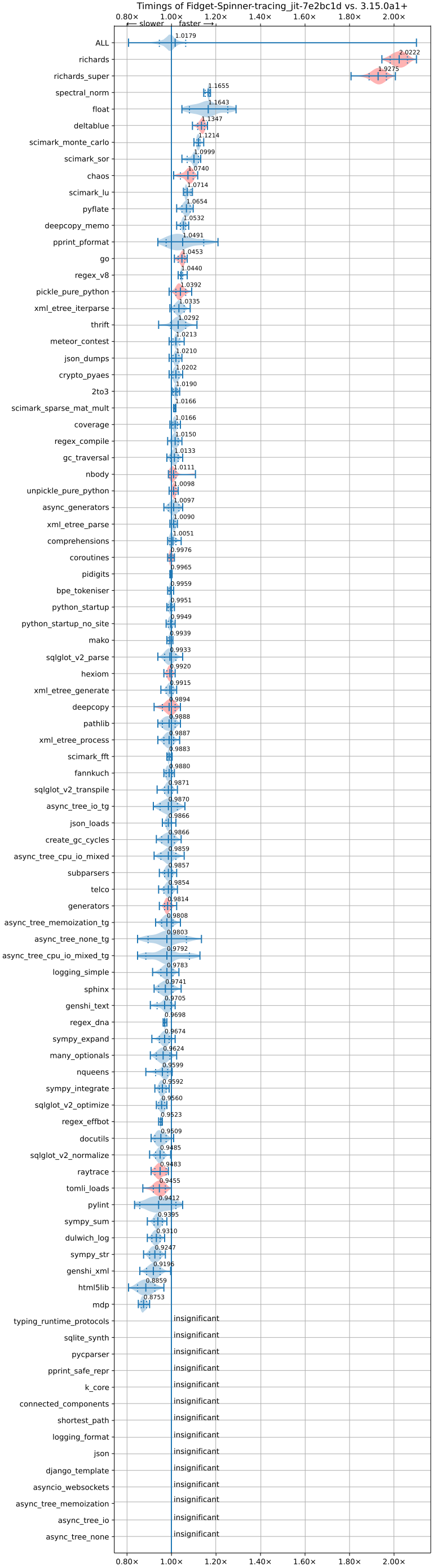
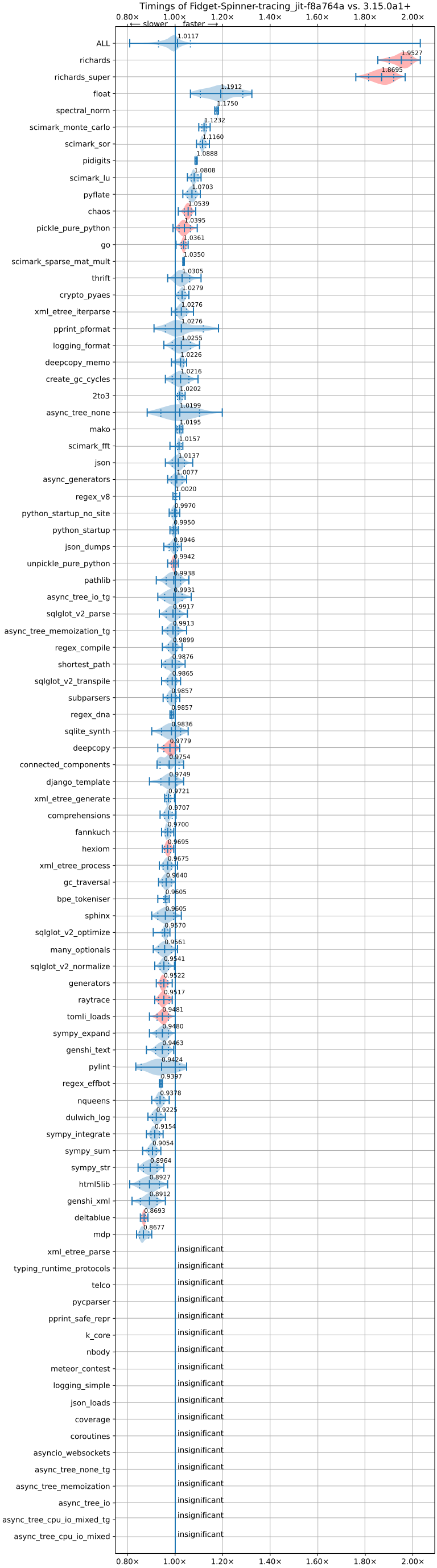
This PR changes the current JIT model from trace projection to trace recording. Benchmarking: better pyperformance (about 1.7% overall) geomean versus current https://raw.githubusercontent.com/facebookexperimental/free-threading-benchmarking/refs/heads/main/results/bm-20251108-3.15.0a1%2B-7e2bc1d-JIT/bm-20251108-vultr-x86_64-Fidget%252dSpinner-tracing_jit-3.15.0a1%2B-7e2bc1d-vs-base.svg, 100% faster Richards on the most improved benchmark versus the current JIT. Slowdown of about 10-15% on the worst benchmark versus the current JIT. **Note: the fastest version isn't the one merged, as it relies on fixing bugs in the specializing interpreter, which is left to another PR**. The speedup in the merged version is about 1.1%. https://raw.githubusercontent.com/facebookexperimental/free-threading-benchmarking/refs/heads/main/results/bm-20251112-3.15.0a1%2B-f8a764a-JIT/bm-20251112-vultr-x86_64-Fidget%252dSpinner-tracing_jit-3.15.0a1%2B-f8a764a-vs-base.svg

Stats: 50% more uops executed, 30% more traces entered the last time we ran them. It also suggests our trace lengths for a real trace recording JIT are too short, as a lot of trace too long aborts https://github.com/facebookexperimental/free-threading-benchmarking/blob/main/results/bm-20251023-3.15.0a1%2B-eb73378-CLANG%2CJIT/bm-20251023-vultr-x86_64-Fidget%252dSpinner-tracing_jit-3.15.0a1%2B-eb73378-pystats-vs-base.md .

This new JIT frontend is already able to record/execute significantly more instructions than the previous JIT frontend. In this PR, we are now able to record through custom dunders, simple object creation, generators, etc. None of these were done by the old JIT frontend. Some custom dunders uops were discovered to be broken as part of this work gh-140277

The optimizer stack space check is disabled, as it's no longer valid to deal with underflow.

Pros:
* Ignoring the generated tracer code as it's automatically created, this is only additional 1k lines of code. The maintenance burden is handled by the DSL and code generator.
* `optimizer.c` is now significantly simpler, as we don't have to do strange things to recover the bytecode from a trace.
* The new JIT frontend is able to handle a lot more control-flow than the old one.
* Tracing is very low overhead. We use the tail calling interpreter/computed goto interpreter to switch between tracing mode and non-tracing mode. I call this mechanism dual dispatch, as we have two dispatch tables dispatching to each other. Specialization is still enabled while tracing.
* Better handling of polymorphism. We leverage the specializing interpreter for this.

Cons:
* (For now) requires tail calling interpreter or computed gotos. This means no Windows JIT for now :(. Not to fret, tail calling is coming soon to Windows though https://github.com/python/cpython/pull/139962

Design:
* After each instruction, the `record_previous_inst` function/label is executed. This does as the name suggests.
* The tracing interpreter lowers bytecode to uops directly so that it can obtain "fresh" values at the point of lowering.
* The tracing version behaves nearly identical to the normal interpreter, in fact it even has specialization! This allows it to run without much of a slowdown when tracing. The actual cost of tracing is only a function call and writes to memory.
* The tracing interpreter uses the specializing interpreter's deopt to naturally form the side exit chains. This allows it to side exit chain effectively, without repeating much code. We force a re-specializing when tracing a deopt.
* The tracing interpreter can even handle goto errors/exceptions, but I chose to disable them for now as it's not tested.
* Because we do not share interpreter dispatch, there is should be no significant slowdown to the original specializing interpreter on tailcall and computed got with JIT disabled. With JIT enabled, there might be a slowdown in the form of the JIT trying to trace.
* Things that could have dynamic instruction pointer effects are guarded on. The guard deopts to a new instruction --- `_DYNAMIC_EXIT`.
5713 lines
228 KiB
C
5713 lines
228 KiB
C
// This file contains instruction definitions.
|
|
// It is read by generators stored in Tools/cases_generator/
|
|
// to generate Python/generated_cases.c.h and others.
|
|
// Note that there is some dummy C code at the top and bottom of the file
|
|
// to fool text editors like VS Code into believing this is valid C code.
|
|
// The actual instruction definitions start at // BEGIN BYTECODES //.
|
|
// See Tools/cases_generator/README.md for more information.
|
|
|
|
#include "Python.h"
|
|
#include "pycore_abstract.h" // _PyIndex_Check()
|
|
#include "pycore_audit.h" // _PySys_Audit()
|
|
#include "pycore_backoff.h"
|
|
#include "pycore_cell.h" // PyCell_GetRef()
|
|
#include "pycore_code.h"
|
|
#include "pycore_emscripten_signal.h" // _Py_CHECK_EMSCRIPTEN_SIGNALS
|
|
#include "pycore_function.h"
|
|
#include "pycore_instruments.h"
|
|
#include "pycore_interpolation.h" // _PyInterpolation_Build()
|
|
#include "pycore_intrinsics.h"
|
|
#include "pycore_long.h" // _PyLong_ExactDealloc(), _PyLong_GetZero()
|
|
#include "pycore_moduleobject.h" // PyModuleObject
|
|
#include "pycore_object.h" // _PyObject_GC_TRACK()
|
|
#include "pycore_opcode_metadata.h" // uop names
|
|
#include "pycore_opcode_utils.h" // MAKE_FUNCTION_*
|
|
#include "pycore_pyatomic_ft_wrappers.h" // FT_ATOMIC_*
|
|
#include "pycore_pyerrors.h" // _PyErr_GetRaisedException()
|
|
#include "pycore_pystate.h" // _PyInterpreterState_GET()
|
|
#include "pycore_range.h" // _PyRangeIterObject
|
|
#include "pycore_setobject.h" // _PySet_NextEntry()
|
|
#include "pycore_sliceobject.h" // _PyBuildSlice_ConsumeRefs
|
|
#include "pycore_stackref.h"
|
|
#include "pycore_template.h" // _PyTemplate_Build()
|
|
#include "pycore_tuple.h" // _PyTuple_ITEMS()
|
|
#include "pycore_typeobject.h" // _PySuper_Lookup()
|
|
|
|
#include "pycore_dict.h"
|
|
#include "dictobject.h"
|
|
#include "pycore_frame.h"
|
|
#include "opcode.h"
|
|
#include "optimizer.h"
|
|
#include "pydtrace.h"
|
|
#include "setobject.h"
|
|
|
|
|
|
#define USE_COMPUTED_GOTOS 0
|
|
#include "ceval_macros.h"
|
|
|
|
/* Flow control macros */
|
|
|
|
#define inst(name, ...) case name:
|
|
#define op(name, ...) /* NAME is ignored */
|
|
#define macro(name) static int MACRO_##name
|
|
#define super(name) static int SUPER_##name
|
|
#define family(name, ...) static int family_##name
|
|
#define pseudo(name) static int pseudo_##name
|
|
#define label(name) name:
|
|
|
|
/* Annotations */
|
|
#define guard
|
|
#define override
|
|
#define specializing
|
|
#define replicate(TIMES)
|
|
#define tier1
|
|
#define no_save_ip
|
|
|
|
// Dummy variables for stack effects.
|
|
static PyObject *value, *value1, *value2, *left, *right, *res, *sum, *prod, *sub;
|
|
static PyObject *container, *start, *stop, *v, *lhs, *rhs, *res2;
|
|
static PyObject *list, *tuple, *dict, *owner, *set, *str, *tup, *map, *keys;
|
|
static PyObject *exit_func, *lasti, *val, *retval, *obj, *iter, *exhausted;
|
|
static PyObject *aiter, *awaitable, *iterable, *w, *exc_value, *bc, *locals;
|
|
static PyObject *orig, *excs, *update, *b, *fromlist, *level, *from;
|
|
static PyObject **pieces, **values;
|
|
static size_t jump;
|
|
// Dummy variables for cache effects
|
|
static uint16_t invert, counter, index, hint;
|
|
#define unused 0 // Used in a macro def, can't be static
|
|
static uint32_t type_version;
|
|
static _PyExecutorObject *current_executor;
|
|
|
|
static PyObject *
|
|
dummy_func(
|
|
PyThreadState *tstate,
|
|
_PyInterpreterFrame *frame,
|
|
unsigned char opcode,
|
|
unsigned int oparg,
|
|
_Py_CODEUNIT *next_instr,
|
|
PyObject **stack_pointer,
|
|
int throwflag,
|
|
PyObject *args[]
|
|
)
|
|
{
|
|
// Dummy labels.
|
|
pop_1_error:
|
|
// Dummy locals.
|
|
PyObject *dummy;
|
|
_Py_CODEUNIT *this_instr;
|
|
PyObject *attr;
|
|
PyObject *attrs;
|
|
PyObject *bottom;
|
|
PyObject *callable;
|
|
PyObject *callargs;
|
|
PyObject *codeobj;
|
|
PyObject *cond;
|
|
PyObject *descr;
|
|
PyObject *exc;
|
|
PyObject *exit;
|
|
PyObject *fget;
|
|
PyObject *fmt_spec;
|
|
PyObject *func;
|
|
uint32_t func_version;
|
|
PyObject *getattribute;
|
|
PyObject *kwargs;
|
|
PyObject *kwdefaults;
|
|
PyObject *len_o;
|
|
PyObject *match;
|
|
PyObject *match_type;
|
|
PyObject *method;
|
|
PyObject *mgr;
|
|
Py_ssize_t min_args;
|
|
PyObject *names;
|
|
PyObject *new_exc;
|
|
PyObject *next;
|
|
PyObject *none;
|
|
PyObject *null;
|
|
PyObject *prev_exc;
|
|
PyObject *receiver;
|
|
PyObject *rest;
|
|
int result;
|
|
PyObject *self;
|
|
PyObject *seq;
|
|
PyObject *slice;
|
|
PyObject *step;
|
|
PyObject *subject;
|
|
PyObject *top;
|
|
PyObject *type;
|
|
PyObject *typevars;
|
|
PyObject *val0;
|
|
PyObject *val1;
|
|
int values_or_none;
|
|
|
|
switch (opcode) {
|
|
|
|
// BEGIN BYTECODES //
|
|
pure inst(NOP, (--)) {
|
|
}
|
|
|
|
family(RESUME, 0) = {
|
|
RESUME_CHECK,
|
|
};
|
|
|
|
macro(NOT_TAKEN) = NOP;
|
|
|
|
op(_CHECK_PERIODIC, (--)) {
|
|
int err = check_periodics(tstate);
|
|
ERROR_IF(err != 0);
|
|
}
|
|
|
|
replaced op(_CHECK_PERIODIC_AT_END, (--)) {
|
|
int err = check_periodics(tstate);
|
|
ERROR_IF(err != 0);
|
|
}
|
|
|
|
op(_CHECK_PERIODIC_IF_NOT_YIELD_FROM, (--)) {
|
|
if ((oparg & RESUME_OPARG_LOCATION_MASK) < RESUME_AFTER_YIELD_FROM) {
|
|
int err = check_periodics(tstate);
|
|
ERROR_IF(err != 0);
|
|
}
|
|
}
|
|
|
|
op(_QUICKEN_RESUME, (--)) {
|
|
#if ENABLE_SPECIALIZATION_FT
|
|
if (tstate->tracing == 0 && this_instr->op.code == RESUME) {
|
|
FT_ATOMIC_STORE_UINT8_RELAXED(this_instr->op.code, RESUME_CHECK);
|
|
}
|
|
#endif /* ENABLE_SPECIALIZATION_FT */
|
|
}
|
|
|
|
tier1 op(_MAYBE_INSTRUMENT, (--)) {
|
|
#ifdef Py_GIL_DISABLED
|
|
// For thread-safety, we need to check instrumentation version
|
|
// even when tracing. Otherwise, another thread may concurrently
|
|
// re-write the bytecode while we are executing this function.
|
|
int check_instrumentation = 1;
|
|
#else
|
|
int check_instrumentation = (tstate->tracing == 0);
|
|
#endif
|
|
if (check_instrumentation) {
|
|
uintptr_t global_version = _Py_atomic_load_uintptr_relaxed(&tstate->eval_breaker) & ~_PY_EVAL_EVENTS_MASK;
|
|
uintptr_t code_version = FT_ATOMIC_LOAD_UINTPTR_ACQUIRE(_PyFrame_GetCode(frame)->_co_instrumentation_version);
|
|
if (code_version != global_version) {
|
|
int err = _Py_Instrument(_PyFrame_GetCode(frame), tstate->interp);
|
|
if (err) {
|
|
ERROR_NO_POP();
|
|
}
|
|
next_instr = this_instr;
|
|
DISPATCH();
|
|
}
|
|
}
|
|
}
|
|
|
|
op(_LOAD_BYTECODE, (--)) {
|
|
#ifdef Py_GIL_DISABLED
|
|
if (frame->tlbc_index !=
|
|
((_PyThreadStateImpl *)tstate)->tlbc_index) {
|
|
_Py_CODEUNIT *bytecode =
|
|
_PyEval_GetExecutableCode(tstate, _PyFrame_GetCode(frame));
|
|
ERROR_IF(bytecode == NULL);
|
|
ptrdiff_t off = this_instr - _PyFrame_GetBytecode(frame);
|
|
frame->tlbc_index = ((_PyThreadStateImpl *)tstate)->tlbc_index;
|
|
frame->instr_ptr = bytecode + off;
|
|
// Make sure this_instr gets reset correctly for any uops that
|
|
// follow
|
|
next_instr = frame->instr_ptr;
|
|
DISPATCH();
|
|
}
|
|
#endif
|
|
}
|
|
|
|
macro(RESUME) =
|
|
_LOAD_BYTECODE +
|
|
_MAYBE_INSTRUMENT +
|
|
_QUICKEN_RESUME +
|
|
_CHECK_PERIODIC_IF_NOT_YIELD_FROM;
|
|
|
|
inst(RESUME_CHECK, (--)) {
|
|
#if defined(__EMSCRIPTEN__)
|
|
DEOPT_IF(_Py_emscripten_signal_clock == 0);
|
|
_Py_emscripten_signal_clock -= Py_EMSCRIPTEN_SIGNAL_HANDLING;
|
|
#endif
|
|
uintptr_t eval_breaker = _Py_atomic_load_uintptr_relaxed(&tstate->eval_breaker);
|
|
uintptr_t version = FT_ATOMIC_LOAD_UINTPTR_ACQUIRE(_PyFrame_GetCode(frame)->_co_instrumentation_version);
|
|
assert((version & _PY_EVAL_EVENTS_MASK) == 0);
|
|
DEOPT_IF(eval_breaker != version);
|
|
#ifdef Py_GIL_DISABLED
|
|
DEOPT_IF(frame->tlbc_index !=
|
|
((_PyThreadStateImpl *)tstate)->tlbc_index);
|
|
#endif
|
|
}
|
|
|
|
op(_MONITOR_RESUME, (--)) {
|
|
int err = _Py_call_instrumentation(
|
|
tstate, oparg > 0, frame, this_instr);
|
|
ERROR_IF(err);
|
|
if (frame->instr_ptr != this_instr) {
|
|
/* Instrumentation has jumped */
|
|
next_instr = frame->instr_ptr;
|
|
}
|
|
}
|
|
|
|
macro(INSTRUMENTED_RESUME) =
|
|
_LOAD_BYTECODE +
|
|
_MAYBE_INSTRUMENT +
|
|
_CHECK_PERIODIC_IF_NOT_YIELD_FROM +
|
|
_MONITOR_RESUME;
|
|
|
|
pseudo(LOAD_CLOSURE, (-- unused)) = {
|
|
LOAD_FAST,
|
|
};
|
|
|
|
inst(LOAD_FAST_CHECK, (-- value)) {
|
|
_PyStackRef value_s = GETLOCAL(oparg);
|
|
if (PyStackRef_IsNull(value_s)) {
|
|
_PyEval_FormatExcCheckArg(tstate, PyExc_UnboundLocalError,
|
|
UNBOUNDLOCAL_ERROR_MSG,
|
|
PyTuple_GetItem(_PyFrame_GetCode(frame)->co_localsplusnames, oparg)
|
|
);
|
|
ERROR_IF(true);
|
|
}
|
|
value = PyStackRef_DUP(value_s);
|
|
}
|
|
|
|
replicate(8) pure inst(LOAD_FAST, (-- value)) {
|
|
assert(!PyStackRef_IsNull(GETLOCAL(oparg)));
|
|
value = PyStackRef_DUP(GETLOCAL(oparg));
|
|
}
|
|
|
|
replicate(8) pure inst (LOAD_FAST_BORROW, (-- value)) {
|
|
assert(!PyStackRef_IsNull(GETLOCAL(oparg)));
|
|
value = PyStackRef_Borrow(GETLOCAL(oparg));
|
|
}
|
|
|
|
inst(LOAD_FAST_AND_CLEAR, (-- value)) {
|
|
value = GETLOCAL(oparg);
|
|
GETLOCAL(oparg) = PyStackRef_NULL;
|
|
}
|
|
|
|
inst(LOAD_FAST_LOAD_FAST, ( -- value1, value2)) {
|
|
uint32_t oparg1 = oparg >> 4;
|
|
uint32_t oparg2 = oparg & 15;
|
|
value1 = PyStackRef_DUP(GETLOCAL(oparg1));
|
|
value2 = PyStackRef_DUP(GETLOCAL(oparg2));
|
|
}
|
|
|
|
inst(LOAD_FAST_BORROW_LOAD_FAST_BORROW, ( -- value1, value2)) {
|
|
uint32_t oparg1 = oparg >> 4;
|
|
uint32_t oparg2 = oparg & 15;
|
|
value1 = PyStackRef_Borrow(GETLOCAL(oparg1));
|
|
value2 = PyStackRef_Borrow(GETLOCAL(oparg2));
|
|
}
|
|
|
|
inst(LOAD_CONST, (-- value)) {
|
|
PyObject *obj = GETITEM(FRAME_CO_CONSTS, oparg);
|
|
value = PyStackRef_FromPyObjectBorrow(obj);
|
|
}
|
|
|
|
replicate(4) inst(LOAD_SMALL_INT, (-- value)) {
|
|
assert(oparg < _PY_NSMALLPOSINTS);
|
|
PyObject *obj = (PyObject *)&_PyLong_SMALL_INTS[_PY_NSMALLNEGINTS + oparg];
|
|
value = PyStackRef_FromPyObjectBorrow(obj);
|
|
}
|
|
|
|
replicate(8) inst(STORE_FAST, (value --)) {
|
|
_PyStackRef tmp = GETLOCAL(oparg);
|
|
GETLOCAL(oparg) = value;
|
|
DEAD(value);
|
|
PyStackRef_XCLOSE(tmp);
|
|
}
|
|
|
|
pseudo(STORE_FAST_MAYBE_NULL, (unused --)) = {
|
|
STORE_FAST,
|
|
};
|
|
|
|
inst(STORE_FAST_LOAD_FAST, (value1 -- value2)) {
|
|
uint32_t oparg1 = oparg >> 4;
|
|
uint32_t oparg2 = oparg & 15;
|
|
_PyStackRef tmp = GETLOCAL(oparg1);
|
|
GETLOCAL(oparg1) = value1;
|
|
DEAD(value1);
|
|
value2 = PyStackRef_DUP(GETLOCAL(oparg2));
|
|
PyStackRef_XCLOSE(tmp);
|
|
}
|
|
|
|
inst(STORE_FAST_STORE_FAST, (value2, value1 --)) {
|
|
uint32_t oparg1 = oparg >> 4;
|
|
uint32_t oparg2 = oparg & 15;
|
|
_PyStackRef tmp = GETLOCAL(oparg1);
|
|
GETLOCAL(oparg1) = value1;
|
|
DEAD(value1);
|
|
PyStackRef_XCLOSE(tmp);
|
|
tmp = GETLOCAL(oparg2);
|
|
GETLOCAL(oparg2) = value2;
|
|
DEAD(value2);
|
|
PyStackRef_XCLOSE(tmp);
|
|
}
|
|
|
|
pure inst(POP_TOP, (value --)) {
|
|
PyStackRef_XCLOSE(value);
|
|
}
|
|
|
|
op(_POP_TOP_NOP, (value --)) {
|
|
assert(PyStackRef_IsNull(value) || (!PyStackRef_RefcountOnObject(value)) ||
|
|
_Py_IsImmortal((PyStackRef_AsPyObjectBorrow(value))));
|
|
DEAD(value);
|
|
}
|
|
|
|
op(_POP_TOP_INT, (value --)) {
|
|
assert(PyLong_CheckExact(PyStackRef_AsPyObjectBorrow(value)));
|
|
PyStackRef_CLOSE_SPECIALIZED(value, _PyLong_ExactDealloc);
|
|
}
|
|
|
|
op(_POP_TOP_FLOAT, (value --)) {
|
|
assert(PyFloat_CheckExact(PyStackRef_AsPyObjectBorrow(value)));
|
|
PyStackRef_CLOSE_SPECIALIZED(value, _PyFloat_ExactDealloc);
|
|
}
|
|
|
|
op(_POP_TOP_UNICODE, (value --)) {
|
|
assert(PyUnicode_CheckExact(PyStackRef_AsPyObjectBorrow(value)));
|
|
PyStackRef_CLOSE_SPECIALIZED(value, _PyUnicode_ExactDealloc);
|
|
}
|
|
|
|
tier2 op(_POP_TWO, (nos, tos --)) {
|
|
PyStackRef_CLOSE(tos);
|
|
PyStackRef_CLOSE(nos);
|
|
}
|
|
|
|
pure inst(PUSH_NULL, (-- res)) {
|
|
res = PyStackRef_NULL;
|
|
}
|
|
|
|
no_save_ip inst(END_FOR, (value -- )) {
|
|
/* Don't update instr_ptr, so that POP_ITER sees
|
|
* the FOR_ITER as the previous instruction.
|
|
* This has the benign side effect that if value is
|
|
* finalized it will see the location as the FOR_ITER's.
|
|
*/
|
|
PyStackRef_CLOSE(value);
|
|
}
|
|
|
|
|
|
inst(POP_ITER, (iter, index_or_null -- )) {
|
|
(void)index_or_null;
|
|
DEAD(index_or_null);
|
|
PyStackRef_CLOSE(iter);
|
|
}
|
|
|
|
no_save_ip tier1 inst(INSTRUMENTED_END_FOR, (receiver, index_or_null, value -- receiver, index_or_null)) {
|
|
/* Need to create a fake StopIteration error here,
|
|
* to conform to PEP 380 */
|
|
if (PyStackRef_GenCheck(receiver)) {
|
|
int err = monitor_stop_iteration(tstate, frame, this_instr, PyStackRef_AsPyObjectBorrow(value));
|
|
if (err) {
|
|
ERROR_NO_POP();
|
|
}
|
|
}
|
|
PyStackRef_CLOSE(value);
|
|
}
|
|
|
|
tier1 inst(INSTRUMENTED_POP_ITER, (iter, index_or_null -- )) {
|
|
(void)index_or_null;
|
|
DEAD(index_or_null);
|
|
INSTRUMENTED_JUMP(prev_instr, this_instr+1, PY_MONITORING_EVENT_BRANCH_RIGHT);
|
|
PyStackRef_CLOSE(iter);
|
|
}
|
|
|
|
pure inst(END_SEND, (receiver, value -- val)) {
|
|
val = value;
|
|
DEAD(value);
|
|
PyStackRef_CLOSE(receiver);
|
|
}
|
|
|
|
tier1 inst(INSTRUMENTED_END_SEND, (receiver, value -- val)) {
|
|
PyObject *receiver_o = PyStackRef_AsPyObjectBorrow(receiver);
|
|
if (PyGen_Check(receiver_o) || PyCoro_CheckExact(receiver_o)) {
|
|
int err = monitor_stop_iteration(tstate, frame, this_instr, PyStackRef_AsPyObjectBorrow(value));
|
|
if (err) {
|
|
ERROR_NO_POP();
|
|
}
|
|
}
|
|
val = value;
|
|
DEAD(value);
|
|
PyStackRef_CLOSE(receiver);
|
|
}
|
|
|
|
inst(UNARY_NEGATIVE, (value -- res)) {
|
|
PyObject *res_o = PyNumber_Negative(PyStackRef_AsPyObjectBorrow(value));
|
|
PyStackRef_CLOSE(value);
|
|
ERROR_IF(res_o == NULL);
|
|
res = PyStackRef_FromPyObjectSteal(res_o);
|
|
}
|
|
|
|
pure inst(UNARY_NOT, (value -- res)) {
|
|
assert(PyStackRef_BoolCheck(value));
|
|
res = PyStackRef_IsFalse(value)
|
|
? PyStackRef_True : PyStackRef_False;
|
|
DEAD(value);
|
|
}
|
|
|
|
family(TO_BOOL, INLINE_CACHE_ENTRIES_TO_BOOL) = {
|
|
TO_BOOL_ALWAYS_TRUE,
|
|
TO_BOOL_BOOL,
|
|
TO_BOOL_INT,
|
|
TO_BOOL_LIST,
|
|
TO_BOOL_NONE,
|
|
TO_BOOL_STR,
|
|
};
|
|
|
|
specializing op(_SPECIALIZE_TO_BOOL, (counter/1, value -- value)) {
|
|
#if ENABLE_SPECIALIZATION_FT
|
|
if (ADAPTIVE_COUNTER_TRIGGERS(counter)) {
|
|
next_instr = this_instr;
|
|
_Py_Specialize_ToBool(value, next_instr);
|
|
DISPATCH_SAME_OPARG();
|
|
}
|
|
OPCODE_DEFERRED_INC(TO_BOOL);
|
|
ADVANCE_ADAPTIVE_COUNTER(this_instr[1].counter);
|
|
#endif /* ENABLE_SPECIALIZATION_FT */
|
|
}
|
|
|
|
op(_TO_BOOL, (value -- res)) {
|
|
int err = PyObject_IsTrue(PyStackRef_AsPyObjectBorrow(value));
|
|
PyStackRef_CLOSE(value);
|
|
ERROR_IF(err < 0);
|
|
res = err ? PyStackRef_True : PyStackRef_False;
|
|
}
|
|
|
|
macro(TO_BOOL) = _SPECIALIZE_TO_BOOL + unused/2 + _TO_BOOL;
|
|
|
|
inst(TO_BOOL_BOOL, (unused/1, unused/2, value -- value)) {
|
|
EXIT_IF(!PyStackRef_BoolCheck(value));
|
|
STAT_INC(TO_BOOL, hit);
|
|
}
|
|
|
|
inst(TO_BOOL_INT, (unused/1, unused/2, value -- res)) {
|
|
PyObject *value_o = PyStackRef_AsPyObjectBorrow(value);
|
|
EXIT_IF(!PyLong_CheckExact(value_o));
|
|
STAT_INC(TO_BOOL, hit);
|
|
if (_PyLong_IsZero((PyLongObject *)value_o)) {
|
|
assert(_Py_IsImmortal(value_o));
|
|
DEAD(value);
|
|
res = PyStackRef_False;
|
|
}
|
|
else {
|
|
PyStackRef_CLOSE(value);
|
|
res = PyStackRef_True;
|
|
}
|
|
}
|
|
|
|
op(_GUARD_NOS_LIST, (nos, unused -- nos, unused)) {
|
|
PyObject *o = PyStackRef_AsPyObjectBorrow(nos);
|
|
EXIT_IF(!PyList_CheckExact(o));
|
|
}
|
|
|
|
op(_GUARD_TOS_LIST, (tos -- tos)) {
|
|
PyObject *o = PyStackRef_AsPyObjectBorrow(tos);
|
|
EXIT_IF(!PyList_CheckExact(o));
|
|
}
|
|
|
|
op(_GUARD_TOS_SLICE, (tos -- tos)) {
|
|
PyObject *o = PyStackRef_AsPyObjectBorrow(tos);
|
|
EXIT_IF(!PySlice_Check(o));
|
|
}
|
|
|
|
macro(TO_BOOL_LIST) = _GUARD_TOS_LIST + unused/1 + unused/2 + _TO_BOOL_LIST;
|
|
|
|
op(_TO_BOOL_LIST, (value -- res)) {
|
|
PyObject *value_o = PyStackRef_AsPyObjectBorrow(value);
|
|
assert(PyList_CheckExact(value_o));
|
|
STAT_INC(TO_BOOL, hit);
|
|
res = PyList_GET_SIZE(value_o) ? PyStackRef_True : PyStackRef_False;
|
|
DECREF_INPUTS();
|
|
}
|
|
|
|
inst(TO_BOOL_NONE, (unused/1, unused/2, value -- res)) {
|
|
// This one is a bit weird, because we expect *some* failures:
|
|
EXIT_IF(!PyStackRef_IsNone(value));
|
|
DEAD(value);
|
|
STAT_INC(TO_BOOL, hit);
|
|
res = PyStackRef_False;
|
|
}
|
|
|
|
op(_GUARD_NOS_UNICODE, (nos, unused -- nos, unused)) {
|
|
PyObject *o = PyStackRef_AsPyObjectBorrow(nos);
|
|
EXIT_IF(!PyUnicode_CheckExact(o));
|
|
}
|
|
|
|
op(_GUARD_TOS_UNICODE, (value -- value)) {
|
|
PyObject *value_o = PyStackRef_AsPyObjectBorrow(value);
|
|
EXIT_IF(!PyUnicode_CheckExact(value_o));
|
|
}
|
|
|
|
op(_TO_BOOL_STR, (value -- res)) {
|
|
STAT_INC(TO_BOOL, hit);
|
|
PyObject *value_o = PyStackRef_AsPyObjectBorrow(value);
|
|
if (value_o == &_Py_STR(empty)) {
|
|
assert(_Py_IsImmortal(value_o));
|
|
DEAD(value);
|
|
res = PyStackRef_False;
|
|
}
|
|
else {
|
|
assert(Py_SIZE(value_o));
|
|
PyStackRef_CLOSE(value);
|
|
res = PyStackRef_True;
|
|
}
|
|
}
|
|
|
|
macro(TO_BOOL_STR) =
|
|
_GUARD_TOS_UNICODE + unused/1 + unused/2 + _TO_BOOL_STR;
|
|
|
|
op(_REPLACE_WITH_TRUE, (value -- res)) {
|
|
PyStackRef_CLOSE(value);
|
|
res = PyStackRef_True;
|
|
}
|
|
|
|
macro(TO_BOOL_ALWAYS_TRUE) =
|
|
unused/1 +
|
|
_GUARD_TYPE_VERSION +
|
|
_REPLACE_WITH_TRUE;
|
|
|
|
inst(UNARY_INVERT, (value -- res)) {
|
|
PyObject *res_o = PyNumber_Invert(PyStackRef_AsPyObjectBorrow(value));
|
|
PyStackRef_CLOSE(value);
|
|
ERROR_IF(res_o == NULL);
|
|
res = PyStackRef_FromPyObjectSteal(res_o);
|
|
}
|
|
|
|
family(BINARY_OP, INLINE_CACHE_ENTRIES_BINARY_OP) = {
|
|
BINARY_OP_MULTIPLY_INT,
|
|
BINARY_OP_ADD_INT,
|
|
BINARY_OP_SUBTRACT_INT,
|
|
BINARY_OP_MULTIPLY_FLOAT,
|
|
BINARY_OP_ADD_FLOAT,
|
|
BINARY_OP_SUBTRACT_FLOAT,
|
|
BINARY_OP_ADD_UNICODE,
|
|
BINARY_OP_SUBSCR_LIST_INT,
|
|
BINARY_OP_SUBSCR_LIST_SLICE,
|
|
BINARY_OP_SUBSCR_TUPLE_INT,
|
|
BINARY_OP_SUBSCR_STR_INT,
|
|
BINARY_OP_SUBSCR_DICT,
|
|
BINARY_OP_SUBSCR_GETITEM,
|
|
// BINARY_OP_INPLACE_ADD_UNICODE, // See comments at that opcode.
|
|
BINARY_OP_EXTEND,
|
|
};
|
|
|
|
op(_GUARD_NOS_INT, (left, unused -- left, unused)) {
|
|
PyObject *left_o = PyStackRef_AsPyObjectBorrow(left);
|
|
EXIT_IF(!_PyLong_CheckExactAndCompact(left_o));
|
|
}
|
|
|
|
op(_GUARD_TOS_INT, (value -- value)) {
|
|
PyObject *value_o = PyStackRef_AsPyObjectBorrow(value);
|
|
EXIT_IF(!_PyLong_CheckExactAndCompact(value_o));
|
|
}
|
|
|
|
op(_GUARD_NOS_OVERFLOWED, (left, unused -- left, unused)) {
|
|
PyObject *left_o = PyStackRef_AsPyObjectBorrow(left);
|
|
assert(Py_TYPE(left_o) == &PyLong_Type);
|
|
EXIT_IF(!_PyLong_IsCompact((PyLongObject *)left_o));
|
|
}
|
|
|
|
op(_GUARD_TOS_OVERFLOWED, (value -- value)) {
|
|
PyObject *value_o = PyStackRef_AsPyObjectBorrow(value);
|
|
assert(Py_TYPE(value_o) == &PyLong_Type);
|
|
EXIT_IF(!_PyLong_IsCompact((PyLongObject *)value_o));
|
|
}
|
|
|
|
pure op(_BINARY_OP_MULTIPLY_INT, (left, right -- res)) {
|
|
PyObject *left_o = PyStackRef_AsPyObjectBorrow(left);
|
|
PyObject *right_o = PyStackRef_AsPyObjectBorrow(right);
|
|
assert(PyLong_CheckExact(left_o));
|
|
assert(PyLong_CheckExact(right_o));
|
|
assert(_PyLong_BothAreCompact((PyLongObject *)left_o, (PyLongObject *)right_o));
|
|
|
|
STAT_INC(BINARY_OP, hit);
|
|
res = _PyCompactLong_Multiply((PyLongObject *)left_o, (PyLongObject *)right_o);
|
|
EXIT_IF(PyStackRef_IsNull(res));
|
|
PyStackRef_CLOSE_SPECIALIZED(right, _PyLong_ExactDealloc);
|
|
PyStackRef_CLOSE_SPECIALIZED(left, _PyLong_ExactDealloc);
|
|
INPUTS_DEAD();
|
|
}
|
|
|
|
pure op(_BINARY_OP_ADD_INT, (left, right -- res)) {
|
|
PyObject *left_o = PyStackRef_AsPyObjectBorrow(left);
|
|
PyObject *right_o = PyStackRef_AsPyObjectBorrow(right);
|
|
assert(PyLong_CheckExact(left_o));
|
|
assert(PyLong_CheckExact(right_o));
|
|
assert(_PyLong_BothAreCompact((PyLongObject *)left_o, (PyLongObject *)right_o));
|
|
|
|
STAT_INC(BINARY_OP, hit);
|
|
res = _PyCompactLong_Add((PyLongObject *)left_o, (PyLongObject *)right_o);
|
|
EXIT_IF(PyStackRef_IsNull(res));
|
|
PyStackRef_CLOSE_SPECIALIZED(right, _PyLong_ExactDealloc);
|
|
PyStackRef_CLOSE_SPECIALIZED(left, _PyLong_ExactDealloc);
|
|
INPUTS_DEAD();
|
|
}
|
|
|
|
pure op(_BINARY_OP_SUBTRACT_INT, (left, right -- res)) {
|
|
PyObject *left_o = PyStackRef_AsPyObjectBorrow(left);
|
|
PyObject *right_o = PyStackRef_AsPyObjectBorrow(right);
|
|
assert(PyLong_CheckExact(left_o));
|
|
assert(PyLong_CheckExact(right_o));
|
|
assert(_PyLong_BothAreCompact((PyLongObject *)left_o, (PyLongObject *)right_o));
|
|
|
|
STAT_INC(BINARY_OP, hit);
|
|
res = _PyCompactLong_Subtract((PyLongObject *)left_o, (PyLongObject *)right_o);
|
|
EXIT_IF(PyStackRef_IsNull(res));
|
|
PyStackRef_CLOSE_SPECIALIZED(right, _PyLong_ExactDealloc);
|
|
PyStackRef_CLOSE_SPECIALIZED(left, _PyLong_ExactDealloc);
|
|
INPUTS_DEAD();
|
|
}
|
|
|
|
macro(BINARY_OP_MULTIPLY_INT) =
|
|
_GUARD_TOS_INT + _GUARD_NOS_INT + unused/5 + _BINARY_OP_MULTIPLY_INT;
|
|
|
|
macro(BINARY_OP_ADD_INT) =
|
|
_GUARD_TOS_INT + _GUARD_NOS_INT + unused/5 + _BINARY_OP_ADD_INT;
|
|
|
|
macro(BINARY_OP_SUBTRACT_INT) =
|
|
_GUARD_TOS_INT + _GUARD_NOS_INT + unused/5 + _BINARY_OP_SUBTRACT_INT;
|
|
|
|
op(_GUARD_NOS_FLOAT, (left, unused -- left, unused)) {
|
|
PyObject *left_o = PyStackRef_AsPyObjectBorrow(left);
|
|
EXIT_IF(!PyFloat_CheckExact(left_o));
|
|
}
|
|
|
|
op(_GUARD_TOS_FLOAT, (value -- value)) {
|
|
PyObject *value_o = PyStackRef_AsPyObjectBorrow(value);
|
|
EXIT_IF(!PyFloat_CheckExact(value_o));
|
|
}
|
|
|
|
pure op(_BINARY_OP_MULTIPLY_FLOAT, (left, right -- res)) {
|
|
PyObject *left_o = PyStackRef_AsPyObjectBorrow(left);
|
|
PyObject *right_o = PyStackRef_AsPyObjectBorrow(right);
|
|
assert(PyFloat_CheckExact(left_o));
|
|
assert(PyFloat_CheckExact(right_o));
|
|
|
|
STAT_INC(BINARY_OP, hit);
|
|
double dres =
|
|
((PyFloatObject *)left_o)->ob_fval *
|
|
((PyFloatObject *)right_o)->ob_fval;
|
|
res = _PyFloat_FromDouble_ConsumeInputs(left, right, dres);
|
|
INPUTS_DEAD();
|
|
ERROR_IF(PyStackRef_IsNull(res));
|
|
}
|
|
|
|
pure op(_BINARY_OP_ADD_FLOAT, (left, right -- res)) {
|
|
PyObject *left_o = PyStackRef_AsPyObjectBorrow(left);
|
|
PyObject *right_o = PyStackRef_AsPyObjectBorrow(right);
|
|
assert(PyFloat_CheckExact(left_o));
|
|
assert(PyFloat_CheckExact(right_o));
|
|
|
|
STAT_INC(BINARY_OP, hit);
|
|
double dres =
|
|
((PyFloatObject *)left_o)->ob_fval +
|
|
((PyFloatObject *)right_o)->ob_fval;
|
|
res = _PyFloat_FromDouble_ConsumeInputs(left, right, dres);
|
|
INPUTS_DEAD();
|
|
ERROR_IF(PyStackRef_IsNull(res));
|
|
}
|
|
|
|
pure op(_BINARY_OP_SUBTRACT_FLOAT, (left, right -- res)) {
|
|
PyObject *left_o = PyStackRef_AsPyObjectBorrow(left);
|
|
PyObject *right_o = PyStackRef_AsPyObjectBorrow(right);
|
|
assert(PyFloat_CheckExact(left_o));
|
|
assert(PyFloat_CheckExact(right_o));
|
|
|
|
STAT_INC(BINARY_OP, hit);
|
|
double dres =
|
|
((PyFloatObject *)left_o)->ob_fval -
|
|
((PyFloatObject *)right_o)->ob_fval;
|
|
res = _PyFloat_FromDouble_ConsumeInputs(left, right, dres);
|
|
INPUTS_DEAD();
|
|
ERROR_IF(PyStackRef_IsNull(res));
|
|
}
|
|
|
|
|
|
pure op(_BINARY_OP_MULTIPLY_FLOAT__NO_DECREF_INPUTS, (left, right -- res)) {
|
|
PyObject *left_o = PyStackRef_AsPyObjectBorrow(left);
|
|
PyObject *right_o = PyStackRef_AsPyObjectBorrow(right);
|
|
assert(PyFloat_CheckExact(left_o));
|
|
assert(PyFloat_CheckExact(right_o));
|
|
|
|
STAT_INC(BINARY_OP, hit);
|
|
double dres =
|
|
((PyFloatObject *)left_o)->ob_fval *
|
|
((PyFloatObject *)right_o)->ob_fval;
|
|
res = PyStackRef_FromPyObjectSteal(PyFloat_FromDouble(dres));
|
|
INPUTS_DEAD();
|
|
ERROR_IF(PyStackRef_IsNull(res));
|
|
}
|
|
|
|
pure op(_BINARY_OP_ADD_FLOAT__NO_DECREF_INPUTS, (left, right -- res)) {
|
|
PyObject *left_o = PyStackRef_AsPyObjectBorrow(left);
|
|
PyObject *right_o = PyStackRef_AsPyObjectBorrow(right);
|
|
assert(PyFloat_CheckExact(left_o));
|
|
assert(PyFloat_CheckExact(right_o));
|
|
|
|
STAT_INC(BINARY_OP, hit);
|
|
double dres =
|
|
((PyFloatObject *)left_o)->ob_fval +
|
|
((PyFloatObject *)right_o)->ob_fval;
|
|
res = PyStackRef_FromPyObjectSteal(PyFloat_FromDouble(dres));
|
|
INPUTS_DEAD();
|
|
ERROR_IF(PyStackRef_IsNull(res));
|
|
}
|
|
|
|
pure op(_BINARY_OP_SUBTRACT_FLOAT__NO_DECREF_INPUTS, (left, right -- res)) {
|
|
PyObject *left_o = PyStackRef_AsPyObjectBorrow(left);
|
|
PyObject *right_o = PyStackRef_AsPyObjectBorrow(right);
|
|
assert(PyFloat_CheckExact(left_o));
|
|
assert(PyFloat_CheckExact(right_o));
|
|
|
|
STAT_INC(BINARY_OP, hit);
|
|
double dres =
|
|
((PyFloatObject *)left_o)->ob_fval -
|
|
((PyFloatObject *)right_o)->ob_fval;
|
|
res = PyStackRef_FromPyObjectSteal(PyFloat_FromDouble(dres));
|
|
INPUTS_DEAD();
|
|
ERROR_IF(PyStackRef_IsNull(res));
|
|
}
|
|
|
|
macro(BINARY_OP_MULTIPLY_FLOAT) =
|
|
_GUARD_TOS_FLOAT + _GUARD_NOS_FLOAT + unused/5 + _BINARY_OP_MULTIPLY_FLOAT;
|
|
macro(BINARY_OP_ADD_FLOAT) =
|
|
_GUARD_TOS_FLOAT + _GUARD_NOS_FLOAT + unused/5 + _BINARY_OP_ADD_FLOAT;
|
|
macro(BINARY_OP_SUBTRACT_FLOAT) =
|
|
_GUARD_TOS_FLOAT + _GUARD_NOS_FLOAT + unused/5 + _BINARY_OP_SUBTRACT_FLOAT;
|
|
|
|
pure op(_BINARY_OP_ADD_UNICODE, (left, right -- res)) {
|
|
PyObject *left_o = PyStackRef_AsPyObjectBorrow(left);
|
|
PyObject *right_o = PyStackRef_AsPyObjectBorrow(right);
|
|
assert(PyUnicode_CheckExact(left_o));
|
|
assert(PyUnicode_CheckExact(right_o));
|
|
|
|
STAT_INC(BINARY_OP, hit);
|
|
PyObject *res_o = PyUnicode_Concat(left_o, right_o);
|
|
PyStackRef_CLOSE_SPECIALIZED(right, _PyUnicode_ExactDealloc);
|
|
PyStackRef_CLOSE_SPECIALIZED(left, _PyUnicode_ExactDealloc);
|
|
INPUTS_DEAD();
|
|
ERROR_IF(res_o == NULL);
|
|
res = PyStackRef_FromPyObjectSteal(res_o);
|
|
}
|
|
|
|
macro(BINARY_OP_ADD_UNICODE) =
|
|
_GUARD_TOS_UNICODE + _GUARD_NOS_UNICODE + unused/5 + _BINARY_OP_ADD_UNICODE;
|
|
|
|
// This is a subtle one. It's a super-instruction for
|
|
// BINARY_OP_ADD_UNICODE followed by STORE_FAST
|
|
// where the store goes into the left argument.
|
|
// So the inputs are the same as for all BINARY_OP
|
|
// specializations, but there is no output.
|
|
// At the end we just skip over the STORE_FAST.
|
|
op(_BINARY_OP_INPLACE_ADD_UNICODE, (left, right --)) {
|
|
PyObject *left_o = PyStackRef_AsPyObjectBorrow(left);
|
|
assert(PyUnicode_CheckExact(left_o));
|
|
assert(PyUnicode_CheckExact(PyStackRef_AsPyObjectBorrow(right)));
|
|
|
|
int next_oparg;
|
|
#if TIER_ONE
|
|
assert(next_instr->op.code == STORE_FAST);
|
|
next_oparg = next_instr->op.arg;
|
|
#else
|
|
next_oparg = (int)CURRENT_OPERAND0();
|
|
#endif
|
|
_PyStackRef *target_local = &GETLOCAL(next_oparg);
|
|
assert(PyUnicode_CheckExact(left_o));
|
|
DEOPT_IF(PyStackRef_AsPyObjectBorrow(*target_local) != left_o);
|
|
STAT_INC(BINARY_OP, hit);
|
|
/* Handle `left = left + right` or `left += right` for str.
|
|
*
|
|
* When possible, extend `left` in place rather than
|
|
* allocating a new PyUnicodeObject. This attempts to avoid
|
|
* quadratic behavior when one neglects to use str.join().
|
|
*
|
|
* If `left` has only two references remaining (one from
|
|
* the stack, one in the locals), DECREFing `left` leaves
|
|
* only the locals reference, so PyUnicode_Append knows
|
|
* that the string is safe to mutate.
|
|
*/
|
|
assert(Py_REFCNT(left_o) >= 2 || !PyStackRef_IsHeapSafe(left));
|
|
PyStackRef_CLOSE_SPECIALIZED(left, _PyUnicode_ExactDealloc);
|
|
DEAD(left);
|
|
PyObject *temp = PyStackRef_AsPyObjectSteal(*target_local);
|
|
PyObject *right_o = PyStackRef_AsPyObjectSteal(right);
|
|
PyUnicode_Append(&temp, right_o);
|
|
*target_local = PyStackRef_FromPyObjectSteal(temp);
|
|
Py_DECREF(right_o);
|
|
ERROR_IF(PyStackRef_IsNull(*target_local));
|
|
#if TIER_ONE
|
|
// The STORE_FAST is already done. This is done here in tier one,
|
|
// and during trace projection in tier two:
|
|
assert(next_instr->op.code == STORE_FAST);
|
|
SKIP_OVER(1);
|
|
#endif
|
|
}
|
|
|
|
op(_GUARD_BINARY_OP_EXTEND, (descr/4, left, right -- left, right)) {
|
|
PyObject *left_o = PyStackRef_AsPyObjectBorrow(left);
|
|
PyObject *right_o = PyStackRef_AsPyObjectBorrow(right);
|
|
_PyBinaryOpSpecializationDescr *d = (_PyBinaryOpSpecializationDescr*)descr;
|
|
assert(INLINE_CACHE_ENTRIES_BINARY_OP == 5);
|
|
assert(d && d->guard);
|
|
int res = d->guard(left_o, right_o);
|
|
DEOPT_IF(!res);
|
|
}
|
|
|
|
op(_BINARY_OP_EXTEND, (descr/4, left, right -- res)) {
|
|
PyObject *left_o = PyStackRef_AsPyObjectBorrow(left);
|
|
PyObject *right_o = PyStackRef_AsPyObjectBorrow(right);
|
|
assert(INLINE_CACHE_ENTRIES_BINARY_OP == 5);
|
|
_PyBinaryOpSpecializationDescr *d = (_PyBinaryOpSpecializationDescr*)descr;
|
|
|
|
STAT_INC(BINARY_OP, hit);
|
|
|
|
PyObject *res_o = d->action(left_o, right_o);
|
|
DECREF_INPUTS();
|
|
res = PyStackRef_FromPyObjectSteal(res_o);
|
|
}
|
|
|
|
macro(BINARY_OP_EXTEND) =
|
|
unused/1 + _GUARD_BINARY_OP_EXTEND + rewind/-4 + _BINARY_OP_EXTEND;
|
|
|
|
macro(BINARY_OP_INPLACE_ADD_UNICODE) =
|
|
_GUARD_TOS_UNICODE + _GUARD_NOS_UNICODE + unused/5 + _BINARY_OP_INPLACE_ADD_UNICODE;
|
|
|
|
specializing op(_SPECIALIZE_BINARY_SLICE, (container, start, stop -- container, start, stop)) {
|
|
// Placeholder until we implement BINARY_SLICE specialization
|
|
#if ENABLE_SPECIALIZATION
|
|
OPCODE_DEFERRED_INC(BINARY_SLICE);
|
|
#endif /* ENABLE_SPECIALIZATION */
|
|
}
|
|
|
|
op(_BINARY_SLICE, (container, start, stop -- res)) {
|
|
PyObject *slice = _PyBuildSlice_ConsumeRefs(PyStackRef_AsPyObjectSteal(start),
|
|
PyStackRef_AsPyObjectSteal(stop));
|
|
PyObject *res_o;
|
|
// Can't use ERROR_IF() here, because we haven't
|
|
// DECREF'ed container yet, and we still own slice.
|
|
if (slice == NULL) {
|
|
res_o = NULL;
|
|
}
|
|
else {
|
|
res_o = PyObject_GetItem(PyStackRef_AsPyObjectBorrow(container), slice);
|
|
Py_DECREF(slice);
|
|
}
|
|
PyStackRef_CLOSE(container);
|
|
ERROR_IF(res_o == NULL);
|
|
res = PyStackRef_FromPyObjectSteal(res_o);
|
|
}
|
|
|
|
macro(BINARY_SLICE) = _SPECIALIZE_BINARY_SLICE + _BINARY_SLICE;
|
|
|
|
specializing op(_SPECIALIZE_STORE_SLICE, (v, container, start, stop -- v, container, start, stop)) {
|
|
// Placeholder until we implement STORE_SLICE specialization
|
|
#if ENABLE_SPECIALIZATION
|
|
OPCODE_DEFERRED_INC(STORE_SLICE);
|
|
#endif /* ENABLE_SPECIALIZATION */
|
|
}
|
|
|
|
op(_STORE_SLICE, (v, container, start, stop -- )) {
|
|
PyObject *slice = _PyBuildSlice_ConsumeRefs(PyStackRef_AsPyObjectSteal(start),
|
|
PyStackRef_AsPyObjectSteal(stop));
|
|
int err;
|
|
if (slice == NULL) {
|
|
err = 1;
|
|
}
|
|
else {
|
|
err = PyObject_SetItem(PyStackRef_AsPyObjectBorrow(container), slice, PyStackRef_AsPyObjectBorrow(v));
|
|
Py_DECREF(slice);
|
|
}
|
|
DECREF_INPUTS();
|
|
ERROR_IF(err);
|
|
}
|
|
|
|
macro(STORE_SLICE) = _SPECIALIZE_STORE_SLICE + _STORE_SLICE;
|
|
|
|
macro(BINARY_OP_SUBSCR_LIST_INT) =
|
|
_GUARD_TOS_INT + _GUARD_NOS_LIST + unused/5 + _BINARY_OP_SUBSCR_LIST_INT;
|
|
|
|
op(_BINARY_OP_SUBSCR_LIST_INT, (list_st, sub_st -- res)) {
|
|
PyObject *sub = PyStackRef_AsPyObjectBorrow(sub_st);
|
|
PyObject *list = PyStackRef_AsPyObjectBorrow(list_st);
|
|
|
|
assert(PyLong_CheckExact(sub));
|
|
assert(PyList_CheckExact(list));
|
|
|
|
// Deopt unless 0 <= sub < PyList_Size(list)
|
|
DEOPT_IF(!_PyLong_IsNonNegativeCompact((PyLongObject *)sub));
|
|
Py_ssize_t index = ((PyLongObject*)sub)->long_value.ob_digit[0];
|
|
#ifdef Py_GIL_DISABLED
|
|
PyObject *res_o = _PyList_GetItemRef((PyListObject*)list, index);
|
|
DEOPT_IF(res_o == NULL);
|
|
STAT_INC(BINARY_OP, hit);
|
|
res = PyStackRef_FromPyObjectSteal(res_o);
|
|
#else
|
|
DEOPT_IF(index >= PyList_GET_SIZE(list));
|
|
STAT_INC(BINARY_OP, hit);
|
|
PyObject *res_o = PyList_GET_ITEM(list, index);
|
|
assert(res_o != NULL);
|
|
res = PyStackRef_FromPyObjectNew(res_o);
|
|
#endif
|
|
STAT_INC(BINARY_OP, hit);
|
|
DECREF_INPUTS();
|
|
}
|
|
|
|
macro(BINARY_OP_SUBSCR_LIST_SLICE) =
|
|
_GUARD_TOS_SLICE + _GUARD_NOS_LIST + unused/5 + _BINARY_OP_SUBSCR_LIST_SLICE;
|
|
|
|
op(_BINARY_OP_SUBSCR_LIST_SLICE, (list_st, sub_st -- res)) {
|
|
PyObject *sub = PyStackRef_AsPyObjectBorrow(sub_st);
|
|
PyObject *list = PyStackRef_AsPyObjectBorrow(list_st);
|
|
|
|
assert(PySlice_Check(sub));
|
|
assert(PyList_CheckExact(list));
|
|
|
|
PyObject *res_o = _PyList_SliceSubscript(list, sub);
|
|
STAT_INC(BINARY_OP, hit);
|
|
DECREF_INPUTS();
|
|
ERROR_IF(res_o == NULL);
|
|
res = PyStackRef_FromPyObjectSteal(res_o);
|
|
}
|
|
|
|
macro(BINARY_OP_SUBSCR_STR_INT) =
|
|
_GUARD_TOS_INT + _GUARD_NOS_UNICODE + unused/5 + _BINARY_OP_SUBSCR_STR_INT;
|
|
|
|
op(_BINARY_OP_SUBSCR_STR_INT, (str_st, sub_st -- res)) {
|
|
PyObject *sub = PyStackRef_AsPyObjectBorrow(sub_st);
|
|
PyObject *str = PyStackRef_AsPyObjectBorrow(str_st);
|
|
|
|
assert(PyLong_CheckExact(sub));
|
|
assert(PyUnicode_CheckExact(str));
|
|
DEOPT_IF(!_PyLong_IsNonNegativeCompact((PyLongObject *)sub));
|
|
Py_ssize_t index = ((PyLongObject*)sub)->long_value.ob_digit[0];
|
|
DEOPT_IF(PyUnicode_GET_LENGTH(str) <= index);
|
|
// Specialize for reading an ASCII character from any string:
|
|
Py_UCS4 c = PyUnicode_READ_CHAR(str, index);
|
|
DEOPT_IF(Py_ARRAY_LENGTH(_Py_SINGLETON(strings).ascii) <= c);
|
|
STAT_INC(BINARY_OP, hit);
|
|
PyObject *res_o = (PyObject*)&_Py_SINGLETON(strings).ascii[c];
|
|
PyStackRef_CLOSE_SPECIALIZED(sub_st, _PyLong_ExactDealloc);
|
|
DEAD(sub_st);
|
|
PyStackRef_CLOSE(str_st);
|
|
res = PyStackRef_FromPyObjectBorrow(res_o);
|
|
}
|
|
|
|
op(_GUARD_NOS_TUPLE, (nos, unused -- nos, unused)) {
|
|
PyObject *o = PyStackRef_AsPyObjectBorrow(nos);
|
|
EXIT_IF(!PyTuple_CheckExact(o));
|
|
}
|
|
|
|
op(_GUARD_TOS_TUPLE, (tos -- tos)) {
|
|
PyObject *o = PyStackRef_AsPyObjectBorrow(tos);
|
|
EXIT_IF(!PyTuple_CheckExact(o));
|
|
}
|
|
|
|
macro(BINARY_OP_SUBSCR_TUPLE_INT) =
|
|
_GUARD_TOS_INT + _GUARD_NOS_TUPLE + unused/5 + _BINARY_OP_SUBSCR_TUPLE_INT;
|
|
|
|
op(_BINARY_OP_SUBSCR_TUPLE_INT, (tuple_st, sub_st -- res)) {
|
|
PyObject *sub = PyStackRef_AsPyObjectBorrow(sub_st);
|
|
PyObject *tuple = PyStackRef_AsPyObjectBorrow(tuple_st);
|
|
|
|
assert(PyLong_CheckExact(sub));
|
|
assert(PyTuple_CheckExact(tuple));
|
|
|
|
// Deopt unless 0 <= sub < PyTuple_Size(list)
|
|
DEOPT_IF(!_PyLong_IsNonNegativeCompact((PyLongObject *)sub));
|
|
Py_ssize_t index = ((PyLongObject*)sub)->long_value.ob_digit[0];
|
|
DEOPT_IF(index >= PyTuple_GET_SIZE(tuple));
|
|
STAT_INC(BINARY_OP, hit);
|
|
PyObject *res_o = PyTuple_GET_ITEM(tuple, index);
|
|
assert(res_o != NULL);
|
|
PyStackRef_CLOSE_SPECIALIZED(sub_st, _PyLong_ExactDealloc);
|
|
res = PyStackRef_FromPyObjectNew(res_o);
|
|
DECREF_INPUTS();
|
|
}
|
|
|
|
op(_GUARD_NOS_DICT, (nos, unused -- nos, unused)) {
|
|
PyObject *o = PyStackRef_AsPyObjectBorrow(nos);
|
|
EXIT_IF(!PyDict_CheckExact(o));
|
|
}
|
|
|
|
op(_GUARD_TOS_DICT, (tos -- tos)) {
|
|
PyObject *o = PyStackRef_AsPyObjectBorrow(tos);
|
|
EXIT_IF(!PyDict_CheckExact(o));
|
|
}
|
|
|
|
macro(BINARY_OP_SUBSCR_DICT) =
|
|
_GUARD_NOS_DICT + unused/5 + _BINARY_OP_SUBSCR_DICT;
|
|
|
|
op(_BINARY_OP_SUBSCR_DICT, (dict_st, sub_st -- res)) {
|
|
PyObject *sub = PyStackRef_AsPyObjectBorrow(sub_st);
|
|
PyObject *dict = PyStackRef_AsPyObjectBorrow(dict_st);
|
|
|
|
assert(PyDict_CheckExact(dict));
|
|
STAT_INC(BINARY_OP, hit);
|
|
PyObject *res_o;
|
|
int rc = PyDict_GetItemRef(dict, sub, &res_o);
|
|
if (rc == 0) {
|
|
_PyErr_SetKeyError(sub);
|
|
}
|
|
DECREF_INPUTS();
|
|
ERROR_IF(rc <= 0); // not found or error
|
|
res = PyStackRef_FromPyObjectSteal(res_o);
|
|
}
|
|
|
|
op(_BINARY_OP_SUBSCR_CHECK_FUNC, (container, unused -- container, unused, getitem)) {
|
|
PyTypeObject *tp = Py_TYPE(PyStackRef_AsPyObjectBorrow(container));
|
|
DEOPT_IF(!PyType_HasFeature(tp, Py_TPFLAGS_HEAPTYPE));
|
|
PyHeapTypeObject *ht = (PyHeapTypeObject *)tp;
|
|
PyObject *getitem_o = FT_ATOMIC_LOAD_PTR_ACQUIRE(ht->_spec_cache.getitem);
|
|
DEOPT_IF(getitem_o == NULL);
|
|
assert(PyFunction_Check(getitem_o));
|
|
uint32_t cached_version = FT_ATOMIC_LOAD_UINT32_RELAXED(ht->_spec_cache.getitem_version);
|
|
DEOPT_IF(((PyFunctionObject *)getitem_o)->func_version != cached_version);
|
|
PyCodeObject *code = (PyCodeObject *)PyFunction_GET_CODE(getitem_o);
|
|
assert(code->co_argcount == 2);
|
|
DEOPT_IF(!_PyThreadState_HasStackSpace(tstate, code->co_framesize));
|
|
getitem = PyStackRef_FromPyObjectNew(getitem_o);
|
|
STAT_INC(BINARY_OP, hit);
|
|
}
|
|
|
|
op(_BINARY_OP_SUBSCR_INIT_CALL, (container, sub, getitem -- new_frame)) {
|
|
_PyInterpreterFrame* pushed_frame = _PyFrame_PushUnchecked(tstate, getitem, 2, frame);
|
|
pushed_frame->localsplus[0] = container;
|
|
pushed_frame->localsplus[1] = sub;
|
|
INPUTS_DEAD();
|
|
frame->return_offset = INSTRUCTION_SIZE;
|
|
new_frame = PyStackRef_Wrap(pushed_frame);
|
|
}
|
|
|
|
macro(BINARY_OP_SUBSCR_GETITEM) =
|
|
unused/5 + // Skip over the counter and cache
|
|
_CHECK_PEP_523 +
|
|
_BINARY_OP_SUBSCR_CHECK_FUNC +
|
|
_BINARY_OP_SUBSCR_INIT_CALL +
|
|
_PUSH_FRAME;
|
|
|
|
inst(LIST_APPEND, (list, unused[oparg-1], v -- list, unused[oparg-1])) {
|
|
int err = _PyList_AppendTakeRef((PyListObject *)PyStackRef_AsPyObjectBorrow(list),
|
|
PyStackRef_AsPyObjectSteal(v));
|
|
ERROR_IF(err < 0);
|
|
}
|
|
|
|
inst(SET_ADD, (set, unused[oparg-1], v -- set, unused[oparg-1])) {
|
|
int err = _PySet_AddTakeRef((PySetObject *)PyStackRef_AsPyObjectBorrow(set),
|
|
PyStackRef_AsPyObjectSteal(v));
|
|
ERROR_IF(err);
|
|
}
|
|
|
|
family(STORE_SUBSCR, INLINE_CACHE_ENTRIES_STORE_SUBSCR) = {
|
|
STORE_SUBSCR_DICT,
|
|
STORE_SUBSCR_LIST_INT,
|
|
};
|
|
|
|
specializing op(_SPECIALIZE_STORE_SUBSCR, (counter/1, container, sub -- container, sub)) {
|
|
#if ENABLE_SPECIALIZATION_FT
|
|
if (ADAPTIVE_COUNTER_TRIGGERS(counter)) {
|
|
next_instr = this_instr;
|
|
_Py_Specialize_StoreSubscr(container, sub, next_instr);
|
|
DISPATCH_SAME_OPARG();
|
|
}
|
|
OPCODE_DEFERRED_INC(STORE_SUBSCR);
|
|
ADVANCE_ADAPTIVE_COUNTER(this_instr[1].counter);
|
|
#endif /* ENABLE_SPECIALIZATION_FT */
|
|
}
|
|
|
|
op(_STORE_SUBSCR, (v, container, sub -- )) {
|
|
/* container[sub] = v */
|
|
int err = PyObject_SetItem(PyStackRef_AsPyObjectBorrow(container), PyStackRef_AsPyObjectBorrow(sub), PyStackRef_AsPyObjectBorrow(v));
|
|
DECREF_INPUTS();
|
|
ERROR_IF(err);
|
|
}
|
|
|
|
macro(STORE_SUBSCR) = _SPECIALIZE_STORE_SUBSCR + _STORE_SUBSCR;
|
|
|
|
macro(STORE_SUBSCR_LIST_INT) =
|
|
_GUARD_TOS_INT + _GUARD_NOS_LIST + unused/1 + _STORE_SUBSCR_LIST_INT;
|
|
|
|
op(_STORE_SUBSCR_LIST_INT, (value, list_st, sub_st -- )) {
|
|
PyObject *sub = PyStackRef_AsPyObjectBorrow(sub_st);
|
|
PyObject *list = PyStackRef_AsPyObjectBorrow(list_st);
|
|
|
|
assert(PyLong_CheckExact(sub));
|
|
assert(PyList_CheckExact(list));
|
|
|
|
// Ensure nonnegative, zero-or-one-digit ints.
|
|
DEOPT_IF(!_PyLong_IsNonNegativeCompact((PyLongObject *)sub));
|
|
Py_ssize_t index = ((PyLongObject*)sub)->long_value.ob_digit[0];
|
|
DEOPT_IF(!LOCK_OBJECT(list));
|
|
// Ensure index < len(list)
|
|
if (index >= PyList_GET_SIZE(list)) {
|
|
UNLOCK_OBJECT(list);
|
|
DEOPT_IF(true);
|
|
}
|
|
STAT_INC(STORE_SUBSCR, hit);
|
|
|
|
PyObject *old_value = PyList_GET_ITEM(list, index);
|
|
FT_ATOMIC_STORE_PTR_RELEASE(_PyList_ITEMS(list)[index],
|
|
PyStackRef_AsPyObjectSteal(value));
|
|
assert(old_value != NULL);
|
|
UNLOCK_OBJECT(list); // unlock before decrefs!
|
|
PyStackRef_CLOSE_SPECIALIZED(sub_st, _PyLong_ExactDealloc);
|
|
DEAD(sub_st);
|
|
PyStackRef_CLOSE(list_st);
|
|
Py_DECREF(old_value);
|
|
}
|
|
|
|
macro(STORE_SUBSCR_DICT) =
|
|
_GUARD_NOS_DICT + unused/1 + _STORE_SUBSCR_DICT;
|
|
|
|
op(_STORE_SUBSCR_DICT, (value, dict_st, sub -- )) {
|
|
PyObject *dict = PyStackRef_AsPyObjectBorrow(dict_st);
|
|
|
|
assert(PyDict_CheckExact(dict));
|
|
STAT_INC(STORE_SUBSCR, hit);
|
|
int err = _PyDict_SetItem_Take2((PyDictObject *)dict,
|
|
PyStackRef_AsPyObjectSteal(sub),
|
|
PyStackRef_AsPyObjectSteal(value));
|
|
PyStackRef_CLOSE(dict_st);
|
|
ERROR_IF(err);
|
|
}
|
|
|
|
inst(DELETE_SUBSCR, (container, sub --)) {
|
|
/* del container[sub] */
|
|
int err = PyObject_DelItem(PyStackRef_AsPyObjectBorrow(container),
|
|
PyStackRef_AsPyObjectBorrow(sub));
|
|
DECREF_INPUTS();
|
|
ERROR_IF(err);
|
|
}
|
|
|
|
inst(CALL_INTRINSIC_1, (value -- res)) {
|
|
assert(oparg <= MAX_INTRINSIC_1);
|
|
PyObject *res_o = _PyIntrinsics_UnaryFunctions[oparg].func(tstate, PyStackRef_AsPyObjectBorrow(value));
|
|
PyStackRef_CLOSE(value);
|
|
ERROR_IF(res_o == NULL);
|
|
res = PyStackRef_FromPyObjectSteal(res_o);
|
|
}
|
|
|
|
inst(CALL_INTRINSIC_2, (value2_st, value1_st -- res)) {
|
|
assert(oparg <= MAX_INTRINSIC_2);
|
|
PyObject *value1 = PyStackRef_AsPyObjectBorrow(value1_st);
|
|
PyObject *value2 = PyStackRef_AsPyObjectBorrow(value2_st);
|
|
|
|
PyObject *res_o = _PyIntrinsics_BinaryFunctions[oparg].func(tstate, value2, value1);
|
|
DECREF_INPUTS();
|
|
ERROR_IF(res_o == NULL);
|
|
res = PyStackRef_FromPyObjectSteal(res_o);
|
|
}
|
|
|
|
tier1 inst(RAISE_VARARGS, (args[oparg] -- )) {
|
|
assert(oparg < 3);
|
|
PyObject *cause = oparg == 2 ? PyStackRef_AsPyObjectSteal(args[1]) : NULL;
|
|
PyObject *exc = oparg > 0 ? PyStackRef_AsPyObjectSteal(args[0]) : NULL;
|
|
int err = do_raise(tstate, exc, cause);
|
|
if (err) {
|
|
assert(oparg == 0);
|
|
monitor_reraise(tstate, frame, this_instr);
|
|
goto exception_unwind;
|
|
}
|
|
ERROR_IF(true);
|
|
}
|
|
|
|
tier1 inst(INTERPRETER_EXIT, (retval --)) {
|
|
assert(frame->owner == FRAME_OWNED_BY_INTERPRETER);
|
|
assert(_PyFrame_IsIncomplete(frame));
|
|
/* Restore previous frame and return. */
|
|
tstate->current_frame = frame->previous;
|
|
assert(!_PyErr_Occurred(tstate));
|
|
PyObject *result = PyStackRef_AsPyObjectSteal(retval);
|
|
#if !_Py_TAIL_CALL_INTERP
|
|
assert(frame == &entry.frame);
|
|
#endif
|
|
#ifdef _Py_TIER2
|
|
_PyStackRef executor = frame->localsplus[0];
|
|
assert(tstate->current_executor == NULL);
|
|
if (!PyStackRef_IsNull(executor)) {
|
|
tstate->current_executor = PyStackRef_AsPyObjectBorrow(executor);
|
|
PyStackRef_CLOSE(executor);
|
|
}
|
|
#endif
|
|
LLTRACE_RESUME_FRAME();
|
|
return result;
|
|
}
|
|
|
|
// The stack effect here is a bit misleading.
|
|
// retval is popped from the stack, but res
|
|
// is pushed to a different frame, the callers' frame.
|
|
inst(RETURN_VALUE, (retval -- res)) {
|
|
assert(frame->owner != FRAME_OWNED_BY_INTERPRETER);
|
|
_PyStackRef temp = PyStackRef_MakeHeapSafe(retval);
|
|
DEAD(retval);
|
|
SAVE_STACK();
|
|
assert(STACK_LEVEL() == 0);
|
|
_Py_LeaveRecursiveCallPy(tstate);
|
|
// GH-99729: We need to unlink the frame *before* clearing it:
|
|
_PyInterpreterFrame *dying = frame;
|
|
frame = tstate->current_frame = dying->previous;
|
|
_PyEval_FrameClearAndPop(tstate, dying);
|
|
RELOAD_STACK();
|
|
LOAD_IP(frame->return_offset);
|
|
res = temp;
|
|
LLTRACE_RESUME_FRAME();
|
|
}
|
|
|
|
tier1 op(_RETURN_VALUE_EVENT, (val -- val)) {
|
|
int err = _Py_call_instrumentation_arg(
|
|
tstate, PY_MONITORING_EVENT_PY_RETURN,
|
|
frame, this_instr, PyStackRef_AsPyObjectBorrow(val));
|
|
ERROR_IF(err);
|
|
}
|
|
|
|
macro(INSTRUMENTED_RETURN_VALUE) =
|
|
_RETURN_VALUE_EVENT +
|
|
RETURN_VALUE;
|
|
|
|
inst(GET_AITER, (obj -- iter)) {
|
|
unaryfunc getter = NULL;
|
|
PyObject *obj_o = PyStackRef_AsPyObjectBorrow(obj);
|
|
PyObject *iter_o;
|
|
PyTypeObject *type = Py_TYPE(obj_o);
|
|
|
|
if (type->tp_as_async != NULL) {
|
|
getter = type->tp_as_async->am_aiter;
|
|
}
|
|
|
|
if (getter == NULL) {
|
|
_PyErr_Format(tstate, PyExc_TypeError,
|
|
"'async for' requires an object with "
|
|
"__aiter__ method, got %.100s",
|
|
type->tp_name);
|
|
PyStackRef_CLOSE(obj);
|
|
ERROR_IF(true);
|
|
}
|
|
|
|
iter_o = (*getter)(obj_o);
|
|
PyStackRef_CLOSE(obj);
|
|
ERROR_IF(iter_o == NULL);
|
|
|
|
if (Py_TYPE(iter_o)->tp_as_async == NULL ||
|
|
Py_TYPE(iter_o)->tp_as_async->am_anext == NULL) {
|
|
|
|
_PyErr_Format(tstate, PyExc_TypeError,
|
|
"'async for' received an object from __aiter__ "
|
|
"that does not implement __anext__: %.100s",
|
|
Py_TYPE(iter_o)->tp_name);
|
|
Py_DECREF(iter_o);
|
|
ERROR_IF(true);
|
|
}
|
|
iter = PyStackRef_FromPyObjectSteal(iter_o);
|
|
}
|
|
|
|
inst(GET_ANEXT, (aiter -- aiter, awaitable)) {
|
|
PyObject *awaitable_o = _PyEval_GetANext(PyStackRef_AsPyObjectBorrow(aiter));
|
|
if (awaitable_o == NULL) {
|
|
ERROR_NO_POP();
|
|
}
|
|
awaitable = PyStackRef_FromPyObjectSteal(awaitable_o);
|
|
}
|
|
|
|
inst(GET_AWAITABLE, (iterable -- iter)) {
|
|
PyObject *iter_o = _PyEval_GetAwaitable(PyStackRef_AsPyObjectBorrow(iterable), oparg);
|
|
PyStackRef_CLOSE(iterable);
|
|
ERROR_IF(iter_o == NULL);
|
|
iter = PyStackRef_FromPyObjectSteal(iter_o);
|
|
}
|
|
|
|
family(SEND, INLINE_CACHE_ENTRIES_SEND) = {
|
|
SEND_GEN,
|
|
};
|
|
|
|
specializing op(_SPECIALIZE_SEND, (counter/1, receiver, unused -- receiver, unused)) {
|
|
#if ENABLE_SPECIALIZATION_FT
|
|
if (ADAPTIVE_COUNTER_TRIGGERS(counter)) {
|
|
next_instr = this_instr;
|
|
_Py_Specialize_Send(receiver, next_instr);
|
|
DISPATCH_SAME_OPARG();
|
|
}
|
|
OPCODE_DEFERRED_INC(SEND);
|
|
ADVANCE_ADAPTIVE_COUNTER(this_instr[1].counter);
|
|
#endif /* ENABLE_SPECIALIZATION_FT */
|
|
}
|
|
|
|
op(_SEND, (receiver, v -- receiver, retval)) {
|
|
PyObject *receiver_o = PyStackRef_AsPyObjectBorrow(receiver);
|
|
PyObject *retval_o;
|
|
assert(frame->owner != FRAME_OWNED_BY_INTERPRETER);
|
|
if ((tstate->interp->eval_frame == NULL) &&
|
|
(Py_TYPE(receiver_o) == &PyGen_Type || Py_TYPE(receiver_o) == &PyCoro_Type) &&
|
|
((PyGenObject *)receiver_o)->gi_frame_state < FRAME_EXECUTING)
|
|
{
|
|
PyGenObject *gen = (PyGenObject *)receiver_o;
|
|
_PyInterpreterFrame *gen_frame = &gen->gi_iframe;
|
|
_PyFrame_StackPush(gen_frame, PyStackRef_MakeHeapSafe(v));
|
|
DEAD(v);
|
|
SYNC_SP();
|
|
gen->gi_frame_state = FRAME_EXECUTING;
|
|
gen->gi_exc_state.previous_item = tstate->exc_info;
|
|
tstate->exc_info = &gen->gi_exc_state;
|
|
assert(INSTRUCTION_SIZE + oparg <= UINT16_MAX);
|
|
frame->return_offset = (uint16_t)(INSTRUCTION_SIZE + oparg);
|
|
assert(gen_frame->previous == NULL);
|
|
gen_frame->previous = frame;
|
|
DISPATCH_INLINED(gen_frame);
|
|
}
|
|
if (PyStackRef_IsNone(v) && PyIter_Check(receiver_o)) {
|
|
retval_o = Py_TYPE(receiver_o)->tp_iternext(receiver_o);
|
|
}
|
|
else {
|
|
retval_o = PyObject_CallMethodOneArg(receiver_o,
|
|
&_Py_ID(send),
|
|
PyStackRef_AsPyObjectBorrow(v));
|
|
}
|
|
if (retval_o == NULL) {
|
|
int matches = _PyErr_ExceptionMatches(tstate, PyExc_StopIteration);
|
|
if (matches) {
|
|
_PyEval_MonitorRaise(tstate, frame, this_instr);
|
|
}
|
|
int err = _PyGen_FetchStopIterationValue(&retval_o);
|
|
if (err == 0) {
|
|
assert(retval_o != NULL);
|
|
JUMPBY(oparg);
|
|
}
|
|
else {
|
|
PyStackRef_CLOSE(v);
|
|
ERROR_IF(true);
|
|
}
|
|
}
|
|
PyStackRef_CLOSE(v);
|
|
retval = PyStackRef_FromPyObjectSteal(retval_o);
|
|
}
|
|
|
|
macro(SEND) = _SPECIALIZE_SEND + _SEND;
|
|
|
|
op(_SEND_GEN_FRAME, (receiver, v -- receiver, gen_frame)) {
|
|
PyGenObject *gen = (PyGenObject *)PyStackRef_AsPyObjectBorrow(receiver);
|
|
DEOPT_IF(Py_TYPE(gen) != &PyGen_Type && Py_TYPE(gen) != &PyCoro_Type);
|
|
DEOPT_IF(gen->gi_frame_state >= FRAME_EXECUTING);
|
|
STAT_INC(SEND, hit);
|
|
_PyInterpreterFrame *pushed_frame = &gen->gi_iframe;
|
|
_PyFrame_StackPush(pushed_frame, PyStackRef_MakeHeapSafe(v));
|
|
DEAD(v);
|
|
gen->gi_frame_state = FRAME_EXECUTING;
|
|
gen->gi_exc_state.previous_item = tstate->exc_info;
|
|
tstate->exc_info = &gen->gi_exc_state;
|
|
assert(INSTRUCTION_SIZE + oparg <= UINT16_MAX);
|
|
frame->return_offset = (uint16_t)(INSTRUCTION_SIZE + oparg);
|
|
pushed_frame->previous = frame;
|
|
gen_frame = PyStackRef_Wrap(pushed_frame);
|
|
}
|
|
|
|
macro(SEND_GEN) =
|
|
unused/1 +
|
|
_CHECK_PEP_523 +
|
|
_SEND_GEN_FRAME +
|
|
_PUSH_FRAME;
|
|
|
|
inst(YIELD_VALUE, (retval -- value)) {
|
|
// NOTE: It's important that YIELD_VALUE never raises an exception!
|
|
// The compiler treats any exception raised here as a failed close()
|
|
// or throw() call.
|
|
assert(frame->owner != FRAME_OWNED_BY_INTERPRETER);
|
|
frame->instr_ptr++;
|
|
PyGenObject *gen = _PyGen_GetGeneratorFromFrame(frame);
|
|
assert(FRAME_SUSPENDED_YIELD_FROM == FRAME_SUSPENDED + 1);
|
|
assert(oparg == 0 || oparg == 1);
|
|
gen->gi_frame_state = FRAME_SUSPENDED + oparg;
|
|
_PyStackRef temp = retval;
|
|
DEAD(retval);
|
|
SAVE_STACK();
|
|
tstate->exc_info = gen->gi_exc_state.previous_item;
|
|
gen->gi_exc_state.previous_item = NULL;
|
|
_Py_LeaveRecursiveCallPy(tstate);
|
|
_PyInterpreterFrame *gen_frame = frame;
|
|
frame = tstate->current_frame = frame->previous;
|
|
gen_frame->previous = NULL;
|
|
/* We don't know which of these is relevant here, so keep them equal */
|
|
assert(INLINE_CACHE_ENTRIES_SEND == INLINE_CACHE_ENTRIES_FOR_ITER);
|
|
#if TIER_ONE
|
|
assert(frame->instr_ptr->op.code == INSTRUMENTED_LINE ||
|
|
frame->instr_ptr->op.code == INSTRUMENTED_INSTRUCTION ||
|
|
_PyOpcode_Deopt[frame->instr_ptr->op.code] == SEND ||
|
|
_PyOpcode_Deopt[frame->instr_ptr->op.code] == FOR_ITER ||
|
|
_PyOpcode_Deopt[frame->instr_ptr->op.code] == INTERPRETER_EXIT ||
|
|
_PyOpcode_Deopt[frame->instr_ptr->op.code] == ENTER_EXECUTOR);
|
|
#endif
|
|
RELOAD_STACK();
|
|
LOAD_IP(1 + INLINE_CACHE_ENTRIES_SEND);
|
|
value = PyStackRef_MakeHeapSafe(temp);
|
|
LLTRACE_RESUME_FRAME();
|
|
}
|
|
|
|
tier1 op(_YIELD_VALUE_EVENT, (val -- val)) {
|
|
int err = _Py_call_instrumentation_arg(
|
|
tstate, PY_MONITORING_EVENT_PY_YIELD,
|
|
frame, this_instr, PyStackRef_AsPyObjectBorrow(val));
|
|
if (err) {
|
|
ERROR_NO_POP();
|
|
}
|
|
if (frame->instr_ptr != this_instr) {
|
|
next_instr = frame->instr_ptr;
|
|
DISPATCH();
|
|
}
|
|
}
|
|
|
|
macro(INSTRUMENTED_YIELD_VALUE) =
|
|
_YIELD_VALUE_EVENT +
|
|
YIELD_VALUE;
|
|
|
|
inst(POP_EXCEPT, (exc_value -- )) {
|
|
_PyErr_StackItem *exc_info = tstate->exc_info;
|
|
Py_XSETREF(exc_info->exc_value,
|
|
PyStackRef_IsNone(exc_value)
|
|
? NULL : PyStackRef_AsPyObjectSteal(exc_value));
|
|
}
|
|
|
|
tier1 inst(RERAISE, (values[oparg], exc_st -- values[oparg])) {
|
|
PyObject *exc = PyStackRef_AsPyObjectSteal(exc_st);
|
|
|
|
assert(oparg >= 0 && oparg <= 2);
|
|
if (oparg) {
|
|
frame->instr_ptr = _PyFrame_GetBytecode(frame) + PyStackRef_UntagInt(values[0]);
|
|
}
|
|
assert(exc && PyExceptionInstance_Check(exc));
|
|
_PyErr_SetRaisedException(tstate, exc);
|
|
monitor_reraise(tstate, frame, this_instr);
|
|
goto exception_unwind;
|
|
}
|
|
|
|
tier1 op(_END_ASYNC_FOR, (awaitable_st, exc_st -- )) {
|
|
JUMPBY(0); // Pretend jump as we need source offset for monitoring
|
|
(void)oparg;
|
|
PyObject *exc = PyStackRef_AsPyObjectBorrow(exc_st);
|
|
|
|
assert(exc && PyExceptionInstance_Check(exc));
|
|
int matches = PyErr_GivenExceptionMatches(exc, PyExc_StopAsyncIteration);
|
|
if (matches) {
|
|
DECREF_INPUTS();
|
|
}
|
|
else {
|
|
Py_INCREF(exc);
|
|
_PyErr_SetRaisedException(tstate, exc);
|
|
monitor_reraise(tstate, frame, this_instr);
|
|
goto exception_unwind;
|
|
}
|
|
}
|
|
|
|
tier1 op(_MONITOR_END_ASYNC_FOR, ( -- )) {
|
|
assert((next_instr-oparg)->op.code == END_SEND || (next_instr-oparg)->op.code >= MIN_INSTRUMENTED_OPCODE);
|
|
INSTRUMENTED_JUMP(next_instr-oparg, this_instr+1, PY_MONITORING_EVENT_BRANCH_RIGHT);
|
|
}
|
|
|
|
macro(INSTRUMENTED_END_ASYNC_FOR) =
|
|
_MONITOR_END_ASYNC_FOR +
|
|
_END_ASYNC_FOR;
|
|
|
|
macro(END_ASYNC_FOR) = _END_ASYNC_FOR;
|
|
|
|
tier1 inst(CLEANUP_THROW, (sub_iter, last_sent_val, exc_value_st -- none, value)) {
|
|
PyObject *exc_value = PyStackRef_AsPyObjectBorrow(exc_value_st);
|
|
#if !_Py_TAIL_CALL_INTERP
|
|
assert(throwflag);
|
|
#endif
|
|
assert(exc_value && PyExceptionInstance_Check(exc_value));
|
|
|
|
int matches = PyErr_GivenExceptionMatches(exc_value, PyExc_StopIteration);
|
|
if (matches) {
|
|
value = PyStackRef_FromPyObjectNew(((PyStopIterationObject *)exc_value)->value);
|
|
DECREF_INPUTS();
|
|
none = PyStackRef_None;
|
|
}
|
|
else {
|
|
_PyErr_SetRaisedException(tstate, Py_NewRef(exc_value));
|
|
monitor_reraise(tstate, frame, this_instr);
|
|
goto exception_unwind;
|
|
}
|
|
}
|
|
|
|
inst(LOAD_COMMON_CONSTANT, ( -- value)) {
|
|
// Keep in sync with _common_constants in opcode.py
|
|
assert(oparg < NUM_COMMON_CONSTANTS);
|
|
value = PyStackRef_FromPyObjectNew(tstate->interp->common_consts[oparg]);
|
|
}
|
|
|
|
inst(LOAD_BUILD_CLASS, ( -- bc)) {
|
|
PyObject *bc_o;
|
|
int err = PyMapping_GetOptionalItem(BUILTINS(), &_Py_ID(__build_class__), &bc_o);
|
|
ERROR_IF(err < 0);
|
|
if (bc_o == NULL) {
|
|
_PyErr_SetString(tstate, PyExc_NameError,
|
|
"__build_class__ not found");
|
|
ERROR_IF(true);
|
|
}
|
|
bc = PyStackRef_FromPyObjectSteal(bc_o);
|
|
}
|
|
|
|
inst(STORE_NAME, (v -- )) {
|
|
PyObject *name = GETITEM(FRAME_CO_NAMES, oparg);
|
|
PyObject *ns = LOCALS();
|
|
int err;
|
|
if (ns == NULL) {
|
|
_PyErr_Format(tstate, PyExc_SystemError,
|
|
"no locals found when storing %R", name);
|
|
PyStackRef_CLOSE(v);
|
|
ERROR_IF(true);
|
|
}
|
|
if (PyDict_CheckExact(ns)) {
|
|
err = PyDict_SetItem(ns, name, PyStackRef_AsPyObjectBorrow(v));
|
|
}
|
|
else {
|
|
err = PyObject_SetItem(ns, name, PyStackRef_AsPyObjectBorrow(v));
|
|
}
|
|
PyStackRef_CLOSE(v);
|
|
ERROR_IF(err);
|
|
}
|
|
|
|
inst(DELETE_NAME, (--)) {
|
|
PyObject *name = GETITEM(FRAME_CO_NAMES, oparg);
|
|
PyObject *ns = LOCALS();
|
|
int err;
|
|
if (ns == NULL) {
|
|
_PyErr_Format(tstate, PyExc_SystemError,
|
|
"no locals when deleting %R", name);
|
|
ERROR_NO_POP();
|
|
}
|
|
err = PyObject_DelItem(ns, name);
|
|
// Can't use ERROR_IF here.
|
|
if (err != 0) {
|
|
_PyEval_FormatExcCheckArg(tstate, PyExc_NameError,
|
|
NAME_ERROR_MSG,
|
|
name);
|
|
ERROR_NO_POP();
|
|
}
|
|
}
|
|
|
|
family(UNPACK_SEQUENCE, INLINE_CACHE_ENTRIES_UNPACK_SEQUENCE) = {
|
|
UNPACK_SEQUENCE_TWO_TUPLE,
|
|
UNPACK_SEQUENCE_TUPLE,
|
|
UNPACK_SEQUENCE_LIST,
|
|
};
|
|
|
|
specializing op(_SPECIALIZE_UNPACK_SEQUENCE, (counter/1, seq -- seq)) {
|
|
#if ENABLE_SPECIALIZATION_FT
|
|
if (ADAPTIVE_COUNTER_TRIGGERS(counter)) {
|
|
next_instr = this_instr;
|
|
_Py_Specialize_UnpackSequence(seq, next_instr, oparg);
|
|
DISPATCH_SAME_OPARG();
|
|
}
|
|
OPCODE_DEFERRED_INC(UNPACK_SEQUENCE);
|
|
ADVANCE_ADAPTIVE_COUNTER(this_instr[1].counter);
|
|
#endif /* ENABLE_SPECIALIZATION_FT */
|
|
(void)seq;
|
|
(void)counter;
|
|
}
|
|
|
|
op(_UNPACK_SEQUENCE, (seq -- unused[oparg], top[0])) {
|
|
PyObject *seq_o = PyStackRef_AsPyObjectSteal(seq);
|
|
int res = _PyEval_UnpackIterableStackRef(tstate, seq_o, oparg, -1, top);
|
|
Py_DECREF(seq_o);
|
|
ERROR_IF(res == 0);
|
|
}
|
|
|
|
macro(UNPACK_SEQUENCE) = _SPECIALIZE_UNPACK_SEQUENCE + _UNPACK_SEQUENCE;
|
|
|
|
macro(UNPACK_SEQUENCE_TWO_TUPLE) =
|
|
_GUARD_TOS_TUPLE + unused/1 + _UNPACK_SEQUENCE_TWO_TUPLE;
|
|
|
|
op(_UNPACK_SEQUENCE_TWO_TUPLE, (seq -- val1, val0)) {
|
|
assert(oparg == 2);
|
|
PyObject *seq_o = PyStackRef_AsPyObjectBorrow(seq);
|
|
assert(PyTuple_CheckExact(seq_o));
|
|
DEOPT_IF(PyTuple_GET_SIZE(seq_o) != 2);
|
|
STAT_INC(UNPACK_SEQUENCE, hit);
|
|
val0 = PyStackRef_FromPyObjectNew(PyTuple_GET_ITEM(seq_o, 0));
|
|
val1 = PyStackRef_FromPyObjectNew(PyTuple_GET_ITEM(seq_o, 1));
|
|
PyStackRef_CLOSE(seq);
|
|
}
|
|
|
|
macro(UNPACK_SEQUENCE_TUPLE) =
|
|
_GUARD_TOS_TUPLE + unused/1 + _UNPACK_SEQUENCE_TUPLE;
|
|
|
|
op(_UNPACK_SEQUENCE_TUPLE, (seq -- values[oparg])) {
|
|
PyObject *seq_o = PyStackRef_AsPyObjectBorrow(seq);
|
|
assert(PyTuple_CheckExact(seq_o));
|
|
DEOPT_IF(PyTuple_GET_SIZE(seq_o) != oparg);
|
|
STAT_INC(UNPACK_SEQUENCE, hit);
|
|
PyObject **items = _PyTuple_ITEMS(seq_o);
|
|
for (int i = oparg; --i >= 0; ) {
|
|
*values++ = PyStackRef_FromPyObjectNew(items[i]);
|
|
}
|
|
DECREF_INPUTS();
|
|
}
|
|
|
|
macro(UNPACK_SEQUENCE_LIST) =
|
|
_GUARD_TOS_LIST + unused/1 + _UNPACK_SEQUENCE_LIST;
|
|
|
|
op(_UNPACK_SEQUENCE_LIST, (seq -- values[oparg])) {
|
|
PyObject *seq_o = PyStackRef_AsPyObjectBorrow(seq);
|
|
assert(PyList_CheckExact(seq_o));
|
|
DEOPT_IF(!LOCK_OBJECT(seq_o));
|
|
if (PyList_GET_SIZE(seq_o) != oparg) {
|
|
UNLOCK_OBJECT(seq_o);
|
|
DEOPT_IF(true);
|
|
}
|
|
STAT_INC(UNPACK_SEQUENCE, hit);
|
|
PyObject **items = _PyList_ITEMS(seq_o);
|
|
for (int i = oparg; --i >= 0; ) {
|
|
*values++ = PyStackRef_FromPyObjectNew(items[i]);
|
|
}
|
|
UNLOCK_OBJECT(seq_o);
|
|
DECREF_INPUTS();
|
|
}
|
|
|
|
inst(UNPACK_EX, (seq -- unused[oparg & 0xFF], unused, unused[oparg >> 8], top[0])) {
|
|
PyObject *seq_o = PyStackRef_AsPyObjectSteal(seq);
|
|
int res = _PyEval_UnpackIterableStackRef(tstate, seq_o, oparg & 0xFF, oparg >> 8, top);
|
|
Py_DECREF(seq_o);
|
|
ERROR_IF(res == 0);
|
|
}
|
|
|
|
family(STORE_ATTR, INLINE_CACHE_ENTRIES_STORE_ATTR) = {
|
|
STORE_ATTR_INSTANCE_VALUE,
|
|
STORE_ATTR_SLOT,
|
|
STORE_ATTR_WITH_HINT,
|
|
};
|
|
|
|
specializing op(_SPECIALIZE_STORE_ATTR, (counter/1, owner -- owner)) {
|
|
#if ENABLE_SPECIALIZATION_FT
|
|
if (ADAPTIVE_COUNTER_TRIGGERS(counter)) {
|
|
PyObject *name = GETITEM(FRAME_CO_NAMES, oparg);
|
|
next_instr = this_instr;
|
|
_Py_Specialize_StoreAttr(owner, next_instr, name);
|
|
DISPATCH_SAME_OPARG();
|
|
}
|
|
OPCODE_DEFERRED_INC(STORE_ATTR);
|
|
ADVANCE_ADAPTIVE_COUNTER(this_instr[1].counter);
|
|
#endif /* ENABLE_SPECIALIZATION_FT */
|
|
}
|
|
|
|
op(_STORE_ATTR, (v, owner --)) {
|
|
PyObject *name = GETITEM(FRAME_CO_NAMES, oparg);
|
|
int err = PyObject_SetAttr(PyStackRef_AsPyObjectBorrow(owner),
|
|
name, PyStackRef_AsPyObjectBorrow(v));
|
|
DECREF_INPUTS();
|
|
ERROR_IF(err);
|
|
}
|
|
|
|
macro(STORE_ATTR) = _SPECIALIZE_STORE_ATTR + unused/3 + _STORE_ATTR;
|
|
|
|
inst(DELETE_ATTR, (owner --)) {
|
|
PyObject *name = GETITEM(FRAME_CO_NAMES, oparg);
|
|
int err = PyObject_DelAttr(PyStackRef_AsPyObjectBorrow(owner), name);
|
|
PyStackRef_CLOSE(owner);
|
|
ERROR_IF(err);
|
|
}
|
|
|
|
inst(STORE_GLOBAL, (v --)) {
|
|
PyObject *name = GETITEM(FRAME_CO_NAMES, oparg);
|
|
int err = PyDict_SetItem(GLOBALS(), name, PyStackRef_AsPyObjectBorrow(v));
|
|
PyStackRef_CLOSE(v);
|
|
ERROR_IF(err);
|
|
}
|
|
|
|
inst(DELETE_GLOBAL, (--)) {
|
|
PyObject *name = GETITEM(FRAME_CO_NAMES, oparg);
|
|
int err = PyDict_Pop(GLOBALS(), name, NULL);
|
|
// Can't use ERROR_IF here.
|
|
if (err < 0) {
|
|
ERROR_NO_POP();
|
|
}
|
|
if (err == 0) {
|
|
_PyEval_FormatExcCheckArg(tstate, PyExc_NameError,
|
|
NAME_ERROR_MSG, name);
|
|
ERROR_NO_POP();
|
|
}
|
|
}
|
|
|
|
inst(LOAD_LOCALS, ( -- locals)) {
|
|
PyObject *l = LOCALS();
|
|
if (l == NULL) {
|
|
_PyErr_SetString(tstate, PyExc_SystemError,
|
|
"no locals found");
|
|
ERROR_IF(true);
|
|
}
|
|
locals = PyStackRef_FromPyObjectNew(l);
|
|
}
|
|
|
|
inst(LOAD_FROM_DICT_OR_GLOBALS, (mod_or_class_dict -- v)) {
|
|
PyObject *name = GETITEM(FRAME_CO_NAMES, oparg);
|
|
PyObject *v_o;
|
|
int err = PyMapping_GetOptionalItem(PyStackRef_AsPyObjectBorrow(mod_or_class_dict), name, &v_o);
|
|
PyStackRef_CLOSE(mod_or_class_dict);
|
|
ERROR_IF(err < 0);
|
|
if (v_o == NULL) {
|
|
if (PyDict_CheckExact(GLOBALS())
|
|
&& PyDict_CheckExact(BUILTINS()))
|
|
{
|
|
v_o = _PyDict_LoadGlobal((PyDictObject *)GLOBALS(),
|
|
(PyDictObject *)BUILTINS(),
|
|
name);
|
|
if (v_o == NULL) {
|
|
if (!_PyErr_Occurred(tstate)) {
|
|
/* _PyDict_LoadGlobal() returns NULL without raising
|
|
* an exception if the key doesn't exist */
|
|
_PyEval_FormatExcCheckArg(tstate, PyExc_NameError,
|
|
NAME_ERROR_MSG, name);
|
|
}
|
|
ERROR_NO_POP();
|
|
}
|
|
}
|
|
else {
|
|
/* Slow-path if globals or builtins is not a dict */
|
|
/* namespace 1: globals */
|
|
int err = PyMapping_GetOptionalItem(GLOBALS(), name, &v_o);
|
|
ERROR_IF(err < 0);
|
|
if (v_o == NULL) {
|
|
/* namespace 2: builtins */
|
|
int err = PyMapping_GetOptionalItem(BUILTINS(), name, &v_o);
|
|
ERROR_IF(err < 0);
|
|
if (v_o == NULL) {
|
|
_PyEval_FormatExcCheckArg(
|
|
tstate, PyExc_NameError,
|
|
NAME_ERROR_MSG, name);
|
|
ERROR_IF(true);
|
|
}
|
|
}
|
|
}
|
|
}
|
|
v = PyStackRef_FromPyObjectSteal(v_o);
|
|
}
|
|
|
|
inst(LOAD_NAME, (-- v)) {
|
|
PyObject *name = GETITEM(FRAME_CO_NAMES, oparg);
|
|
PyObject *v_o = _PyEval_LoadName(tstate, frame, name);
|
|
ERROR_IF(v_o == NULL);
|
|
v = PyStackRef_FromPyObjectSteal(v_o);
|
|
}
|
|
|
|
family(LOAD_GLOBAL, INLINE_CACHE_ENTRIES_LOAD_GLOBAL) = {
|
|
LOAD_GLOBAL_MODULE,
|
|
LOAD_GLOBAL_BUILTIN,
|
|
};
|
|
|
|
specializing op(_SPECIALIZE_LOAD_GLOBAL, (counter/1 -- )) {
|
|
#if ENABLE_SPECIALIZATION_FT
|
|
if (ADAPTIVE_COUNTER_TRIGGERS(counter)) {
|
|
PyObject *name = GETITEM(FRAME_CO_NAMES, oparg>>1);
|
|
next_instr = this_instr;
|
|
_Py_Specialize_LoadGlobal(GLOBALS(), BUILTINS(), next_instr, name);
|
|
DISPATCH_SAME_OPARG();
|
|
}
|
|
OPCODE_DEFERRED_INC(LOAD_GLOBAL);
|
|
ADVANCE_ADAPTIVE_COUNTER(this_instr[1].counter);
|
|
#endif /* ENABLE_SPECIALIZATION_FT */
|
|
}
|
|
|
|
// res[1] because we need a pointer to res to pass it to _PyEval_LoadGlobalStackRef
|
|
op(_LOAD_GLOBAL, ( -- res[1])) {
|
|
PyObject *name = GETITEM(FRAME_CO_NAMES, oparg>>1);
|
|
_PyEval_LoadGlobalStackRef(GLOBALS(), BUILTINS(), name, res);
|
|
ERROR_IF(PyStackRef_IsNull(*res));
|
|
}
|
|
|
|
op(_PUSH_NULL_CONDITIONAL, ( -- null[oparg & 1])) {
|
|
if (oparg & 1) {
|
|
null[0] = PyStackRef_NULL;
|
|
}
|
|
}
|
|
|
|
macro(LOAD_GLOBAL) =
|
|
_SPECIALIZE_LOAD_GLOBAL +
|
|
counter/1 +
|
|
globals_version/1 +
|
|
builtins_version/1 +
|
|
_LOAD_GLOBAL +
|
|
_PUSH_NULL_CONDITIONAL;
|
|
|
|
op(_GUARD_GLOBALS_VERSION, (version/1 --)) {
|
|
PyDictObject *dict = (PyDictObject *)GLOBALS();
|
|
DEOPT_IF(!PyDict_CheckExact(dict));
|
|
PyDictKeysObject *keys = FT_ATOMIC_LOAD_PTR_ACQUIRE(dict->ma_keys);
|
|
DEOPT_IF(FT_ATOMIC_LOAD_UINT32_RELAXED(keys->dk_version) != version);
|
|
assert(DK_IS_UNICODE(keys));
|
|
}
|
|
|
|
op(_LOAD_GLOBAL_MODULE, (version/1, unused/1, index/1 -- res))
|
|
{
|
|
PyDictObject *dict = (PyDictObject *)GLOBALS();
|
|
DEOPT_IF(!PyDict_CheckExact(dict));
|
|
PyDictKeysObject *keys = FT_ATOMIC_LOAD_PTR_ACQUIRE(dict->ma_keys);
|
|
DEOPT_IF(FT_ATOMIC_LOAD_UINT32_RELAXED(keys->dk_version) != version);
|
|
assert(DK_IS_UNICODE(keys));
|
|
PyDictUnicodeEntry *entries = DK_UNICODE_ENTRIES(keys);
|
|
assert(index < DK_SIZE(keys));
|
|
PyObject *res_o = FT_ATOMIC_LOAD_PTR_RELAXED(entries[index].me_value);
|
|
DEOPT_IF(res_o == NULL);
|
|
#if Py_GIL_DISABLED
|
|
int increfed = _Py_TryIncrefCompareStackRef(&entries[index].me_value, res_o, &res);
|
|
DEOPT_IF(!increfed);
|
|
#else
|
|
res = PyStackRef_FromPyObjectNew(res_o);
|
|
#endif
|
|
STAT_INC(LOAD_GLOBAL, hit);
|
|
}
|
|
|
|
op(_LOAD_GLOBAL_BUILTINS, (version/1, index/1 -- res))
|
|
{
|
|
PyDictObject *dict = (PyDictObject *)BUILTINS();
|
|
DEOPT_IF(!PyDict_CheckExact(dict));
|
|
PyDictKeysObject *keys = FT_ATOMIC_LOAD_PTR_ACQUIRE(dict->ma_keys);
|
|
DEOPT_IF(FT_ATOMIC_LOAD_UINT32_RELAXED(keys->dk_version) != version);
|
|
assert(DK_IS_UNICODE(keys));
|
|
PyDictUnicodeEntry *entries = DK_UNICODE_ENTRIES(keys);
|
|
PyObject *res_o = FT_ATOMIC_LOAD_PTR_RELAXED(entries[index].me_value);
|
|
DEOPT_IF(res_o == NULL);
|
|
#if Py_GIL_DISABLED
|
|
int increfed = _Py_TryIncrefCompareStackRef(&entries[index].me_value, res_o, &res);
|
|
DEOPT_IF(!increfed);
|
|
#else
|
|
res = PyStackRef_FromPyObjectNew(res_o);
|
|
#endif
|
|
STAT_INC(LOAD_GLOBAL, hit);
|
|
}
|
|
|
|
macro(LOAD_GLOBAL_MODULE) =
|
|
unused/1 + // Skip over the counter
|
|
NOP + // For guard insertion in the JIT optimizer
|
|
_LOAD_GLOBAL_MODULE +
|
|
_PUSH_NULL_CONDITIONAL;
|
|
|
|
macro(LOAD_GLOBAL_BUILTIN) =
|
|
unused/1 + // Skip over the counter
|
|
_GUARD_GLOBALS_VERSION +
|
|
_LOAD_GLOBAL_BUILTINS +
|
|
_PUSH_NULL_CONDITIONAL;
|
|
|
|
inst(DELETE_FAST, (--)) {
|
|
_PyStackRef v = GETLOCAL(oparg);
|
|
if (PyStackRef_IsNull(v)) {
|
|
_PyEval_FormatExcCheckArg(tstate, PyExc_UnboundLocalError,
|
|
UNBOUNDLOCAL_ERROR_MSG,
|
|
PyTuple_GetItem(_PyFrame_GetCode(frame)->co_localsplusnames, oparg)
|
|
);
|
|
ERROR_IF(true);
|
|
}
|
|
_PyStackRef tmp = GETLOCAL(oparg);
|
|
GETLOCAL(oparg) = PyStackRef_NULL;
|
|
PyStackRef_XCLOSE(tmp);
|
|
}
|
|
|
|
inst(MAKE_CELL, (--)) {
|
|
// "initial" is probably NULL but not if it's an arg (or set
|
|
// via the f_locals proxy before MAKE_CELL has run).
|
|
PyObject *initial = PyStackRef_AsPyObjectBorrow(GETLOCAL(oparg));
|
|
PyObject *cell = PyCell_New(initial);
|
|
if (cell == NULL) {
|
|
ERROR_NO_POP();
|
|
}
|
|
_PyStackRef tmp = GETLOCAL(oparg);
|
|
GETLOCAL(oparg) = PyStackRef_FromPyObjectSteal(cell);
|
|
PyStackRef_XCLOSE(tmp);
|
|
}
|
|
|
|
inst(DELETE_DEREF, (--)) {
|
|
PyObject *cell = PyStackRef_AsPyObjectBorrow(GETLOCAL(oparg));
|
|
// Can't use ERROR_IF here.
|
|
// Fortunately we don't need its superpower.
|
|
PyObject *oldobj = PyCell_SwapTakeRef((PyCellObject *)cell, NULL);
|
|
if (oldobj == NULL) {
|
|
_PyEval_FormatExcUnbound(tstate, _PyFrame_GetCode(frame), oparg);
|
|
ERROR_NO_POP();
|
|
}
|
|
Py_DECREF(oldobj);
|
|
}
|
|
|
|
inst(LOAD_FROM_DICT_OR_DEREF, (class_dict_st -- value)) {
|
|
PyObject *value_o;
|
|
PyObject *name;
|
|
PyObject *class_dict = PyStackRef_AsPyObjectBorrow(class_dict_st);
|
|
|
|
assert(class_dict);
|
|
assert(oparg >= 0 && oparg < _PyFrame_GetCode(frame)->co_nlocalsplus);
|
|
name = PyTuple_GET_ITEM(_PyFrame_GetCode(frame)->co_localsplusnames, oparg);
|
|
int err = PyMapping_GetOptionalItem(class_dict, name, &value_o);
|
|
if (err < 0) {
|
|
ERROR_NO_POP();
|
|
}
|
|
if (!value_o) {
|
|
PyCellObject *cell = (PyCellObject *)PyStackRef_AsPyObjectBorrow(GETLOCAL(oparg));
|
|
value_o = PyCell_GetRef(cell);
|
|
if (value_o == NULL) {
|
|
_PyEval_FormatExcUnbound(tstate, _PyFrame_GetCode(frame), oparg);
|
|
ERROR_NO_POP();
|
|
}
|
|
}
|
|
PyStackRef_CLOSE(class_dict_st);
|
|
value = PyStackRef_FromPyObjectSteal(value_o);
|
|
}
|
|
|
|
inst(LOAD_DEREF, ( -- value)) {
|
|
PyCellObject *cell = (PyCellObject *)PyStackRef_AsPyObjectBorrow(GETLOCAL(oparg));
|
|
value = _PyCell_GetStackRef(cell);
|
|
if (PyStackRef_IsNull(value)) {
|
|
_PyEval_FormatExcUnbound(tstate, _PyFrame_GetCode(frame), oparg);
|
|
ERROR_IF(true);
|
|
}
|
|
}
|
|
|
|
inst(STORE_DEREF, (v --)) {
|
|
PyCellObject *cell = (PyCellObject *)PyStackRef_AsPyObjectBorrow(GETLOCAL(oparg));
|
|
PyCell_SetTakeRef(cell, PyStackRef_AsPyObjectSteal(v));
|
|
}
|
|
|
|
inst(COPY_FREE_VARS, (--)) {
|
|
/* Copy closure variables to free variables */
|
|
PyCodeObject *co = _PyFrame_GetCode(frame);
|
|
assert(PyStackRef_FunctionCheck(frame->f_funcobj));
|
|
PyFunctionObject *func = (PyFunctionObject *)PyStackRef_AsPyObjectBorrow(frame->f_funcobj);
|
|
PyObject *closure = func->func_closure;
|
|
assert(oparg == co->co_nfreevars);
|
|
int offset = co->co_nlocalsplus - oparg;
|
|
for (int i = 0; i < oparg; ++i) {
|
|
PyObject *o = PyTuple_GET_ITEM(closure, i);
|
|
frame->localsplus[offset + i] = PyStackRef_FromPyObjectNew(o);
|
|
}
|
|
}
|
|
|
|
inst(BUILD_STRING, (pieces[oparg] -- str)) {
|
|
STACKREFS_TO_PYOBJECTS(pieces, oparg, pieces_o);
|
|
if (CONVERSION_FAILED(pieces_o)) {
|
|
DECREF_INPUTS();
|
|
ERROR_IF(true);
|
|
}
|
|
PyObject *str_o = _PyUnicode_JoinArray(&_Py_STR(empty), pieces_o, oparg);
|
|
STACKREFS_TO_PYOBJECTS_CLEANUP(pieces_o);
|
|
DECREF_INPUTS();
|
|
ERROR_IF(str_o == NULL);
|
|
str = PyStackRef_FromPyObjectSteal(str_o);
|
|
}
|
|
|
|
inst(BUILD_INTERPOLATION, (value, str, format[oparg & 1] -- interpolation)) {
|
|
PyObject *value_o = PyStackRef_AsPyObjectBorrow(value);
|
|
PyObject *str_o = PyStackRef_AsPyObjectBorrow(str);
|
|
int conversion = oparg >> 2;
|
|
PyObject *format_o;
|
|
if (oparg & 1) {
|
|
format_o = PyStackRef_AsPyObjectBorrow(format[0]);
|
|
}
|
|
else {
|
|
format_o = &_Py_STR(empty);
|
|
}
|
|
PyObject *interpolation_o = _PyInterpolation_Build(value_o, str_o, conversion, format_o);
|
|
if (oparg & 1) {
|
|
PyStackRef_CLOSE(format[0]);
|
|
}
|
|
else {
|
|
DEAD(format);
|
|
}
|
|
PyStackRef_CLOSE(str);
|
|
PyStackRef_CLOSE(value);
|
|
ERROR_IF(interpolation_o == NULL);
|
|
interpolation = PyStackRef_FromPyObjectSteal(interpolation_o);
|
|
}
|
|
|
|
inst(BUILD_TEMPLATE, (strings, interpolations -- template)) {
|
|
PyObject *strings_o = PyStackRef_AsPyObjectBorrow(strings);
|
|
PyObject *interpolations_o = PyStackRef_AsPyObjectBorrow(interpolations);
|
|
PyObject *template_o = _PyTemplate_Build(strings_o, interpolations_o);
|
|
PyStackRef_CLOSE(interpolations);
|
|
PyStackRef_CLOSE(strings);
|
|
ERROR_IF(template_o == NULL);
|
|
template = PyStackRef_FromPyObjectSteal(template_o);
|
|
}
|
|
|
|
inst(BUILD_TUPLE, (values[oparg] -- tup)) {
|
|
PyObject *tup_o = _PyTuple_FromStackRefStealOnSuccess(values, oparg);
|
|
if (tup_o == NULL) {
|
|
ERROR_NO_POP();
|
|
}
|
|
INPUTS_DEAD();
|
|
tup = PyStackRef_FromPyObjectStealMortal(tup_o);
|
|
}
|
|
|
|
inst(BUILD_LIST, (values[oparg] -- list)) {
|
|
PyObject *list_o = _PyList_FromStackRefStealOnSuccess(values, oparg);
|
|
if (list_o == NULL) {
|
|
ERROR_NO_POP();
|
|
}
|
|
INPUTS_DEAD();
|
|
list = PyStackRef_FromPyObjectStealMortal(list_o);
|
|
}
|
|
|
|
inst(LIST_EXTEND, (list_st, unused[oparg-1], iterable_st -- list_st, unused[oparg-1])) {
|
|
PyObject *list = PyStackRef_AsPyObjectBorrow(list_st);
|
|
PyObject *iterable = PyStackRef_AsPyObjectBorrow(iterable_st);
|
|
|
|
PyObject *none_val = _PyList_Extend((PyListObject *)list, iterable);
|
|
if (none_val == NULL) {
|
|
int matches = _PyErr_ExceptionMatches(tstate, PyExc_TypeError);
|
|
if (matches &&
|
|
(Py_TYPE(iterable)->tp_iter == NULL && !PySequence_Check(iterable)))
|
|
{
|
|
_PyErr_Clear(tstate);
|
|
_PyErr_Format(tstate, PyExc_TypeError,
|
|
"Value after * must be an iterable, not %.200s",
|
|
Py_TYPE(iterable)->tp_name);
|
|
}
|
|
PyStackRef_CLOSE(iterable_st);
|
|
ERROR_IF(true);
|
|
}
|
|
assert(Py_IsNone(none_val));
|
|
PyStackRef_CLOSE(iterable_st);
|
|
}
|
|
|
|
inst(SET_UPDATE, (set, unused[oparg-1], iterable -- set, unused[oparg-1])) {
|
|
int err = _PySet_Update(PyStackRef_AsPyObjectBorrow(set),
|
|
PyStackRef_AsPyObjectBorrow(iterable));
|
|
PyStackRef_CLOSE(iterable);
|
|
ERROR_IF(err < 0);
|
|
}
|
|
|
|
inst(BUILD_SET, (values[oparg] -- set)) {
|
|
PyObject *set_o = PySet_New(NULL);
|
|
if (set_o == NULL) {
|
|
DECREF_INPUTS();
|
|
ERROR_IF(true);
|
|
}
|
|
|
|
int err = 0;
|
|
for (Py_ssize_t i = 0; i < oparg; i++) {
|
|
_PyStackRef value = values[i];
|
|
values[i] = PyStackRef_NULL;
|
|
if (err == 0) {
|
|
err = _PySet_AddTakeRef((PySetObject *)set_o, PyStackRef_AsPyObjectSteal(value));
|
|
}
|
|
else {
|
|
PyStackRef_CLOSE(value);
|
|
}
|
|
}
|
|
DEAD(values);
|
|
if (err) {
|
|
Py_DECREF(set_o);
|
|
ERROR_IF(true);
|
|
}
|
|
|
|
INPUTS_DEAD();
|
|
set = PyStackRef_FromPyObjectStealMortal(set_o);
|
|
}
|
|
|
|
inst(BUILD_MAP, (values[oparg*2] -- map)) {
|
|
STACKREFS_TO_PYOBJECTS(values, oparg*2, values_o);
|
|
if (CONVERSION_FAILED(values_o)) {
|
|
DECREF_INPUTS();
|
|
ERROR_IF(true);
|
|
}
|
|
PyObject *map_o = _PyDict_FromItems(
|
|
values_o, 2,
|
|
values_o+1, 2,
|
|
oparg);
|
|
STACKREFS_TO_PYOBJECTS_CLEANUP(values_o);
|
|
DECREF_INPUTS();
|
|
ERROR_IF(map_o == NULL);
|
|
map = PyStackRef_FromPyObjectStealMortal(map_o);
|
|
}
|
|
|
|
inst(SETUP_ANNOTATIONS, (--)) {
|
|
PyObject *ann_dict;
|
|
if (LOCALS() == NULL) {
|
|
_PyErr_Format(tstate, PyExc_SystemError,
|
|
"no locals found when setting up annotations");
|
|
ERROR_IF(true);
|
|
}
|
|
/* check if __annotations__ in locals()... */
|
|
int err = PyMapping_GetOptionalItem(LOCALS(), &_Py_ID(__annotations__), &ann_dict);
|
|
ERROR_IF(err < 0);
|
|
if (ann_dict == NULL) {
|
|
ann_dict = PyDict_New();
|
|
ERROR_IF(ann_dict == NULL);
|
|
err = PyObject_SetItem(LOCALS(), &_Py_ID(__annotations__),
|
|
ann_dict);
|
|
Py_DECREF(ann_dict);
|
|
ERROR_IF(err);
|
|
}
|
|
else {
|
|
Py_DECREF(ann_dict);
|
|
}
|
|
}
|
|
|
|
pseudo(ANNOTATIONS_PLACEHOLDER, (--)) = {
|
|
NOP,
|
|
};
|
|
|
|
inst(DICT_UPDATE, (dict, unused[oparg - 1], update -- dict, unused[oparg - 1])) {
|
|
PyObject *dict_o = PyStackRef_AsPyObjectBorrow(dict);
|
|
PyObject *update_o = PyStackRef_AsPyObjectBorrow(update);
|
|
|
|
int err = PyDict_Update(dict_o, update_o);
|
|
if (err < 0) {
|
|
int matches = _PyErr_ExceptionMatches(tstate, PyExc_AttributeError);
|
|
if (matches) {
|
|
_PyErr_Format(tstate, PyExc_TypeError,
|
|
"'%.200s' object is not a mapping",
|
|
Py_TYPE(update_o)->tp_name);
|
|
}
|
|
PyStackRef_CLOSE(update);
|
|
ERROR_IF(true);
|
|
}
|
|
PyStackRef_CLOSE(update);
|
|
}
|
|
|
|
inst(DICT_MERGE, (callable, unused, unused, dict, unused[oparg - 1], update -- callable, unused, unused, dict, unused[oparg - 1])) {
|
|
PyObject *callable_o = PyStackRef_AsPyObjectBorrow(callable);
|
|
PyObject *dict_o = PyStackRef_AsPyObjectBorrow(dict);
|
|
PyObject *update_o = PyStackRef_AsPyObjectBorrow(update);
|
|
|
|
int err = _PyDict_MergeEx(dict_o, update_o, 2);
|
|
if (err < 0) {
|
|
_PyEval_FormatKwargsError(tstate, callable_o, update_o);
|
|
PyStackRef_CLOSE(update);
|
|
ERROR_IF(true);
|
|
}
|
|
PyStackRef_CLOSE(update);
|
|
}
|
|
|
|
inst(MAP_ADD, (dict_st, unused[oparg - 1], key, value -- dict_st, unused[oparg - 1])) {
|
|
PyObject *dict = PyStackRef_AsPyObjectBorrow(dict_st);
|
|
assert(PyDict_CheckExact(dict));
|
|
/* dict[key] = value */
|
|
// Do not DECREF INPUTS because the function steals the references
|
|
int err = _PyDict_SetItem_Take2(
|
|
(PyDictObject *)dict,
|
|
PyStackRef_AsPyObjectSteal(key),
|
|
PyStackRef_AsPyObjectSteal(value)
|
|
);
|
|
ERROR_IF(err != 0);
|
|
}
|
|
|
|
macro(INSTRUMENTED_LOAD_SUPER_ATTR) =
|
|
counter/1 +
|
|
_LOAD_SUPER_ATTR +
|
|
_PUSH_NULL_CONDITIONAL;
|
|
|
|
family(LOAD_SUPER_ATTR, INLINE_CACHE_ENTRIES_LOAD_SUPER_ATTR) = {
|
|
LOAD_SUPER_ATTR_ATTR,
|
|
LOAD_SUPER_ATTR_METHOD,
|
|
};
|
|
|
|
specializing op(_SPECIALIZE_LOAD_SUPER_ATTR, (counter/1, global_super_st, class_st, unused -- global_super_st, class_st, unused)) {
|
|
#if ENABLE_SPECIALIZATION_FT
|
|
int load_method = oparg & 1;
|
|
if (ADAPTIVE_COUNTER_TRIGGERS(counter)) {
|
|
next_instr = this_instr;
|
|
_Py_Specialize_LoadSuperAttr(global_super_st, class_st, next_instr, load_method);
|
|
DISPATCH_SAME_OPARG();
|
|
}
|
|
OPCODE_DEFERRED_INC(LOAD_SUPER_ATTR);
|
|
ADVANCE_ADAPTIVE_COUNTER(this_instr[1].counter);
|
|
#endif /* ENABLE_SPECIALIZATION_FT */
|
|
}
|
|
|
|
tier1 op(_LOAD_SUPER_ATTR, (global_super_st, class_st, self_st -- attr)) {
|
|
PyObject *global_super = PyStackRef_AsPyObjectBorrow(global_super_st);
|
|
PyObject *class = PyStackRef_AsPyObjectBorrow(class_st);
|
|
PyObject *self = PyStackRef_AsPyObjectBorrow(self_st);
|
|
|
|
if (opcode == INSTRUMENTED_LOAD_SUPER_ATTR) {
|
|
PyObject *arg = oparg & 2 ? class : &_PyInstrumentation_MISSING;
|
|
int err = _Py_call_instrumentation_2args(
|
|
tstate, PY_MONITORING_EVENT_CALL,
|
|
frame, this_instr, global_super, arg);
|
|
if (err) {
|
|
DECREF_INPUTS();
|
|
ERROR_IF(true);
|
|
}
|
|
}
|
|
// we make no attempt to optimize here; specializations should
|
|
// handle any case whose performance we care about
|
|
PyObject *stack[] = {class, self};
|
|
PyObject *super = PyObject_Vectorcall(global_super, stack, oparg & 2, NULL);
|
|
if (opcode == INSTRUMENTED_LOAD_SUPER_ATTR) {
|
|
PyObject *arg = oparg & 2 ? class : &_PyInstrumentation_MISSING;
|
|
if (super == NULL) {
|
|
_Py_call_instrumentation_exc2(
|
|
tstate, PY_MONITORING_EVENT_C_RAISE,
|
|
frame, this_instr, global_super, arg);
|
|
}
|
|
else {
|
|
int err = _Py_call_instrumentation_2args(
|
|
tstate, PY_MONITORING_EVENT_C_RETURN,
|
|
frame, this_instr, global_super, arg);
|
|
if (err < 0) {
|
|
Py_CLEAR(super);
|
|
}
|
|
}
|
|
}
|
|
DECREF_INPUTS();
|
|
ERROR_IF(super == NULL);
|
|
PyObject *name = GETITEM(FRAME_CO_NAMES, oparg >> 2);
|
|
PyObject *attr_o = PyObject_GetAttr(super, name);
|
|
Py_DECREF(super);
|
|
ERROR_IF(attr_o == NULL);
|
|
attr = PyStackRef_FromPyObjectSteal(attr_o);
|
|
}
|
|
|
|
macro(LOAD_SUPER_ATTR) =
|
|
_SPECIALIZE_LOAD_SUPER_ATTR +
|
|
_LOAD_SUPER_ATTR +
|
|
_PUSH_NULL_CONDITIONAL;
|
|
|
|
inst(LOAD_SUPER_ATTR_ATTR, (unused/1, global_super_st, class_st, self_st -- attr_st)) {
|
|
PyObject *global_super = PyStackRef_AsPyObjectBorrow(global_super_st);
|
|
PyObject *class = PyStackRef_AsPyObjectBorrow(class_st);
|
|
PyObject *self = PyStackRef_AsPyObjectBorrow(self_st);
|
|
|
|
assert(!(oparg & 1));
|
|
DEOPT_IF(global_super != (PyObject *)&PySuper_Type);
|
|
DEOPT_IF(!PyType_Check(class));
|
|
STAT_INC(LOAD_SUPER_ATTR, hit);
|
|
PyObject *name = GETITEM(FRAME_CO_NAMES, oparg >> 2);
|
|
PyObject *attr = _PySuper_Lookup((PyTypeObject *)class, self, name, NULL);
|
|
DECREF_INPUTS();
|
|
ERROR_IF(attr == NULL);
|
|
attr_st = PyStackRef_FromPyObjectSteal(attr);
|
|
}
|
|
|
|
inst(LOAD_SUPER_ATTR_METHOD, (unused/1, global_super_st, class_st, self_st -- attr, self_or_null)) {
|
|
PyObject *global_super = PyStackRef_AsPyObjectBorrow(global_super_st);
|
|
PyObject *class = PyStackRef_AsPyObjectBorrow(class_st);
|
|
PyObject *self = PyStackRef_AsPyObjectBorrow(self_st);
|
|
|
|
assert(oparg & 1);
|
|
DEOPT_IF(global_super != (PyObject *)&PySuper_Type);
|
|
DEOPT_IF(!PyType_Check(class));
|
|
STAT_INC(LOAD_SUPER_ATTR, hit);
|
|
PyObject *name = GETITEM(FRAME_CO_NAMES, oparg >> 2);
|
|
PyTypeObject *cls = (PyTypeObject *)class;
|
|
int method_found = 0;
|
|
PyObject *attr_o = _PySuper_Lookup(cls, self, name,
|
|
Py_TYPE(self)->tp_getattro == PyObject_GenericGetAttr ? &method_found : NULL);
|
|
if (attr_o == NULL) {
|
|
ERROR_NO_POP();
|
|
}
|
|
if (method_found) {
|
|
self_or_null = self_st; // transfer ownership
|
|
DEAD(self_st);
|
|
} else {
|
|
PyStackRef_CLOSE(self_st);
|
|
self_or_null = PyStackRef_NULL;
|
|
}
|
|
DECREF_INPUTS();
|
|
|
|
attr = PyStackRef_FromPyObjectSteal(attr_o);
|
|
}
|
|
|
|
family(LOAD_ATTR, INLINE_CACHE_ENTRIES_LOAD_ATTR) = {
|
|
LOAD_ATTR_INSTANCE_VALUE,
|
|
LOAD_ATTR_MODULE,
|
|
LOAD_ATTR_WITH_HINT,
|
|
LOAD_ATTR_SLOT,
|
|
LOAD_ATTR_CLASS,
|
|
LOAD_ATTR_CLASS_WITH_METACLASS_CHECK,
|
|
LOAD_ATTR_PROPERTY,
|
|
LOAD_ATTR_GETATTRIBUTE_OVERRIDDEN,
|
|
LOAD_ATTR_METHOD_WITH_VALUES,
|
|
LOAD_ATTR_METHOD_NO_DICT,
|
|
LOAD_ATTR_METHOD_LAZY_DICT,
|
|
LOAD_ATTR_NONDESCRIPTOR_WITH_VALUES,
|
|
LOAD_ATTR_NONDESCRIPTOR_NO_DICT,
|
|
};
|
|
|
|
specializing op(_SPECIALIZE_LOAD_ATTR, (counter/1, owner -- owner)) {
|
|
#if ENABLE_SPECIALIZATION_FT
|
|
if (ADAPTIVE_COUNTER_TRIGGERS(counter)) {
|
|
PyObject *name = GETITEM(FRAME_CO_NAMES, oparg>>1);
|
|
next_instr = this_instr;
|
|
_Py_Specialize_LoadAttr(owner, next_instr, name);
|
|
DISPATCH_SAME_OPARG();
|
|
}
|
|
OPCODE_DEFERRED_INC(LOAD_ATTR);
|
|
ADVANCE_ADAPTIVE_COUNTER(this_instr[1].counter);
|
|
#endif /* ENABLE_SPECIALIZATION_FT */
|
|
}
|
|
|
|
op(_LOAD_ATTR, (owner -- attr[1], self_or_null[oparg&1])) {
|
|
PyObject *name = GETITEM(FRAME_CO_NAMES, oparg >> 1);
|
|
if (oparg & 1) {
|
|
/* Designed to work in tandem with CALL, pushes two values. */
|
|
*attr = PyStackRef_NULL;
|
|
int is_meth = _PyObject_GetMethodStackRef(tstate, PyStackRef_AsPyObjectBorrow(owner), name, attr);
|
|
if (is_meth) {
|
|
/* We can bypass temporary bound method object.
|
|
meth is unbound method and obj is self.
|
|
meth | self | arg1 | ... | argN
|
|
*/
|
|
assert(!PyStackRef_IsNull(*attr)); // No errors on this branch
|
|
self_or_null[0] = owner; // Transfer ownership
|
|
DEAD(owner);
|
|
}
|
|
else {
|
|
/* meth is not an unbound method (but a regular attr, or
|
|
something was returned by a descriptor protocol). Set
|
|
the second element of the stack to NULL, to signal
|
|
CALL that it's not a method call.
|
|
meth | NULL | arg1 | ... | argN
|
|
*/
|
|
PyStackRef_CLOSE(owner);
|
|
ERROR_IF(PyStackRef_IsNull(*attr));
|
|
self_or_null[0] = PyStackRef_NULL;
|
|
}
|
|
}
|
|
else {
|
|
/* Classic, pushes one value. */
|
|
PyObject *attr_o = PyObject_GetAttr(PyStackRef_AsPyObjectBorrow(owner), name);
|
|
PyStackRef_CLOSE(owner);
|
|
ERROR_IF(attr_o == NULL);
|
|
*attr = PyStackRef_FromPyObjectSteal(attr_o);
|
|
}
|
|
}
|
|
|
|
macro(LOAD_ATTR) =
|
|
_SPECIALIZE_LOAD_ATTR +
|
|
unused/8 +
|
|
_LOAD_ATTR;
|
|
|
|
op(_GUARD_TYPE_VERSION, (type_version/2, owner -- owner)) {
|
|
PyTypeObject *tp = Py_TYPE(PyStackRef_AsPyObjectBorrow(owner));
|
|
assert(type_version != 0);
|
|
EXIT_IF(FT_ATOMIC_LOAD_UINT_RELAXED(tp->tp_version_tag) != type_version);
|
|
}
|
|
|
|
op(_GUARD_TYPE_VERSION_AND_LOCK, (type_version/2, owner -- owner)) {
|
|
PyObject *owner_o = PyStackRef_AsPyObjectBorrow(owner);
|
|
assert(type_version != 0);
|
|
EXIT_IF(!LOCK_OBJECT(owner_o));
|
|
PyTypeObject *tp = Py_TYPE(owner_o);
|
|
if (FT_ATOMIC_LOAD_UINT_RELAXED(tp->tp_version_tag) != type_version) {
|
|
UNLOCK_OBJECT(owner_o);
|
|
EXIT_IF(true);
|
|
}
|
|
}
|
|
|
|
op(_CHECK_MANAGED_OBJECT_HAS_VALUES, (owner -- owner)) {
|
|
PyObject *owner_o = PyStackRef_AsPyObjectBorrow(owner);
|
|
assert(Py_TYPE(owner_o)->tp_dictoffset < 0);
|
|
assert(Py_TYPE(owner_o)->tp_flags & Py_TPFLAGS_INLINE_VALUES);
|
|
DEOPT_IF(!FT_ATOMIC_LOAD_UINT8(_PyObject_InlineValues(owner_o)->valid));
|
|
}
|
|
|
|
op(_LOAD_ATTR_INSTANCE_VALUE, (offset/1, owner -- attr)) {
|
|
PyObject *owner_o = PyStackRef_AsPyObjectBorrow(owner);
|
|
PyObject **value_ptr = (PyObject**)(((char *)owner_o) + offset);
|
|
PyObject *attr_o = FT_ATOMIC_LOAD_PTR_ACQUIRE(*value_ptr);
|
|
DEOPT_IF(attr_o == NULL);
|
|
#ifdef Py_GIL_DISABLED
|
|
int increfed = _Py_TryIncrefCompareStackRef(value_ptr, attr_o, &attr);
|
|
if (!increfed) {
|
|
DEOPT_IF(true);
|
|
}
|
|
#else
|
|
attr = PyStackRef_FromPyObjectNew(attr_o);
|
|
#endif
|
|
STAT_INC(LOAD_ATTR, hit);
|
|
PyStackRef_CLOSE(owner);
|
|
}
|
|
|
|
macro(LOAD_ATTR_INSTANCE_VALUE) =
|
|
unused/1 + // Skip over the counter
|
|
_GUARD_TYPE_VERSION +
|
|
_CHECK_MANAGED_OBJECT_HAS_VALUES +
|
|
_LOAD_ATTR_INSTANCE_VALUE +
|
|
unused/5 +
|
|
_PUSH_NULL_CONDITIONAL;
|
|
|
|
op(_LOAD_ATTR_MODULE, (dict_version/2, index/1, owner -- attr)) {
|
|
PyObject *owner_o = PyStackRef_AsPyObjectBorrow(owner);
|
|
DEOPT_IF(Py_TYPE(owner_o)->tp_getattro != PyModule_Type.tp_getattro);
|
|
PyDictObject *dict = (PyDictObject *)((PyModuleObject *)owner_o)->md_dict;
|
|
assert(dict != NULL);
|
|
PyDictKeysObject *keys = FT_ATOMIC_LOAD_PTR_ACQUIRE(dict->ma_keys);
|
|
DEOPT_IF(FT_ATOMIC_LOAD_UINT32_RELAXED(keys->dk_version) != dict_version);
|
|
assert(keys->dk_kind == DICT_KEYS_UNICODE);
|
|
assert(index < FT_ATOMIC_LOAD_SSIZE_RELAXED(keys->dk_nentries));
|
|
PyDictUnicodeEntry *ep = DK_UNICODE_ENTRIES(keys) + index;
|
|
PyObject *attr_o = FT_ATOMIC_LOAD_PTR_RELAXED(ep->me_value);
|
|
DEOPT_IF(attr_o == NULL);
|
|
#ifdef Py_GIL_DISABLED
|
|
int increfed = _Py_TryIncrefCompareStackRef(&ep->me_value, attr_o, &attr);
|
|
if (!increfed) {
|
|
DEOPT_IF(true);
|
|
}
|
|
#else
|
|
attr = PyStackRef_FromPyObjectNew(attr_o);
|
|
#endif
|
|
STAT_INC(LOAD_ATTR, hit);
|
|
PyStackRef_CLOSE(owner);
|
|
}
|
|
|
|
macro(LOAD_ATTR_MODULE) =
|
|
unused/1 +
|
|
_LOAD_ATTR_MODULE +
|
|
unused/5 +
|
|
_PUSH_NULL_CONDITIONAL;
|
|
|
|
op(_LOAD_ATTR_WITH_HINT, (hint/1, owner -- attr)) {
|
|
PyObject *owner_o = PyStackRef_AsPyObjectBorrow(owner);
|
|
assert(Py_TYPE(owner_o)->tp_flags & Py_TPFLAGS_MANAGED_DICT);
|
|
PyDictObject *dict = _PyObject_GetManagedDict(owner_o);
|
|
DEOPT_IF(dict == NULL);
|
|
PyDictKeysObject *dk = FT_ATOMIC_LOAD_PTR(dict->ma_keys);
|
|
assert(PyDict_CheckExact((PyObject *)dict));
|
|
#ifdef Py_GIL_DISABLED
|
|
DEOPT_IF(!_Py_IsOwnedByCurrentThread((PyObject *)dict) && !_PyObject_GC_IS_SHARED(dict));
|
|
#endif
|
|
PyObject *attr_o;
|
|
if (hint >= (size_t)FT_ATOMIC_LOAD_SSIZE_RELAXED(dk->dk_nentries)) {
|
|
DEOPT_IF(true);
|
|
}
|
|
|
|
PyObject *name = GETITEM(FRAME_CO_NAMES, oparg>>1);
|
|
if (dk->dk_kind != DICT_KEYS_UNICODE) {
|
|
DEOPT_IF(true);
|
|
}
|
|
PyDictUnicodeEntry *ep = DK_UNICODE_ENTRIES(dk) + hint;
|
|
if (FT_ATOMIC_LOAD_PTR_RELAXED(ep->me_key) != name) {
|
|
DEOPT_IF(true);
|
|
}
|
|
attr_o = FT_ATOMIC_LOAD_PTR(ep->me_value);
|
|
if (attr_o == NULL) {
|
|
DEOPT_IF(true);
|
|
}
|
|
STAT_INC(LOAD_ATTR, hit);
|
|
#ifdef Py_GIL_DISABLED
|
|
int increfed = _Py_TryIncrefCompareStackRef(&ep->me_value, attr_o, &attr);
|
|
if (!increfed) {
|
|
DEOPT_IF(true);
|
|
}
|
|
#else
|
|
attr = PyStackRef_FromPyObjectNew(attr_o);
|
|
#endif
|
|
PyStackRef_CLOSE(owner);
|
|
}
|
|
|
|
macro(LOAD_ATTR_WITH_HINT) =
|
|
unused/1 +
|
|
_GUARD_TYPE_VERSION +
|
|
_LOAD_ATTR_WITH_HINT +
|
|
unused/5 +
|
|
_PUSH_NULL_CONDITIONAL;
|
|
|
|
op(_LOAD_ATTR_SLOT, (index/1, owner -- attr)) {
|
|
PyObject *owner_o = PyStackRef_AsPyObjectBorrow(owner);
|
|
|
|
PyObject **addr = (PyObject **)((char *)owner_o + index);
|
|
PyObject *attr_o = FT_ATOMIC_LOAD_PTR(*addr);
|
|
DEOPT_IF(attr_o == NULL);
|
|
#ifdef Py_GIL_DISABLED
|
|
int increfed = _Py_TryIncrefCompareStackRef(addr, attr_o, &attr);
|
|
DEOPT_IF(!increfed);
|
|
#else
|
|
attr = PyStackRef_FromPyObjectNew(attr_o);
|
|
#endif
|
|
STAT_INC(LOAD_ATTR, hit);
|
|
DECREF_INPUTS();
|
|
}
|
|
|
|
macro(LOAD_ATTR_SLOT) =
|
|
unused/1 +
|
|
_GUARD_TYPE_VERSION +
|
|
_LOAD_ATTR_SLOT + // NOTE: This action may also deopt
|
|
unused/5 +
|
|
_PUSH_NULL_CONDITIONAL;
|
|
|
|
op(_CHECK_ATTR_CLASS, (type_version/2, owner -- owner)) {
|
|
PyObject *owner_o = PyStackRef_AsPyObjectBorrow(owner);
|
|
|
|
EXIT_IF(!PyType_Check(owner_o));
|
|
assert(type_version != 0);
|
|
EXIT_IF(FT_ATOMIC_LOAD_UINT_RELAXED(((PyTypeObject *)owner_o)->tp_version_tag) != type_version);
|
|
}
|
|
|
|
op(_LOAD_ATTR_CLASS, (descr/4, owner -- attr)) {
|
|
STAT_INC(LOAD_ATTR, hit);
|
|
assert(descr != NULL);
|
|
attr = PyStackRef_FromPyObjectNew(descr);
|
|
DECREF_INPUTS();
|
|
}
|
|
|
|
macro(LOAD_ATTR_CLASS) =
|
|
unused/1 +
|
|
_CHECK_ATTR_CLASS +
|
|
unused/2 +
|
|
_LOAD_ATTR_CLASS +
|
|
_PUSH_NULL_CONDITIONAL;
|
|
|
|
macro(LOAD_ATTR_CLASS_WITH_METACLASS_CHECK) =
|
|
unused/1 +
|
|
_CHECK_ATTR_CLASS +
|
|
_GUARD_TYPE_VERSION +
|
|
_LOAD_ATTR_CLASS +
|
|
_PUSH_NULL_CONDITIONAL;
|
|
|
|
op(_LOAD_ATTR_PROPERTY_FRAME, (fget/4, owner -- new_frame)) {
|
|
assert((oparg & 1) == 0);
|
|
assert(Py_IS_TYPE(fget, &PyFunction_Type));
|
|
PyFunctionObject *f = (PyFunctionObject *)fget;
|
|
PyCodeObject *code = (PyCodeObject *)f->func_code;
|
|
DEOPT_IF((code->co_flags & (CO_VARKEYWORDS | CO_VARARGS | CO_OPTIMIZED)) != CO_OPTIMIZED);
|
|
DEOPT_IF(code->co_kwonlyargcount);
|
|
DEOPT_IF(code->co_argcount != 1);
|
|
DEOPT_IF(!_PyThreadState_HasStackSpace(tstate, code->co_framesize));
|
|
STAT_INC(LOAD_ATTR, hit);
|
|
_PyInterpreterFrame *pushed_frame = _PyFrame_PushUnchecked(tstate, PyStackRef_FromPyObjectNew(fget), 1, frame);
|
|
pushed_frame->localsplus[0] = owner;
|
|
DEAD(owner);
|
|
new_frame = PyStackRef_Wrap(pushed_frame);
|
|
}
|
|
|
|
macro(LOAD_ATTR_PROPERTY) =
|
|
unused/1 +
|
|
_CHECK_PEP_523 +
|
|
_GUARD_TYPE_VERSION +
|
|
unused/2 +
|
|
_LOAD_ATTR_PROPERTY_FRAME +
|
|
_SAVE_RETURN_OFFSET +
|
|
_PUSH_FRAME;
|
|
|
|
inst(LOAD_ATTR_GETATTRIBUTE_OVERRIDDEN, (unused/1, type_version/2, func_version/2, getattribute/4, owner -- unused)) {
|
|
PyObject *owner_o = PyStackRef_AsPyObjectBorrow(owner);
|
|
|
|
assert((oparg & 1) == 0);
|
|
DEOPT_IF(tstate->interp->eval_frame);
|
|
PyTypeObject *cls = Py_TYPE(owner_o);
|
|
assert(type_version != 0);
|
|
DEOPT_IF(FT_ATOMIC_LOAD_UINT_RELAXED(cls->tp_version_tag) != type_version);
|
|
assert(Py_IS_TYPE(getattribute, &PyFunction_Type));
|
|
PyFunctionObject *f = (PyFunctionObject *)getattribute;
|
|
assert(func_version != 0);
|
|
DEOPT_IF(f->func_version != func_version);
|
|
PyCodeObject *code = (PyCodeObject *)f->func_code;
|
|
assert(code->co_argcount == 2);
|
|
DEOPT_IF(!_PyThreadState_HasStackSpace(tstate, code->co_framesize));
|
|
STAT_INC(LOAD_ATTR, hit);
|
|
|
|
PyObject *name = GETITEM(FRAME_CO_NAMES, oparg >> 1);
|
|
_PyInterpreterFrame *new_frame = _PyFrame_PushUnchecked(
|
|
tstate, PyStackRef_FromPyObjectNew(f), 2, frame);
|
|
new_frame->localsplus[0] = owner;
|
|
DEAD(owner);
|
|
// Manipulate stack directly because we exit with DISPATCH_INLINED().
|
|
SYNC_SP();
|
|
new_frame->localsplus[1] = PyStackRef_FromPyObjectNew(name);
|
|
frame->return_offset = INSTRUCTION_SIZE;
|
|
DISPATCH_INLINED(new_frame);
|
|
}
|
|
|
|
op(_GUARD_DORV_NO_DICT, (owner -- owner)) {
|
|
PyObject *owner_o = PyStackRef_AsPyObjectBorrow(owner);
|
|
|
|
assert(Py_TYPE(owner_o)->tp_dictoffset < 0);
|
|
assert(Py_TYPE(owner_o)->tp_flags & Py_TPFLAGS_INLINE_VALUES);
|
|
if (_PyObject_GetManagedDict(owner_o) ||
|
|
!FT_ATOMIC_LOAD_UINT8(_PyObject_InlineValues(owner_o)->valid)) {
|
|
UNLOCK_OBJECT(owner_o);
|
|
EXIT_IF(true);
|
|
}
|
|
}
|
|
|
|
op(_STORE_ATTR_INSTANCE_VALUE, (offset/1, value, owner --)) {
|
|
PyObject *owner_o = PyStackRef_AsPyObjectBorrow(owner);
|
|
|
|
STAT_INC(STORE_ATTR, hit);
|
|
assert(_PyObject_GetManagedDict(owner_o) == NULL);
|
|
PyObject **value_ptr = (PyObject**)(((char *)owner_o) + offset);
|
|
PyObject *old_value = *value_ptr;
|
|
FT_ATOMIC_STORE_PTR_RELEASE(*value_ptr, PyStackRef_AsPyObjectSteal(value));
|
|
if (old_value == NULL) {
|
|
PyDictValues *values = _PyObject_InlineValues(owner_o);
|
|
Py_ssize_t index = value_ptr - values->values;
|
|
_PyDictValues_AddToInsertionOrder(values, index);
|
|
}
|
|
UNLOCK_OBJECT(owner_o);
|
|
PyStackRef_CLOSE(owner);
|
|
Py_XDECREF(old_value);
|
|
}
|
|
|
|
macro(STORE_ATTR_INSTANCE_VALUE) =
|
|
unused/1 +
|
|
_GUARD_TYPE_VERSION_AND_LOCK +
|
|
_GUARD_DORV_NO_DICT +
|
|
_STORE_ATTR_INSTANCE_VALUE;
|
|
|
|
op(_STORE_ATTR_WITH_HINT, (hint/1, value, owner --)) {
|
|
PyObject *owner_o = PyStackRef_AsPyObjectBorrow(owner);
|
|
assert(Py_TYPE(owner_o)->tp_flags & Py_TPFLAGS_MANAGED_DICT);
|
|
PyDictObject *dict = _PyObject_GetManagedDict(owner_o);
|
|
DEOPT_IF(dict == NULL);
|
|
DEOPT_IF(!LOCK_OBJECT(dict));
|
|
assert(PyDict_CheckExact((PyObject *)dict));
|
|
PyObject *name = GETITEM(FRAME_CO_NAMES, oparg);
|
|
if (hint >= (size_t)dict->ma_keys->dk_nentries ||
|
|
!DK_IS_UNICODE(dict->ma_keys)) {
|
|
UNLOCK_OBJECT(dict);
|
|
DEOPT_IF(true);
|
|
}
|
|
PyDictUnicodeEntry *ep = DK_UNICODE_ENTRIES(dict->ma_keys) + hint;
|
|
if (ep->me_key != name) {
|
|
UNLOCK_OBJECT(dict);
|
|
DEOPT_IF(true);
|
|
}
|
|
PyObject *old_value = ep->me_value;
|
|
if (old_value == NULL) {
|
|
UNLOCK_OBJECT(dict);
|
|
DEOPT_IF(true);
|
|
}
|
|
_PyDict_NotifyEvent(tstate->interp, PyDict_EVENT_MODIFIED, dict, name, PyStackRef_AsPyObjectBorrow(value));
|
|
FT_ATOMIC_STORE_PTR_RELEASE(ep->me_value, PyStackRef_AsPyObjectSteal(value));
|
|
UNLOCK_OBJECT(dict);
|
|
|
|
// old_value should be DECREFed after GC track checking is done, if not, it could raise a segmentation fault,
|
|
// when dict only holds the strong reference to value in ep->me_value.
|
|
STAT_INC(STORE_ATTR, hit);
|
|
PyStackRef_CLOSE(owner);
|
|
Py_XDECREF(old_value);
|
|
}
|
|
|
|
macro(STORE_ATTR_WITH_HINT) =
|
|
unused/1 +
|
|
_GUARD_TYPE_VERSION +
|
|
_STORE_ATTR_WITH_HINT;
|
|
|
|
op(_STORE_ATTR_SLOT, (index/1, value, owner --)) {
|
|
PyObject *owner_o = PyStackRef_AsPyObjectBorrow(owner);
|
|
|
|
DEOPT_IF(!LOCK_OBJECT(owner_o));
|
|
char *addr = (char *)owner_o + index;
|
|
STAT_INC(STORE_ATTR, hit);
|
|
PyObject *old_value = *(PyObject **)addr;
|
|
FT_ATOMIC_STORE_PTR_RELEASE(*(PyObject **)addr, PyStackRef_AsPyObjectSteal(value));
|
|
UNLOCK_OBJECT(owner_o);
|
|
PyStackRef_CLOSE(owner);
|
|
Py_XDECREF(old_value);
|
|
}
|
|
|
|
macro(STORE_ATTR_SLOT) =
|
|
unused/1 +
|
|
_GUARD_TYPE_VERSION +
|
|
_STORE_ATTR_SLOT;
|
|
|
|
family(COMPARE_OP, INLINE_CACHE_ENTRIES_COMPARE_OP) = {
|
|
COMPARE_OP_FLOAT,
|
|
COMPARE_OP_INT,
|
|
COMPARE_OP_STR,
|
|
};
|
|
|
|
specializing op(_SPECIALIZE_COMPARE_OP, (counter/1, left, right -- left, right)) {
|
|
#if ENABLE_SPECIALIZATION_FT
|
|
if (ADAPTIVE_COUNTER_TRIGGERS(counter)) {
|
|
next_instr = this_instr;
|
|
_Py_Specialize_CompareOp(left, right, next_instr, oparg);
|
|
DISPATCH_SAME_OPARG();
|
|
}
|
|
OPCODE_DEFERRED_INC(COMPARE_OP);
|
|
ADVANCE_ADAPTIVE_COUNTER(this_instr[1].counter);
|
|
#endif /* ENABLE_SPECIALIZATION_FT */
|
|
}
|
|
|
|
op(_COMPARE_OP, (left, right -- res)) {
|
|
PyObject *left_o = PyStackRef_AsPyObjectBorrow(left);
|
|
PyObject *right_o = PyStackRef_AsPyObjectBorrow(right);
|
|
|
|
assert((oparg >> 5) <= Py_GE);
|
|
PyObject *res_o = PyObject_RichCompare(left_o, right_o, oparg >> 5);
|
|
DECREF_INPUTS();
|
|
ERROR_IF(res_o == NULL);
|
|
if (oparg & 16) {
|
|
int res_bool = PyObject_IsTrue(res_o);
|
|
Py_DECREF(res_o);
|
|
ERROR_IF(res_bool < 0);
|
|
res = res_bool ? PyStackRef_True : PyStackRef_False;
|
|
}
|
|
else {
|
|
res = PyStackRef_FromPyObjectSteal(res_o);
|
|
}
|
|
}
|
|
|
|
macro(COMPARE_OP) = _SPECIALIZE_COMPARE_OP + _COMPARE_OP;
|
|
|
|
macro(COMPARE_OP_FLOAT) =
|
|
_GUARD_TOS_FLOAT + _GUARD_NOS_FLOAT + unused/1 + _COMPARE_OP_FLOAT;
|
|
|
|
macro(COMPARE_OP_INT) =
|
|
_GUARD_TOS_INT + _GUARD_NOS_INT + unused/1 + _COMPARE_OP_INT;
|
|
|
|
macro(COMPARE_OP_STR) =
|
|
_GUARD_TOS_UNICODE + _GUARD_NOS_UNICODE + unused/1 + _COMPARE_OP_STR;
|
|
|
|
op(_COMPARE_OP_FLOAT, (left, right -- res)) {
|
|
PyObject *left_o = PyStackRef_AsPyObjectBorrow(left);
|
|
PyObject *right_o = PyStackRef_AsPyObjectBorrow(right);
|
|
|
|
STAT_INC(COMPARE_OP, hit);
|
|
double dleft = PyFloat_AS_DOUBLE(left_o);
|
|
double dright = PyFloat_AS_DOUBLE(right_o);
|
|
// 1 if NaN, 2 if <, 4 if >, 8 if ==; this matches low four bits of the oparg
|
|
int sign_ish = COMPARISON_BIT(dleft, dright);
|
|
PyStackRef_CLOSE_SPECIALIZED(left, _PyFloat_ExactDealloc);
|
|
DEAD(left);
|
|
PyStackRef_CLOSE_SPECIALIZED(right, _PyFloat_ExactDealloc);
|
|
DEAD(right);
|
|
res = (sign_ish & oparg) ? PyStackRef_True : PyStackRef_False;
|
|
// It's always a bool, so we don't care about oparg & 16.
|
|
}
|
|
|
|
// Similar to COMPARE_OP_FLOAT
|
|
op(_COMPARE_OP_INT, (left, right -- res)) {
|
|
PyObject *left_o = PyStackRef_AsPyObjectBorrow(left);
|
|
PyObject *right_o = PyStackRef_AsPyObjectBorrow(right);
|
|
|
|
assert(_PyLong_IsCompact((PyLongObject *)left_o));
|
|
assert(_PyLong_IsCompact((PyLongObject *)right_o));
|
|
STAT_INC(COMPARE_OP, hit);
|
|
assert(_PyLong_DigitCount((PyLongObject *)left_o) <= 1 &&
|
|
_PyLong_DigitCount((PyLongObject *)right_o) <= 1);
|
|
Py_ssize_t ileft = _PyLong_CompactValue((PyLongObject *)left_o);
|
|
Py_ssize_t iright = _PyLong_CompactValue((PyLongObject *)right_o);
|
|
// 2 if <, 4 if >, 8 if ==; this matches the low 4 bits of the oparg
|
|
int sign_ish = COMPARISON_BIT(ileft, iright);
|
|
PyStackRef_CLOSE_SPECIALIZED(left, _PyLong_ExactDealloc);
|
|
DEAD(left);
|
|
PyStackRef_CLOSE_SPECIALIZED(right, _PyLong_ExactDealloc);
|
|
DEAD(right);
|
|
res = (sign_ish & oparg) ? PyStackRef_True : PyStackRef_False;
|
|
// It's always a bool, so we don't care about oparg & 16.
|
|
}
|
|
|
|
// Similar to COMPARE_OP_FLOAT, but for ==, != only
|
|
op(_COMPARE_OP_STR, (left, right -- res)) {
|
|
PyObject *left_o = PyStackRef_AsPyObjectBorrow(left);
|
|
PyObject *right_o = PyStackRef_AsPyObjectBorrow(right);
|
|
|
|
STAT_INC(COMPARE_OP, hit);
|
|
int eq = _PyUnicode_Equal(left_o, right_o);
|
|
assert((oparg >> 5) == Py_EQ || (oparg >> 5) == Py_NE);
|
|
PyStackRef_CLOSE_SPECIALIZED(left, _PyUnicode_ExactDealloc);
|
|
DEAD(left);
|
|
PyStackRef_CLOSE_SPECIALIZED(right, _PyUnicode_ExactDealloc);
|
|
DEAD(right);
|
|
assert(eq == 0 || eq == 1);
|
|
assert((oparg & 0xf) == COMPARISON_NOT_EQUALS || (oparg & 0xf) == COMPARISON_EQUALS);
|
|
assert(COMPARISON_NOT_EQUALS + 1 == COMPARISON_EQUALS);
|
|
res = ((COMPARISON_NOT_EQUALS + eq) & oparg) ? PyStackRef_True : PyStackRef_False;
|
|
// It's always a bool, so we don't care about oparg & 16.
|
|
}
|
|
|
|
inst(IS_OP, (left, right -- b)) {
|
|
int res = Py_Is(PyStackRef_AsPyObjectBorrow(left), PyStackRef_AsPyObjectBorrow(right)) ^ oparg;
|
|
DECREF_INPUTS();
|
|
b = res ? PyStackRef_True : PyStackRef_False;
|
|
}
|
|
|
|
family(CONTAINS_OP, INLINE_CACHE_ENTRIES_CONTAINS_OP) = {
|
|
CONTAINS_OP_SET,
|
|
CONTAINS_OP_DICT,
|
|
};
|
|
|
|
op(_CONTAINS_OP, (left, right -- b)) {
|
|
PyObject *left_o = PyStackRef_AsPyObjectBorrow(left);
|
|
PyObject *right_o = PyStackRef_AsPyObjectBorrow(right);
|
|
|
|
int res = PySequence_Contains(right_o, left_o);
|
|
DECREF_INPUTS();
|
|
ERROR_IF(res < 0);
|
|
b = (res ^ oparg) ? PyStackRef_True : PyStackRef_False;
|
|
}
|
|
|
|
specializing op(_SPECIALIZE_CONTAINS_OP, (counter/1, left, right -- left, right)) {
|
|
#if ENABLE_SPECIALIZATION_FT
|
|
if (ADAPTIVE_COUNTER_TRIGGERS(counter)) {
|
|
next_instr = this_instr;
|
|
_Py_Specialize_ContainsOp(right, next_instr);
|
|
DISPATCH_SAME_OPARG();
|
|
}
|
|
OPCODE_DEFERRED_INC(CONTAINS_OP);
|
|
ADVANCE_ADAPTIVE_COUNTER(this_instr[1].counter);
|
|
#endif /* ENABLE_SPECIALIZATION_FT */
|
|
}
|
|
|
|
macro(CONTAINS_OP) = _SPECIALIZE_CONTAINS_OP + _CONTAINS_OP;
|
|
|
|
op(_GUARD_TOS_ANY_SET, (tos -- tos)) {
|
|
PyObject *o = PyStackRef_AsPyObjectBorrow(tos);
|
|
DEOPT_IF(!PyAnySet_CheckExact(o));
|
|
}
|
|
|
|
macro(CONTAINS_OP_SET) = _GUARD_TOS_ANY_SET + unused/1 + _CONTAINS_OP_SET;
|
|
|
|
op(_CONTAINS_OP_SET, (left, right -- b)) {
|
|
PyObject *left_o = PyStackRef_AsPyObjectBorrow(left);
|
|
PyObject *right_o = PyStackRef_AsPyObjectBorrow(right);
|
|
|
|
assert(PyAnySet_CheckExact(right_o));
|
|
STAT_INC(CONTAINS_OP, hit);
|
|
// Note: both set and frozenset use the same seq_contains method!
|
|
int res = _PySet_Contains((PySetObject *)right_o, left_o);
|
|
DECREF_INPUTS();
|
|
ERROR_IF(res < 0);
|
|
b = (res ^ oparg) ? PyStackRef_True : PyStackRef_False;
|
|
}
|
|
|
|
macro(CONTAINS_OP_DICT) = _GUARD_TOS_DICT + unused/1 + _CONTAINS_OP_DICT;
|
|
|
|
op(_CONTAINS_OP_DICT, (left, right -- b)) {
|
|
PyObject *left_o = PyStackRef_AsPyObjectBorrow(left);
|
|
PyObject *right_o = PyStackRef_AsPyObjectBorrow(right);
|
|
|
|
assert(PyDict_CheckExact(right_o));
|
|
STAT_INC(CONTAINS_OP, hit);
|
|
int res = PyDict_Contains(right_o, left_o);
|
|
DECREF_INPUTS();
|
|
ERROR_IF(res < 0);
|
|
b = (res ^ oparg) ? PyStackRef_True : PyStackRef_False;
|
|
}
|
|
|
|
inst(CHECK_EG_MATCH, (exc_value_st, match_type_st -- rest, match)) {
|
|
PyObject *exc_value = PyStackRef_AsPyObjectBorrow(exc_value_st);
|
|
PyObject *match_type = PyStackRef_AsPyObjectBorrow(match_type_st);
|
|
int err = _PyEval_CheckExceptStarTypeValid(tstate, match_type);
|
|
if (err < 0) {
|
|
DECREF_INPUTS();
|
|
ERROR_IF(true);
|
|
}
|
|
|
|
PyObject *match_o = NULL;
|
|
PyObject *rest_o = NULL;
|
|
int res = _PyEval_ExceptionGroupMatch(frame, exc_value, match_type,
|
|
&match_o, &rest_o);
|
|
DECREF_INPUTS();
|
|
ERROR_IF(res < 0);
|
|
|
|
assert((match_o == NULL) == (rest_o == NULL));
|
|
ERROR_IF(match_o == NULL);
|
|
|
|
if (!Py_IsNone(match_o)) {
|
|
PyErr_SetHandledException(match_o);
|
|
}
|
|
rest = PyStackRef_FromPyObjectSteal(rest_o);
|
|
match = PyStackRef_FromPyObjectSteal(match_o);
|
|
}
|
|
|
|
inst(CHECK_EXC_MATCH, (left, right -- left, b)) {
|
|
PyObject *left_o = PyStackRef_AsPyObjectBorrow(left);
|
|
PyObject *right_o = PyStackRef_AsPyObjectBorrow(right);
|
|
|
|
assert(PyExceptionInstance_Check(left_o));
|
|
int err = _PyEval_CheckExceptTypeValid(tstate, right_o);
|
|
if (err < 0) {
|
|
ERROR_NO_POP();
|
|
}
|
|
|
|
int res = PyErr_GivenExceptionMatches(left_o, right_o);
|
|
PyStackRef_CLOSE(right);
|
|
b = res ? PyStackRef_True : PyStackRef_False;
|
|
}
|
|
|
|
inst(IMPORT_NAME, (level, fromlist -- res)) {
|
|
PyObject *name = GETITEM(FRAME_CO_NAMES, oparg);
|
|
PyObject *res_o = _PyEval_ImportName(tstate, frame, name,
|
|
PyStackRef_AsPyObjectBorrow(fromlist),
|
|
PyStackRef_AsPyObjectBorrow(level));
|
|
DECREF_INPUTS();
|
|
ERROR_IF(res_o == NULL);
|
|
res = PyStackRef_FromPyObjectSteal(res_o);
|
|
}
|
|
|
|
inst(IMPORT_FROM, (from -- from, res)) {
|
|
PyObject *name = GETITEM(FRAME_CO_NAMES, oparg);
|
|
PyObject *res_o = _PyEval_ImportFrom(tstate, PyStackRef_AsPyObjectBorrow(from), name);
|
|
ERROR_IF(res_o == NULL);
|
|
res = PyStackRef_FromPyObjectSteal(res_o);
|
|
}
|
|
|
|
tier1 inst(JUMP_FORWARD, (--)) {
|
|
JUMPBY(oparg);
|
|
}
|
|
|
|
family(JUMP_BACKWARD, 1) = {
|
|
JUMP_BACKWARD_NO_JIT,
|
|
JUMP_BACKWARD_JIT,
|
|
};
|
|
|
|
specializing tier1 op(_SPECIALIZE_JUMP_BACKWARD, (--)) {
|
|
#if ENABLE_SPECIALIZATION
|
|
if (this_instr->op.code == JUMP_BACKWARD) {
|
|
uint8_t desired = tstate->interp->jit ? JUMP_BACKWARD_JIT : JUMP_BACKWARD_NO_JIT;
|
|
FT_ATOMIC_STORE_UINT8_RELAXED(this_instr->op.code, desired);
|
|
// Need to re-dispatch so the warmup counter isn't off by one:
|
|
next_instr = this_instr;
|
|
DISPATCH_SAME_OPARG();
|
|
}
|
|
#endif
|
|
}
|
|
|
|
tier1 op(_JIT, (--)) {
|
|
#ifdef _Py_TIER2
|
|
_Py_BackoffCounter counter = this_instr[1].counter;
|
|
if (!IS_JIT_TRACING() && backoff_counter_triggers(counter) &&
|
|
this_instr->op.code == JUMP_BACKWARD_JIT &&
|
|
next_instr->op.code != ENTER_EXECUTOR) {
|
|
/* Back up over EXTENDED_ARGs so executor is inserted at the correct place */
|
|
_Py_CODEUNIT *insert_exec_at = this_instr;
|
|
while (oparg > 255) {
|
|
oparg >>= 8;
|
|
insert_exec_at--;
|
|
}
|
|
int succ = _PyJit_TryInitializeTracing(tstate, frame, this_instr, insert_exec_at, next_instr, STACK_LEVEL(), 0, NULL, oparg);
|
|
if (succ) {
|
|
ENTER_TRACING();
|
|
}
|
|
else {
|
|
this_instr[1].counter = restart_backoff_counter(counter);
|
|
}
|
|
}
|
|
else {
|
|
ADVANCE_ADAPTIVE_COUNTER(this_instr[1].counter);
|
|
}
|
|
#endif
|
|
}
|
|
|
|
macro(JUMP_BACKWARD) =
|
|
unused/1 +
|
|
_SPECIALIZE_JUMP_BACKWARD +
|
|
_CHECK_PERIODIC +
|
|
JUMP_BACKWARD_NO_INTERRUPT;
|
|
|
|
macro(JUMP_BACKWARD_NO_JIT) =
|
|
unused/1 +
|
|
_CHECK_PERIODIC +
|
|
JUMP_BACKWARD_NO_INTERRUPT;
|
|
|
|
macro(JUMP_BACKWARD_JIT) =
|
|
unused/1 +
|
|
_CHECK_PERIODIC +
|
|
JUMP_BACKWARD_NO_INTERRUPT +
|
|
_JIT;
|
|
|
|
pseudo(JUMP, (--)) = {
|
|
JUMP_FORWARD,
|
|
JUMP_BACKWARD,
|
|
};
|
|
|
|
pseudo(JUMP_NO_INTERRUPT, (--)) = {
|
|
JUMP_FORWARD,
|
|
JUMP_BACKWARD_NO_INTERRUPT,
|
|
};
|
|
|
|
pseudo(JUMP_IF_FALSE, (cond -- cond)) = [
|
|
COPY, TO_BOOL, POP_JUMP_IF_FALSE,
|
|
];
|
|
|
|
pseudo(JUMP_IF_TRUE, (cond -- cond)) = [
|
|
COPY, TO_BOOL, POP_JUMP_IF_TRUE,
|
|
];
|
|
|
|
tier1 inst(ENTER_EXECUTOR, (--)) {
|
|
#ifdef _Py_TIER2
|
|
if (IS_JIT_TRACING()) {
|
|
next_instr = this_instr;
|
|
goto stop_tracing;
|
|
}
|
|
PyCodeObject *code = _PyFrame_GetCode(frame);
|
|
_PyExecutorObject *executor = code->co_executors->executors[oparg & 255];
|
|
assert(executor->vm_data.index == INSTR_OFFSET() - 1);
|
|
assert(executor->vm_data.code == code);
|
|
assert(executor->vm_data.valid);
|
|
assert(tstate->current_executor == NULL);
|
|
/* If the eval breaker is set then stay in tier 1.
|
|
* This avoids any potentially infinite loops
|
|
* involving _RESUME_CHECK */
|
|
if (_Py_atomic_load_uintptr_relaxed(&tstate->eval_breaker) & _PY_EVAL_EVENTS_MASK) {
|
|
opcode = executor->vm_data.opcode;
|
|
oparg = (oparg & ~255) | executor->vm_data.oparg;
|
|
next_instr = this_instr;
|
|
if (_PyOpcode_Caches[_PyOpcode_Deopt[opcode]]) {
|
|
PAUSE_ADAPTIVE_COUNTER(this_instr[1].counter);
|
|
}
|
|
DISPATCH_GOTO();
|
|
}
|
|
assert(executor != tstate->interp->cold_executor);
|
|
tstate->jit_exit = NULL;
|
|
TIER1_TO_TIER2(executor);
|
|
#else
|
|
Py_FatalError("ENTER_EXECUTOR is not supported in this build");
|
|
#endif /* _Py_TIER2 */
|
|
}
|
|
|
|
replaced op(_POP_JUMP_IF_FALSE, (cond -- )) {
|
|
assert(PyStackRef_BoolCheck(cond));
|
|
int flag = PyStackRef_IsFalse(cond);
|
|
DEAD(cond);
|
|
RECORD_BRANCH_TAKEN(this_instr[1].cache, flag);
|
|
JUMPBY(flag ? oparg : next_instr->op.code == NOT_TAKEN);
|
|
}
|
|
|
|
replaced op(_POP_JUMP_IF_TRUE, (cond -- )) {
|
|
assert(PyStackRef_BoolCheck(cond));
|
|
int flag = PyStackRef_IsTrue(cond);
|
|
DEAD(cond);
|
|
RECORD_BRANCH_TAKEN(this_instr[1].cache, flag);
|
|
JUMPBY(flag ? oparg : next_instr->op.code == NOT_TAKEN);
|
|
}
|
|
|
|
op(_IS_NONE, (value -- b)) {
|
|
if (PyStackRef_IsNone(value)) {
|
|
b = PyStackRef_True;
|
|
DEAD(value);
|
|
}
|
|
else {
|
|
b = PyStackRef_False;
|
|
DECREF_INPUTS();
|
|
}
|
|
}
|
|
|
|
macro(POP_JUMP_IF_TRUE) = unused/1 + _POP_JUMP_IF_TRUE;
|
|
|
|
macro(POP_JUMP_IF_FALSE) = unused/1 + _POP_JUMP_IF_FALSE;
|
|
|
|
macro(POP_JUMP_IF_NONE) = unused/1 + _IS_NONE + _POP_JUMP_IF_TRUE;
|
|
|
|
macro(POP_JUMP_IF_NOT_NONE) = unused/1 + _IS_NONE + _POP_JUMP_IF_FALSE;
|
|
|
|
replaced inst(JUMP_BACKWARD_NO_INTERRUPT, (--)) {
|
|
/* This bytecode is used in the `yield from` or `await` loop.
|
|
* If there is an interrupt, we want it handled in the innermost
|
|
* generator or coroutine, so we deliberately do not check it here.
|
|
* (see bpo-30039).
|
|
*/
|
|
assert(oparg <= INSTR_OFFSET());
|
|
JUMPBY(-oparg);
|
|
}
|
|
|
|
inst(GET_LEN, (obj -- obj, len)) {
|
|
// PUSH(len(TOS))
|
|
Py_ssize_t len_i = PyObject_Length(PyStackRef_AsPyObjectBorrow(obj));
|
|
ERROR_IF(len_i < 0);
|
|
PyObject *len_o = PyLong_FromSsize_t(len_i);
|
|
ERROR_IF(len_o == NULL);
|
|
len = PyStackRef_FromPyObjectSteal(len_o);
|
|
}
|
|
|
|
inst(MATCH_CLASS, (subject, type, names -- attrs)) {
|
|
// Pop TOS and TOS1. Set TOS to a tuple of attributes on success, or
|
|
// None on failure.
|
|
assert(PyTuple_CheckExact(PyStackRef_AsPyObjectBorrow(names)));
|
|
PyObject *attrs_o = _PyEval_MatchClass(tstate,
|
|
PyStackRef_AsPyObjectBorrow(subject),
|
|
PyStackRef_AsPyObjectBorrow(type), oparg,
|
|
PyStackRef_AsPyObjectBorrow(names));
|
|
DECREF_INPUTS();
|
|
if (attrs_o) {
|
|
assert(PyTuple_CheckExact(attrs_o)); // Success!
|
|
attrs = PyStackRef_FromPyObjectSteal(attrs_o);
|
|
}
|
|
else {
|
|
ERROR_IF(_PyErr_Occurred(tstate)); // Error!
|
|
attrs = PyStackRef_None; // Failure!
|
|
}
|
|
}
|
|
|
|
inst(MATCH_MAPPING, (subject -- subject, res)) {
|
|
int match = PyStackRef_TYPE(subject)->tp_flags & Py_TPFLAGS_MAPPING;
|
|
res = match ? PyStackRef_True : PyStackRef_False;
|
|
}
|
|
|
|
inst(MATCH_SEQUENCE, (subject -- subject, res)) {
|
|
int match = PyStackRef_TYPE(subject)->tp_flags & Py_TPFLAGS_SEQUENCE;
|
|
res = match ? PyStackRef_True : PyStackRef_False;
|
|
}
|
|
|
|
inst(MATCH_KEYS, (subject, keys -- subject, keys, values_or_none)) {
|
|
// On successful match, PUSH(values). Otherwise, PUSH(None).
|
|
PyObject *values_or_none_o = _PyEval_MatchKeys(tstate,
|
|
PyStackRef_AsPyObjectBorrow(subject), PyStackRef_AsPyObjectBorrow(keys));
|
|
ERROR_IF(values_or_none_o == NULL);
|
|
values_or_none = PyStackRef_FromPyObjectSteal(values_or_none_o);
|
|
}
|
|
|
|
inst(GET_ITER, (iterable -- iter, index_or_null)) {
|
|
#ifdef Py_STATS
|
|
_Py_GatherStats_GetIter(iterable);
|
|
#endif
|
|
/* before: [obj]; after [getiter(obj)] */
|
|
PyTypeObject *tp = PyStackRef_TYPE(iterable);
|
|
if (tp == &PyTuple_Type || tp == &PyList_Type) {
|
|
iter = iterable;
|
|
DEAD(iterable);
|
|
index_or_null = PyStackRef_TagInt(0);
|
|
}
|
|
else {
|
|
PyObject *iter_o = PyObject_GetIter(PyStackRef_AsPyObjectBorrow(iterable));
|
|
PyStackRef_CLOSE(iterable);
|
|
ERROR_IF(iter_o == NULL);
|
|
iter = PyStackRef_FromPyObjectSteal(iter_o);
|
|
index_or_null = PyStackRef_NULL;
|
|
}
|
|
}
|
|
|
|
inst(GET_YIELD_FROM_ITER, (iterable -- iter)) {
|
|
/* before: [obj]; after [getiter(obj)] */
|
|
PyObject *iterable_o = PyStackRef_AsPyObjectBorrow(iterable);
|
|
if (PyCoro_CheckExact(iterable_o)) {
|
|
/* `iterable` is a coroutine */
|
|
if (!(_PyFrame_GetCode(frame)->co_flags & (CO_COROUTINE | CO_ITERABLE_COROUTINE))) {
|
|
/* and it is used in a 'yield from' expression of a
|
|
regular generator. */
|
|
_PyErr_SetString(tstate, PyExc_TypeError,
|
|
"cannot 'yield from' a coroutine object "
|
|
"in a non-coroutine generator");
|
|
ERROR_NO_POP();
|
|
}
|
|
iter = iterable;
|
|
DEAD(iterable);
|
|
}
|
|
else if (PyGen_CheckExact(iterable_o)) {
|
|
iter = iterable;
|
|
DEAD(iterable);
|
|
}
|
|
else {
|
|
/* `iterable` is not a generator. */
|
|
PyObject *iter_o = PyObject_GetIter(iterable_o);
|
|
if (iter_o == NULL) {
|
|
ERROR_NO_POP();
|
|
}
|
|
iter = PyStackRef_FromPyObjectSteal(iter_o);
|
|
DECREF_INPUTS();
|
|
}
|
|
}
|
|
|
|
// Most members of this family are "secretly" super-instructions.
|
|
// When the loop is exhausted, they jump, and the jump target is
|
|
// always END_FOR, which pops two values off the stack.
|
|
// This is optimized by skipping that instruction and combining
|
|
// its effect (popping 'iter' instead of pushing 'next'.)
|
|
|
|
family(FOR_ITER, INLINE_CACHE_ENTRIES_FOR_ITER) = {
|
|
FOR_ITER_LIST,
|
|
FOR_ITER_TUPLE,
|
|
FOR_ITER_RANGE,
|
|
FOR_ITER_GEN,
|
|
};
|
|
|
|
specializing op(_SPECIALIZE_FOR_ITER, (counter/1, iter, null_or_index -- iter, null_or_index)) {
|
|
#if ENABLE_SPECIALIZATION_FT
|
|
if (ADAPTIVE_COUNTER_TRIGGERS(counter)) {
|
|
next_instr = this_instr;
|
|
_Py_Specialize_ForIter(iter, null_or_index, next_instr, oparg);
|
|
DISPATCH_SAME_OPARG();
|
|
}
|
|
OPCODE_DEFERRED_INC(FOR_ITER);
|
|
ADVANCE_ADAPTIVE_COUNTER(this_instr[1].counter);
|
|
#endif /* ENABLE_SPECIALIZATION_FT */
|
|
}
|
|
|
|
replaced op(_FOR_ITER, (iter, null_or_index -- iter, null_or_index, next)) {
|
|
_PyStackRef item = _PyForIter_VirtualIteratorNext(tstate, frame, iter, &null_or_index);
|
|
if (!PyStackRef_IsValid(item)) {
|
|
if (PyStackRef_IsError(item)) {
|
|
ERROR_NO_POP();
|
|
}
|
|
// Jump forward by oparg and skip the following END_FOR
|
|
JUMPBY(oparg + 1);
|
|
DISPATCH();
|
|
}
|
|
next = item;
|
|
}
|
|
|
|
op(_FOR_ITER_TIER_TWO, (iter, null_or_index -- iter, null_or_index, next)) {
|
|
_PyStackRef item = _PyForIter_VirtualIteratorNext(tstate, frame, iter, &null_or_index);
|
|
if (!PyStackRef_IsValid(item)) {
|
|
if (PyStackRef_IsError(item)) {
|
|
ERROR_NO_POP();
|
|
}
|
|
/* iterator ended normally */
|
|
/* The translator sets the deopt target just past the matching END_FOR */
|
|
EXIT_IF(true);
|
|
}
|
|
next = item;
|
|
}
|
|
|
|
|
|
macro(FOR_ITER) = _SPECIALIZE_FOR_ITER + _FOR_ITER;
|
|
|
|
|
|
inst(INSTRUMENTED_FOR_ITER, (unused/1, iter, null_or_index -- iter, null_or_index, next)) {
|
|
_PyStackRef item = _PyForIter_VirtualIteratorNext(tstate, frame, iter, &null_or_index);
|
|
if (!PyStackRef_IsValid(item)) {
|
|
if (PyStackRef_IsError(item)) {
|
|
ERROR_NO_POP();
|
|
}
|
|
// Jump forward by oparg and skip the following END_FOR
|
|
JUMPBY(oparg + 1);
|
|
DISPATCH();
|
|
}
|
|
next = item;
|
|
INSTRUMENTED_JUMP(this_instr, next_instr, PY_MONITORING_EVENT_BRANCH_LEFT);
|
|
}
|
|
|
|
op(_ITER_CHECK_LIST, (iter, null_or_index -- iter, null_or_index)) {
|
|
PyObject *iter_o = PyStackRef_AsPyObjectBorrow(iter);
|
|
EXIT_IF(Py_TYPE(iter_o) != &PyList_Type);
|
|
assert(PyStackRef_IsTaggedInt(null_or_index));
|
|
#ifdef Py_GIL_DISABLED
|
|
EXIT_IF(!_Py_IsOwnedByCurrentThread(iter_o) && !_PyObject_GC_IS_SHARED(iter_o));
|
|
#endif
|
|
}
|
|
|
|
replaced op(_ITER_JUMP_LIST, (iter, null_or_index -- iter, null_or_index)) {
|
|
#ifdef Py_GIL_DISABLED
|
|
// For free-threaded Python, the loop exit can happen at any point during
|
|
// item retrieval, so it doesn't make much sense to check and jump
|
|
// separately before item retrieval. Any length check we do here can be
|
|
// invalid by the time we actually try to fetch the item.
|
|
#else
|
|
PyObject *list_o = PyStackRef_AsPyObjectBorrow(iter);
|
|
assert(Py_TYPE(list_o) == &PyList_Type);
|
|
STAT_INC(FOR_ITER, hit);
|
|
if ((size_t)PyStackRef_UntagInt(null_or_index) >= (size_t)PyList_GET_SIZE(list_o)) {
|
|
null_or_index = PyStackRef_TagInt(-1);
|
|
/* Jump forward oparg, then skip following END_FOR instruction */
|
|
JUMPBY(oparg + 1);
|
|
DISPATCH();
|
|
}
|
|
#endif
|
|
}
|
|
|
|
// Only used by Tier 2
|
|
op(_GUARD_NOT_EXHAUSTED_LIST, (iter, null_or_index -- iter, null_or_index)) {
|
|
#ifndef Py_GIL_DISABLED
|
|
PyObject *list_o = PyStackRef_AsPyObjectBorrow(iter);
|
|
assert(Py_TYPE(list_o) == &PyList_Type);
|
|
EXIT_IF((size_t)PyStackRef_UntagInt(null_or_index) >= (size_t)PyList_GET_SIZE(list_o));
|
|
#endif
|
|
}
|
|
|
|
replaced op(_ITER_NEXT_LIST, (iter, null_or_index -- iter, null_or_index, next)) {
|
|
PyObject *list_o = PyStackRef_AsPyObjectBorrow(iter);
|
|
assert(PyList_CheckExact(list_o));
|
|
#ifdef Py_GIL_DISABLED
|
|
assert(_Py_IsOwnedByCurrentThread(list_o) ||
|
|
_PyObject_GC_IS_SHARED(list_o));
|
|
STAT_INC(FOR_ITER, hit);
|
|
int result = _PyList_GetItemRefNoLock((PyListObject *)list_o, PyStackRef_UntagInt(null_or_index), &next);
|
|
// A negative result means we lost a race with another thread
|
|
// and we need to take the slow path.
|
|
DEOPT_IF(result < 0);
|
|
if (result == 0) {
|
|
null_or_index = PyStackRef_TagInt(-1);
|
|
/* Jump forward oparg, then skip following END_FOR instruction */
|
|
JUMPBY(oparg + 1);
|
|
DISPATCH();
|
|
}
|
|
#else
|
|
next = PyStackRef_FromPyObjectNew(PyList_GET_ITEM(list_o, PyStackRef_UntagInt(null_or_index)));
|
|
#endif
|
|
null_or_index = PyStackRef_IncrementTaggedIntNoOverflow(null_or_index);
|
|
}
|
|
|
|
// Only used by Tier 2
|
|
op(_ITER_NEXT_LIST_TIER_TWO, (iter, null_or_index -- iter, null_or_index, next)) {
|
|
PyObject *list_o = PyStackRef_AsPyObjectBorrow(iter);
|
|
assert(PyList_CheckExact(list_o));
|
|
#ifdef Py_GIL_DISABLED
|
|
assert(_Py_IsOwnedByCurrentThread((PyObject *)list_o) ||
|
|
_PyObject_GC_IS_SHARED(list_o));
|
|
STAT_INC(FOR_ITER, hit);
|
|
int result = _PyList_GetItemRefNoLock((PyListObject *)list_o, PyStackRef_UntagInt(null_or_index), &next);
|
|
// A negative result means we lost a race with another thread
|
|
// and we need to take the slow path.
|
|
DEOPT_IF(result <= 0);
|
|
#else
|
|
assert(PyStackRef_UntagInt(null_or_index) < PyList_GET_SIZE(list_o));
|
|
next = PyStackRef_FromPyObjectNew(PyList_GET_ITEM(list_o, PyStackRef_UntagInt(null_or_index)));
|
|
#endif
|
|
null_or_index = PyStackRef_IncrementTaggedIntNoOverflow(null_or_index);
|
|
}
|
|
|
|
macro(FOR_ITER_LIST) =
|
|
unused/1 + // Skip over the counter
|
|
_ITER_CHECK_LIST +
|
|
_ITER_JUMP_LIST +
|
|
_ITER_NEXT_LIST;
|
|
|
|
op(_ITER_CHECK_TUPLE, (iter, null_or_index -- iter, null_or_index)) {
|
|
PyObject *iter_o = PyStackRef_AsPyObjectBorrow(iter);
|
|
EXIT_IF(Py_TYPE(iter_o) != &PyTuple_Type);
|
|
assert(PyStackRef_IsTaggedInt(null_or_index));
|
|
}
|
|
|
|
replaced op(_ITER_JUMP_TUPLE, (iter, null_or_index -- iter, null_or_index)) {
|
|
PyObject *tuple_o = PyStackRef_AsPyObjectBorrow(iter);
|
|
(void)tuple_o;
|
|
assert(Py_TYPE(tuple_o) == &PyTuple_Type);
|
|
STAT_INC(FOR_ITER, hit);
|
|
if ((size_t)PyStackRef_UntagInt(null_or_index) >= (size_t)PyTuple_GET_SIZE(tuple_o)) {
|
|
null_or_index = PyStackRef_TagInt(-1);
|
|
/* Jump forward oparg, then skip following END_FOR instruction */
|
|
JUMPBY(oparg + 1);
|
|
DISPATCH();
|
|
}
|
|
}
|
|
|
|
// Only used by Tier 2
|
|
op(_GUARD_NOT_EXHAUSTED_TUPLE, (iter, null_or_index -- iter, null_or_index)) {
|
|
PyObject *tuple_o = PyStackRef_AsPyObjectBorrow(iter);
|
|
assert(Py_TYPE(tuple_o) == &PyTuple_Type);
|
|
EXIT_IF((size_t)PyStackRef_UntagInt(null_or_index) >= (size_t)PyTuple_GET_SIZE(tuple_o));
|
|
}
|
|
|
|
op(_ITER_NEXT_TUPLE, (iter, null_or_index -- iter, null_or_index, next)) {
|
|
PyObject *tuple_o = PyStackRef_AsPyObjectBorrow(iter);
|
|
assert(Py_TYPE(tuple_o) == &PyTuple_Type);
|
|
uintptr_t i = PyStackRef_UntagInt(null_or_index);
|
|
assert((size_t)i < (size_t)PyTuple_GET_SIZE(tuple_o));
|
|
next = PyStackRef_FromPyObjectNew(PyTuple_GET_ITEM(tuple_o, i));
|
|
null_or_index = PyStackRef_IncrementTaggedIntNoOverflow(null_or_index);
|
|
}
|
|
|
|
macro(FOR_ITER_TUPLE) =
|
|
unused/1 + // Skip over the counter
|
|
_ITER_CHECK_TUPLE +
|
|
_ITER_JUMP_TUPLE +
|
|
_ITER_NEXT_TUPLE;
|
|
|
|
op(_ITER_CHECK_RANGE, (iter, null_or_index -- iter, null_or_index)) {
|
|
_PyRangeIterObject *r = (_PyRangeIterObject *)PyStackRef_AsPyObjectBorrow(iter);
|
|
EXIT_IF(Py_TYPE(r) != &PyRangeIter_Type);
|
|
#ifdef Py_GIL_DISABLED
|
|
EXIT_IF(!_PyObject_IsUniquelyReferenced((PyObject *)r));
|
|
#endif
|
|
}
|
|
|
|
replaced op(_ITER_JUMP_RANGE, (iter, null_or_index -- iter, null_or_index)) {
|
|
_PyRangeIterObject *r = (_PyRangeIterObject *)PyStackRef_AsPyObjectBorrow(iter);
|
|
assert(Py_TYPE(r) == &PyRangeIter_Type);
|
|
#ifdef Py_GIL_DISABLED
|
|
assert(_PyObject_IsUniquelyReferenced((PyObject *)r));
|
|
#endif
|
|
STAT_INC(FOR_ITER, hit);
|
|
if (r->len <= 0) {
|
|
// Jump over END_FOR instruction.
|
|
JUMPBY(oparg + 1);
|
|
DISPATCH();
|
|
}
|
|
}
|
|
|
|
// Only used by Tier 2
|
|
op(_GUARD_NOT_EXHAUSTED_RANGE, (iter, null_or_index -- iter, null_or_index)) {
|
|
_PyRangeIterObject *r = (_PyRangeIterObject *)PyStackRef_AsPyObjectBorrow(iter);
|
|
assert(Py_TYPE(r) == &PyRangeIter_Type);
|
|
EXIT_IF(r->len <= 0);
|
|
}
|
|
|
|
op(_ITER_NEXT_RANGE, (iter, null_or_index -- iter, null_or_index, next)) {
|
|
_PyRangeIterObject *r = (_PyRangeIterObject *)PyStackRef_AsPyObjectBorrow(iter);
|
|
assert(Py_TYPE(r) == &PyRangeIter_Type);
|
|
#ifdef Py_GIL_DISABLED
|
|
assert(_PyObject_IsUniquelyReferenced((PyObject *)r));
|
|
#endif
|
|
assert(r->len > 0);
|
|
long value = r->start;
|
|
r->start = value + r->step;
|
|
r->len--;
|
|
PyObject *res = PyLong_FromLong(value);
|
|
ERROR_IF(res == NULL);
|
|
next = PyStackRef_FromPyObjectSteal(res);
|
|
}
|
|
|
|
macro(FOR_ITER_RANGE) =
|
|
unused/1 + // Skip over the counter
|
|
_ITER_CHECK_RANGE +
|
|
_ITER_JUMP_RANGE +
|
|
_ITER_NEXT_RANGE;
|
|
|
|
op(_FOR_ITER_GEN_FRAME, (iter, null -- iter, null, gen_frame)) {
|
|
PyGenObject *gen = (PyGenObject *)PyStackRef_AsPyObjectBorrow(iter);
|
|
DEOPT_IF(Py_TYPE(gen) != &PyGen_Type);
|
|
#ifdef Py_GIL_DISABLED
|
|
// Since generators can't be used by multiple threads anyway we
|
|
// don't need to deopt here, but this lets us work on making
|
|
// generators thread-safe without necessarily having to
|
|
// specialize them thread-safely as well.
|
|
DEOPT_IF(!_PyObject_IsUniquelyReferenced((PyObject *)gen));
|
|
#endif
|
|
DEOPT_IF(gen->gi_frame_state >= FRAME_EXECUTING);
|
|
STAT_INC(FOR_ITER, hit);
|
|
_PyInterpreterFrame *pushed_frame = &gen->gi_iframe;
|
|
_PyFrame_StackPush(pushed_frame, PyStackRef_None);
|
|
gen->gi_frame_state = FRAME_EXECUTING;
|
|
gen->gi_exc_state.previous_item = tstate->exc_info;
|
|
tstate->exc_info = &gen->gi_exc_state;
|
|
pushed_frame->previous = frame;
|
|
// oparg is the return offset from the next instruction.
|
|
frame->return_offset = (uint16_t)(INSTRUCTION_SIZE + oparg);
|
|
gen_frame = PyStackRef_Wrap(pushed_frame);
|
|
}
|
|
|
|
macro(FOR_ITER_GEN) =
|
|
unused/1 +
|
|
_CHECK_PEP_523 +
|
|
_FOR_ITER_GEN_FRAME +
|
|
_PUSH_FRAME;
|
|
|
|
op(_INSERT_NULL, (self -- method_and_self[2])) {
|
|
method_and_self[1] = self;
|
|
method_and_self[0] = PyStackRef_NULL;
|
|
DEAD(self);
|
|
}
|
|
|
|
op(_LOAD_SPECIAL, (method_and_self[2] -- method_and_self[2])) {
|
|
PyObject *name = _Py_SpecialMethods[oparg].name;
|
|
int err = _PyObject_LookupSpecialMethod(name, method_and_self);
|
|
if (err <= 0) {
|
|
if (err == 0) {
|
|
PyObject *owner = PyStackRef_AsPyObjectBorrow(method_and_self[1]);
|
|
const char *errfmt = _PyEval_SpecialMethodCanSuggest(owner, oparg)
|
|
? _Py_SpecialMethods[oparg].error_suggestion
|
|
: _Py_SpecialMethods[oparg].error;
|
|
assert(!_PyErr_Occurred(tstate));
|
|
assert(errfmt != NULL);
|
|
_PyErr_Format(tstate, PyExc_TypeError, errfmt, owner);
|
|
}
|
|
ERROR_NO_POP();
|
|
}
|
|
}
|
|
|
|
macro(LOAD_SPECIAL) =
|
|
_INSERT_NULL +
|
|
_LOAD_SPECIAL;
|
|
|
|
inst(WITH_EXCEPT_START, (exit_func, exit_self, lasti, unused, val -- exit_func, exit_self, lasti, unused, val, res)) {
|
|
/* At the top of the stack are 4 values:
|
|
- val: TOP = exc_info()
|
|
- unused: SECOND = previous exception
|
|
- lasti: THIRD = lasti of exception in exc_info()
|
|
- exit_self: FOURTH = the context or NULL
|
|
- exit_func: FIFTH = the context.__exit__ function or context.__exit__ bound method
|
|
We call FOURTH(type(TOP), TOP, GetTraceback(TOP)).
|
|
Then we push the __exit__ return value.
|
|
*/
|
|
PyObject *exc, *tb;
|
|
|
|
PyObject *val_o = PyStackRef_AsPyObjectBorrow(val);
|
|
PyObject *exit_func_o = PyStackRef_AsPyObjectBorrow(exit_func);
|
|
|
|
assert(val_o && PyExceptionInstance_Check(val_o));
|
|
exc = PyExceptionInstance_Class(val_o);
|
|
PyObject *original_tb = tb = PyException_GetTraceback(val_o);
|
|
if (tb == NULL) {
|
|
tb = Py_None;
|
|
}
|
|
assert(PyStackRef_IsTaggedInt(lasti));
|
|
(void)lasti; // Shut up compiler warning if asserts are off
|
|
PyObject *stack[5] = {NULL, PyStackRef_AsPyObjectBorrow(exit_self), exc, val_o, tb};
|
|
int has_self = !PyStackRef_IsNull(exit_self);
|
|
PyObject *res_o = PyObject_Vectorcall(exit_func_o, stack + 2 - has_self,
|
|
(3 + has_self) | PY_VECTORCALL_ARGUMENTS_OFFSET, NULL);
|
|
Py_XDECREF(original_tb);
|
|
ERROR_IF(res_o == NULL);
|
|
res = PyStackRef_FromPyObjectSteal(res_o);
|
|
}
|
|
|
|
pseudo(SETUP_FINALLY, (-- unused), (HAS_ARG)) = {
|
|
/* If an exception is raised, restore the stack position
|
|
* and push one value before jumping to the handler.
|
|
*/
|
|
NOP,
|
|
};
|
|
|
|
pseudo(SETUP_CLEANUP, (-- unused, unused), (HAS_ARG)) = {
|
|
/* As SETUP_FINALLY, but push lasti as well */
|
|
NOP,
|
|
};
|
|
|
|
pseudo(SETUP_WITH, (-- unused), (HAS_ARG)) = {
|
|
/* If an exception is raised, restore the stack position to the
|
|
* position before the result of __(a)enter__ and push 2 values
|
|
* before jumping to the handler.
|
|
*/
|
|
NOP,
|
|
};
|
|
|
|
pseudo(POP_BLOCK, (--)) = {
|
|
NOP,
|
|
};
|
|
|
|
inst(PUSH_EXC_INFO, (exc -- prev_exc, new_exc)) {
|
|
|
|
_PyErr_StackItem *exc_info = tstate->exc_info;
|
|
if (exc_info->exc_value != NULL) {
|
|
prev_exc = PyStackRef_FromPyObjectSteal(exc_info->exc_value);
|
|
}
|
|
else {
|
|
prev_exc = PyStackRef_None;
|
|
}
|
|
assert(PyStackRef_ExceptionInstanceCheck(exc));
|
|
exc_info->exc_value = PyStackRef_AsPyObjectNew(exc);
|
|
new_exc = exc;
|
|
DEAD(exc);
|
|
}
|
|
|
|
op(_GUARD_DORV_VALUES_INST_ATTR_FROM_DICT, (owner -- owner)) {
|
|
PyObject *owner_o = PyStackRef_AsPyObjectBorrow(owner);
|
|
assert(Py_TYPE(owner_o)->tp_flags & Py_TPFLAGS_INLINE_VALUES);
|
|
PyDictValues *ivs = _PyObject_InlineValues(owner_o);
|
|
DEOPT_IF(!FT_ATOMIC_LOAD_UINT8(ivs->valid));
|
|
}
|
|
|
|
op(_GUARD_KEYS_VERSION, (keys_version/2, owner -- owner)) {
|
|
PyTypeObject *owner_cls = Py_TYPE(PyStackRef_AsPyObjectBorrow(owner));
|
|
PyHeapTypeObject *owner_heap_type = (PyHeapTypeObject *)owner_cls;
|
|
PyDictKeysObject *keys = owner_heap_type->ht_cached_keys;
|
|
DEOPT_IF(FT_ATOMIC_LOAD_UINT32_RELAXED(keys->dk_version) != keys_version);
|
|
}
|
|
|
|
op(_LOAD_ATTR_METHOD_WITH_VALUES, (descr/4, owner -- attr, self)) {
|
|
assert(oparg & 1);
|
|
/* Cached method object */
|
|
STAT_INC(LOAD_ATTR, hit);
|
|
assert(descr != NULL);
|
|
assert(_PyType_HasFeature(Py_TYPE(descr), Py_TPFLAGS_METHOD_DESCRIPTOR));
|
|
attr = PyStackRef_FromPyObjectNew(descr);
|
|
self = owner;
|
|
DEAD(owner);
|
|
}
|
|
|
|
macro(LOAD_ATTR_METHOD_WITH_VALUES) =
|
|
unused/1 +
|
|
_GUARD_TYPE_VERSION +
|
|
_GUARD_DORV_VALUES_INST_ATTR_FROM_DICT +
|
|
_GUARD_KEYS_VERSION +
|
|
_LOAD_ATTR_METHOD_WITH_VALUES;
|
|
|
|
op(_LOAD_ATTR_METHOD_NO_DICT, (descr/4, owner -- attr, self)) {
|
|
assert(oparg & 1);
|
|
assert(Py_TYPE(PyStackRef_AsPyObjectBorrow(owner))->tp_dictoffset == 0);
|
|
STAT_INC(LOAD_ATTR, hit);
|
|
assert(descr != NULL);
|
|
assert(_PyType_HasFeature(Py_TYPE(descr), Py_TPFLAGS_METHOD_DESCRIPTOR));
|
|
attr = PyStackRef_FromPyObjectNew(descr);
|
|
self = owner;
|
|
DEAD(owner);
|
|
}
|
|
|
|
macro(LOAD_ATTR_METHOD_NO_DICT) =
|
|
unused/1 +
|
|
_GUARD_TYPE_VERSION +
|
|
unused/2 +
|
|
_LOAD_ATTR_METHOD_NO_DICT;
|
|
|
|
op(_LOAD_ATTR_NONDESCRIPTOR_WITH_VALUES, (descr/4, owner -- attr)) {
|
|
assert((oparg & 1) == 0);
|
|
STAT_INC(LOAD_ATTR, hit);
|
|
assert(descr != NULL);
|
|
PyStackRef_CLOSE(owner);
|
|
attr = PyStackRef_FromPyObjectNew(descr);
|
|
}
|
|
|
|
macro(LOAD_ATTR_NONDESCRIPTOR_WITH_VALUES) =
|
|
unused/1 +
|
|
_GUARD_TYPE_VERSION +
|
|
_GUARD_DORV_VALUES_INST_ATTR_FROM_DICT +
|
|
_GUARD_KEYS_VERSION +
|
|
_LOAD_ATTR_NONDESCRIPTOR_WITH_VALUES;
|
|
|
|
op(_LOAD_ATTR_NONDESCRIPTOR_NO_DICT, (descr/4, owner -- attr)) {
|
|
assert((oparg & 1) == 0);
|
|
assert(Py_TYPE(PyStackRef_AsPyObjectBorrow(owner))->tp_dictoffset == 0);
|
|
STAT_INC(LOAD_ATTR, hit);
|
|
assert(descr != NULL);
|
|
PyStackRef_CLOSE(owner);
|
|
attr = PyStackRef_FromPyObjectNew(descr);
|
|
}
|
|
|
|
macro(LOAD_ATTR_NONDESCRIPTOR_NO_DICT) =
|
|
unused/1 +
|
|
_GUARD_TYPE_VERSION +
|
|
unused/2 +
|
|
_LOAD_ATTR_NONDESCRIPTOR_NO_DICT;
|
|
|
|
op(_CHECK_ATTR_METHOD_LAZY_DICT, (dictoffset/1, owner -- owner)) {
|
|
char *ptr = ((char *)PyStackRef_AsPyObjectBorrow(owner)) + MANAGED_DICT_OFFSET + dictoffset;
|
|
PyObject *dict = FT_ATOMIC_LOAD_PTR_ACQUIRE(*(PyObject **)ptr);
|
|
/* This object has a __dict__, just not yet created */
|
|
DEOPT_IF(dict != NULL);
|
|
}
|
|
|
|
op(_LOAD_ATTR_METHOD_LAZY_DICT, (descr/4, owner -- attr, self)) {
|
|
assert(oparg & 1);
|
|
STAT_INC(LOAD_ATTR, hit);
|
|
assert(descr != NULL);
|
|
assert(_PyType_HasFeature(Py_TYPE(descr), Py_TPFLAGS_METHOD_DESCRIPTOR));
|
|
attr = PyStackRef_FromPyObjectNew(descr);
|
|
self = owner;
|
|
DEAD(owner);
|
|
}
|
|
|
|
macro(LOAD_ATTR_METHOD_LAZY_DICT) =
|
|
unused/1 +
|
|
_GUARD_TYPE_VERSION +
|
|
_CHECK_ATTR_METHOD_LAZY_DICT +
|
|
unused/1 +
|
|
_LOAD_ATTR_METHOD_LAZY_DICT;
|
|
|
|
// Cache layout: counter/1, func_version/2
|
|
// CALL_INTRINSIC_1/2, CALL_KW, and CALL_FUNCTION_EX aren't members!
|
|
family(CALL, INLINE_CACHE_ENTRIES_CALL) = {
|
|
CALL_BOUND_METHOD_EXACT_ARGS,
|
|
CALL_PY_EXACT_ARGS,
|
|
CALL_TYPE_1,
|
|
CALL_STR_1,
|
|
CALL_TUPLE_1,
|
|
CALL_BUILTIN_CLASS,
|
|
CALL_BUILTIN_O,
|
|
CALL_BUILTIN_FAST,
|
|
CALL_BUILTIN_FAST_WITH_KEYWORDS,
|
|
CALL_LEN,
|
|
CALL_ISINSTANCE,
|
|
CALL_LIST_APPEND,
|
|
CALL_METHOD_DESCRIPTOR_O,
|
|
CALL_METHOD_DESCRIPTOR_FAST_WITH_KEYWORDS,
|
|
CALL_METHOD_DESCRIPTOR_NOARGS,
|
|
CALL_METHOD_DESCRIPTOR_FAST,
|
|
CALL_ALLOC_AND_ENTER_INIT,
|
|
CALL_PY_GENERAL,
|
|
CALL_BOUND_METHOD_GENERAL,
|
|
CALL_NON_PY_GENERAL,
|
|
};
|
|
|
|
specializing op(_SPECIALIZE_CALL, (counter/1, callable, self_or_null, unused[oparg] -- callable, self_or_null, unused[oparg])) {
|
|
#if ENABLE_SPECIALIZATION_FT
|
|
if (ADAPTIVE_COUNTER_TRIGGERS(counter)) {
|
|
next_instr = this_instr;
|
|
_Py_Specialize_Call(callable, next_instr, oparg + !PyStackRef_IsNull(self_or_null));
|
|
DISPATCH_SAME_OPARG();
|
|
}
|
|
OPCODE_DEFERRED_INC(CALL);
|
|
ADVANCE_ADAPTIVE_COUNTER(this_instr[1].counter);
|
|
#endif /* ENABLE_SPECIALIZATION_FT */
|
|
}
|
|
|
|
op(_MAYBE_EXPAND_METHOD, (callable, self_or_null, unused[oparg] -- callable, self_or_null, unused[oparg])) {
|
|
if (PyStackRef_TYPE(callable) == &PyMethod_Type && PyStackRef_IsNull(self_or_null)) {
|
|
PyObject *callable_o = PyStackRef_AsPyObjectBorrow(callable);
|
|
PyObject *self = ((PyMethodObject *)callable_o)->im_self;
|
|
self_or_null = PyStackRef_FromPyObjectNew(self);
|
|
PyObject *method = ((PyMethodObject *)callable_o)->im_func;
|
|
_PyStackRef temp = callable;
|
|
callable = PyStackRef_FromPyObjectNew(method);
|
|
PyStackRef_CLOSE(temp);
|
|
}
|
|
}
|
|
|
|
// When calling Python, inline the call using DISPATCH_INLINED().
|
|
op(_DO_CALL, (callable, self_or_null, args[oparg] -- res)) {
|
|
PyObject *callable_o = PyStackRef_AsPyObjectBorrow(callable);
|
|
|
|
// oparg counts all of the args, but *not* self:
|
|
int total_args = oparg;
|
|
_PyStackRef *arguments = args;
|
|
if (!PyStackRef_IsNull(self_or_null)) {
|
|
arguments--;
|
|
total_args++;
|
|
}
|
|
// Check if the call can be inlined or not
|
|
if (Py_TYPE(callable_o) == &PyFunction_Type &&
|
|
tstate->interp->eval_frame == NULL &&
|
|
((PyFunctionObject *)callable_o)->vectorcall == _PyFunction_Vectorcall)
|
|
{
|
|
int code_flags = ((PyCodeObject*)PyFunction_GET_CODE(callable_o))->co_flags;
|
|
PyObject *locals = code_flags & CO_OPTIMIZED ? NULL : Py_NewRef(PyFunction_GET_GLOBALS(callable_o));
|
|
_PyInterpreterFrame *new_frame = _PyEvalFramePushAndInit(
|
|
tstate, callable, locals,
|
|
arguments, total_args, NULL, frame
|
|
);
|
|
DEAD(args);
|
|
DEAD(self_or_null);
|
|
DEAD(callable);
|
|
// Manipulate stack directly since we leave using DISPATCH_INLINED().
|
|
SYNC_SP();
|
|
// The frame has stolen all the arguments from the stack,
|
|
// so there is no need to clean them up.
|
|
if (new_frame == NULL) {
|
|
ERROR_NO_POP();
|
|
}
|
|
frame->return_offset = INSTRUCTION_SIZE;
|
|
DISPATCH_INLINED(new_frame);
|
|
}
|
|
/* Callable is not a normal Python function */
|
|
STACKREFS_TO_PYOBJECTS(arguments, total_args, args_o);
|
|
if (CONVERSION_FAILED(args_o)) {
|
|
DECREF_INPUTS();
|
|
ERROR_IF(true);
|
|
}
|
|
PyObject *res_o = PyObject_Vectorcall(
|
|
callable_o, args_o,
|
|
total_args | PY_VECTORCALL_ARGUMENTS_OFFSET,
|
|
NULL);
|
|
STACKREFS_TO_PYOBJECTS_CLEANUP(args_o);
|
|
if (opcode == INSTRUMENTED_CALL) {
|
|
PyObject *arg = total_args == 0 ?
|
|
&_PyInstrumentation_MISSING : PyStackRef_AsPyObjectBorrow(arguments[0]);
|
|
if (res_o == NULL) {
|
|
_Py_call_instrumentation_exc2(
|
|
tstate, PY_MONITORING_EVENT_C_RAISE,
|
|
frame, this_instr, callable_o, arg);
|
|
}
|
|
else {
|
|
int err = _Py_call_instrumentation_2args(
|
|
tstate, PY_MONITORING_EVENT_C_RETURN,
|
|
frame, this_instr, callable_o, arg);
|
|
if (err < 0) {
|
|
Py_CLEAR(res_o);
|
|
}
|
|
}
|
|
}
|
|
assert((res_o != NULL) ^ (_PyErr_Occurred(tstate) != NULL));
|
|
DECREF_INPUTS();
|
|
ERROR_IF(res_o == NULL);
|
|
res = PyStackRef_FromPyObjectSteal(res_o);
|
|
}
|
|
|
|
op(_MONITOR_CALL, (func, maybe_self, args[oparg] -- func, maybe_self, args[oparg])) {
|
|
int is_meth = !PyStackRef_IsNull(maybe_self);
|
|
PyObject *function = PyStackRef_AsPyObjectBorrow(func);
|
|
PyObject *arg0;
|
|
if (is_meth) {
|
|
arg0 = PyStackRef_AsPyObjectBorrow(maybe_self);
|
|
}
|
|
else if (oparg) {
|
|
arg0 = PyStackRef_AsPyObjectBorrow(args[0]);
|
|
}
|
|
else {
|
|
arg0 = &_PyInstrumentation_MISSING;
|
|
}
|
|
SYNC_SP();
|
|
int err = _Py_call_instrumentation_2args(
|
|
tstate, PY_MONITORING_EVENT_CALL,
|
|
frame, this_instr, function, arg0
|
|
);
|
|
ERROR_IF(err);
|
|
}
|
|
|
|
macro(CALL) = _SPECIALIZE_CALL + unused/2 + _MAYBE_EXPAND_METHOD + _DO_CALL + _CHECK_PERIODIC_AT_END;
|
|
macro(INSTRUMENTED_CALL) = unused/3 + _MAYBE_EXPAND_METHOD + _MONITOR_CALL + _DO_CALL + _CHECK_PERIODIC_AT_END;
|
|
|
|
op(_PY_FRAME_GENERAL, (callable, self_or_null, args[oparg] -- new_frame)) {
|
|
PyObject *callable_o = PyStackRef_AsPyObjectBorrow(callable);
|
|
|
|
// oparg counts all of the args, but *not* self:
|
|
int total_args = oparg;
|
|
if (!PyStackRef_IsNull(self_or_null)) {
|
|
args--;
|
|
total_args++;
|
|
}
|
|
assert(Py_TYPE(callable_o) == &PyFunction_Type);
|
|
int code_flags = ((PyCodeObject*)PyFunction_GET_CODE(callable_o))->co_flags;
|
|
PyObject *locals = code_flags & CO_OPTIMIZED ? NULL : Py_NewRef(PyFunction_GET_GLOBALS(callable_o));
|
|
_PyInterpreterFrame *temp = _PyEvalFramePushAndInit(
|
|
tstate, callable, locals,
|
|
args, total_args, NULL, frame
|
|
);
|
|
// The frame has stolen all the arguments from the stack.
|
|
INPUTS_DEAD();
|
|
SYNC_SP();
|
|
if (temp == NULL) {
|
|
ERROR_NO_POP();
|
|
}
|
|
new_frame = PyStackRef_Wrap(temp);
|
|
}
|
|
|
|
op(_CHECK_FUNCTION_VERSION, (func_version/2, callable, unused, unused[oparg] -- callable, unused, unused[oparg])) {
|
|
PyObject *callable_o = PyStackRef_AsPyObjectBorrow(callable);
|
|
EXIT_IF(!PyFunction_Check(callable_o));
|
|
PyFunctionObject *func = (PyFunctionObject *)callable_o;
|
|
EXIT_IF(func->func_version != func_version);
|
|
}
|
|
|
|
tier2 op(_CHECK_FUNCTION_VERSION_INLINE, (func_version/2, callable_o/4 --)) {
|
|
assert(PyFunction_Check(callable_o));
|
|
PyFunctionObject *func = (PyFunctionObject *)callable_o;
|
|
EXIT_IF(func->func_version != func_version);
|
|
}
|
|
|
|
macro(CALL_PY_GENERAL) =
|
|
unused/1 + // Skip over the counter
|
|
_CHECK_PEP_523 +
|
|
_CHECK_FUNCTION_VERSION +
|
|
_CHECK_RECURSION_REMAINING +
|
|
_PY_FRAME_GENERAL +
|
|
_SAVE_RETURN_OFFSET +
|
|
_PUSH_FRAME;
|
|
|
|
op(_CHECK_METHOD_VERSION, (func_version/2, callable, null, unused[oparg] -- callable, null, unused[oparg])) {
|
|
PyObject *callable_o = PyStackRef_AsPyObjectBorrow(callable);
|
|
|
|
EXIT_IF(Py_TYPE(callable_o) != &PyMethod_Type);
|
|
PyObject *func = ((PyMethodObject *)callable_o)->im_func;
|
|
EXIT_IF(!PyFunction_Check(func));
|
|
EXIT_IF(((PyFunctionObject *)func)->func_version != func_version);
|
|
EXIT_IF(!PyStackRef_IsNull(null));
|
|
}
|
|
|
|
op(_EXPAND_METHOD, (callable, self_or_null, unused[oparg] -- callable, self_or_null, unused[oparg])) {
|
|
PyObject *callable_o = PyStackRef_AsPyObjectBorrow(callable);
|
|
assert(PyStackRef_IsNull(self_or_null));
|
|
assert(Py_TYPE(callable_o) == &PyMethod_Type);
|
|
self_or_null = PyStackRef_FromPyObjectNew(((PyMethodObject *)callable_o)->im_self);
|
|
_PyStackRef temp = callable;
|
|
callable = PyStackRef_FromPyObjectNew(((PyMethodObject *)callable_o)->im_func);
|
|
assert(PyStackRef_FunctionCheck(callable));
|
|
PyStackRef_CLOSE(temp);
|
|
}
|
|
|
|
macro(CALL_BOUND_METHOD_GENERAL) =
|
|
unused/1 + // Skip over the counter
|
|
_CHECK_PEP_523 +
|
|
_CHECK_METHOD_VERSION +
|
|
_EXPAND_METHOD +
|
|
flush + // so that self is in the argument array
|
|
_CHECK_RECURSION_REMAINING +
|
|
_PY_FRAME_GENERAL +
|
|
_SAVE_RETURN_OFFSET +
|
|
_PUSH_FRAME;
|
|
|
|
op(_CHECK_IS_NOT_PY_CALLABLE, (callable, unused, unused[oparg] -- callable, unused, unused[oparg])) {
|
|
PyObject *callable_o = PyStackRef_AsPyObjectBorrow(callable);
|
|
EXIT_IF(PyFunction_Check(callable_o));
|
|
EXIT_IF(Py_TYPE(callable_o) == &PyMethod_Type);
|
|
}
|
|
|
|
op(_CALL_NON_PY_GENERAL, (callable, self_or_null, args[oparg] -- res)) {
|
|
#if TIER_ONE
|
|
assert(opcode != INSTRUMENTED_CALL);
|
|
#endif
|
|
PyObject *callable_o = PyStackRef_AsPyObjectBorrow(callable);
|
|
|
|
int total_args = oparg;
|
|
_PyStackRef *arguments = args;
|
|
if (!PyStackRef_IsNull(self_or_null)) {
|
|
arguments--;
|
|
total_args++;
|
|
}
|
|
/* Callable is not a normal Python function */
|
|
STACKREFS_TO_PYOBJECTS(arguments, total_args, args_o);
|
|
if (CONVERSION_FAILED(args_o)) {
|
|
DECREF_INPUTS();
|
|
ERROR_IF(true);
|
|
}
|
|
PyObject *res_o = PyObject_Vectorcall(
|
|
callable_o, args_o,
|
|
total_args | PY_VECTORCALL_ARGUMENTS_OFFSET,
|
|
NULL);
|
|
STACKREFS_TO_PYOBJECTS_CLEANUP(args_o);
|
|
assert((res_o != NULL) ^ (_PyErr_Occurred(tstate) != NULL));
|
|
DECREF_INPUTS();
|
|
ERROR_IF(res_o == NULL);
|
|
res = PyStackRef_FromPyObjectSteal(res_o);
|
|
}
|
|
|
|
macro(CALL_NON_PY_GENERAL) =
|
|
unused/1 + // Skip over the counter
|
|
unused/2 +
|
|
_CHECK_IS_NOT_PY_CALLABLE +
|
|
_CALL_NON_PY_GENERAL +
|
|
_CHECK_PERIODIC_AT_END;
|
|
|
|
op(_CHECK_CALL_BOUND_METHOD_EXACT_ARGS, (callable, null, unused[oparg] -- callable, null, unused[oparg])) {
|
|
EXIT_IF(!PyStackRef_IsNull(null));
|
|
EXIT_IF(Py_TYPE(PyStackRef_AsPyObjectBorrow(callable)) != &PyMethod_Type);
|
|
}
|
|
|
|
op(_INIT_CALL_BOUND_METHOD_EXACT_ARGS, (callable, self_or_null, unused[oparg] -- callable, self_or_null, unused[oparg])) {
|
|
assert(PyStackRef_IsNull(self_or_null));
|
|
PyObject *callable_o = PyStackRef_AsPyObjectBorrow(callable);
|
|
STAT_INC(CALL, hit);
|
|
self_or_null = PyStackRef_FromPyObjectNew(((PyMethodObject *)callable_o)->im_self);
|
|
_PyStackRef temp = callable;
|
|
callable = PyStackRef_FromPyObjectNew(((PyMethodObject *)callable_o)->im_func);
|
|
PyStackRef_CLOSE(temp);
|
|
}
|
|
|
|
op(_CHECK_PEP_523, (--)) {
|
|
DEOPT_IF(tstate->interp->eval_frame);
|
|
}
|
|
|
|
op(_CHECK_FUNCTION_EXACT_ARGS, (callable, self_or_null, unused[oparg] -- callable, self_or_null, unused[oparg])) {
|
|
PyObject *callable_o = PyStackRef_AsPyObjectBorrow(callable);
|
|
assert(PyFunction_Check(callable_o));
|
|
PyFunctionObject *func = (PyFunctionObject *)callable_o;
|
|
PyCodeObject *code = (PyCodeObject *)func->func_code;
|
|
EXIT_IF(code->co_argcount != oparg + (!PyStackRef_IsNull(self_or_null)));
|
|
}
|
|
|
|
op(_CHECK_STACK_SPACE, (callable, unused, unused[oparg] -- callable, unused, unused[oparg])) {
|
|
PyObject *callable_o = PyStackRef_AsPyObjectBorrow(callable);
|
|
PyFunctionObject *func = (PyFunctionObject *)callable_o;
|
|
PyCodeObject *code = (PyCodeObject *)func->func_code;
|
|
DEOPT_IF(!_PyThreadState_HasStackSpace(tstate, code->co_framesize));
|
|
}
|
|
|
|
op(_CHECK_RECURSION_REMAINING, (--)) {
|
|
DEOPT_IF(tstate->py_recursion_remaining <= 1);
|
|
}
|
|
|
|
replicate(5) pure op(_INIT_CALL_PY_EXACT_ARGS, (callable, self_or_null, args[oparg] -- new_frame)) {
|
|
int has_self = !PyStackRef_IsNull(self_or_null);
|
|
STAT_INC(CALL, hit);
|
|
_PyInterpreterFrame *pushed_frame = _PyFrame_PushUnchecked(tstate, callable, oparg + has_self, frame);
|
|
_PyStackRef *first_non_self_local = pushed_frame->localsplus + has_self;
|
|
pushed_frame->localsplus[0] = self_or_null;
|
|
for (int i = 0; i < oparg; i++) {
|
|
first_non_self_local[i] = args[i];
|
|
}
|
|
INPUTS_DEAD();
|
|
new_frame = PyStackRef_Wrap(pushed_frame);
|
|
}
|
|
|
|
op(_PUSH_FRAME, (new_frame -- )) {
|
|
assert(tstate->interp->eval_frame == NULL);
|
|
_PyInterpreterFrame *temp = PyStackRef_Unwrap(new_frame);
|
|
DEAD(new_frame);
|
|
SYNC_SP();
|
|
_PyFrame_SetStackPointer(frame, stack_pointer);
|
|
assert(temp->previous == frame || temp->previous->previous == frame);
|
|
CALL_STAT_INC(inlined_py_calls);
|
|
frame = tstate->current_frame = temp;
|
|
tstate->py_recursion_remaining--;
|
|
LOAD_SP();
|
|
LOAD_IP(0);
|
|
LLTRACE_RESUME_FRAME();
|
|
}
|
|
|
|
macro(CALL_BOUND_METHOD_EXACT_ARGS) =
|
|
unused/1 + // Skip over the counter
|
|
_CHECK_PEP_523 +
|
|
_CHECK_CALL_BOUND_METHOD_EXACT_ARGS +
|
|
_INIT_CALL_BOUND_METHOD_EXACT_ARGS +
|
|
flush + // In case the following deopt
|
|
_CHECK_FUNCTION_VERSION +
|
|
_CHECK_FUNCTION_EXACT_ARGS +
|
|
_CHECK_STACK_SPACE +
|
|
_CHECK_RECURSION_REMAINING +
|
|
_INIT_CALL_PY_EXACT_ARGS +
|
|
_SAVE_RETURN_OFFSET +
|
|
_PUSH_FRAME;
|
|
|
|
macro(CALL_PY_EXACT_ARGS) =
|
|
unused/1 + // Skip over the counter
|
|
_CHECK_PEP_523 +
|
|
_CHECK_FUNCTION_VERSION +
|
|
_CHECK_FUNCTION_EXACT_ARGS +
|
|
_CHECK_STACK_SPACE +
|
|
_CHECK_RECURSION_REMAINING +
|
|
_INIT_CALL_PY_EXACT_ARGS +
|
|
_SAVE_RETURN_OFFSET +
|
|
_PUSH_FRAME;
|
|
|
|
op(_GUARD_NOS_NULL, (null, unused -- null, unused)) {
|
|
DEOPT_IF(!PyStackRef_IsNull(null));
|
|
}
|
|
|
|
op(_GUARD_NOS_NOT_NULL, (nos, unused -- nos, unused)) {
|
|
PyObject *o = PyStackRef_AsPyObjectBorrow(nos);
|
|
EXIT_IF(o == NULL);
|
|
}
|
|
|
|
op(_GUARD_THIRD_NULL, (null, unused, unused -- null, unused, unused)) {
|
|
DEOPT_IF(!PyStackRef_IsNull(null));
|
|
}
|
|
|
|
op(_GUARD_CALLABLE_TYPE_1, (callable, unused, unused -- callable, unused, unused)) {
|
|
PyObject *callable_o = PyStackRef_AsPyObjectBorrow(callable);
|
|
DEOPT_IF(callable_o != (PyObject *)&PyType_Type);
|
|
}
|
|
|
|
op(_CALL_TYPE_1, (callable, null, arg -- res)) {
|
|
PyObject *arg_o = PyStackRef_AsPyObjectBorrow(arg);
|
|
|
|
assert(oparg == 1);
|
|
DEAD(null);
|
|
DEAD(callable);
|
|
(void)callable; // Silence compiler warnings about unused variables
|
|
(void)null;
|
|
STAT_INC(CALL, hit);
|
|
res = PyStackRef_FromPyObjectNew(Py_TYPE(arg_o));
|
|
PyStackRef_CLOSE(arg);
|
|
}
|
|
|
|
macro(CALL_TYPE_1) =
|
|
unused/1 +
|
|
unused/2 +
|
|
_GUARD_NOS_NULL +
|
|
_GUARD_CALLABLE_TYPE_1 +
|
|
_CALL_TYPE_1;
|
|
|
|
op(_GUARD_CALLABLE_STR_1, (callable, unused, unused -- callable, unused, unused)) {
|
|
PyObject *callable_o = PyStackRef_AsPyObjectBorrow(callable);
|
|
DEOPT_IF(callable_o != (PyObject *)&PyUnicode_Type);
|
|
}
|
|
|
|
op(_CALL_STR_1, (callable, null, arg -- res)) {
|
|
PyObject *arg_o = PyStackRef_AsPyObjectBorrow(arg);
|
|
|
|
assert(oparg == 1);
|
|
STAT_INC(CALL, hit);
|
|
PyObject *res_o = PyObject_Str(arg_o);
|
|
DEAD(null);
|
|
DEAD(callable);
|
|
(void)callable; // Silence compiler warnings about unused variables
|
|
(void)null;
|
|
PyStackRef_CLOSE(arg);
|
|
ERROR_IF(res_o == NULL);
|
|
res = PyStackRef_FromPyObjectSteal(res_o);
|
|
}
|
|
|
|
macro(CALL_STR_1) =
|
|
unused/1 +
|
|
unused/2 +
|
|
_GUARD_NOS_NULL +
|
|
_GUARD_CALLABLE_STR_1 +
|
|
_CALL_STR_1 +
|
|
_CHECK_PERIODIC_AT_END;
|
|
|
|
op(_GUARD_CALLABLE_TUPLE_1, (callable, unused, unused -- callable, unused, unused)) {
|
|
PyObject *callable_o = PyStackRef_AsPyObjectBorrow(callable);
|
|
DEOPT_IF(callable_o != (PyObject *)&PyTuple_Type);
|
|
}
|
|
|
|
op(_CALL_TUPLE_1, (callable, null, arg -- res)) {
|
|
PyObject *arg_o = PyStackRef_AsPyObjectBorrow(arg);
|
|
|
|
assert(oparg == 1);
|
|
STAT_INC(CALL, hit);
|
|
PyObject *res_o = PySequence_Tuple(arg_o);
|
|
DEAD(null);
|
|
DEAD(callable);
|
|
(void)callable; // Silence compiler warnings about unused variables
|
|
(void)null;
|
|
PyStackRef_CLOSE(arg);
|
|
ERROR_IF(res_o == NULL);
|
|
res = PyStackRef_FromPyObjectSteal(res_o);
|
|
}
|
|
|
|
macro(CALL_TUPLE_1) =
|
|
unused/1 +
|
|
unused/2 +
|
|
_GUARD_NOS_NULL +
|
|
_GUARD_CALLABLE_TUPLE_1 +
|
|
_CALL_TUPLE_1 +
|
|
_CHECK_PERIODIC_AT_END;
|
|
|
|
op(_CHECK_AND_ALLOCATE_OBJECT, (type_version/2, callable, self_or_null, unused[oparg] -- callable, self_or_null, unused[oparg])) {
|
|
PyObject *callable_o = PyStackRef_AsPyObjectBorrow(callable);
|
|
DEOPT_IF(!PyStackRef_IsNull(self_or_null));
|
|
DEOPT_IF(!PyType_Check(callable_o));
|
|
PyTypeObject *tp = (PyTypeObject *)callable_o;
|
|
DEOPT_IF(FT_ATOMIC_LOAD_UINT32_RELAXED(tp->tp_version_tag) != type_version);
|
|
assert(tp->tp_new == PyBaseObject_Type.tp_new);
|
|
assert(tp->tp_flags & Py_TPFLAGS_HEAPTYPE);
|
|
assert(tp->tp_alloc == PyType_GenericAlloc);
|
|
PyHeapTypeObject *cls = (PyHeapTypeObject *)callable_o;
|
|
PyFunctionObject *init_func = (PyFunctionObject *)FT_ATOMIC_LOAD_PTR_ACQUIRE(cls->_spec_cache.init);
|
|
PyCodeObject *code = (PyCodeObject *)init_func->func_code;
|
|
DEOPT_IF(!_PyThreadState_HasStackSpace(tstate, code->co_framesize + _Py_InitCleanup.co_framesize));
|
|
STAT_INC(CALL, hit);
|
|
PyObject *self_o = PyType_GenericAlloc(tp, 0);
|
|
if (self_o == NULL) {
|
|
ERROR_NO_POP();
|
|
}
|
|
self_or_null = PyStackRef_FromPyObjectSteal(self_o);
|
|
_PyStackRef temp = callable;
|
|
callable = PyStackRef_FromPyObjectNew(init_func);
|
|
PyStackRef_CLOSE(temp);
|
|
}
|
|
|
|
op(_CREATE_INIT_FRAME, (init, self, args[oparg] -- init_frame)) {
|
|
_PyInterpreterFrame *shim = _PyFrame_PushTrampolineUnchecked(
|
|
tstate, (PyCodeObject *)&_Py_InitCleanup, 1, frame);
|
|
assert(_PyFrame_GetBytecode(shim)[0].op.code == EXIT_INIT_CHECK);
|
|
assert(_PyFrame_GetBytecode(shim)[1].op.code == RETURN_VALUE);
|
|
/* Push self onto stack of shim */
|
|
shim->localsplus[0] = PyStackRef_DUP(self);
|
|
_PyInterpreterFrame *temp = _PyEvalFramePushAndInit(
|
|
tstate, init, NULL, args-1, oparg+1, NULL, shim);
|
|
DEAD(init);
|
|
DEAD(self);
|
|
DEAD(args);
|
|
SYNC_SP();
|
|
if (temp == NULL) {
|
|
_PyEval_FrameClearAndPop(tstate, shim);
|
|
ERROR_NO_POP();
|
|
}
|
|
frame->return_offset = 1 + INLINE_CACHE_ENTRIES_CALL;
|
|
/* Account for pushing the extra frame.
|
|
* We don't check recursion depth here,
|
|
* as it will be checked after start_frame */
|
|
tstate->py_recursion_remaining--;
|
|
init_frame = PyStackRef_Wrap(temp);
|
|
}
|
|
|
|
macro(CALL_ALLOC_AND_ENTER_INIT) =
|
|
unused/1 +
|
|
_CHECK_PEP_523 +
|
|
_CHECK_AND_ALLOCATE_OBJECT +
|
|
_CREATE_INIT_FRAME +
|
|
_PUSH_FRAME;
|
|
|
|
inst(EXIT_INIT_CHECK, (should_be_none -- )) {
|
|
if (!PyStackRef_IsNone(should_be_none)) {
|
|
PyErr_Format(PyExc_TypeError,
|
|
"__init__() should return None, not '%.200s'",
|
|
Py_TYPE(PyStackRef_AsPyObjectBorrow(should_be_none))->tp_name);
|
|
ERROR_NO_POP();
|
|
}
|
|
DEAD(should_be_none);
|
|
}
|
|
|
|
op(_CALL_BUILTIN_CLASS, (callable, self_or_null, args[oparg] -- res)) {
|
|
PyObject *callable_o = PyStackRef_AsPyObjectBorrow(callable);
|
|
DEOPT_IF(!PyType_Check(callable_o));
|
|
PyTypeObject *tp = (PyTypeObject *)callable_o;
|
|
int total_args = oparg;
|
|
_PyStackRef *arguments = args;
|
|
if (!PyStackRef_IsNull(self_or_null)) {
|
|
arguments--;
|
|
total_args++;
|
|
}
|
|
DEOPT_IF(tp->tp_vectorcall == NULL);
|
|
STAT_INC(CALL, hit);
|
|
STACKREFS_TO_PYOBJECTS(arguments, total_args, args_o);
|
|
if (CONVERSION_FAILED(args_o)) {
|
|
DECREF_INPUTS();
|
|
ERROR_IF(true);
|
|
}
|
|
PyObject *res_o = tp->tp_vectorcall((PyObject *)tp, args_o, total_args, NULL);
|
|
STACKREFS_TO_PYOBJECTS_CLEANUP(args_o);
|
|
DECREF_INPUTS();
|
|
ERROR_IF(res_o == NULL);
|
|
res = PyStackRef_FromPyObjectSteal(res_o);
|
|
}
|
|
|
|
macro(CALL_BUILTIN_CLASS) =
|
|
unused/1 +
|
|
unused/2 +
|
|
_CALL_BUILTIN_CLASS +
|
|
_CHECK_PERIODIC_AT_END;
|
|
|
|
op(_CALL_BUILTIN_O, (callable, self_or_null, args[oparg] -- res)) {
|
|
/* Builtin METH_O functions */
|
|
PyObject *callable_o = PyStackRef_AsPyObjectBorrow(callable);
|
|
|
|
int total_args = oparg;
|
|
if (!PyStackRef_IsNull(self_or_null)) {
|
|
args--;
|
|
total_args++;
|
|
}
|
|
EXIT_IF(total_args != 1);
|
|
EXIT_IF(!PyCFunction_CheckExact(callable_o));
|
|
EXIT_IF(PyCFunction_GET_FLAGS(callable_o) != METH_O);
|
|
// CPython promises to check all non-vectorcall function calls.
|
|
EXIT_IF(_Py_ReachedRecursionLimit(tstate));
|
|
STAT_INC(CALL, hit);
|
|
PyCFunction cfunc = PyCFunction_GET_FUNCTION(callable_o);
|
|
_PyStackRef arg = args[0];
|
|
PyObject *res_o = _PyCFunction_TrampolineCall(cfunc, PyCFunction_GET_SELF(callable_o), PyStackRef_AsPyObjectBorrow(arg));
|
|
_Py_LeaveRecursiveCallTstate(tstate);
|
|
assert((res_o != NULL) ^ (_PyErr_Occurred(tstate) != NULL));
|
|
|
|
PyStackRef_CLOSE(arg);
|
|
DEAD(args);
|
|
DEAD(self_or_null);
|
|
PyStackRef_CLOSE(callable);
|
|
ERROR_IF(res_o == NULL);
|
|
res = PyStackRef_FromPyObjectSteal(res_o);
|
|
}
|
|
|
|
macro(CALL_BUILTIN_O) =
|
|
unused/1 +
|
|
unused/2 +
|
|
_CALL_BUILTIN_O +
|
|
_CHECK_PERIODIC_AT_END;
|
|
|
|
op(_CALL_BUILTIN_FAST, (callable, self_or_null, args[oparg] -- res)) {
|
|
/* Builtin METH_FASTCALL functions, without keywords */
|
|
PyObject *callable_o = PyStackRef_AsPyObjectBorrow(callable);
|
|
|
|
int total_args = oparg;
|
|
_PyStackRef *arguments = args;
|
|
if (!PyStackRef_IsNull(self_or_null)) {
|
|
arguments--;
|
|
total_args++;
|
|
}
|
|
DEOPT_IF(!PyCFunction_CheckExact(callable_o));
|
|
DEOPT_IF(PyCFunction_GET_FLAGS(callable_o) != METH_FASTCALL);
|
|
STAT_INC(CALL, hit);
|
|
PyCFunction cfunc = PyCFunction_GET_FUNCTION(callable_o);
|
|
/* res = func(self, args, nargs) */
|
|
STACKREFS_TO_PYOBJECTS(arguments, total_args, args_o);
|
|
if (CONVERSION_FAILED(args_o)) {
|
|
DECREF_INPUTS();
|
|
ERROR_IF(true);
|
|
}
|
|
PyObject *res_o = _PyCFunctionFast_CAST(cfunc)(
|
|
PyCFunction_GET_SELF(callable_o),
|
|
args_o,
|
|
total_args);
|
|
STACKREFS_TO_PYOBJECTS_CLEANUP(args_o);
|
|
assert((res_o != NULL) ^ (_PyErr_Occurred(tstate) != NULL));
|
|
DECREF_INPUTS();
|
|
ERROR_IF(res_o == NULL);
|
|
res = PyStackRef_FromPyObjectSteal(res_o);
|
|
}
|
|
|
|
macro(CALL_BUILTIN_FAST) =
|
|
unused/1 +
|
|
unused/2 +
|
|
_CALL_BUILTIN_FAST +
|
|
_CHECK_PERIODIC_AT_END;
|
|
|
|
op(_CALL_BUILTIN_FAST_WITH_KEYWORDS, (callable, self_or_null, args[oparg] -- res)) {
|
|
/* Builtin METH_FASTCALL | METH_KEYWORDS functions */
|
|
PyObject *callable_o = PyStackRef_AsPyObjectBorrow(callable);
|
|
|
|
int total_args = oparg;
|
|
_PyStackRef *arguments = args;
|
|
if (!PyStackRef_IsNull(self_or_null)) {
|
|
arguments--;
|
|
total_args++;
|
|
}
|
|
DEOPT_IF(!PyCFunction_CheckExact(callable_o));
|
|
DEOPT_IF(PyCFunction_GET_FLAGS(callable_o) != (METH_FASTCALL | METH_KEYWORDS));
|
|
STAT_INC(CALL, hit);
|
|
/* res = func(self, arguments, nargs, kwnames) */
|
|
PyCFunctionFastWithKeywords cfunc =
|
|
_PyCFunctionFastWithKeywords_CAST(PyCFunction_GET_FUNCTION(callable_o));
|
|
|
|
STACKREFS_TO_PYOBJECTS(arguments, total_args, args_o);
|
|
if (CONVERSION_FAILED(args_o)) {
|
|
DECREF_INPUTS();
|
|
ERROR_IF(true);
|
|
}
|
|
PyObject *res_o = cfunc(PyCFunction_GET_SELF(callable_o), args_o, total_args, NULL);
|
|
STACKREFS_TO_PYOBJECTS_CLEANUP(args_o);
|
|
assert((res_o != NULL) ^ (_PyErr_Occurred(tstate) != NULL));
|
|
DECREF_INPUTS();
|
|
ERROR_IF(res_o == NULL);
|
|
res = PyStackRef_FromPyObjectSteal(res_o);
|
|
}
|
|
|
|
macro(CALL_BUILTIN_FAST_WITH_KEYWORDS) =
|
|
unused/1 +
|
|
unused/2 +
|
|
_CALL_BUILTIN_FAST_WITH_KEYWORDS +
|
|
_CHECK_PERIODIC_AT_END;
|
|
|
|
macro(CALL_LEN) =
|
|
unused/1 +
|
|
unused/2 +
|
|
_GUARD_NOS_NULL +
|
|
_GUARD_CALLABLE_LEN +
|
|
_CALL_LEN;
|
|
|
|
op(_GUARD_CALLABLE_LEN, (callable, unused, unused -- callable, unused, unused)){
|
|
PyObject *callable_o = PyStackRef_AsPyObjectBorrow(callable);
|
|
PyInterpreterState *interp = tstate->interp;
|
|
DEOPT_IF(callable_o != interp->callable_cache.len);
|
|
}
|
|
|
|
op(_CALL_LEN, (callable, null, arg -- res)) {
|
|
/* len(o) */
|
|
(void)null;
|
|
STAT_INC(CALL, hit);
|
|
PyObject *arg_o = PyStackRef_AsPyObjectBorrow(arg);
|
|
Py_ssize_t len_i = PyObject_Length(arg_o);
|
|
if (len_i < 0) {
|
|
ERROR_NO_POP();
|
|
}
|
|
PyObject *res_o = PyLong_FromSsize_t(len_i);
|
|
assert((res_o != NULL) ^ (_PyErr_Occurred(tstate) != NULL));
|
|
if (res_o == NULL) {
|
|
ERROR_NO_POP();
|
|
}
|
|
PyStackRef_CLOSE(arg);
|
|
DEAD(null);
|
|
PyStackRef_CLOSE(callable);
|
|
res = PyStackRef_FromPyObjectSteal(res_o);
|
|
}
|
|
|
|
op(_GUARD_CALLABLE_ISINSTANCE, (callable, unused, unused, unused -- callable, unused, unused, unused)) {
|
|
PyObject *callable_o = PyStackRef_AsPyObjectBorrow(callable);
|
|
PyInterpreterState *interp = tstate->interp;
|
|
DEOPT_IF(callable_o != interp->callable_cache.isinstance);
|
|
}
|
|
|
|
op(_CALL_ISINSTANCE, (callable, null, instance, cls -- res)) {
|
|
/* isinstance(o, o2) */
|
|
STAT_INC(CALL, hit);
|
|
PyObject *inst_o = PyStackRef_AsPyObjectBorrow(instance);
|
|
PyObject *cls_o = PyStackRef_AsPyObjectBorrow(cls);
|
|
int retval = PyObject_IsInstance(inst_o, cls_o);
|
|
if (retval < 0) {
|
|
ERROR_NO_POP();
|
|
}
|
|
(void)null; // Silence compiler warnings about unused variables
|
|
PyStackRef_CLOSE(cls);
|
|
PyStackRef_CLOSE(instance);
|
|
DEAD(null);
|
|
PyStackRef_CLOSE(callable);
|
|
res = retval ? PyStackRef_True : PyStackRef_False;
|
|
assert((!PyStackRef_IsNull(res)) ^ (_PyErr_Occurred(tstate) != NULL));
|
|
}
|
|
|
|
macro(CALL_ISINSTANCE) =
|
|
unused/1 +
|
|
unused/2 +
|
|
_GUARD_THIRD_NULL +
|
|
_GUARD_CALLABLE_ISINSTANCE +
|
|
_CALL_ISINSTANCE;
|
|
|
|
macro(CALL_LIST_APPEND) =
|
|
unused/1 +
|
|
unused/2 +
|
|
_GUARD_CALLABLE_LIST_APPEND +
|
|
_GUARD_NOS_NOT_NULL +
|
|
_GUARD_NOS_LIST +
|
|
_CALL_LIST_APPEND;
|
|
|
|
op(_GUARD_CALLABLE_LIST_APPEND, (callable, unused, unused -- callable, unused, unused)){
|
|
PyObject *callable_o = PyStackRef_AsPyObjectBorrow(callable);
|
|
PyInterpreterState *interp = tstate->interp;
|
|
DEOPT_IF(callable_o != interp->callable_cache.list_append);
|
|
}
|
|
|
|
// This is secretly a super-instruction
|
|
op(_CALL_LIST_APPEND, (callable, self, arg -- )) {
|
|
assert(oparg == 1);
|
|
PyObject *self_o = PyStackRef_AsPyObjectBorrow(self);
|
|
|
|
DEOPT_IF(!PyList_CheckExact(self_o));
|
|
DEOPT_IF(!LOCK_OBJECT(self_o));
|
|
STAT_INC(CALL, hit);
|
|
int err = _PyList_AppendTakeRef((PyListObject *)self_o, PyStackRef_AsPyObjectSteal(arg));
|
|
UNLOCK_OBJECT(self_o);
|
|
PyStackRef_CLOSE(self);
|
|
PyStackRef_CLOSE(callable);
|
|
ERROR_IF(err);
|
|
#if TIER_ONE
|
|
// Skip the following POP_TOP. This is done here in tier one, and
|
|
// during trace projection in tier two:
|
|
assert(next_instr->op.code == POP_TOP);
|
|
SKIP_OVER(1);
|
|
#endif
|
|
}
|
|
|
|
op(_CALL_METHOD_DESCRIPTOR_O, (callable, self_or_null, args[oparg] -- res)) {
|
|
PyObject *callable_o = PyStackRef_AsPyObjectBorrow(callable);
|
|
|
|
int total_args = oparg;
|
|
_PyStackRef *arguments = args;
|
|
if (!PyStackRef_IsNull(self_or_null)) {
|
|
arguments--;
|
|
total_args++;
|
|
}
|
|
|
|
PyMethodDescrObject *method = (PyMethodDescrObject *)callable_o;
|
|
EXIT_IF(total_args != 2);
|
|
EXIT_IF(!Py_IS_TYPE(method, &PyMethodDescr_Type));
|
|
PyMethodDef *meth = method->d_method;
|
|
EXIT_IF(meth->ml_flags != METH_O);
|
|
// CPython promises to check all non-vectorcall function calls.
|
|
EXIT_IF(_Py_ReachedRecursionLimit(tstate));
|
|
_PyStackRef arg_stackref = arguments[1];
|
|
_PyStackRef self_stackref = arguments[0];
|
|
EXIT_IF(!Py_IS_TYPE(PyStackRef_AsPyObjectBorrow(self_stackref),
|
|
method->d_common.d_type));
|
|
STAT_INC(CALL, hit);
|
|
PyCFunction cfunc = meth->ml_meth;
|
|
PyObject *res_o = _PyCFunction_TrampolineCall(cfunc,
|
|
PyStackRef_AsPyObjectBorrow(self_stackref),
|
|
PyStackRef_AsPyObjectBorrow(arg_stackref));
|
|
_Py_LeaveRecursiveCallTstate(tstate);
|
|
assert((res_o != NULL) ^ (_PyErr_Occurred(tstate) != NULL));
|
|
DECREF_INPUTS();
|
|
ERROR_IF(res_o == NULL);
|
|
res = PyStackRef_FromPyObjectSteal(res_o);
|
|
}
|
|
|
|
macro(CALL_METHOD_DESCRIPTOR_O) =
|
|
unused/1 +
|
|
unused/2 +
|
|
_CALL_METHOD_DESCRIPTOR_O +
|
|
_CHECK_PERIODIC_AT_END;
|
|
|
|
op(_CALL_METHOD_DESCRIPTOR_FAST_WITH_KEYWORDS, (callable, self_or_null, args[oparg] -- res)) {
|
|
PyObject *callable_o = PyStackRef_AsPyObjectBorrow(callable);
|
|
|
|
int total_args = oparg;
|
|
_PyStackRef *arguments = args;
|
|
if (!PyStackRef_IsNull(self_or_null)) {
|
|
arguments--;
|
|
total_args++;
|
|
}
|
|
EXIT_IF(total_args == 0);
|
|
PyMethodDescrObject *method = (PyMethodDescrObject *)callable_o;
|
|
EXIT_IF(!Py_IS_TYPE(method, &PyMethodDescr_Type));
|
|
PyMethodDef *meth = method->d_method;
|
|
EXIT_IF(meth->ml_flags != (METH_FASTCALL|METH_KEYWORDS));
|
|
PyTypeObject *d_type = method->d_common.d_type;
|
|
PyObject *self = PyStackRef_AsPyObjectBorrow(arguments[0]);
|
|
assert(self != NULL);
|
|
EXIT_IF(!Py_IS_TYPE(self, d_type));
|
|
STAT_INC(CALL, hit);
|
|
int nargs = total_args - 1;
|
|
|
|
STACKREFS_TO_PYOBJECTS(arguments, total_args, args_o);
|
|
if (CONVERSION_FAILED(args_o)) {
|
|
DECREF_INPUTS();
|
|
ERROR_IF(true);
|
|
}
|
|
PyCFunctionFastWithKeywords cfunc =
|
|
_PyCFunctionFastWithKeywords_CAST(meth->ml_meth);
|
|
PyObject *res_o = cfunc(self, (args_o + 1), nargs, NULL);
|
|
STACKREFS_TO_PYOBJECTS_CLEANUP(args_o);
|
|
assert((res_o != NULL) ^ (_PyErr_Occurred(tstate) != NULL));
|
|
DECREF_INPUTS();
|
|
ERROR_IF(res_o == NULL);
|
|
res = PyStackRef_FromPyObjectSteal(res_o);
|
|
}
|
|
|
|
macro(CALL_METHOD_DESCRIPTOR_FAST_WITH_KEYWORDS) =
|
|
unused/1 +
|
|
unused/2 +
|
|
_CALL_METHOD_DESCRIPTOR_FAST_WITH_KEYWORDS +
|
|
_CHECK_PERIODIC_AT_END;
|
|
|
|
op(_CALL_METHOD_DESCRIPTOR_NOARGS, (callable, self_or_null, args[oparg] -- res)) {
|
|
assert(oparg == 0 || oparg == 1);
|
|
PyObject *callable_o = PyStackRef_AsPyObjectBorrow(callable);
|
|
|
|
int total_args = oparg;
|
|
if (!PyStackRef_IsNull(self_or_null)) {
|
|
args--;
|
|
total_args++;
|
|
}
|
|
EXIT_IF(total_args != 1);
|
|
PyMethodDescrObject *method = (PyMethodDescrObject *)callable_o;
|
|
EXIT_IF(!Py_IS_TYPE(method, &PyMethodDescr_Type));
|
|
PyMethodDef *meth = method->d_method;
|
|
_PyStackRef self_stackref = args[0];
|
|
PyObject *self = PyStackRef_AsPyObjectBorrow(self_stackref);
|
|
EXIT_IF(!Py_IS_TYPE(self, method->d_common.d_type));
|
|
EXIT_IF(meth->ml_flags != METH_NOARGS);
|
|
// CPython promises to check all non-vectorcall function calls.
|
|
EXIT_IF(_Py_ReachedRecursionLimit(tstate));
|
|
STAT_INC(CALL, hit);
|
|
PyCFunction cfunc = meth->ml_meth;
|
|
PyObject *res_o = _PyCFunction_TrampolineCall(cfunc, self, NULL);
|
|
_Py_LeaveRecursiveCallTstate(tstate);
|
|
assert((res_o != NULL) ^ (_PyErr_Occurred(tstate) != NULL));
|
|
PyStackRef_CLOSE(self_stackref);
|
|
DEAD(args);
|
|
DEAD(self_or_null);
|
|
PyStackRef_CLOSE(callable);
|
|
ERROR_IF(res_o == NULL);
|
|
res = PyStackRef_FromPyObjectSteal(res_o);
|
|
}
|
|
|
|
macro(CALL_METHOD_DESCRIPTOR_NOARGS) =
|
|
unused/1 +
|
|
unused/2 +
|
|
_CALL_METHOD_DESCRIPTOR_NOARGS +
|
|
_CHECK_PERIODIC_AT_END;
|
|
|
|
op(_CALL_METHOD_DESCRIPTOR_FAST, (callable, self_or_null, args[oparg] -- res)) {
|
|
PyObject *callable_o = PyStackRef_AsPyObjectBorrow(callable);
|
|
|
|
int total_args = oparg;
|
|
_PyStackRef *arguments = args;
|
|
if (!PyStackRef_IsNull(self_or_null)) {
|
|
arguments--;
|
|
total_args++;
|
|
}
|
|
EXIT_IF(total_args == 0);
|
|
PyMethodDescrObject *method = (PyMethodDescrObject *)callable_o;
|
|
/* Builtin METH_FASTCALL methods, without keywords */
|
|
EXIT_IF(!Py_IS_TYPE(method, &PyMethodDescr_Type));
|
|
PyMethodDef *meth = method->d_method;
|
|
EXIT_IF(meth->ml_flags != METH_FASTCALL);
|
|
PyObject *self = PyStackRef_AsPyObjectBorrow(arguments[0]);
|
|
assert(self != NULL);
|
|
EXIT_IF(!Py_IS_TYPE(self, method->d_common.d_type));
|
|
STAT_INC(CALL, hit);
|
|
int nargs = total_args - 1;
|
|
|
|
STACKREFS_TO_PYOBJECTS(arguments, total_args, args_o);
|
|
if (CONVERSION_FAILED(args_o)) {
|
|
DECREF_INPUTS();
|
|
ERROR_IF(true);
|
|
}
|
|
PyCFunctionFast cfunc = _PyCFunctionFast_CAST(meth->ml_meth);
|
|
PyObject *res_o = cfunc(self, (args_o + 1), nargs);
|
|
STACKREFS_TO_PYOBJECTS_CLEANUP(args_o);
|
|
assert((res_o != NULL) ^ (_PyErr_Occurred(tstate) != NULL));
|
|
DECREF_INPUTS();
|
|
ERROR_IF(res_o == NULL);
|
|
res = PyStackRef_FromPyObjectSteal(res_o);
|
|
}
|
|
|
|
macro(CALL_METHOD_DESCRIPTOR_FAST) =
|
|
unused/1 +
|
|
unused/2 +
|
|
_CALL_METHOD_DESCRIPTOR_FAST +
|
|
_CHECK_PERIODIC_AT_END;
|
|
|
|
// Cache layout: counter/1, func_version/2
|
|
family(CALL_KW, INLINE_CACHE_ENTRIES_CALL_KW) = {
|
|
CALL_KW_BOUND_METHOD,
|
|
CALL_KW_PY,
|
|
CALL_KW_NON_PY,
|
|
};
|
|
|
|
op(_MONITOR_CALL_KW, (callable, self_or_null, args[oparg], unused -- callable, self_or_null, args[oparg], unused)) {
|
|
int is_meth = !PyStackRef_IsNull(self_or_null);
|
|
PyObject *arg;
|
|
if (is_meth) {
|
|
arg = PyStackRef_AsPyObjectBorrow(self_or_null);
|
|
}
|
|
else if (args) {
|
|
arg = PyStackRef_AsPyObjectBorrow(args[0]);
|
|
}
|
|
else {
|
|
arg = &_PyInstrumentation_MISSING;
|
|
}
|
|
PyObject *function = PyStackRef_AsPyObjectBorrow(callable);
|
|
int err = _Py_call_instrumentation_2args(
|
|
tstate, PY_MONITORING_EVENT_CALL,
|
|
frame, this_instr, function, arg);
|
|
ERROR_IF(err);
|
|
}
|
|
|
|
op(_MAYBE_EXPAND_METHOD_KW, (callable, self_or_null, unused[oparg], unused -- callable, self_or_null, unused[oparg], unused)) {
|
|
if (PyStackRef_TYPE(callable) == &PyMethod_Type && PyStackRef_IsNull(self_or_null)) {
|
|
PyObject *callable_o = PyStackRef_AsPyObjectBorrow(callable);
|
|
PyObject *self = ((PyMethodObject *)callable_o)->im_self;
|
|
self_or_null = PyStackRef_FromPyObjectNew(self);
|
|
PyObject *method = ((PyMethodObject *)callable_o)->im_func;
|
|
_PyStackRef temp = callable;
|
|
callable = PyStackRef_FromPyObjectNew(method);
|
|
PyStackRef_CLOSE(temp);
|
|
}
|
|
}
|
|
|
|
op(_DO_CALL_KW, (callable, self_or_null, args[oparg], kwnames -- res)) {
|
|
PyObject *callable_o = PyStackRef_AsPyObjectBorrow(callable);
|
|
PyObject *kwnames_o = PyStackRef_AsPyObjectBorrow(kwnames);
|
|
|
|
// oparg counts all of the args, but *not* self:
|
|
int total_args = oparg;
|
|
_PyStackRef *arguments = args;
|
|
if (!PyStackRef_IsNull(self_or_null)) {
|
|
arguments--;
|
|
total_args++;
|
|
}
|
|
int positional_args = total_args - (int)PyTuple_GET_SIZE(kwnames_o);
|
|
// Check if the call can be inlined or not
|
|
if (Py_TYPE(callable_o) == &PyFunction_Type &&
|
|
tstate->interp->eval_frame == NULL &&
|
|
((PyFunctionObject *)callable_o)->vectorcall == _PyFunction_Vectorcall)
|
|
{
|
|
int code_flags = ((PyCodeObject*)PyFunction_GET_CODE(callable_o))->co_flags;
|
|
PyObject *locals = code_flags & CO_OPTIMIZED ? NULL : Py_NewRef(PyFunction_GET_GLOBALS(callable_o));
|
|
_PyInterpreterFrame *new_frame = _PyEvalFramePushAndInit(
|
|
tstate, callable, locals,
|
|
arguments, positional_args, kwnames_o, frame
|
|
);
|
|
DEAD(args);
|
|
DEAD(self_or_null);
|
|
DEAD(callable);
|
|
PyStackRef_CLOSE(kwnames);
|
|
// Sync stack explicitly since we leave using DISPATCH_INLINED().
|
|
SYNC_SP();
|
|
// The frame has stolen all the arguments from the stack,
|
|
// so there is no need to clean them up.
|
|
if (new_frame == NULL) {
|
|
ERROR_NO_POP();
|
|
}
|
|
assert(INSTRUCTION_SIZE == 1 + INLINE_CACHE_ENTRIES_CALL_KW);
|
|
frame->return_offset = INSTRUCTION_SIZE;
|
|
DISPATCH_INLINED(new_frame);
|
|
}
|
|
/* Callable is not a normal Python function */
|
|
STACKREFS_TO_PYOBJECTS(arguments, total_args, args_o);
|
|
if (CONVERSION_FAILED(args_o)) {
|
|
DECREF_INPUTS();
|
|
ERROR_IF(true);
|
|
}
|
|
PyObject *res_o = PyObject_Vectorcall(
|
|
callable_o, args_o,
|
|
positional_args | PY_VECTORCALL_ARGUMENTS_OFFSET,
|
|
kwnames_o);
|
|
STACKREFS_TO_PYOBJECTS_CLEANUP(args_o);
|
|
if (opcode == INSTRUMENTED_CALL_KW) {
|
|
PyObject *arg = total_args == 0 ?
|
|
&_PyInstrumentation_MISSING : PyStackRef_AsPyObjectBorrow(arguments[0]);
|
|
if (res_o == NULL) {
|
|
_Py_call_instrumentation_exc2(
|
|
tstate, PY_MONITORING_EVENT_C_RAISE,
|
|
frame, this_instr, callable_o, arg);
|
|
}
|
|
else {
|
|
int err = _Py_call_instrumentation_2args(
|
|
tstate, PY_MONITORING_EVENT_C_RETURN,
|
|
frame, this_instr, callable_o, arg);
|
|
if (err < 0) {
|
|
Py_CLEAR(res_o);
|
|
}
|
|
}
|
|
}
|
|
DECREF_INPUTS();
|
|
ERROR_IF(res_o == NULL);
|
|
res = PyStackRef_FromPyObjectSteal(res_o);
|
|
}
|
|
|
|
op(_PY_FRAME_KW, (callable, self_or_null, args[oparg], kwnames -- new_frame)) {
|
|
PyObject *callable_o = PyStackRef_AsPyObjectBorrow(callable);
|
|
|
|
// oparg counts all of the args, but *not* self:
|
|
int total_args = oparg;
|
|
_PyStackRef *arguments = args;
|
|
if (!PyStackRef_IsNull(self_or_null)) {
|
|
arguments--;
|
|
total_args++;
|
|
}
|
|
PyObject *kwnames_o = PyStackRef_AsPyObjectBorrow(kwnames);
|
|
int positional_args = total_args - (int)PyTuple_GET_SIZE(kwnames_o);
|
|
assert(Py_TYPE(callable_o) == &PyFunction_Type);
|
|
int code_flags = ((PyCodeObject*)PyFunction_GET_CODE(callable_o))->co_flags;
|
|
PyObject *locals = code_flags & CO_OPTIMIZED ? NULL : Py_NewRef(PyFunction_GET_GLOBALS(callable_o));
|
|
_PyInterpreterFrame *temp = _PyEvalFramePushAndInit(
|
|
tstate, callable, locals,
|
|
arguments, positional_args, kwnames_o, frame
|
|
);
|
|
PyStackRef_CLOSE(kwnames);
|
|
// The frame has stolen all the arguments from the stack,
|
|
// so there is no need to clean them up.
|
|
DEAD(args);
|
|
DEAD(self_or_null);
|
|
DEAD(callable);
|
|
SYNC_SP();
|
|
ERROR_IF(temp == NULL);
|
|
new_frame = PyStackRef_Wrap(temp);
|
|
}
|
|
|
|
op(_CHECK_FUNCTION_VERSION_KW, (func_version/2, callable, unused, unused[oparg], unused -- callable, unused, unused[oparg], unused)) {
|
|
PyObject *callable_o = PyStackRef_AsPyObjectBorrow(callable);
|
|
EXIT_IF(!PyFunction_Check(callable_o));
|
|
PyFunctionObject *func = (PyFunctionObject *)callable_o;
|
|
EXIT_IF(func->func_version != func_version);
|
|
}
|
|
|
|
macro(CALL_KW_PY) =
|
|
unused/1 + // Skip over the counter
|
|
_CHECK_PEP_523 +
|
|
_CHECK_FUNCTION_VERSION_KW +
|
|
_CHECK_RECURSION_REMAINING +
|
|
_PY_FRAME_KW +
|
|
_SAVE_RETURN_OFFSET +
|
|
_PUSH_FRAME;
|
|
|
|
op(_CHECK_METHOD_VERSION_KW, (func_version/2, callable, null, unused[oparg], unused -- callable, null, unused[oparg], unused)) {
|
|
PyObject *callable_o = PyStackRef_AsPyObjectBorrow(callable);
|
|
|
|
EXIT_IF(Py_TYPE(callable_o) != &PyMethod_Type);
|
|
PyObject *func = ((PyMethodObject *)callable_o)->im_func;
|
|
EXIT_IF(!PyFunction_Check(func));
|
|
EXIT_IF(((PyFunctionObject *)func)->func_version != func_version);
|
|
EXIT_IF(!PyStackRef_IsNull(null));
|
|
}
|
|
|
|
op(_EXPAND_METHOD_KW, (callable, self_or_null, unused[oparg], unused -- callable, self_or_null, unused[oparg], unused)) {
|
|
assert(PyStackRef_IsNull(self_or_null));
|
|
_PyStackRef callable_s = callable;
|
|
PyObject *callable_o = PyStackRef_AsPyObjectBorrow(callable);
|
|
assert(Py_TYPE(callable_o) == &PyMethod_Type);
|
|
self_or_null = PyStackRef_FromPyObjectNew(((PyMethodObject *)callable_o)->im_self);
|
|
callable = PyStackRef_FromPyObjectNew(((PyMethodObject *)callable_o)->im_func);
|
|
assert(PyStackRef_FunctionCheck(callable));
|
|
PyStackRef_CLOSE(callable_s);
|
|
}
|
|
|
|
macro(CALL_KW_BOUND_METHOD) =
|
|
unused/1 + // Skip over the counter
|
|
_CHECK_PEP_523 +
|
|
_CHECK_METHOD_VERSION_KW +
|
|
_EXPAND_METHOD_KW +
|
|
flush + // so that self is in the argument array
|
|
_PY_FRAME_KW +
|
|
_SAVE_RETURN_OFFSET +
|
|
_PUSH_FRAME;
|
|
|
|
specializing op(_SPECIALIZE_CALL_KW, (counter/1, callable, self_or_null, unused[oparg], unused -- callable, self_or_null, unused[oparg], unused)) {
|
|
#if ENABLE_SPECIALIZATION_FT
|
|
if (ADAPTIVE_COUNTER_TRIGGERS(counter)) {
|
|
next_instr = this_instr;
|
|
_Py_Specialize_CallKw(callable, next_instr, oparg + !PyStackRef_IsNull(self_or_null));
|
|
DISPATCH_SAME_OPARG();
|
|
}
|
|
OPCODE_DEFERRED_INC(CALL_KW);
|
|
ADVANCE_ADAPTIVE_COUNTER(this_instr[1].counter);
|
|
#endif /* ENABLE_SPECIALIZATION_FT */
|
|
}
|
|
|
|
macro(CALL_KW) =
|
|
_SPECIALIZE_CALL_KW +
|
|
unused/2 +
|
|
_MAYBE_EXPAND_METHOD_KW +
|
|
_DO_CALL_KW;
|
|
|
|
macro(INSTRUMENTED_CALL_KW) =
|
|
counter/1 +
|
|
unused/2 +
|
|
_MAYBE_EXPAND_METHOD_KW +
|
|
_MONITOR_CALL_KW +
|
|
_DO_CALL_KW;
|
|
|
|
op(_CHECK_IS_NOT_PY_CALLABLE_KW, (callable, unused, unused[oparg], unused -- callable, unused, unused[oparg], unused)) {
|
|
PyObject *callable_o = PyStackRef_AsPyObjectBorrow(callable);
|
|
EXIT_IF(PyFunction_Check(callable_o));
|
|
EXIT_IF(Py_TYPE(callable_o) == &PyMethod_Type);
|
|
}
|
|
|
|
|
|
op(_CALL_KW_NON_PY, (callable, self_or_null, args[oparg], kwnames -- res)) {
|
|
#if TIER_ONE
|
|
assert(opcode != INSTRUMENTED_CALL);
|
|
#endif
|
|
PyObject *callable_o = PyStackRef_AsPyObjectBorrow(callable);
|
|
|
|
int total_args = oparg;
|
|
_PyStackRef *arguments = args;
|
|
if (!PyStackRef_IsNull(self_or_null)) {
|
|
arguments--;
|
|
total_args++;
|
|
}
|
|
/* Callable is not a normal Python function */
|
|
STACKREFS_TO_PYOBJECTS(arguments, total_args, args_o);
|
|
if (CONVERSION_FAILED(args_o)) {
|
|
DECREF_INPUTS();
|
|
ERROR_IF(true);
|
|
}
|
|
PyObject *kwnames_o = PyStackRef_AsPyObjectBorrow(kwnames);
|
|
int positional_args = total_args - (int)PyTuple_GET_SIZE(kwnames_o);
|
|
PyObject *res_o = PyObject_Vectorcall(
|
|
callable_o, args_o,
|
|
positional_args | PY_VECTORCALL_ARGUMENTS_OFFSET,
|
|
kwnames_o);
|
|
PyStackRef_CLOSE(kwnames);
|
|
STACKREFS_TO_PYOBJECTS_CLEANUP(args_o);
|
|
assert((res_o != NULL) ^ (_PyErr_Occurred(tstate) != NULL));
|
|
DECREF_INPUTS();
|
|
ERROR_IF(res_o == NULL);
|
|
res = PyStackRef_FromPyObjectSteal(res_o);
|
|
}
|
|
|
|
macro(CALL_KW_NON_PY) =
|
|
unused/1 + // Skip over the counter
|
|
unused/2 +
|
|
_CHECK_IS_NOT_PY_CALLABLE_KW +
|
|
_CALL_KW_NON_PY +
|
|
_CHECK_PERIODIC_AT_END;
|
|
|
|
op(_MAKE_CALLARGS_A_TUPLE, (func, unused, callargs, kwargs -- func, unused, callargs, kwargs)) {
|
|
PyObject *callargs_o = PyStackRef_AsPyObjectBorrow(callargs);
|
|
if (!PyTuple_CheckExact(callargs_o)) {
|
|
int err = _Py_Check_ArgsIterable(tstate, PyStackRef_AsPyObjectBorrow(func), callargs_o);
|
|
if (err < 0) {
|
|
ERROR_NO_POP();
|
|
}
|
|
PyObject *tuple_o = PySequence_Tuple(callargs_o);
|
|
if (tuple_o == NULL) {
|
|
ERROR_NO_POP();
|
|
}
|
|
_PyStackRef temp = callargs;
|
|
callargs = PyStackRef_FromPyObjectSteal(tuple_o);
|
|
PyStackRef_CLOSE(temp);
|
|
}
|
|
}
|
|
|
|
op(_DO_CALL_FUNCTION_EX, (func_st, null, callargs_st, kwargs_st -- result)) {
|
|
(void)null;
|
|
PyObject *func = PyStackRef_AsPyObjectBorrow(func_st);
|
|
|
|
// DICT_MERGE is called before this opcode if there are kwargs.
|
|
// It converts all dict subtypes in kwargs into regular dicts.
|
|
EVAL_CALL_STAT_INC_IF_FUNCTION(EVAL_CALL_FUNCTION_EX, func);
|
|
PyObject *result_o;
|
|
assert(!_PyErr_Occurred(tstate));
|
|
if (opcode == INSTRUMENTED_CALL_FUNCTION_EX) {
|
|
PyObject *callargs = PyStackRef_AsPyObjectBorrow(callargs_st);
|
|
PyObject *kwargs = PyStackRef_AsPyObjectBorrow(kwargs_st);
|
|
assert(kwargs == NULL || PyDict_CheckExact(kwargs));
|
|
assert(PyTuple_CheckExact(callargs));
|
|
PyObject *arg = PyTuple_GET_SIZE(callargs) > 0 ?
|
|
PyTuple_GET_ITEM(callargs, 0) : &_PyInstrumentation_MISSING;
|
|
int err = _Py_call_instrumentation_2args(
|
|
tstate, PY_MONITORING_EVENT_CALL,
|
|
frame, this_instr, func, arg);
|
|
if (err) {
|
|
ERROR_NO_POP();
|
|
}
|
|
result_o = PyObject_Call(func, callargs, kwargs);
|
|
|
|
if (!PyFunction_Check(func) && !PyMethod_Check(func)) {
|
|
if (result_o == NULL) {
|
|
_Py_call_instrumentation_exc2(
|
|
tstate, PY_MONITORING_EVENT_C_RAISE,
|
|
frame, this_instr, func, arg);
|
|
}
|
|
else {
|
|
int err = _Py_call_instrumentation_2args(
|
|
tstate, PY_MONITORING_EVENT_C_RETURN,
|
|
frame, this_instr, func, arg);
|
|
if (err < 0) {
|
|
Py_CLEAR(result_o);
|
|
}
|
|
}
|
|
}
|
|
}
|
|
else {
|
|
if (Py_TYPE(func) == &PyFunction_Type &&
|
|
tstate->interp->eval_frame == NULL &&
|
|
((PyFunctionObject *)func)->vectorcall == _PyFunction_Vectorcall) {
|
|
PyObject *callargs = PyStackRef_AsPyObjectSteal(callargs_st);
|
|
assert(PyTuple_CheckExact(callargs));
|
|
PyObject *kwargs = PyStackRef_IsNull(kwargs_st) ? NULL : PyStackRef_AsPyObjectSteal(kwargs_st);
|
|
assert(kwargs == NULL || PyDict_CheckExact(kwargs));
|
|
Py_ssize_t nargs = PyTuple_GET_SIZE(callargs);
|
|
int code_flags = ((PyCodeObject *)PyFunction_GET_CODE(func))->co_flags;
|
|
PyObject *locals = code_flags & CO_OPTIMIZED ? NULL : Py_NewRef(PyFunction_GET_GLOBALS(func));
|
|
|
|
_PyInterpreterFrame *new_frame = _PyEvalFramePushAndInit_Ex(
|
|
tstate, func_st, locals,
|
|
nargs, callargs, kwargs, frame);
|
|
// Need to sync the stack since we exit with DISPATCH_INLINED.
|
|
INPUTS_DEAD();
|
|
SYNC_SP();
|
|
if (new_frame == NULL) {
|
|
ERROR_NO_POP();
|
|
}
|
|
assert(INSTRUCTION_SIZE == 1);
|
|
frame->return_offset = 1;
|
|
DISPATCH_INLINED(new_frame);
|
|
}
|
|
PyObject *callargs = PyStackRef_AsPyObjectBorrow(callargs_st);
|
|
assert(PyTuple_CheckExact(callargs));
|
|
PyObject *kwargs = PyStackRef_AsPyObjectBorrow(kwargs_st);
|
|
assert(kwargs == NULL || PyDict_CheckExact(kwargs));
|
|
result_o = PyObject_Call(func, callargs, kwargs);
|
|
}
|
|
PyStackRef_XCLOSE(kwargs_st);
|
|
PyStackRef_CLOSE(callargs_st);
|
|
DEAD(null);
|
|
PyStackRef_CLOSE(func_st);
|
|
ERROR_IF(result_o == NULL);
|
|
result = PyStackRef_FromPyObjectSteal(result_o);
|
|
}
|
|
|
|
macro(CALL_FUNCTION_EX) =
|
|
_MAKE_CALLARGS_A_TUPLE +
|
|
_DO_CALL_FUNCTION_EX +
|
|
_CHECK_PERIODIC_AT_END;
|
|
|
|
macro(INSTRUMENTED_CALL_FUNCTION_EX) =
|
|
_MAKE_CALLARGS_A_TUPLE +
|
|
_DO_CALL_FUNCTION_EX +
|
|
_CHECK_PERIODIC_AT_END;
|
|
|
|
inst(MAKE_FUNCTION, (codeobj_st -- func)) {
|
|
PyObject *codeobj = PyStackRef_AsPyObjectBorrow(codeobj_st);
|
|
|
|
PyFunctionObject *func_obj = (PyFunctionObject *)
|
|
PyFunction_New(codeobj, GLOBALS());
|
|
|
|
PyStackRef_CLOSE(codeobj_st);
|
|
ERROR_IF(func_obj == NULL);
|
|
|
|
_PyFunction_SetVersion(
|
|
func_obj, ((PyCodeObject *)codeobj)->co_version);
|
|
func = PyStackRef_FromPyObjectSteal((PyObject *)func_obj);
|
|
}
|
|
|
|
inst(SET_FUNCTION_ATTRIBUTE, (attr_st, func_in -- func_out)) {
|
|
PyObject *func = PyStackRef_AsPyObjectBorrow(func_in);
|
|
PyObject *attr = PyStackRef_AsPyObjectSteal(attr_st);
|
|
func_out = func_in;
|
|
DEAD(func_in);
|
|
assert(PyFunction_Check(func));
|
|
size_t offset = _Py_FunctionAttributeOffsets[oparg];
|
|
assert(offset != 0);
|
|
PyObject **ptr = (PyObject **)(((char *)func) + offset);
|
|
assert(*ptr == NULL);
|
|
*ptr = attr;
|
|
}
|
|
|
|
inst(RETURN_GENERATOR, (-- res)) {
|
|
assert(PyStackRef_FunctionCheck(frame->f_funcobj));
|
|
PyFunctionObject *func = (PyFunctionObject *)PyStackRef_AsPyObjectBorrow(frame->f_funcobj);
|
|
PyGenObject *gen = (PyGenObject *)_Py_MakeCoro(func);
|
|
ERROR_IF(gen == NULL);
|
|
assert(STACK_LEVEL() == 0);
|
|
SAVE_STACK();
|
|
_PyInterpreterFrame *gen_frame = &gen->gi_iframe;
|
|
frame->instr_ptr++;
|
|
_PyFrame_Copy(frame, gen_frame);
|
|
assert(frame->frame_obj == NULL);
|
|
gen->gi_frame_state = FRAME_CREATED;
|
|
gen_frame->owner = FRAME_OWNED_BY_GENERATOR;
|
|
_Py_LeaveRecursiveCallPy(tstate);
|
|
_PyInterpreterFrame *prev = frame->previous;
|
|
_PyThreadState_PopFrame(tstate, frame);
|
|
frame = tstate->current_frame = prev;
|
|
LOAD_IP(frame->return_offset);
|
|
RELOAD_STACK();
|
|
res = PyStackRef_FromPyObjectStealMortal((PyObject *)gen);
|
|
LLTRACE_RESUME_FRAME();
|
|
}
|
|
|
|
inst(BUILD_SLICE, (args[oparg] -- slice)) {
|
|
PyObject *start_o = PyStackRef_AsPyObjectBorrow(args[0]);
|
|
PyObject *stop_o = PyStackRef_AsPyObjectBorrow(args[1]);
|
|
PyObject *step_o = oparg == 3 ? PyStackRef_AsPyObjectBorrow(args[2]) : NULL;
|
|
PyObject *slice_o = PySlice_New(start_o, stop_o, step_o);
|
|
DECREF_INPUTS();
|
|
ERROR_IF(slice_o == NULL);
|
|
slice = PyStackRef_FromPyObjectStealMortal(slice_o);
|
|
}
|
|
|
|
inst(CONVERT_VALUE, (value -- result)) {
|
|
conversion_func conv_fn;
|
|
assert(oparg >= FVC_STR && oparg <= FVC_ASCII);
|
|
conv_fn = _PyEval_ConversionFuncs[oparg];
|
|
PyObject *result_o = conv_fn(PyStackRef_AsPyObjectBorrow(value));
|
|
PyStackRef_CLOSE(value);
|
|
ERROR_IF(result_o == NULL);
|
|
result = PyStackRef_FromPyObjectSteal(result_o);
|
|
}
|
|
|
|
inst(FORMAT_SIMPLE, (value -- res)) {
|
|
PyObject *value_o = PyStackRef_AsPyObjectBorrow(value);
|
|
/* If value is a unicode object, then we know the result
|
|
* of format(value) is value itself. */
|
|
if (!PyUnicode_CheckExact(value_o)) {
|
|
PyObject *res_o = PyObject_Format(value_o, NULL);
|
|
PyStackRef_CLOSE(value);
|
|
ERROR_IF(res_o == NULL);
|
|
res = PyStackRef_FromPyObjectSteal(res_o);
|
|
}
|
|
else {
|
|
res = value;
|
|
DEAD(value);
|
|
}
|
|
}
|
|
|
|
inst(FORMAT_WITH_SPEC, (value, fmt_spec -- res)) {
|
|
PyObject *res_o = PyObject_Format(PyStackRef_AsPyObjectBorrow(value), PyStackRef_AsPyObjectBorrow(fmt_spec));
|
|
DECREF_INPUTS();
|
|
ERROR_IF(res_o == NULL);
|
|
res = PyStackRef_FromPyObjectSteal(res_o);
|
|
}
|
|
|
|
pure replicate(1:4) inst(COPY, (bottom, unused[oparg-1] -- bottom, unused[oparg-1], top)) {
|
|
top = PyStackRef_DUP(bottom);
|
|
}
|
|
|
|
specializing op(_SPECIALIZE_BINARY_OP, (counter/1, lhs, rhs -- lhs, rhs)) {
|
|
#if ENABLE_SPECIALIZATION_FT
|
|
if (ADAPTIVE_COUNTER_TRIGGERS(counter)) {
|
|
next_instr = this_instr;
|
|
_Py_Specialize_BinaryOp(lhs, rhs, next_instr, oparg, LOCALS_ARRAY);
|
|
DISPATCH_SAME_OPARG();
|
|
}
|
|
OPCODE_DEFERRED_INC(BINARY_OP);
|
|
ADVANCE_ADAPTIVE_COUNTER(this_instr[1].counter);
|
|
#endif /* ENABLE_SPECIALIZATION_FT */
|
|
assert(NB_ADD <= oparg);
|
|
assert(oparg <= NB_OPARG_LAST);
|
|
}
|
|
|
|
op(_BINARY_OP, (lhs, rhs -- res)) {
|
|
PyObject *lhs_o = PyStackRef_AsPyObjectBorrow(lhs);
|
|
PyObject *rhs_o = PyStackRef_AsPyObjectBorrow(rhs);
|
|
|
|
assert(_PyEval_BinaryOps[oparg]);
|
|
PyObject *res_o = _PyEval_BinaryOps[oparg](lhs_o, rhs_o);
|
|
if (res_o == NULL) {
|
|
ERROR_NO_POP();
|
|
}
|
|
res = PyStackRef_FromPyObjectSteal(res_o);
|
|
DECREF_INPUTS();
|
|
}
|
|
|
|
macro(BINARY_OP) = _SPECIALIZE_BINARY_OP + unused/4 + _BINARY_OP;
|
|
|
|
pure replicate(2:4) inst(SWAP, (bottom, unused[oparg-2], top --
|
|
bottom, unused[oparg-2], top)) {
|
|
_PyStackRef temp = bottom;
|
|
bottom = top;
|
|
top = temp;
|
|
}
|
|
|
|
inst(INSTRUMENTED_LINE, ( -- )) {
|
|
int original_opcode = 0;
|
|
if (tstate->tracing) {
|
|
PyCodeObject *code = _PyFrame_GetCode(frame);
|
|
int index = (int)(this_instr - _PyFrame_GetBytecode(frame));
|
|
original_opcode = code->_co_monitoring->lines->data[index*code->_co_monitoring->lines->bytes_per_entry];
|
|
next_instr = this_instr;
|
|
} else {
|
|
original_opcode = _Py_call_instrumentation_line(
|
|
tstate, frame, this_instr, prev_instr);
|
|
if (original_opcode < 0) {
|
|
next_instr = this_instr+1;
|
|
goto error;
|
|
}
|
|
next_instr = frame->instr_ptr;
|
|
if (next_instr != this_instr) {
|
|
SYNC_SP();
|
|
DISPATCH();
|
|
}
|
|
}
|
|
if (_PyOpcode_Caches[original_opcode]) {
|
|
_PyBinaryOpCache *cache = (_PyBinaryOpCache *)(next_instr+1);
|
|
/* Prevent the underlying instruction from specializing
|
|
* and overwriting the instrumentation. */
|
|
PAUSE_ADAPTIVE_COUNTER(cache->counter);
|
|
}
|
|
opcode = original_opcode;
|
|
DISPATCH_GOTO();
|
|
}
|
|
|
|
inst(INSTRUMENTED_INSTRUCTION, ( -- )) {
|
|
int next_opcode = _Py_call_instrumentation_instruction(
|
|
tstate, frame, this_instr);
|
|
ERROR_IF(next_opcode < 0);
|
|
next_instr = this_instr;
|
|
if (_PyOpcode_Caches[next_opcode]) {
|
|
PAUSE_ADAPTIVE_COUNTER(next_instr[1].counter);
|
|
}
|
|
assert(next_opcode > 0 && next_opcode < 256);
|
|
opcode = next_opcode;
|
|
DISPATCH_GOTO();
|
|
}
|
|
|
|
inst(INSTRUMENTED_JUMP_FORWARD, ( -- )) {
|
|
INSTRUMENTED_JUMP(this_instr, next_instr + oparg, PY_MONITORING_EVENT_JUMP);
|
|
}
|
|
|
|
op(_MONITOR_JUMP_BACKWARD, (-- )) {
|
|
INSTRUMENTED_JUMP(this_instr, next_instr - oparg, PY_MONITORING_EVENT_JUMP);
|
|
}
|
|
|
|
inst(INSTRUMENTED_NOT_TAKEN, ( -- )) {
|
|
(void)this_instr; // INSTRUMENTED_JUMP requires this_instr
|
|
INSTRUMENTED_JUMP(prev_instr, next_instr, PY_MONITORING_EVENT_BRANCH_LEFT);
|
|
}
|
|
|
|
macro(INSTRUMENTED_JUMP_BACKWARD) =
|
|
unused/1 +
|
|
_CHECK_PERIODIC +
|
|
_MONITOR_JUMP_BACKWARD;
|
|
|
|
inst(INSTRUMENTED_POP_JUMP_IF_TRUE, (unused/1, cond -- )) {
|
|
assert(PyStackRef_BoolCheck(cond));
|
|
int jump = PyStackRef_IsTrue(cond);
|
|
DEAD(cond);
|
|
RECORD_BRANCH_TAKEN(this_instr[1].cache, jump);
|
|
if (jump) {
|
|
INSTRUMENTED_JUMP(this_instr, next_instr + oparg, PY_MONITORING_EVENT_BRANCH_RIGHT);
|
|
}
|
|
}
|
|
|
|
inst(INSTRUMENTED_POP_JUMP_IF_FALSE, (unused/1, cond -- )) {
|
|
assert(PyStackRef_BoolCheck(cond));
|
|
int jump = PyStackRef_IsFalse(cond);
|
|
DEAD(cond);
|
|
RECORD_BRANCH_TAKEN(this_instr[1].cache, jump);
|
|
if (jump) {
|
|
INSTRUMENTED_JUMP(this_instr, next_instr + oparg, PY_MONITORING_EVENT_BRANCH_RIGHT);
|
|
}
|
|
}
|
|
|
|
inst(INSTRUMENTED_POP_JUMP_IF_NONE, (unused/1, value -- )) {
|
|
int jump = PyStackRef_IsNone(value);
|
|
RECORD_BRANCH_TAKEN(this_instr[1].cache, jump);
|
|
if (jump) {
|
|
DEAD(value);
|
|
INSTRUMENTED_JUMP(this_instr, next_instr + oparg, PY_MONITORING_EVENT_BRANCH_RIGHT);
|
|
}
|
|
else {
|
|
PyStackRef_CLOSE(value);
|
|
}
|
|
}
|
|
|
|
inst(INSTRUMENTED_POP_JUMP_IF_NOT_NONE, (unused/1, value -- )) {
|
|
int jump = !PyStackRef_IsNone(value);
|
|
RECORD_BRANCH_TAKEN(this_instr[1].cache, jump);
|
|
if (jump) {
|
|
PyStackRef_CLOSE(value);
|
|
INSTRUMENTED_JUMP(this_instr, next_instr + oparg, PY_MONITORING_EVENT_BRANCH_RIGHT);
|
|
}
|
|
else {
|
|
DEAD(value);
|
|
}
|
|
}
|
|
|
|
tier1 inst(EXTENDED_ARG, ( -- )) {
|
|
assert(oparg);
|
|
opcode = next_instr->op.code;
|
|
oparg = oparg << 8 | next_instr->op.arg;
|
|
PRE_DISPATCH_GOTO();
|
|
DISPATCH_GOTO();
|
|
}
|
|
|
|
tier1 inst(CACHE, (--)) {
|
|
assert(0 && "Executing a cache.");
|
|
Py_FatalError("Executing a cache.");
|
|
}
|
|
|
|
tier1 inst(RESERVED, (--)) {
|
|
assert(0 && "Executing RESERVED instruction.");
|
|
Py_FatalError("Executing RESERVED instruction.");
|
|
}
|
|
|
|
///////// Tier-2 only opcodes /////////
|
|
|
|
op (_GUARD_IS_TRUE_POP, (flag -- )) {
|
|
int is_true = PyStackRef_IsTrue(flag);
|
|
DEAD(flag);
|
|
AT_END_EXIT_IF(!is_true);
|
|
}
|
|
|
|
op (_GUARD_IS_FALSE_POP, (flag -- )) {
|
|
int is_false = PyStackRef_IsFalse(flag);
|
|
DEAD(flag);
|
|
AT_END_EXIT_IF(!is_false);
|
|
}
|
|
|
|
op (_GUARD_IS_NONE_POP, (val -- )) {
|
|
int is_none = PyStackRef_IsNone(val);
|
|
if (!is_none) {
|
|
PyStackRef_CLOSE(val);
|
|
AT_END_EXIT_IF(1);
|
|
}
|
|
DEAD(val);
|
|
}
|
|
|
|
op (_GUARD_IS_NOT_NONE_POP, (val -- )) {
|
|
int is_none = PyStackRef_IsNone(val);
|
|
PyStackRef_CLOSE(val);
|
|
AT_END_EXIT_IF(is_none);
|
|
}
|
|
|
|
op(_JUMP_TO_TOP, (--)) {
|
|
JUMP_TO_JUMP_TARGET();
|
|
}
|
|
|
|
tier2 op(_SET_IP, (instr_ptr/4 --)) {
|
|
frame->instr_ptr = (_Py_CODEUNIT *)instr_ptr;
|
|
}
|
|
|
|
tier2 op(_CHECK_STACK_SPACE_OPERAND, (framesize/2 --)) {
|
|
assert(framesize <= INT_MAX);
|
|
DEOPT_IF(!_PyThreadState_HasStackSpace(tstate, framesize));
|
|
DEOPT_IF(tstate->py_recursion_remaining <= 1);
|
|
}
|
|
|
|
op(_SAVE_RETURN_OFFSET, (--)) {
|
|
#if TIER_ONE
|
|
frame->return_offset = (uint16_t)(next_instr - this_instr);
|
|
#endif
|
|
#if TIER_TWO
|
|
frame->return_offset = oparg;
|
|
#endif
|
|
}
|
|
|
|
tier2 op(_EXIT_TRACE, (exit_p/4 --)) {
|
|
_PyExitData *exit = (_PyExitData *)exit_p;
|
|
#if defined(Py_DEBUG) && !defined(_Py_JIT)
|
|
const _Py_CODEUNIT *target = ((frame->owner == FRAME_OWNED_BY_INTERPRETER)
|
|
? _Py_INTERPRETER_TRAMPOLINE_INSTRUCTIONS_PTR : _PyFrame_GetBytecode(frame))
|
|
+ exit->target;
|
|
OPT_HIST(trace_uop_execution_counter, trace_run_length_hist);
|
|
if (frame->lltrace >= 3) {
|
|
printf("SIDE EXIT: [UOp ");
|
|
_PyUOpPrint(&next_uop[-1]);
|
|
printf(", exit %tu, temp %d, target %d -> %s, is_control_flow %d]\n",
|
|
exit - current_executor->exits, exit->temperature.value_and_backoff,
|
|
(int)(target - _PyFrame_GetBytecode(frame)),
|
|
_PyOpcode_OpName[target->op.code], exit->is_control_flow);
|
|
}
|
|
#endif
|
|
tstate->jit_exit = exit;
|
|
TIER2_TO_TIER2(exit->executor);
|
|
}
|
|
|
|
tier2 op(_DYNAMIC_EXIT, (exit_p/4 --)) {
|
|
#if defined(Py_DEBUG) && !defined(_Py_JIT)
|
|
_PyExitData *exit = (_PyExitData *)exit_p;
|
|
_Py_CODEUNIT *target = frame->instr_ptr;
|
|
OPT_HIST(trace_uop_execution_counter, trace_run_length_hist);
|
|
if (frame->lltrace >= 3) {
|
|
printf("DYNAMIC EXIT: [UOp ");
|
|
_PyUOpPrint(&next_uop[-1]);
|
|
printf(", exit %tu, temp %d, target %d -> %s]\n",
|
|
exit - current_executor->exits, exit->temperature.value_and_backoff,
|
|
(int)(target - _PyFrame_GetBytecode(frame)),
|
|
_PyOpcode_OpName[target->op.code]);
|
|
}
|
|
#endif
|
|
// Disabled for now (gh-139109) as it slows down dynamic code tremendously.
|
|
// Compile and jump to the cold dynamic executors in the future.
|
|
GOTO_TIER_ONE(frame->instr_ptr);
|
|
}
|
|
|
|
tier2 op(_CHECK_VALIDITY, (--)) {
|
|
DEOPT_IF(!current_executor->vm_data.valid);
|
|
}
|
|
|
|
tier2 pure op(_LOAD_CONST_INLINE, (ptr/4 -- value)) {
|
|
value = PyStackRef_FromPyObjectNew(ptr);
|
|
}
|
|
|
|
tier2 pure op (_POP_TOP_LOAD_CONST_INLINE, (ptr/4, pop -- value)) {
|
|
PyStackRef_CLOSE(pop);
|
|
value = PyStackRef_FromPyObjectNew(ptr);
|
|
}
|
|
|
|
tier2 pure op(_LOAD_CONST_INLINE_BORROW, (ptr/4 -- value)) {
|
|
value = PyStackRef_FromPyObjectBorrow(ptr);
|
|
}
|
|
|
|
tier2 op(_POP_CALL, (callable, null --)) {
|
|
(void)null; // Silence compiler warnings about unused variables
|
|
DEAD(null);
|
|
PyStackRef_CLOSE(callable);
|
|
}
|
|
|
|
tier2 op(_POP_CALL_ONE, (callable, null, pop --)) {
|
|
PyStackRef_CLOSE(pop);
|
|
(void)null; // Silence compiler warnings about unused variables
|
|
DEAD(null);
|
|
PyStackRef_CLOSE(callable);
|
|
}
|
|
|
|
tier2 op(_POP_CALL_TWO, (callable, null, pop1, pop2 --)) {
|
|
PyStackRef_CLOSE(pop2);
|
|
PyStackRef_CLOSE(pop1);
|
|
(void)null; // Silence compiler warnings about unused variables
|
|
DEAD(null);
|
|
PyStackRef_CLOSE(callable);
|
|
}
|
|
|
|
tier2 op(_POP_TOP_LOAD_CONST_INLINE_BORROW, (ptr/4, pop -- value)) {
|
|
PyStackRef_CLOSE(pop);
|
|
value = PyStackRef_FromPyObjectBorrow(ptr);
|
|
}
|
|
|
|
tier2 op(_POP_TWO_LOAD_CONST_INLINE_BORROW, (ptr/4, pop1, pop2 -- value)) {
|
|
PyStackRef_CLOSE(pop2);
|
|
PyStackRef_CLOSE(pop1);
|
|
value = PyStackRef_FromPyObjectBorrow(ptr);
|
|
}
|
|
|
|
tier2 op(_POP_CALL_LOAD_CONST_INLINE_BORROW, (ptr/4, callable, null -- value)) {
|
|
(void)null; // Silence compiler warnings about unused variables
|
|
DEAD(null);
|
|
PyStackRef_CLOSE(callable);
|
|
value = PyStackRef_FromPyObjectBorrow(ptr);
|
|
}
|
|
|
|
tier2 op(_POP_CALL_ONE_LOAD_CONST_INLINE_BORROW, (ptr/4, callable, null, pop -- value)) {
|
|
PyStackRef_CLOSE(pop);
|
|
(void)null; // Silence compiler warnings about unused variables
|
|
DEAD(null);
|
|
PyStackRef_CLOSE(callable);
|
|
value = PyStackRef_FromPyObjectBorrow(ptr);
|
|
}
|
|
|
|
tier2 op(_POP_CALL_TWO_LOAD_CONST_INLINE_BORROW, (ptr/4, callable, null, pop1, pop2 -- value)) {
|
|
PyStackRef_CLOSE(pop2);
|
|
PyStackRef_CLOSE(pop1);
|
|
(void)null; // Silence compiler warnings about unused variables
|
|
DEAD(null);
|
|
PyStackRef_CLOSE(callable);
|
|
value = PyStackRef_FromPyObjectBorrow(ptr);
|
|
}
|
|
|
|
tier2 op(_LOAD_CONST_UNDER_INLINE, (ptr/4, old -- value, new)) {
|
|
new = old;
|
|
DEAD(old);
|
|
value = PyStackRef_FromPyObjectNew(ptr);
|
|
}
|
|
|
|
tier2 op(_LOAD_CONST_UNDER_INLINE_BORROW, (ptr/4, old -- value, new)) {
|
|
new = old;
|
|
DEAD(old);
|
|
value = PyStackRef_FromPyObjectBorrow(ptr);
|
|
}
|
|
|
|
tier2 op(_START_EXECUTOR, (executor/4 --)) {
|
|
#ifndef _Py_JIT
|
|
assert(current_executor == (_PyExecutorObject*)executor);
|
|
#endif
|
|
assert(tstate->jit_exit == NULL || tstate->jit_exit->executor == current_executor);
|
|
tstate->current_executor = (PyObject *)executor;
|
|
if (!current_executor->vm_data.valid) {
|
|
assert(tstate->jit_exit->executor == current_executor);
|
|
assert(tstate->current_executor == executor);
|
|
_PyExecutor_ClearExit(tstate->jit_exit);
|
|
DEOPT_IF(true);
|
|
}
|
|
}
|
|
|
|
tier2 op(_MAKE_WARM, (--)) {
|
|
current_executor->vm_data.warm = true;
|
|
}
|
|
|
|
tier2 op(_FATAL_ERROR, (--)) {
|
|
assert(0);
|
|
Py_FatalError("Fatal error uop executed.");
|
|
}
|
|
|
|
tier2 op(_DEOPT, (--)) {
|
|
GOTO_TIER_ONE((frame->owner == FRAME_OWNED_BY_INTERPRETER)
|
|
? _Py_INTERPRETER_TRAMPOLINE_INSTRUCTIONS_PTR : _PyFrame_GetBytecode(frame) + CURRENT_TARGET());
|
|
}
|
|
|
|
tier2 op(_HANDLE_PENDING_AND_DEOPT, (--)) {
|
|
int err = _Py_HandlePending(tstate);
|
|
GOTO_TIER_ONE(err ? NULL : _PyFrame_GetBytecode(frame) + CURRENT_TARGET());
|
|
}
|
|
|
|
tier2 op(_ERROR_POP_N, (target/2 --)) {
|
|
assert(oparg == 0);
|
|
frame->instr_ptr = _PyFrame_GetBytecode(frame) + target;
|
|
SYNC_SP();
|
|
GOTO_TIER_ONE(NULL);
|
|
}
|
|
|
|
/* Progress is guaranteed if we DEOPT on the eval breaker, because
|
|
* ENTER_EXECUTOR will not re-enter tier 2 with the eval breaker set. */
|
|
tier2 op(_TIER2_RESUME_CHECK, (--)) {
|
|
#if defined(__EMSCRIPTEN__)
|
|
HANDLE_PENDING_AND_DEOPT_IF(_Py_emscripten_signal_clock == 0);
|
|
_Py_emscripten_signal_clock -= Py_EMSCRIPTEN_SIGNAL_HANDLING;
|
|
#endif
|
|
uintptr_t eval_breaker = _Py_atomic_load_uintptr_relaxed(&tstate->eval_breaker);
|
|
HANDLE_PENDING_AND_DEOPT_IF(eval_breaker & _PY_EVAL_EVENTS_MASK);
|
|
assert(tstate->tracing || eval_breaker == FT_ATOMIC_LOAD_UINTPTR_ACQUIRE(_PyFrame_GetCode(frame)->_co_instrumentation_version));
|
|
}
|
|
|
|
tier2 op(_COLD_EXIT, ( -- )) {
|
|
_PyExitData *exit = tstate->jit_exit;
|
|
assert(exit != NULL);
|
|
assert(frame->owner < FRAME_OWNED_BY_INTERPRETER);
|
|
_Py_CODEUNIT *target = _PyFrame_GetBytecode(frame) + exit->target;
|
|
_Py_BackoffCounter temperature = exit->temperature;
|
|
_PyExecutorObject *executor;
|
|
if (target->op.code == ENTER_EXECUTOR) {
|
|
PyCodeObject *code = _PyFrame_GetCode(frame);
|
|
executor = code->co_executors->executors[target->op.arg];
|
|
Py_INCREF(executor);
|
|
assert(tstate->jit_exit == exit);
|
|
exit->executor = executor;
|
|
TIER2_TO_TIER2(exit->executor);
|
|
}
|
|
else {
|
|
if (!backoff_counter_triggers(temperature)) {
|
|
exit->temperature = advance_backoff_counter(temperature);
|
|
GOTO_TIER_ONE(target);
|
|
}
|
|
_PyExecutorObject *previous_executor = _PyExecutor_FromExit(exit);
|
|
assert(tstate->current_executor == (PyObject *)previous_executor);
|
|
// For control-flow guards, we don't want to increase the chain depth, as those don't actually
|
|
// represent deopts but rather just normal programs!
|
|
int chain_depth = previous_executor->vm_data.chain_depth + !exit->is_control_flow;
|
|
// Note: it's safe to use target->op.arg here instead of the oparg given by EXTENDED_ARG.
|
|
// The invariant in the optimizer is the deopt target always points back to the first EXTENDED_ARG.
|
|
// So setting it to anything else is wrong.
|
|
int succ = _PyJit_TryInitializeTracing(tstate, frame, target, target, target, STACK_LEVEL(), chain_depth, exit, target->op.arg);
|
|
exit->temperature = restart_backoff_counter(exit->temperature);
|
|
if (succ) {
|
|
GOTO_TIER_ONE_CONTINUE_TRACING(target);
|
|
}
|
|
GOTO_TIER_ONE(target);
|
|
}
|
|
}
|
|
|
|
tier2 op(_COLD_DYNAMIC_EXIT, ( -- )) {
|
|
// TODO (gh-139109): This should be similar to _COLD_EXIT in the future.
|
|
_Py_CODEUNIT *target = frame->instr_ptr;
|
|
GOTO_TIER_ONE(target);
|
|
}
|
|
|
|
tier2 op(_GUARD_IP__PUSH_FRAME, (ip/4 --)) {
|
|
_Py_CODEUNIT *target = frame->instr_ptr + IP_OFFSET_OF(_PUSH_FRAME);
|
|
if (target != (_Py_CODEUNIT *)ip) {
|
|
frame->instr_ptr += IP_OFFSET_OF(_PUSH_FRAME);
|
|
EXIT_IF(true);
|
|
}
|
|
}
|
|
|
|
tier2 op(_GUARD_IP_YIELD_VALUE, (ip/4 --)) {
|
|
_Py_CODEUNIT *target = frame->instr_ptr + IP_OFFSET_OF(YIELD_VALUE);
|
|
if (target != (_Py_CODEUNIT *)ip) {
|
|
frame->instr_ptr += IP_OFFSET_OF(YIELD_VALUE);
|
|
EXIT_IF(true);
|
|
}
|
|
}
|
|
|
|
tier2 op(_GUARD_IP_RETURN_VALUE, (ip/4 --)) {
|
|
_Py_CODEUNIT *target = frame->instr_ptr + IP_OFFSET_OF(RETURN_VALUE);
|
|
if (target != (_Py_CODEUNIT *)ip) {
|
|
frame->instr_ptr += IP_OFFSET_OF(RETURN_VALUE);
|
|
EXIT_IF(true);
|
|
}
|
|
}
|
|
|
|
tier2 op(_GUARD_IP_RETURN_GENERATOR, (ip/4 --)) {
|
|
_Py_CODEUNIT *target = frame->instr_ptr + IP_OFFSET_OF(RETURN_GENERATOR);
|
|
if (target != (_Py_CODEUNIT *)ip) {
|
|
frame->instr_ptr += IP_OFFSET_OF(RETURN_GENERATOR);
|
|
EXIT_IF(true);
|
|
}
|
|
}
|
|
|
|
label(pop_2_error) {
|
|
stack_pointer -= 2;
|
|
assert(WITHIN_STACK_BOUNDS());
|
|
goto error;
|
|
}
|
|
|
|
label(pop_1_error) {
|
|
stack_pointer -= 1;
|
|
assert(WITHIN_STACK_BOUNDS());
|
|
goto error;
|
|
}
|
|
|
|
label(error) {
|
|
/* Double-check exception status. */
|
|
#ifdef NDEBUG
|
|
if (!_PyErr_Occurred(tstate)) {
|
|
_PyErr_SetString(tstate, PyExc_SystemError,
|
|
"error return without exception set");
|
|
}
|
|
#else
|
|
assert(_PyErr_Occurred(tstate));
|
|
#endif
|
|
|
|
/* Log traceback info. */
|
|
assert(frame->owner != FRAME_OWNED_BY_INTERPRETER);
|
|
if (!_PyFrame_IsIncomplete(frame)) {
|
|
PyFrameObject *f = _PyFrame_GetFrameObject(frame);
|
|
if (f != NULL) {
|
|
PyTraceBack_Here(f);
|
|
}
|
|
}
|
|
_PyEval_MonitorRaise(tstate, frame, next_instr-1);
|
|
goto exception_unwind;
|
|
}
|
|
|
|
spilled label(exception_unwind) {
|
|
/* We can't use frame->instr_ptr here, as RERAISE may have set it */
|
|
int offset = INSTR_OFFSET()-1;
|
|
int level, handler, lasti;
|
|
int handled = get_exception_handler(_PyFrame_GetCode(frame), offset, &level, &handler, &lasti);
|
|
if (handled == 0) {
|
|
// No handlers, so exit.
|
|
assert(_PyErr_Occurred(tstate));
|
|
/* Pop remaining stack entries. */
|
|
_PyStackRef *stackbase = _PyFrame_Stackbase(frame);
|
|
while (frame->stackpointer > stackbase) {
|
|
_PyStackRef ref = _PyFrame_StackPop(frame);
|
|
PyStackRef_XCLOSE(ref);
|
|
}
|
|
monitor_unwind(tstate, frame, next_instr-1);
|
|
goto exit_unwind;
|
|
}
|
|
assert(STACK_LEVEL() >= level);
|
|
_PyStackRef *new_top = _PyFrame_Stackbase(frame) + level;
|
|
assert(frame->stackpointer >= new_top);
|
|
while (frame->stackpointer > new_top) {
|
|
_PyStackRef ref = _PyFrame_StackPop(frame);
|
|
PyStackRef_XCLOSE(ref);
|
|
}
|
|
if (lasti) {
|
|
int frame_lasti = _PyInterpreterFrame_LASTI(frame);
|
|
_PyStackRef lasti = PyStackRef_TagInt(frame_lasti);
|
|
_PyFrame_StackPush(frame, lasti);
|
|
}
|
|
|
|
/* Make the raw exception data
|
|
available to the handler,
|
|
so a program can emulate the
|
|
Python main loop. */
|
|
PyObject *exc = _PyErr_GetRaisedException(tstate);
|
|
_PyFrame_StackPush(frame, PyStackRef_FromPyObjectSteal(exc));
|
|
next_instr = _PyFrame_GetBytecode(frame) + handler;
|
|
|
|
int err = monitor_handled(tstate, frame, next_instr, exc);
|
|
if (err < 0) {
|
|
goto exception_unwind;
|
|
}
|
|
/* Resume normal execution */
|
|
#ifdef Py_DEBUG
|
|
if (frame->lltrace >= 5) {
|
|
lltrace_resume_frame(frame);
|
|
}
|
|
#endif
|
|
RELOAD_STACK();
|
|
#if _Py_TAIL_CALL_INTERP
|
|
int opcode;
|
|
#endif
|
|
DISPATCH();
|
|
}
|
|
|
|
spilled label(exit_unwind) {
|
|
assert(_PyErr_Occurred(tstate));
|
|
_Py_LeaveRecursiveCallPy(tstate);
|
|
assert(frame->owner != FRAME_OWNED_BY_INTERPRETER);
|
|
// GH-99729: We need to unlink the frame *before* clearing it:
|
|
_PyInterpreterFrame *dying = frame;
|
|
frame = tstate->current_frame = dying->previous;
|
|
_PyEval_FrameClearAndPop(tstate, dying);
|
|
frame->return_offset = 0;
|
|
if (frame->owner == FRAME_OWNED_BY_INTERPRETER) {
|
|
/* Restore previous frame and exit */
|
|
tstate->current_frame = frame->previous;
|
|
#if !_Py_TAIL_CALL_INTERP
|
|
assert(frame == &entry.frame);
|
|
#endif
|
|
#ifdef _Py_TIER2
|
|
_PyStackRef executor = frame->localsplus[0];
|
|
assert(tstate->current_executor == NULL);
|
|
if (!PyStackRef_IsNull(executor)) {
|
|
tstate->current_executor = PyStackRef_AsPyObjectBorrow(executor);
|
|
PyStackRef_CLOSE(executor);
|
|
}
|
|
#endif
|
|
return NULL;
|
|
}
|
|
next_instr = frame->instr_ptr;
|
|
RELOAD_STACK();
|
|
goto error;
|
|
}
|
|
|
|
spilled label(start_frame) {
|
|
int too_deep = _Py_EnterRecursivePy(tstate);
|
|
if (too_deep) {
|
|
goto exit_unwind;
|
|
}
|
|
next_instr = frame->instr_ptr;
|
|
#ifdef Py_DEBUG
|
|
int lltrace = maybe_lltrace_resume_frame(frame, GLOBALS());
|
|
if (lltrace < 0) {
|
|
JUMP_TO_LABEL(exit_unwind);
|
|
}
|
|
frame->lltrace = lltrace;
|
|
/* _PyEval_EvalFrameDefault() must not be called with an exception set,
|
|
because it can clear it (directly or indirectly) and so the
|
|
caller loses its exception */
|
|
assert(!_PyErr_Occurred(tstate));
|
|
#endif
|
|
RELOAD_STACK();
|
|
#if _Py_TAIL_CALL_INTERP
|
|
int opcode;
|
|
#endif
|
|
DISPATCH();
|
|
}
|
|
|
|
label(record_previous_inst) {
|
|
#if _Py_TIER2
|
|
assert(IS_JIT_TRACING());
|
|
int opcode = next_instr->op.code;
|
|
bool stop_tracing = (opcode == WITH_EXCEPT_START ||
|
|
opcode == RERAISE || opcode == CLEANUP_THROW ||
|
|
opcode == PUSH_EXC_INFO || opcode == INTERPRETER_EXIT);
|
|
int full = !_PyJit_translate_single_bytecode_to_trace(tstate, frame, next_instr, stop_tracing);
|
|
if (full) {
|
|
LEAVE_TRACING();
|
|
int err = stop_tracing_and_jit(tstate, frame);
|
|
ERROR_IF(err < 0);
|
|
DISPATCH_GOTO_NON_TRACING();
|
|
}
|
|
// Super instructions. Instruction deopted. There's a mismatch in what the stack expects
|
|
// in the optimizer. So we have to reflect in the trace correctly.
|
|
_PyThreadStateImpl *_tstate = (_PyThreadStateImpl *)tstate;
|
|
if ((_tstate->jit_tracer_state.prev_state.instr->op.code == CALL_LIST_APPEND &&
|
|
opcode == POP_TOP) ||
|
|
(_tstate->jit_tracer_state.prev_state.instr->op.code == BINARY_OP_INPLACE_ADD_UNICODE &&
|
|
opcode == STORE_FAST)) {
|
|
_tstate->jit_tracer_state.prev_state.instr_is_super = true;
|
|
}
|
|
else {
|
|
_tstate->jit_tracer_state.prev_state.instr = next_instr;
|
|
}
|
|
PyObject *prev_code = PyStackRef_AsPyObjectBorrow(frame->f_executable);
|
|
if (_tstate->jit_tracer_state.prev_state.instr_code != (PyCodeObject *)prev_code) {
|
|
Py_SETREF(_tstate->jit_tracer_state.prev_state.instr_code, (PyCodeObject*)Py_NewRef((prev_code)));
|
|
}
|
|
|
|
_tstate->jit_tracer_state.prev_state.instr_frame = frame;
|
|
_tstate->jit_tracer_state.prev_state.instr_oparg = oparg;
|
|
_tstate->jit_tracer_state.prev_state.instr_stacklevel = PyStackRef_IsNone(frame->f_executable) ? 2 : STACK_LEVEL();
|
|
if (_PyOpcode_Caches[_PyOpcode_Deopt[opcode]]) {
|
|
(&next_instr[1])->counter = trigger_backoff_counter();
|
|
}
|
|
DISPATCH_GOTO_NON_TRACING();
|
|
#else
|
|
Py_FatalError("JIT label executed in non-jit build.");
|
|
#endif
|
|
}
|
|
|
|
label(stop_tracing) {
|
|
#if _Py_TIER2
|
|
assert(IS_JIT_TRACING());
|
|
int opcode = next_instr->op.code;
|
|
_PyJit_translate_single_bytecode_to_trace(tstate, frame, NULL, true);
|
|
LEAVE_TRACING();
|
|
int err = stop_tracing_and_jit(tstate, frame);
|
|
ERROR_IF(err < 0);
|
|
DISPATCH_GOTO_NON_TRACING();
|
|
#else
|
|
Py_FatalError("JIT label executed in non-jit build.");
|
|
#endif
|
|
}
|
|
|
|
|
|
// END BYTECODES //
|
|
|
|
}
|
|
dispatch_opcode:
|
|
error:
|
|
exception_unwind:
|
|
exit_unwind:
|
|
handle_eval_breaker:
|
|
resume_frame:
|
|
start_frame:
|
|
unbound_local_error:
|
|
;
|
|
}
|
|
|
|
// Future families go below this point //
|