 4fa80ce74c
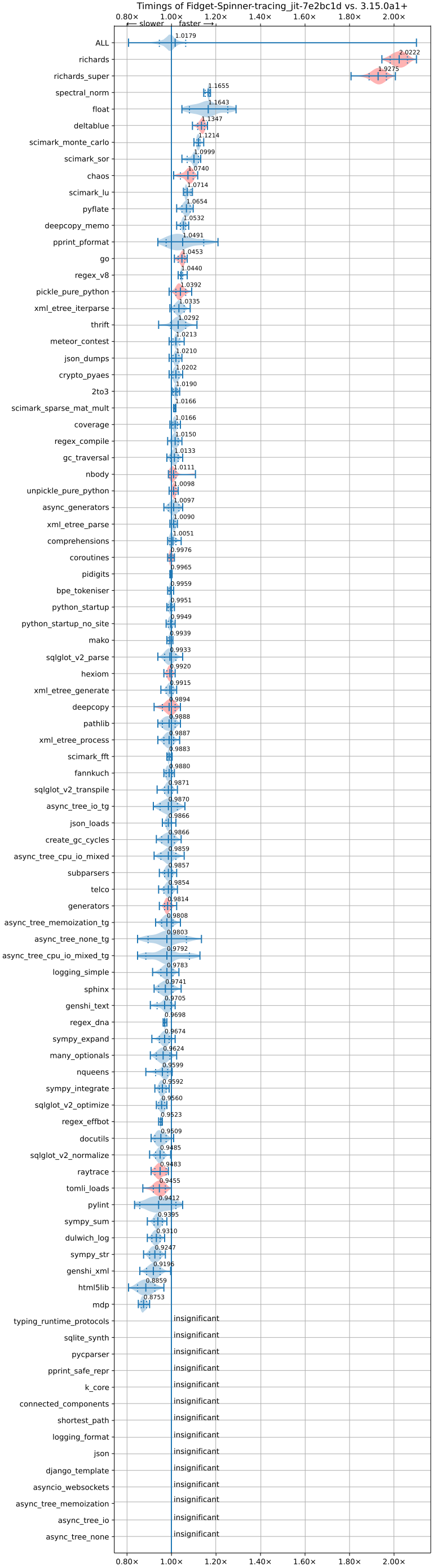
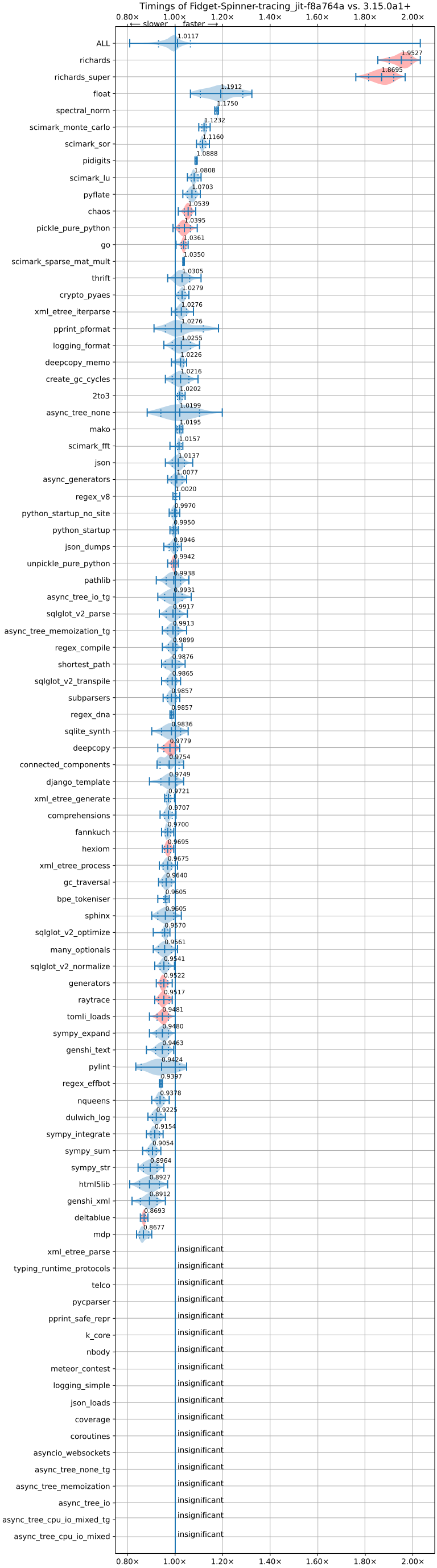
This PR changes the current JIT model from trace projection to trace recording. Benchmarking: better pyperformance (about 1.7% overall) geomean versus current https://raw.githubusercontent.com/facebookexperimental/free-threading-benchmarking/refs/heads/main/results/bm-20251108-3.15.0a1%2B-7e2bc1d-JIT/bm-20251108-vultr-x86_64-Fidget%252dSpinner-tracing_jit-3.15.0a1%2B-7e2bc1d-vs-base.svg, 100% faster Richards on the most improved benchmark versus the current JIT. Slowdown of about 10-15% on the worst benchmark versus the current JIT. **Note: the fastest version isn't the one merged, as it relies on fixing bugs in the specializing interpreter, which is left to another PR**. The speedup in the merged version is about 1.1%. https://raw.githubusercontent.com/facebookexperimental/free-threading-benchmarking/refs/heads/main/results/bm-20251112-3.15.0a1%2B-f8a764a-JIT/bm-20251112-vultr-x86_64-Fidget%252dSpinner-tracing_jit-3.15.0a1%2B-f8a764a-vs-base.svg

Stats: 50% more uops executed, 30% more traces entered the last time we ran them. It also suggests our trace lengths for a real trace recording JIT are too short, as a lot of trace too long aborts https://github.com/facebookexperimental/free-threading-benchmarking/blob/main/results/bm-20251023-3.15.0a1%2B-eb73378-CLANG%2CJIT/bm-20251023-vultr-x86_64-Fidget%252dSpinner-tracing_jit-3.15.0a1%2B-eb73378-pystats-vs-base.md .

This new JIT frontend is already able to record/execute significantly more instructions than the previous JIT frontend. In this PR, we are now able to record through custom dunders, simple object creation, generators, etc. None of these were done by the old JIT frontend. Some custom dunders uops were discovered to be broken as part of this work gh-140277

The optimizer stack space check is disabled, as it's no longer valid to deal with underflow.

Pros:
* Ignoring the generated tracer code as it's automatically created, this is only additional 1k lines of code. The maintenance burden is handled by the DSL and code generator.
* `optimizer.c` is now significantly simpler, as we don't have to do strange things to recover the bytecode from a trace.
* The new JIT frontend is able to handle a lot more control-flow than the old one.
* Tracing is very low overhead. We use the tail calling interpreter/computed goto interpreter to switch between tracing mode and non-tracing mode. I call this mechanism dual dispatch, as we have two dispatch tables dispatching to each other. Specialization is still enabled while tracing.
* Better handling of polymorphism. We leverage the specializing interpreter for this.

Cons:
* (For now) requires tail calling interpreter or computed gotos. This means no Windows JIT for now :(. Not to fret, tail calling is coming soon to Windows though https://github.com/python/cpython/pull/139962

Design:
* After each instruction, the `record_previous_inst` function/label is executed. This does as the name suggests.
* The tracing interpreter lowers bytecode to uops directly so that it can obtain "fresh" values at the point of lowering.
* The tracing version behaves nearly identical to the normal interpreter, in fact it even has specialization! This allows it to run without much of a slowdown when tracing. The actual cost of tracing is only a function call and writes to memory.
* The tracing interpreter uses the specializing interpreter's deopt to naturally form the side exit chains. This allows it to side exit chain effectively, without repeating much code. We force a re-specializing when tracing a deopt.
* The tracing interpreter can even handle goto errors/exceptions, but I chose to disable them for now as it's not tested.
* Because we do not share interpreter dispatch, there is should be no significant slowdown to the original specializing interpreter on tailcall and computed got with JIT disabled. With JIT enabled, there might be a slowdown in the form of the JIT trying to trace.
* Things that could have dynamic instruction pointer effects are guarded on. The guard deopts to a new instruction --- `_DYNAMIC_EXIT`.
1371 lines
47 KiB
C
1371 lines
47 KiB
C
#include "Python.h"
|
|
#include "pycore_optimizer.h"
|
|
#include "pycore_uops.h"
|
|
#include "pycore_uop_ids.h"
|
|
#include "internal/pycore_moduleobject.h"
|
|
|
|
#define op(name, ...) /* NAME is ignored */
|
|
|
|
typedef struct _Py_UOpsAbstractFrame _Py_UOpsAbstractFrame;
|
|
|
|
/* Shortened forms for convenience */
|
|
#define sym_is_not_null _Py_uop_sym_is_not_null
|
|
#define sym_is_const _Py_uop_sym_is_const
|
|
#define sym_get_const _Py_uop_sym_get_const
|
|
#define sym_new_unknown _Py_uop_sym_new_unknown
|
|
#define sym_new_not_null _Py_uop_sym_new_not_null
|
|
#define sym_new_type _Py_uop_sym_new_type
|
|
#define sym_is_null _Py_uop_sym_is_null
|
|
#define sym_new_const _Py_uop_sym_new_const
|
|
#define sym_new_null _Py_uop_sym_new_null
|
|
#define sym_matches_type _Py_uop_sym_matches_type
|
|
#define sym_matches_type_version _Py_uop_sym_matches_type_version
|
|
#define sym_get_type _Py_uop_sym_get_type
|
|
#define sym_has_type _Py_uop_sym_has_type
|
|
#define sym_set_null(SYM) _Py_uop_sym_set_null(ctx, SYM)
|
|
#define sym_set_non_null(SYM) _Py_uop_sym_set_non_null(ctx, SYM)
|
|
#define sym_set_type(SYM, TYPE) _Py_uop_sym_set_type(ctx, SYM, TYPE)
|
|
#define sym_set_type_version(SYM, VERSION) _Py_uop_sym_set_type_version(ctx, SYM, VERSION)
|
|
#define sym_set_const(SYM, CNST) _Py_uop_sym_set_const(ctx, SYM, CNST)
|
|
#define sym_set_compact_int(SYM) _Py_uop_sym_set_compact_int(ctx, SYM)
|
|
#define sym_is_bottom _Py_uop_sym_is_bottom
|
|
#define frame_new _Py_uop_frame_new
|
|
#define frame_pop _Py_uop_frame_pop
|
|
#define sym_new_tuple _Py_uop_sym_new_tuple
|
|
#define sym_tuple_getitem _Py_uop_sym_tuple_getitem
|
|
#define sym_tuple_length _Py_uop_sym_tuple_length
|
|
#define sym_is_immortal _Py_uop_symbol_is_immortal
|
|
#define sym_new_compact_int _Py_uop_sym_new_compact_int
|
|
#define sym_is_compact_int _Py_uop_sym_is_compact_int
|
|
#define sym_new_truthiness _Py_uop_sym_new_truthiness
|
|
|
|
extern int
|
|
optimize_to_bool(
|
|
_PyUOpInstruction *this_instr,
|
|
JitOptContext *ctx,
|
|
JitOptSymbol *value,
|
|
JitOptSymbol **result_ptr);
|
|
|
|
extern void
|
|
eliminate_pop_guard(_PyUOpInstruction *this_instr, bool exit);
|
|
|
|
extern PyCodeObject *get_code(_PyUOpInstruction *op);
|
|
|
|
static int
|
|
dummy_func(void) {
|
|
|
|
PyCodeObject *co;
|
|
int oparg;
|
|
JitOptSymbol *flag;
|
|
JitOptSymbol *left;
|
|
JitOptSymbol *right;
|
|
JitOptSymbol *value;
|
|
JitOptSymbol *res;
|
|
JitOptSymbol *iter;
|
|
JitOptSymbol *top;
|
|
JitOptSymbol *bottom;
|
|
_Py_UOpsAbstractFrame *frame;
|
|
_Py_UOpsAbstractFrame *new_frame;
|
|
JitOptContext *ctx;
|
|
_PyUOpInstruction *this_instr;
|
|
_PyBloomFilter *dependencies;
|
|
int modified;
|
|
int curr_space;
|
|
int max_space;
|
|
_PyUOpInstruction *first_valid_check_stack;
|
|
_PyUOpInstruction *corresponding_check_stack;
|
|
|
|
// BEGIN BYTECODES //
|
|
|
|
op(_LOAD_FAST_CHECK, (-- value)) {
|
|
value = GETLOCAL(oparg);
|
|
// We guarantee this will error - just bail and don't optimize it.
|
|
if (sym_is_null(value)) {
|
|
ctx->done = true;
|
|
}
|
|
}
|
|
|
|
op(_LOAD_FAST, (-- value)) {
|
|
value = GETLOCAL(oparg);
|
|
}
|
|
|
|
op(_LOAD_FAST_BORROW, (-- value)) {
|
|
value = PyJitRef_Borrow(GETLOCAL(oparg));
|
|
}
|
|
|
|
op(_LOAD_FAST_AND_CLEAR, (-- value)) {
|
|
value = GETLOCAL(oparg);
|
|
JitOptRef temp = sym_new_null(ctx);
|
|
GETLOCAL(oparg) = temp;
|
|
}
|
|
|
|
op(_STORE_FAST, (value --)) {
|
|
GETLOCAL(oparg) = value;
|
|
}
|
|
|
|
op(_PUSH_NULL, (-- res)) {
|
|
res = sym_new_null(ctx);
|
|
}
|
|
|
|
op(_GUARD_TOS_INT, (value -- value)) {
|
|
if (sym_is_compact_int(value)) {
|
|
REPLACE_OP(this_instr, _NOP, 0, 0);
|
|
}
|
|
else {
|
|
if (sym_get_type(value) == &PyLong_Type) {
|
|
REPLACE_OP(this_instr, _GUARD_TOS_OVERFLOWED, 0, 0);
|
|
}
|
|
sym_set_compact_int(value);
|
|
}
|
|
}
|
|
|
|
op(_GUARD_NOS_INT, (left, unused -- left, unused)) {
|
|
if (sym_is_compact_int(left)) {
|
|
REPLACE_OP(this_instr, _NOP, 0, 0);
|
|
}
|
|
else {
|
|
if (sym_get_type(left) == &PyLong_Type) {
|
|
REPLACE_OP(this_instr, _GUARD_NOS_OVERFLOWED, 0, 0);
|
|
}
|
|
sym_set_compact_int(left);
|
|
}
|
|
}
|
|
|
|
op(_CHECK_ATTR_CLASS, (type_version/2, owner -- owner)) {
|
|
PyObject *type = (PyObject *)_PyType_LookupByVersion(type_version);
|
|
if (type) {
|
|
if (type == sym_get_const(ctx, owner)) {
|
|
REPLACE_OP(this_instr, _NOP, 0, 0);
|
|
}
|
|
else {
|
|
sym_set_const(owner, type);
|
|
}
|
|
}
|
|
}
|
|
|
|
op(_GUARD_TYPE_VERSION, (type_version/2, owner -- owner)) {
|
|
assert(type_version);
|
|
if (sym_matches_type_version(owner, type_version)) {
|
|
REPLACE_OP(this_instr, _NOP, 0, 0);
|
|
} else {
|
|
// add watcher so that whenever the type changes we invalidate this
|
|
PyTypeObject *type = _PyType_LookupByVersion(type_version);
|
|
// if the type is null, it was not found in the cache (there was a conflict)
|
|
// with the key, in which case we can't trust the version
|
|
if (type) {
|
|
// if the type version was set properly, then add a watcher
|
|
// if it wasn't this means that the type version was previously set to something else
|
|
// and we set the owner to bottom, so we don't need to add a watcher because we must have
|
|
// already added one earlier.
|
|
if (sym_set_type_version(owner, type_version)) {
|
|
PyType_Watch(TYPE_WATCHER_ID, (PyObject *)type);
|
|
_Py_BloomFilter_Add(dependencies, type);
|
|
}
|
|
}
|
|
|
|
}
|
|
}
|
|
|
|
op(_GUARD_TOS_FLOAT, (value -- value)) {
|
|
if (sym_matches_type(value, &PyFloat_Type)) {
|
|
REPLACE_OP(this_instr, _NOP, 0, 0);
|
|
}
|
|
sym_set_type(value, &PyFloat_Type);
|
|
}
|
|
|
|
op(_GUARD_NOS_FLOAT, (left, unused -- left, unused)) {
|
|
if (sym_matches_type(left, &PyFloat_Type)) {
|
|
REPLACE_OP(this_instr, _NOP, 0, 0);
|
|
}
|
|
sym_set_type(left, &PyFloat_Type);
|
|
}
|
|
|
|
op(_BINARY_OP, (lhs, rhs -- res)) {
|
|
REPLACE_OPCODE_IF_EVALUATES_PURE(lhs, rhs);
|
|
bool lhs_int = sym_matches_type(lhs, &PyLong_Type);
|
|
bool rhs_int = sym_matches_type(rhs, &PyLong_Type);
|
|
bool lhs_float = sym_matches_type(lhs, &PyFloat_Type);
|
|
bool rhs_float = sym_matches_type(rhs, &PyFloat_Type);
|
|
if (!((lhs_int || lhs_float) && (rhs_int || rhs_float))) {
|
|
// There's something other than an int or float involved:
|
|
res = sym_new_unknown(ctx);
|
|
}
|
|
else if (oparg == NB_POWER || oparg == NB_INPLACE_POWER) {
|
|
// This one's fun... the *type* of the result depends on the
|
|
// *values* being exponentiated. However, exponents with one
|
|
// constant part are reasonably common, so it's probably worth
|
|
// trying to infer some simple cases:
|
|
// - A: 1 ** 1 -> 1 (int ** int -> int)
|
|
// - B: 1 ** -1 -> 1.0 (int ** int -> float)
|
|
// - C: 1.0 ** 1 -> 1.0 (float ** int -> float)
|
|
// - D: 1 ** 1.0 -> 1.0 (int ** float -> float)
|
|
// - E: -1 ** 0.5 ~> 1j (int ** float -> complex)
|
|
// - F: 1.0 ** 1.0 -> 1.0 (float ** float -> float)
|
|
// - G: -1.0 ** 0.5 ~> 1j (float ** float -> complex)
|
|
if (rhs_float) {
|
|
// Case D, E, F, or G... can't know without the sign of the LHS
|
|
// or whether the RHS is whole, which isn't worth the effort:
|
|
res = sym_new_unknown(ctx);
|
|
}
|
|
else if (lhs_float) {
|
|
// Case C:
|
|
res = sym_new_type(ctx, &PyFloat_Type);
|
|
}
|
|
else if (!sym_is_const(ctx, rhs)) {
|
|
// Case A or B... can't know without the sign of the RHS:
|
|
res = sym_new_unknown(ctx);
|
|
}
|
|
else if (_PyLong_IsNegative((PyLongObject *)sym_get_const(ctx, rhs))) {
|
|
// Case B:
|
|
res = sym_new_type(ctx, &PyFloat_Type);
|
|
}
|
|
else {
|
|
// Case A:
|
|
res = sym_new_type(ctx, &PyLong_Type);
|
|
}
|
|
}
|
|
else if (oparg == NB_TRUE_DIVIDE || oparg == NB_INPLACE_TRUE_DIVIDE) {
|
|
res = sym_new_type(ctx, &PyFloat_Type);
|
|
}
|
|
else if (lhs_int && rhs_int) {
|
|
res = sym_new_type(ctx, &PyLong_Type);
|
|
}
|
|
else {
|
|
res = sym_new_type(ctx, &PyFloat_Type);
|
|
}
|
|
}
|
|
|
|
op(_BINARY_OP_ADD_INT, (left, right -- res)) {
|
|
REPLACE_OPCODE_IF_EVALUATES_PURE(left, right);
|
|
res = sym_new_compact_int(ctx);
|
|
}
|
|
|
|
op(_BINARY_OP_SUBTRACT_INT, (left, right -- res)) {
|
|
REPLACE_OPCODE_IF_EVALUATES_PURE(left, right);
|
|
res = sym_new_compact_int(ctx);
|
|
}
|
|
|
|
op(_BINARY_OP_MULTIPLY_INT, (left, right -- res)) {
|
|
REPLACE_OPCODE_IF_EVALUATES_PURE(left, right);
|
|
res = sym_new_compact_int(ctx);
|
|
}
|
|
|
|
op(_BINARY_OP_ADD_FLOAT, (left, right -- res)) {
|
|
REPLACE_OPCODE_IF_EVALUATES_PURE(left, right);
|
|
res = sym_new_type(ctx, &PyFloat_Type);
|
|
// TODO (gh-134584): Refactor this to use another uop
|
|
if (PyJitRef_IsBorrowed(left) && PyJitRef_IsBorrowed(right)) {
|
|
REPLACE_OP(this_instr, op_without_decref_inputs[opcode], oparg, 0);
|
|
}
|
|
}
|
|
|
|
op(_BINARY_OP_SUBTRACT_FLOAT, (left, right -- res)) {
|
|
REPLACE_OPCODE_IF_EVALUATES_PURE(left, right);
|
|
res = sym_new_type(ctx, &PyFloat_Type);
|
|
// TODO (gh-134584): Refactor this to use another uop
|
|
if (PyJitRef_IsBorrowed(left) && PyJitRef_IsBorrowed(right)) {
|
|
REPLACE_OP(this_instr, op_without_decref_inputs[opcode], oparg, 0);
|
|
}
|
|
}
|
|
|
|
op(_BINARY_OP_MULTIPLY_FLOAT, (left, right -- res)) {
|
|
REPLACE_OPCODE_IF_EVALUATES_PURE(left, right);
|
|
res = sym_new_type(ctx, &PyFloat_Type);
|
|
// TODO (gh-134584): Refactor this to use another uop
|
|
if (PyJitRef_IsBorrowed(left) && PyJitRef_IsBorrowed(right)) {
|
|
REPLACE_OP(this_instr, op_without_decref_inputs[opcode], oparg, 0);
|
|
}
|
|
}
|
|
|
|
op(_BINARY_OP_ADD_UNICODE, (left, right -- res)) {
|
|
REPLACE_OPCODE_IF_EVALUATES_PURE(left, right);
|
|
res = sym_new_type(ctx, &PyUnicode_Type);
|
|
}
|
|
|
|
op(_BINARY_OP_INPLACE_ADD_UNICODE, (left, right -- )) {
|
|
JitOptRef res;
|
|
if (sym_is_const(ctx, left) && sym_is_const(ctx, right)) {
|
|
assert(PyUnicode_CheckExact(sym_get_const(ctx, left)));
|
|
assert(PyUnicode_CheckExact(sym_get_const(ctx, right)));
|
|
PyObject *temp = PyUnicode_Concat(sym_get_const(ctx, left), sym_get_const(ctx, right));
|
|
if (temp == NULL) {
|
|
goto error;
|
|
}
|
|
res = sym_new_const(ctx, temp);
|
|
Py_DECREF(temp);
|
|
}
|
|
else {
|
|
res = sym_new_type(ctx, &PyUnicode_Type);
|
|
}
|
|
// _STORE_FAST:
|
|
GETLOCAL(this_instr->operand0) = res;
|
|
}
|
|
|
|
op(_BINARY_OP_SUBSCR_INIT_CALL, (container, sub, getitem -- new_frame)) {
|
|
new_frame = PyJitRef_NULL;
|
|
ctx->done = true;
|
|
}
|
|
|
|
op(_BINARY_OP_SUBSCR_STR_INT, (str_st, sub_st -- res)) {
|
|
res = sym_new_type(ctx, &PyUnicode_Type);
|
|
}
|
|
|
|
op(_BINARY_OP_SUBSCR_TUPLE_INT, (tuple_st, sub_st -- res)) {
|
|
assert(sym_matches_type(tuple_st, &PyTuple_Type));
|
|
if (sym_is_const(ctx, sub_st)) {
|
|
assert(PyLong_CheckExact(sym_get_const(ctx, sub_st)));
|
|
long index = PyLong_AsLong(sym_get_const(ctx, sub_st));
|
|
assert(index >= 0);
|
|
Py_ssize_t tuple_length = sym_tuple_length(tuple_st);
|
|
if (tuple_length == -1) {
|
|
// Unknown length
|
|
res = sym_new_not_null(ctx);
|
|
}
|
|
else {
|
|
assert(index < tuple_length);
|
|
res = sym_tuple_getitem(ctx, tuple_st, index);
|
|
}
|
|
}
|
|
else {
|
|
res = sym_new_not_null(ctx);
|
|
}
|
|
}
|
|
|
|
op(_TO_BOOL, (value -- res)) {
|
|
int already_bool = optimize_to_bool(this_instr, ctx, value, &res);
|
|
if (!already_bool) {
|
|
res = sym_new_truthiness(ctx, value, true);
|
|
}
|
|
}
|
|
|
|
op(_TO_BOOL_BOOL, (value -- value)) {
|
|
int already_bool = optimize_to_bool(this_instr, ctx, value, &value);
|
|
if (!already_bool) {
|
|
sym_set_type(value, &PyBool_Type);
|
|
}
|
|
}
|
|
|
|
op(_TO_BOOL_INT, (value -- res)) {
|
|
int already_bool = optimize_to_bool(this_instr, ctx, value, &res);
|
|
if (!already_bool) {
|
|
sym_set_type(value, &PyLong_Type);
|
|
res = sym_new_truthiness(ctx, value, true);
|
|
}
|
|
}
|
|
|
|
op(_TO_BOOL_LIST, (value -- res)) {
|
|
int already_bool = optimize_to_bool(this_instr, ctx, value, &res);
|
|
if (!already_bool) {
|
|
res = sym_new_type(ctx, &PyBool_Type);
|
|
}
|
|
}
|
|
|
|
op(_TO_BOOL_NONE, (value -- res)) {
|
|
int already_bool = optimize_to_bool(this_instr, ctx, value, &res);
|
|
if (!already_bool) {
|
|
sym_set_const(value, Py_None);
|
|
res = sym_new_const(ctx, Py_False);
|
|
}
|
|
}
|
|
|
|
op(_GUARD_NOS_UNICODE, (nos, unused -- nos, unused)) {
|
|
if (sym_matches_type(nos, &PyUnicode_Type)) {
|
|
REPLACE_OP(this_instr, _NOP, 0, 0);
|
|
}
|
|
sym_set_type(nos, &PyUnicode_Type);
|
|
}
|
|
|
|
op(_GUARD_TOS_UNICODE, (value -- value)) {
|
|
if (sym_matches_type(value, &PyUnicode_Type)) {
|
|
REPLACE_OP(this_instr, _NOP, 0, 0);
|
|
}
|
|
sym_set_type(value, &PyUnicode_Type);
|
|
}
|
|
|
|
op(_TO_BOOL_STR, (value -- res)) {
|
|
int already_bool = optimize_to_bool(this_instr, ctx, value, &res);
|
|
if (!already_bool) {
|
|
res = sym_new_truthiness(ctx, value, true);
|
|
}
|
|
}
|
|
|
|
op(_UNARY_NOT, (value -- res)) {
|
|
REPLACE_OPCODE_IF_EVALUATES_PURE(value);
|
|
sym_set_type(value, &PyBool_Type);
|
|
res = sym_new_truthiness(ctx, value, false);
|
|
}
|
|
|
|
op(_UNARY_NEGATIVE, (value -- res)) {
|
|
REPLACE_OPCODE_IF_EVALUATES_PURE(value);
|
|
if (sym_is_compact_int(value)) {
|
|
res = sym_new_compact_int(ctx);
|
|
}
|
|
else {
|
|
PyTypeObject *type = sym_get_type(value);
|
|
if (type == &PyLong_Type || type == &PyFloat_Type) {
|
|
res = sym_new_type(ctx, type);
|
|
}
|
|
else {
|
|
res = sym_new_not_null(ctx);
|
|
}
|
|
}
|
|
}
|
|
|
|
op(_UNARY_INVERT, (value -- res)) {
|
|
// Required to avoid a warning due to the deprecation of bitwise inversion of bools
|
|
if (!sym_matches_type(value, &PyBool_Type)) {
|
|
REPLACE_OPCODE_IF_EVALUATES_PURE(value);
|
|
}
|
|
if (sym_matches_type(value, &PyLong_Type)) {
|
|
res = sym_new_type(ctx, &PyLong_Type);
|
|
}
|
|
else {
|
|
res = sym_new_not_null(ctx);
|
|
}
|
|
}
|
|
|
|
op(_COMPARE_OP, (left, right -- res)) {
|
|
// Comparison between bytes and str or int is not impacted by this optimization as bytes
|
|
// is not a safe type (due to its ability to raise a warning during comparisons).
|
|
REPLACE_OPCODE_IF_EVALUATES_PURE(left, right);
|
|
if (oparg & 16) {
|
|
res = sym_new_type(ctx, &PyBool_Type);
|
|
}
|
|
else {
|
|
res = _Py_uop_sym_new_not_null(ctx);
|
|
}
|
|
}
|
|
|
|
op(_COMPARE_OP_INT, (left, right -- res)) {
|
|
REPLACE_OPCODE_IF_EVALUATES_PURE(left, right);
|
|
res = sym_new_type(ctx, &PyBool_Type);
|
|
}
|
|
|
|
op(_COMPARE_OP_FLOAT, (left, right -- res)) {
|
|
REPLACE_OPCODE_IF_EVALUATES_PURE(left, right);
|
|
res = sym_new_type(ctx, &PyBool_Type);
|
|
}
|
|
|
|
op(_COMPARE_OP_STR, (left, right -- res)) {
|
|
REPLACE_OPCODE_IF_EVALUATES_PURE(left, right);
|
|
res = sym_new_type(ctx, &PyBool_Type);
|
|
}
|
|
|
|
op(_IS_OP, (left, right -- b)) {
|
|
b = sym_new_type(ctx, &PyBool_Type);
|
|
}
|
|
|
|
op(_CONTAINS_OP, (left, right -- b)) {
|
|
REPLACE_OPCODE_IF_EVALUATES_PURE(left, right);
|
|
b = sym_new_type(ctx, &PyBool_Type);
|
|
}
|
|
|
|
op(_CONTAINS_OP_SET, (left, right -- b)) {
|
|
b = sym_new_type(ctx, &PyBool_Type);
|
|
}
|
|
|
|
op(_CONTAINS_OP_DICT, (left, right -- b)) {
|
|
b = sym_new_type(ctx, &PyBool_Type);
|
|
}
|
|
|
|
op(_LOAD_CONST, (-- value)) {
|
|
PyCodeObject *co = get_current_code_object(ctx);
|
|
PyObject *val = PyTuple_GET_ITEM(co->co_consts, oparg);
|
|
REPLACE_OP(this_instr, _LOAD_CONST_INLINE_BORROW, 0, (uintptr_t)val);
|
|
value = PyJitRef_Borrow(sym_new_const(ctx, val));
|
|
}
|
|
|
|
op(_LOAD_SMALL_INT, (-- value)) {
|
|
PyObject *val = PyLong_FromLong(oparg);
|
|
assert(val);
|
|
assert(_Py_IsImmortal(val));
|
|
REPLACE_OP(this_instr, _LOAD_CONST_INLINE_BORROW, 0, (uintptr_t)val);
|
|
value = PyJitRef_Borrow(sym_new_const(ctx, val));
|
|
}
|
|
|
|
op(_LOAD_CONST_INLINE, (ptr/4 -- value)) {
|
|
value = sym_new_const(ctx, ptr);
|
|
}
|
|
|
|
op(_LOAD_CONST_INLINE_BORROW, (ptr/4 -- value)) {
|
|
value = PyJitRef_Borrow(sym_new_const(ctx, ptr));
|
|
}
|
|
|
|
op(_POP_TOP_LOAD_CONST_INLINE, (ptr/4, pop -- value)) {
|
|
value = sym_new_const(ctx, ptr);
|
|
}
|
|
|
|
op(_POP_TOP_LOAD_CONST_INLINE_BORROW, (ptr/4, pop -- value)) {
|
|
value = PyJitRef_Borrow(sym_new_const(ctx, ptr));
|
|
}
|
|
|
|
op(_POP_CALL_LOAD_CONST_INLINE_BORROW, (ptr/4, unused, unused -- value)) {
|
|
value = PyJitRef_Borrow(sym_new_const(ctx, ptr));
|
|
}
|
|
|
|
op(_POP_CALL_ONE_LOAD_CONST_INLINE_BORROW, (ptr/4, unused, unused, unused -- value)) {
|
|
value = PyJitRef_Borrow(sym_new_const(ctx, ptr));
|
|
}
|
|
|
|
op(_POP_CALL_TWO_LOAD_CONST_INLINE_BORROW, (ptr/4, unused, unused, unused, unused -- value)) {
|
|
value = PyJitRef_Borrow(sym_new_const(ctx, ptr));
|
|
}
|
|
|
|
op(_POP_TOP, (value -- )) {
|
|
PyTypeObject *typ = sym_get_type(value);
|
|
if (PyJitRef_IsBorrowed(value) ||
|
|
sym_is_immortal(PyJitRef_Unwrap(value)) ||
|
|
sym_is_null(value)) {
|
|
REPLACE_OP(this_instr, _POP_TOP_NOP, 0, 0);
|
|
}
|
|
else if (typ == &PyLong_Type) {
|
|
REPLACE_OP(this_instr, _POP_TOP_INT, 0, 0);
|
|
}
|
|
else if (typ == &PyFloat_Type) {
|
|
REPLACE_OP(this_instr, _POP_TOP_FLOAT, 0, 0);
|
|
}
|
|
else if (typ == &PyUnicode_Type) {
|
|
REPLACE_OP(this_instr, _POP_TOP_UNICODE, 0, 0);
|
|
}
|
|
}
|
|
|
|
op(_COPY, (bottom, unused[oparg-1] -- bottom, unused[oparg-1], top)) {
|
|
assert(oparg > 0);
|
|
top = bottom;
|
|
}
|
|
|
|
op(_SWAP, (bottom, unused[oparg-2], top -- bottom, unused[oparg-2], top)) {
|
|
JitOptRef temp = bottom;
|
|
bottom = top;
|
|
top = temp;
|
|
assert(oparg >= 2);
|
|
}
|
|
|
|
op(_LOAD_ATTR_INSTANCE_VALUE, (offset/1, owner -- attr)) {
|
|
attr = sym_new_not_null(ctx);
|
|
(void)offset;
|
|
}
|
|
|
|
op(_LOAD_ATTR_MODULE, (dict_version/2, index/1, owner -- attr)) {
|
|
(void)dict_version;
|
|
(void)index;
|
|
attr = PyJitRef_NULL;
|
|
if (sym_is_const(ctx, owner)) {
|
|
PyModuleObject *mod = (PyModuleObject *)sym_get_const(ctx, owner);
|
|
if (PyModule_CheckExact(mod)) {
|
|
PyObject *dict = mod->md_dict;
|
|
uint64_t watched_mutations = get_mutations(dict);
|
|
if (watched_mutations < _Py_MAX_ALLOWED_GLOBALS_MODIFICATIONS) {
|
|
PyDict_Watch(GLOBALS_WATCHER_ID, dict);
|
|
_Py_BloomFilter_Add(dependencies, dict);
|
|
PyObject *res = convert_global_to_const(this_instr, dict, true);
|
|
if (res == NULL) {
|
|
attr = sym_new_not_null(ctx);
|
|
}
|
|
else {
|
|
attr = sym_new_const(ctx, res);
|
|
}
|
|
|
|
}
|
|
}
|
|
}
|
|
if (PyJitRef_IsNull(attr)) {
|
|
/* No conversion made. We don't know what `attr` is. */
|
|
attr = sym_new_not_null(ctx);
|
|
}
|
|
}
|
|
|
|
op (_PUSH_NULL_CONDITIONAL, ( -- null[oparg & 1])) {
|
|
if (oparg & 1) {
|
|
REPLACE_OP(this_instr, _PUSH_NULL, 0, 0);
|
|
null[0] = sym_new_null(ctx);
|
|
}
|
|
else {
|
|
REPLACE_OP(this_instr, _NOP, 0, 0);
|
|
}
|
|
}
|
|
|
|
op(_LOAD_ATTR, (owner -- attr[1], self_or_null[oparg&1])) {
|
|
(void)owner;
|
|
*attr = sym_new_not_null(ctx);
|
|
if (oparg & 1) {
|
|
self_or_null[0] = sym_new_unknown(ctx);
|
|
}
|
|
}
|
|
|
|
op(_LOAD_ATTR_WITH_HINT, (hint/1, owner -- attr)) {
|
|
attr = sym_new_not_null(ctx);
|
|
(void)hint;
|
|
}
|
|
|
|
op(_LOAD_ATTR_SLOT, (index/1, owner -- attr)) {
|
|
attr = sym_new_not_null(ctx);
|
|
(void)index;
|
|
}
|
|
|
|
op(_LOAD_ATTR_CLASS, (descr/4, owner -- attr)) {
|
|
(void)descr;
|
|
PyTypeObject *type = (PyTypeObject *)sym_get_const(ctx, owner);
|
|
PyObject *name = get_co_name(ctx, oparg >> 1);
|
|
attr = lookup_attr(ctx, this_instr, type, name,
|
|
_POP_TOP_LOAD_CONST_INLINE_BORROW,
|
|
_POP_TOP_LOAD_CONST_INLINE);
|
|
}
|
|
|
|
op(_LOAD_ATTR_NONDESCRIPTOR_WITH_VALUES, (descr/4, owner -- attr)) {
|
|
(void)descr;
|
|
PyTypeObject *type = sym_get_type(owner);
|
|
PyObject *name = get_co_name(ctx, oparg >> 1);
|
|
attr = lookup_attr(ctx, this_instr, type, name,
|
|
_POP_TOP_LOAD_CONST_INLINE_BORROW,
|
|
_POP_TOP_LOAD_CONST_INLINE);
|
|
}
|
|
|
|
op(_LOAD_ATTR_NONDESCRIPTOR_NO_DICT, (descr/4, owner -- attr)) {
|
|
(void)descr;
|
|
PyTypeObject *type = sym_get_type(owner);
|
|
PyObject *name = get_co_name(ctx, oparg >> 1);
|
|
attr = lookup_attr(ctx, this_instr, type, name,
|
|
_POP_TOP_LOAD_CONST_INLINE_BORROW,
|
|
_POP_TOP_LOAD_CONST_INLINE);
|
|
}
|
|
|
|
op(_LOAD_ATTR_METHOD_WITH_VALUES, (descr/4, owner -- attr, self)) {
|
|
(void)descr;
|
|
PyTypeObject *type = sym_get_type(owner);
|
|
PyObject *name = get_co_name(ctx, oparg >> 1);
|
|
attr = lookup_attr(ctx, this_instr, type, name,
|
|
_LOAD_CONST_UNDER_INLINE_BORROW,
|
|
_LOAD_CONST_UNDER_INLINE);
|
|
self = owner;
|
|
}
|
|
|
|
op(_LOAD_ATTR_METHOD_NO_DICT, (descr/4, owner -- attr, self)) {
|
|
(void)descr;
|
|
PyTypeObject *type = sym_get_type(owner);
|
|
PyObject *name = get_co_name(ctx, oparg >> 1);
|
|
attr = lookup_attr(ctx, this_instr, type, name,
|
|
_LOAD_CONST_UNDER_INLINE_BORROW,
|
|
_LOAD_CONST_UNDER_INLINE);
|
|
self = owner;
|
|
}
|
|
|
|
op(_LOAD_ATTR_METHOD_LAZY_DICT, (descr/4, owner -- attr, self)) {
|
|
(void)descr;
|
|
PyTypeObject *type = sym_get_type(owner);
|
|
PyObject *name = get_co_name(ctx, oparg >> 1);
|
|
attr = lookup_attr(ctx, this_instr, type, name,
|
|
_LOAD_CONST_UNDER_INLINE_BORROW,
|
|
_LOAD_CONST_UNDER_INLINE);
|
|
self = owner;
|
|
}
|
|
|
|
op(_LOAD_ATTR_PROPERTY_FRAME, (fget/4, owner -- new_frame)) {
|
|
(void)fget;
|
|
new_frame = PyJitRef_NULL;
|
|
ctx->done = true;
|
|
}
|
|
|
|
op(_INIT_CALL_BOUND_METHOD_EXACT_ARGS, (callable, self_or_null, unused[oparg] -- callable, self_or_null, unused[oparg])) {
|
|
callable = sym_new_not_null(ctx);
|
|
self_or_null = sym_new_not_null(ctx);
|
|
}
|
|
|
|
op(_CHECK_FUNCTION_VERSION, (func_version/2, callable, self_or_null, unused[oparg] -- callable, self_or_null, unused[oparg])) {
|
|
if (sym_is_const(ctx, callable) && sym_matches_type(callable, &PyFunction_Type)) {
|
|
assert(PyFunction_Check(sym_get_const(ctx, callable)));
|
|
REPLACE_OP(this_instr, _CHECK_FUNCTION_VERSION_INLINE, 0, func_version);
|
|
this_instr->operand1 = (uintptr_t)sym_get_const(ctx, callable);
|
|
}
|
|
sym_set_type(callable, &PyFunction_Type);
|
|
}
|
|
|
|
op(_CHECK_METHOD_VERSION, (func_version/2, callable, null, unused[oparg] -- callable, null, unused[oparg])) {
|
|
if (sym_is_const(ctx, callable) && sym_matches_type(callable, &PyMethod_Type)) {
|
|
PyMethodObject *method = (PyMethodObject *)sym_get_const(ctx, callable);
|
|
assert(PyMethod_Check(method));
|
|
REPLACE_OP(this_instr, _CHECK_FUNCTION_VERSION_INLINE, 0, func_version);
|
|
this_instr->operand1 = (uintptr_t)method->im_func;
|
|
}
|
|
sym_set_type(callable, &PyMethod_Type);
|
|
}
|
|
|
|
op(_CHECK_FUNCTION_EXACT_ARGS, (callable, self_or_null, unused[oparg] -- callable, self_or_null, unused[oparg])) {
|
|
assert(sym_matches_type(callable, &PyFunction_Type));
|
|
if (sym_is_const(ctx, callable)) {
|
|
if (sym_is_null(self_or_null) || sym_is_not_null(self_or_null)) {
|
|
PyFunctionObject *func = (PyFunctionObject *)sym_get_const(ctx, callable);
|
|
PyCodeObject *co = (PyCodeObject *)func->func_code;
|
|
if (co->co_argcount == oparg + !sym_is_null(self_or_null)) {
|
|
REPLACE_OP(this_instr, _NOP, 0 ,0);
|
|
}
|
|
}
|
|
}
|
|
}
|
|
|
|
op(_CHECK_CALL_BOUND_METHOD_EXACT_ARGS, (callable, null, unused[oparg] -- callable, null, unused[oparg])) {
|
|
sym_set_null(null);
|
|
sym_set_type(callable, &PyMethod_Type);
|
|
}
|
|
|
|
op(_INIT_CALL_PY_EXACT_ARGS, (callable, self_or_null, args[oparg] -- new_frame)) {
|
|
int argcount = oparg;
|
|
|
|
assert((this_instr + 2)->opcode == _PUSH_FRAME);
|
|
PyCodeObject *co = get_code_with_logging((this_instr + 2));
|
|
if (co == NULL) {
|
|
ctx->done = true;
|
|
break;
|
|
}
|
|
|
|
assert(!PyJitRef_IsNull(self_or_null));
|
|
assert(args != NULL);
|
|
if (sym_is_not_null(self_or_null)) {
|
|
// Bound method fiddling, same as _INIT_CALL_PY_EXACT_ARGS in VM
|
|
args--;
|
|
argcount++;
|
|
}
|
|
|
|
if (sym_is_null(self_or_null) || sym_is_not_null(self_or_null)) {
|
|
new_frame = PyJitRef_Wrap((JitOptSymbol *)frame_new(ctx, co, 0, args, argcount));
|
|
} else {
|
|
new_frame = PyJitRef_Wrap((JitOptSymbol *)frame_new(ctx, co, 0, NULL, 0));
|
|
}
|
|
}
|
|
|
|
op(_MAYBE_EXPAND_METHOD, (callable, self_or_null, args[oparg] -- callable, self_or_null, args[oparg])) {
|
|
(void)args;
|
|
callable = sym_new_not_null(ctx);
|
|
self_or_null = sym_new_not_null(ctx);
|
|
}
|
|
|
|
op(_PY_FRAME_GENERAL, (callable, self_or_null, args[oparg] -- new_frame)) {
|
|
assert((this_instr + 2)->opcode == _PUSH_FRAME);
|
|
PyCodeObject *co = get_code_with_logging((this_instr + 2));
|
|
if (co == NULL) {
|
|
ctx->done = true;
|
|
break;
|
|
}
|
|
|
|
new_frame = PyJitRef_Wrap((JitOptSymbol *)frame_new(ctx, co, 0, NULL, 0));
|
|
}
|
|
|
|
op(_PY_FRAME_KW, (callable, self_or_null, args[oparg], kwnames -- new_frame)) {
|
|
assert((this_instr + 2)->opcode == _PUSH_FRAME);
|
|
PyCodeObject *co = get_code_with_logging((this_instr + 2));
|
|
if (co == NULL) {
|
|
ctx->done = true;
|
|
break;
|
|
}
|
|
|
|
new_frame = PyJitRef_Wrap((JitOptSymbol *)frame_new(ctx, co, 0, NULL, 0));
|
|
}
|
|
|
|
op(_CHECK_AND_ALLOCATE_OBJECT, (type_version/2, callable, self_or_null, args[oparg] -- callable, self_or_null, args[oparg])) {
|
|
(void)type_version;
|
|
(void)args;
|
|
callable = sym_new_not_null(ctx);
|
|
self_or_null = sym_new_not_null(ctx);
|
|
}
|
|
|
|
op(_CREATE_INIT_FRAME, (init, self, args[oparg] -- init_frame)) {
|
|
ctx->frame->stack_pointer = stack_pointer - oparg - 2;
|
|
_Py_UOpsAbstractFrame *shim = frame_new(ctx, (PyCodeObject *)&_Py_InitCleanup, 0, NULL, 0);
|
|
if (shim == NULL) {
|
|
break;
|
|
}
|
|
/* Push self onto stack of shim */
|
|
shim->stack[0] = self;
|
|
shim->stack_pointer++;
|
|
assert((int)(shim->stack_pointer - shim->stack) == 1);
|
|
ctx->frame = shim;
|
|
ctx->curr_frame_depth++;
|
|
assert((this_instr + 1)->opcode == _PUSH_FRAME);
|
|
PyCodeObject *co = get_code_with_logging((this_instr + 1));
|
|
init_frame = PyJitRef_Wrap((JitOptSymbol *)frame_new(ctx, co, 0, args-1, oparg+1));
|
|
}
|
|
|
|
op(_RETURN_VALUE, (retval -- res)) {
|
|
// Mimics PyStackRef_MakeHeapSafe in the interpreter.
|
|
JitOptRef temp = PyJitRef_StripReferenceInfo(retval);
|
|
DEAD(retval);
|
|
SAVE_STACK();
|
|
ctx->frame->stack_pointer = stack_pointer;
|
|
PyCodeObject *returning_code = get_code_with_logging(this_instr);
|
|
if (returning_code == NULL) {
|
|
ctx->done = true;
|
|
break;
|
|
}
|
|
int returning_stacklevel = this_instr->operand1;
|
|
if (ctx->curr_frame_depth >= 2) {
|
|
PyCodeObject *expected_code = ctx->frames[ctx->curr_frame_depth - 2].code;
|
|
if (expected_code == returning_code) {
|
|
assert((this_instr + 1)->opcode == _GUARD_IP_RETURN_VALUE);
|
|
REPLACE_OP((this_instr + 1), _NOP, 0, 0);
|
|
}
|
|
}
|
|
if (frame_pop(ctx, returning_code, returning_stacklevel)) {
|
|
break;
|
|
}
|
|
stack_pointer = ctx->frame->stack_pointer;
|
|
|
|
RELOAD_STACK();
|
|
res = temp;
|
|
}
|
|
|
|
op(_RETURN_GENERATOR, ( -- res)) {
|
|
SYNC_SP();
|
|
ctx->frame->stack_pointer = stack_pointer;
|
|
PyCodeObject *returning_code = get_code_with_logging(this_instr);
|
|
if (returning_code == NULL) {
|
|
ctx->done = true;
|
|
break;
|
|
}
|
|
_Py_BloomFilter_Add(dependencies, returning_code);
|
|
int returning_stacklevel = this_instr->operand1;
|
|
if (frame_pop(ctx, returning_code, returning_stacklevel)) {
|
|
break;
|
|
}
|
|
stack_pointer = ctx->frame->stack_pointer;
|
|
res = sym_new_unknown(ctx);
|
|
}
|
|
|
|
op(_YIELD_VALUE, (retval -- value)) {
|
|
// Mimics PyStackRef_MakeHeapSafe in the interpreter.
|
|
JitOptRef temp = PyJitRef_StripReferenceInfo(retval);
|
|
DEAD(retval);
|
|
SAVE_STACK();
|
|
ctx->frame->stack_pointer = stack_pointer;
|
|
PyCodeObject *returning_code = get_code_with_logging(this_instr);
|
|
if (returning_code == NULL) {
|
|
ctx->done = true;
|
|
break;
|
|
}
|
|
_Py_BloomFilter_Add(dependencies, returning_code);
|
|
int returning_stacklevel = this_instr->operand1;
|
|
if (frame_pop(ctx, returning_code, returning_stacklevel)) {
|
|
break;
|
|
}
|
|
stack_pointer = ctx->frame->stack_pointer;
|
|
RELOAD_STACK();
|
|
value = temp;
|
|
}
|
|
|
|
op(_GET_ITER, (iterable -- iter, index_or_null)) {
|
|
if (sym_matches_type(iterable, &PyTuple_Type) || sym_matches_type(iterable, &PyList_Type)) {
|
|
iter = iterable;
|
|
index_or_null = sym_new_not_null(ctx);
|
|
}
|
|
else {
|
|
iter = sym_new_not_null(ctx);
|
|
index_or_null = sym_new_unknown(ctx);
|
|
}
|
|
}
|
|
|
|
op(_FOR_ITER_GEN_FRAME, (unused, unused -- unused, unused, gen_frame)) {
|
|
gen_frame = PyJitRef_NULL;
|
|
/* We are about to hit the end of the trace */
|
|
ctx->done = true;
|
|
}
|
|
|
|
op(_SEND_GEN_FRAME, (unused, unused -- unused, gen_frame)) {
|
|
gen_frame = PyJitRef_NULL;
|
|
// We are about to hit the end of the trace:
|
|
ctx->done = true;
|
|
}
|
|
|
|
op(_CHECK_STACK_SPACE, (unused, unused, unused[oparg] -- unused, unused, unused[oparg])) {
|
|
}
|
|
|
|
op (_CHECK_STACK_SPACE_OPERAND, (framesize/2 -- )) {
|
|
(void)framesize;
|
|
/* We should never see _CHECK_STACK_SPACE_OPERANDs.
|
|
* They are only created at the end of this pass. */
|
|
Py_UNREACHABLE();
|
|
}
|
|
|
|
op(_PUSH_FRAME, (new_frame -- )) {
|
|
SYNC_SP();
|
|
if (!CURRENT_FRAME_IS_INIT_SHIM()) {
|
|
ctx->frame->stack_pointer = stack_pointer;
|
|
}
|
|
ctx->frame = (_Py_UOpsAbstractFrame *)PyJitRef_Unwrap(new_frame);
|
|
ctx->curr_frame_depth++;
|
|
stack_pointer = ctx->frame->stack_pointer;
|
|
uint64_t operand = this_instr->operand0;
|
|
if (operand == 0) {
|
|
ctx->done = true;
|
|
break;
|
|
}
|
|
if (!(operand & 1)) {
|
|
PyFunctionObject *func = (PyFunctionObject *)operand;
|
|
// No need to re-add to dependencies here. Already
|
|
// handled by the tracer.
|
|
ctx->frame->func = func;
|
|
}
|
|
// Fixed calls don't need IP guards.
|
|
if ((this_instr-1)->opcode == _SAVE_RETURN_OFFSET ||
|
|
(this_instr-1)->opcode == _CREATE_INIT_FRAME) {
|
|
assert((this_instr+1)->opcode == _GUARD_IP__PUSH_FRAME);
|
|
REPLACE_OP(this_instr+1, _NOP, 0, 0);
|
|
}
|
|
}
|
|
|
|
op(_UNPACK_SEQUENCE, (seq -- values[oparg], top[0])) {
|
|
(void)top;
|
|
/* This has to be done manually */
|
|
for (int i = 0; i < oparg; i++) {
|
|
values[i] = sym_new_unknown(ctx);
|
|
}
|
|
}
|
|
|
|
op(_UNPACK_EX, (seq -- values[oparg & 0xFF], unused, unused[oparg >> 8], top[0])) {
|
|
(void)top;
|
|
/* This has to be done manually */
|
|
int totalargs = (oparg & 0xFF) + (oparg >> 8) + 1;
|
|
for (int i = 0; i < totalargs; i++) {
|
|
values[i] = sym_new_unknown(ctx);
|
|
}
|
|
}
|
|
|
|
op(_ITER_CHECK_TUPLE, (iter, null_or_index -- iter, null_or_index)) {
|
|
if (sym_matches_type(iter, &PyTuple_Type)) {
|
|
REPLACE_OP(this_instr, _NOP, 0, 0);
|
|
}
|
|
sym_set_type(iter, &PyTuple_Type);
|
|
}
|
|
|
|
op(_ITER_NEXT_RANGE, (iter, null_or_index -- iter, null_or_index, next)) {
|
|
next = sym_new_type(ctx, &PyLong_Type);
|
|
}
|
|
|
|
op(_CALL_TYPE_1, (unused, unused, arg -- res)) {
|
|
PyObject* type = (PyObject *)sym_get_type(arg);
|
|
if (type) {
|
|
res = sym_new_const(ctx, type);
|
|
REPLACE_OP(this_instr, _POP_CALL_ONE_LOAD_CONST_INLINE_BORROW, 0,
|
|
(uintptr_t)type);
|
|
}
|
|
else {
|
|
res = sym_new_not_null(ctx);
|
|
}
|
|
}
|
|
|
|
op(_CALL_STR_1, (unused, unused, arg -- res)) {
|
|
if (sym_matches_type(arg, &PyUnicode_Type)) {
|
|
// e.g. str('foo') or str(foo) where foo is known to be a string
|
|
// Note: we must strip the reference information because it goes
|
|
// through str() which strips the reference information from it.
|
|
res = PyJitRef_StripReferenceInfo(arg);
|
|
}
|
|
else {
|
|
res = sym_new_type(ctx, &PyUnicode_Type);
|
|
}
|
|
}
|
|
|
|
op(_CALL_ISINSTANCE, (unused, unused, instance, cls -- res)) {
|
|
// the result is always a bool, but sometimes we can
|
|
// narrow it down to True or False
|
|
res = sym_new_type(ctx, &PyBool_Type);
|
|
PyTypeObject *inst_type = sym_get_type(instance);
|
|
PyTypeObject *cls_o = (PyTypeObject *)sym_get_const(ctx, cls);
|
|
if (inst_type && cls_o && sym_matches_type(cls, &PyType_Type)) {
|
|
// isinstance(inst, cls) where both inst and cls have
|
|
// known types, meaning we can deduce either True or False
|
|
|
|
// The below check is equivalent to PyObject_TypeCheck(inst, cls)
|
|
PyObject *out = Py_False;
|
|
if (inst_type == cls_o || PyType_IsSubtype(inst_type, cls_o)) {
|
|
out = Py_True;
|
|
}
|
|
sym_set_const(res, out);
|
|
REPLACE_OP(this_instr, _POP_CALL_TWO_LOAD_CONST_INLINE_BORROW, 0, (uintptr_t)out);
|
|
}
|
|
}
|
|
|
|
op(_GUARD_IS_TRUE_POP, (flag -- )) {
|
|
if (sym_is_const(ctx, flag)) {
|
|
PyObject *value = sym_get_const(ctx, flag);
|
|
assert(value != NULL);
|
|
eliminate_pop_guard(this_instr, value != Py_True);
|
|
}
|
|
sym_set_const(flag, Py_True);
|
|
}
|
|
|
|
op(_GUARD_IS_FALSE_POP, (flag -- )) {
|
|
if (sym_is_const(ctx, flag)) {
|
|
PyObject *value = sym_get_const(ctx, flag);
|
|
assert(value != NULL);
|
|
eliminate_pop_guard(this_instr, value != Py_False);
|
|
}
|
|
sym_set_const(flag, Py_False);
|
|
}
|
|
|
|
op(_GUARD_IS_NONE_POP, (val -- )) {
|
|
if (sym_is_const(ctx, val)) {
|
|
PyObject *value = sym_get_const(ctx, val);
|
|
assert(value != NULL);
|
|
eliminate_pop_guard(this_instr, !Py_IsNone(value));
|
|
}
|
|
else if (sym_has_type(val)) {
|
|
assert(!sym_matches_type(val, &_PyNone_Type));
|
|
eliminate_pop_guard(this_instr, true);
|
|
}
|
|
sym_set_const(val, Py_None);
|
|
}
|
|
|
|
op(_GUARD_IS_NOT_NONE_POP, (val -- )) {
|
|
if (sym_is_const(ctx, val)) {
|
|
PyObject *value = sym_get_const(ctx, val);
|
|
assert(value != NULL);
|
|
eliminate_pop_guard(this_instr, Py_IsNone(value));
|
|
}
|
|
else if (sym_has_type(val)) {
|
|
assert(!sym_matches_type(val, &_PyNone_Type));
|
|
eliminate_pop_guard(this_instr, false);
|
|
}
|
|
}
|
|
|
|
op(_CHECK_PEP_523, (--)) {
|
|
/* Setting the eval frame function invalidates
|
|
* all executors, so no need to check dynamically */
|
|
if (_PyInterpreterState_GET()->eval_frame == NULL) {
|
|
REPLACE_OP(this_instr, _NOP, 0 ,0);
|
|
}
|
|
}
|
|
|
|
op(_INSERT_NULL, (self -- method_and_self[2])) {
|
|
method_and_self[0] = sym_new_null(ctx);
|
|
method_and_self[1] = self;
|
|
}
|
|
|
|
op(_LOAD_SPECIAL, (method_and_self[2] -- method_and_self[2])) {
|
|
method_and_self[0] = sym_new_not_null(ctx);
|
|
method_and_self[1] = sym_new_unknown(ctx);
|
|
}
|
|
|
|
op(_JUMP_TO_TOP, (--)) {
|
|
ctx->done = true;
|
|
}
|
|
|
|
op(_EXIT_TRACE, (exit_p/4 --)) {
|
|
(void)exit_p;
|
|
ctx->done = true;
|
|
}
|
|
|
|
op(_DEOPT, (--)) {
|
|
ctx->done = true;
|
|
}
|
|
|
|
op(_REPLACE_WITH_TRUE, (value -- res)) {
|
|
REPLACE_OP(this_instr, _POP_TOP_LOAD_CONST_INLINE_BORROW, 0, (uintptr_t)Py_True);
|
|
res = sym_new_const(ctx, Py_True);
|
|
}
|
|
|
|
op(_BUILD_TUPLE, (values[oparg] -- tup)) {
|
|
tup = sym_new_tuple(ctx, oparg, values);
|
|
}
|
|
|
|
op(_BUILD_LIST, (values[oparg] -- list)) {
|
|
list = sym_new_type(ctx, &PyList_Type);
|
|
}
|
|
|
|
op(_BUILD_SLICE, (args[oparg] -- slice)) {
|
|
slice = sym_new_type(ctx, &PySlice_Type);
|
|
}
|
|
|
|
op(_BUILD_MAP, (values[oparg*2] -- map)) {
|
|
map = sym_new_type(ctx, &PyDict_Type);
|
|
}
|
|
|
|
op(_BUILD_STRING, (pieces[oparg] -- str)) {
|
|
str = sym_new_type(ctx, &PyUnicode_Type);
|
|
}
|
|
|
|
op(_BUILD_SET, (values[oparg] -- set)) {
|
|
set = sym_new_type(ctx, &PySet_Type);
|
|
}
|
|
|
|
op(_UNPACK_SEQUENCE_TWO_TUPLE, (seq -- val1, val0)) {
|
|
val0 = sym_tuple_getitem(ctx, seq, 0);
|
|
val1 = sym_tuple_getitem(ctx, seq, 1);
|
|
}
|
|
|
|
op(_UNPACK_SEQUENCE_TUPLE, (seq -- values[oparg])) {
|
|
for (int i = 0; i < oparg; i++) {
|
|
values[i] = sym_tuple_getitem(ctx, seq, oparg - i - 1);
|
|
}
|
|
}
|
|
|
|
op(_CALL_TUPLE_1, (callable, null, arg -- res)) {
|
|
if (sym_matches_type(arg, &PyTuple_Type)) {
|
|
// e.g. tuple((1, 2)) or tuple(foo) where foo is known to be a tuple
|
|
// Note: we must strip the reference information because it goes
|
|
// through tuple() which strips the reference information from it.
|
|
res = PyJitRef_StripReferenceInfo(arg);
|
|
}
|
|
else {
|
|
res = sym_new_type(ctx, &PyTuple_Type);
|
|
}
|
|
}
|
|
|
|
op(_GUARD_TOS_LIST, (tos -- tos)) {
|
|
if (sym_matches_type(tos, &PyList_Type)) {
|
|
REPLACE_OP(this_instr, _NOP, 0, 0);
|
|
}
|
|
sym_set_type(tos, &PyList_Type);
|
|
}
|
|
|
|
op(_GUARD_NOS_LIST, (nos, unused -- nos, unused)) {
|
|
if (sym_matches_type(nos, &PyList_Type)) {
|
|
REPLACE_OP(this_instr, _NOP, 0, 0);
|
|
}
|
|
sym_set_type(nos, &PyList_Type);
|
|
}
|
|
|
|
op(_GUARD_TOS_TUPLE, (tos -- tos)) {
|
|
if (sym_matches_type(tos, &PyTuple_Type)) {
|
|
REPLACE_OP(this_instr, _NOP, 0, 0);
|
|
}
|
|
sym_set_type(tos, &PyTuple_Type);
|
|
}
|
|
|
|
op(_GUARD_NOS_TUPLE, (nos, unused -- nos, unused)) {
|
|
if (sym_matches_type(nos, &PyTuple_Type)) {
|
|
REPLACE_OP(this_instr, _NOP, 0, 0);
|
|
}
|
|
sym_set_type(nos, &PyTuple_Type);
|
|
}
|
|
|
|
op(_GUARD_TOS_DICT, (tos -- tos)) {
|
|
if (sym_matches_type(tos, &PyDict_Type)) {
|
|
REPLACE_OP(this_instr, _NOP, 0, 0);
|
|
}
|
|
sym_set_type(tos, &PyDict_Type);
|
|
}
|
|
|
|
op(_GUARD_NOS_DICT, (nos, unused -- nos, unused)) {
|
|
if (sym_matches_type(nos, &PyDict_Type)) {
|
|
REPLACE_OP(this_instr, _NOP, 0, 0);
|
|
}
|
|
sym_set_type(nos, &PyDict_Type);
|
|
}
|
|
|
|
op(_GUARD_TOS_ANY_SET, (tos -- tos)) {
|
|
if (sym_matches_type(tos, &PySet_Type) ||
|
|
sym_matches_type(tos, &PyFrozenSet_Type))
|
|
{
|
|
REPLACE_OP(this_instr, _NOP, 0, 0);
|
|
}
|
|
}
|
|
|
|
op(_GUARD_NOS_NULL, (null, unused -- null, unused)) {
|
|
if (sym_is_null(null)) {
|
|
REPLACE_OP(this_instr, _NOP, 0, 0);
|
|
}
|
|
sym_set_null(null);
|
|
}
|
|
|
|
op(_GUARD_NOS_NOT_NULL, (nos, unused -- nos, unused)) {
|
|
if (sym_is_not_null(nos)) {
|
|
REPLACE_OP(this_instr, _NOP, 0, 0);
|
|
}
|
|
sym_set_non_null(nos);
|
|
}
|
|
|
|
op(_GUARD_THIRD_NULL, (null, unused, unused -- null, unused, unused)) {
|
|
if (sym_is_null(null)) {
|
|
REPLACE_OP(this_instr, _NOP, 0, 0);
|
|
}
|
|
sym_set_null(null);
|
|
}
|
|
|
|
op(_GUARD_CALLABLE_TYPE_1, (callable, unused, unused -- callable, unused, unused)) {
|
|
if (sym_get_const(ctx, callable) == (PyObject *)&PyType_Type) {
|
|
REPLACE_OP(this_instr, _NOP, 0, 0);
|
|
}
|
|
sym_set_const(callable, (PyObject *)&PyType_Type);
|
|
}
|
|
|
|
op(_GUARD_CALLABLE_TUPLE_1, (callable, unused, unused -- callable, unused, unused)) {
|
|
if (sym_get_const(ctx, callable) == (PyObject *)&PyTuple_Type) {
|
|
REPLACE_OP(this_instr, _NOP, 0, 0);
|
|
}
|
|
sym_set_const(callable, (PyObject *)&PyTuple_Type);
|
|
}
|
|
|
|
op(_GUARD_CALLABLE_STR_1, (callable, unused, unused -- callable, unused, unused)) {
|
|
if (sym_get_const(ctx, callable) == (PyObject *)&PyUnicode_Type) {
|
|
REPLACE_OP(this_instr, _NOP, 0, 0);
|
|
}
|
|
sym_set_const(callable, (PyObject *)&PyUnicode_Type);
|
|
}
|
|
|
|
op(_CALL_LEN, (callable, null, arg -- res)) {
|
|
res = sym_new_type(ctx, &PyLong_Type);
|
|
Py_ssize_t tuple_length = sym_tuple_length(arg);
|
|
if (tuple_length >= 0) {
|
|
PyObject *temp = PyLong_FromSsize_t(tuple_length);
|
|
if (temp == NULL) {
|
|
goto error;
|
|
}
|
|
if (_Py_IsImmortal(temp)) {
|
|
REPLACE_OP(this_instr, _POP_CALL_ONE_LOAD_CONST_INLINE_BORROW,
|
|
0, (uintptr_t)temp);
|
|
}
|
|
res = sym_new_const(ctx, temp);
|
|
Py_DECREF(temp);
|
|
}
|
|
}
|
|
|
|
op(_GET_LEN, (obj -- obj, len)) {
|
|
Py_ssize_t tuple_length = sym_tuple_length(obj);
|
|
if (tuple_length == -1) {
|
|
len = sym_new_type(ctx, &PyLong_Type);
|
|
}
|
|
else {
|
|
assert(tuple_length >= 0);
|
|
PyObject *temp = PyLong_FromSsize_t(tuple_length);
|
|
if (temp == NULL) {
|
|
goto error;
|
|
}
|
|
if (_Py_IsImmortal(temp)) {
|
|
REPLACE_OP(this_instr, _LOAD_CONST_INLINE_BORROW, 0, (uintptr_t)temp);
|
|
}
|
|
len = sym_new_const(ctx, temp);
|
|
Py_DECREF(temp);
|
|
}
|
|
}
|
|
|
|
op(_GUARD_CALLABLE_LEN, (callable, unused, unused -- callable, unused, unused)) {
|
|
PyObject *len = _PyInterpreterState_GET()->callable_cache.len;
|
|
if (sym_get_const(ctx, callable) == len) {
|
|
REPLACE_OP(this_instr, _NOP, 0, 0);
|
|
}
|
|
sym_set_const(callable, len);
|
|
}
|
|
|
|
op(_GUARD_CALLABLE_ISINSTANCE, (callable, unused, unused, unused -- callable, unused, unused, unused)) {
|
|
PyObject *isinstance = _PyInterpreterState_GET()->callable_cache.isinstance;
|
|
if (sym_get_const(ctx, callable) == isinstance) {
|
|
REPLACE_OP(this_instr, _NOP, 0, 0);
|
|
}
|
|
sym_set_const(callable, isinstance);
|
|
}
|
|
|
|
op(_GUARD_CALLABLE_LIST_APPEND, (callable, unused, unused -- callable, unused, unused)) {
|
|
PyObject *list_append = _PyInterpreterState_GET()->callable_cache.list_append;
|
|
if (sym_get_const(ctx, callable) == list_append) {
|
|
REPLACE_OP(this_instr, _NOP, 0, 0);
|
|
}
|
|
sym_set_const(callable, list_append);
|
|
}
|
|
|
|
op(_BINARY_SLICE, (container, start, stop -- res)) {
|
|
// Slicing a string/list/tuple always returns the same type.
|
|
PyTypeObject *type = sym_get_type(container);
|
|
if (type == &PyUnicode_Type ||
|
|
type == &PyList_Type ||
|
|
type == &PyTuple_Type)
|
|
{
|
|
res = sym_new_type(ctx, type);
|
|
}
|
|
else {
|
|
res = sym_new_not_null(ctx);
|
|
}
|
|
}
|
|
|
|
op(_GUARD_GLOBALS_VERSION, (version/1 --)) {
|
|
if (ctx->frame->func != NULL) {
|
|
PyObject *globals = ctx->frame->func->func_globals;
|
|
if (incorrect_keys(globals, version)) {
|
|
OPT_STAT_INC(remove_globals_incorrect_keys);
|
|
ctx->done = true;
|
|
}
|
|
else if (get_mutations(globals) >= _Py_MAX_ALLOWED_GLOBALS_MODIFICATIONS) {
|
|
/* Do nothing */
|
|
}
|
|
else {
|
|
if (!ctx->frame->globals_watched) {
|
|
PyDict_Watch(GLOBALS_WATCHER_ID, globals);
|
|
_Py_BloomFilter_Add(dependencies, globals);
|
|
ctx->frame->globals_watched = true;
|
|
}
|
|
if (ctx->frame->globals_checked_version == version) {
|
|
REPLACE_OP(this_instr, _NOP, 0, 0);
|
|
}
|
|
}
|
|
}
|
|
ctx->frame->globals_checked_version = version;
|
|
}
|
|
|
|
op(_LOAD_GLOBAL_BUILTINS, (version/1, index/1 -- res)) {
|
|
(void)version;
|
|
(void)index;
|
|
PyObject *cnst = NULL;
|
|
PyInterpreterState *interp = _PyInterpreterState_GET();
|
|
PyObject *builtins = interp->builtins;
|
|
if (incorrect_keys(builtins, version)) {
|
|
OPT_STAT_INC(remove_globals_incorrect_keys);
|
|
ctx->done = true;
|
|
}
|
|
else if (interp->rare_events.builtin_dict >= _Py_MAX_ALLOWED_BUILTINS_MODIFICATIONS) {
|
|
/* Do nothing */
|
|
}
|
|
else {
|
|
if (!ctx->builtins_watched) {
|
|
PyDict_Watch(BUILTINS_WATCHER_ID, builtins);
|
|
ctx->builtins_watched = true;
|
|
}
|
|
if (ctx->frame->globals_checked_version != 0 && ctx->frame->globals_watched) {
|
|
cnst = convert_global_to_const(this_instr, builtins, false);
|
|
}
|
|
}
|
|
if (cnst == NULL) {
|
|
res = sym_new_not_null(ctx);
|
|
}
|
|
else {
|
|
res = sym_new_const(ctx, cnst);
|
|
}
|
|
}
|
|
|
|
op(_LOAD_GLOBAL_MODULE, (version/1, unused/1, index/1 -- res)) {
|
|
(void)index;
|
|
PyObject *cnst = NULL;
|
|
if (ctx->frame->func != NULL) {
|
|
PyObject *globals = ctx->frame->func->func_globals;
|
|
if (incorrect_keys(globals, version)) {
|
|
OPT_STAT_INC(remove_globals_incorrect_keys);
|
|
ctx->done = true;
|
|
}
|
|
else if (get_mutations(globals) >= _Py_MAX_ALLOWED_GLOBALS_MODIFICATIONS) {
|
|
/* Do nothing */
|
|
}
|
|
else {
|
|
if (!ctx->frame->globals_watched) {
|
|
PyDict_Watch(GLOBALS_WATCHER_ID, globals);
|
|
_Py_BloomFilter_Add(dependencies, globals);
|
|
ctx->frame->globals_watched = true;
|
|
}
|
|
if (ctx->frame->globals_checked_version != version && this_instr[-1].opcode == _NOP) {
|
|
REPLACE_OP(this_instr-1, _GUARD_GLOBALS_VERSION, 0, version);
|
|
ctx->frame->globals_checked_version = version;
|
|
}
|
|
if (ctx->frame->globals_checked_version == version) {
|
|
cnst = convert_global_to_const(this_instr, globals, false);
|
|
}
|
|
}
|
|
}
|
|
if (cnst == NULL) {
|
|
res = sym_new_not_null(ctx);
|
|
}
|
|
else {
|
|
res = sym_new_const(ctx, cnst);
|
|
}
|
|
}
|
|
|
|
|
|
// END BYTECODES //
|
|
|
|
}
|