 4fa80ce74c
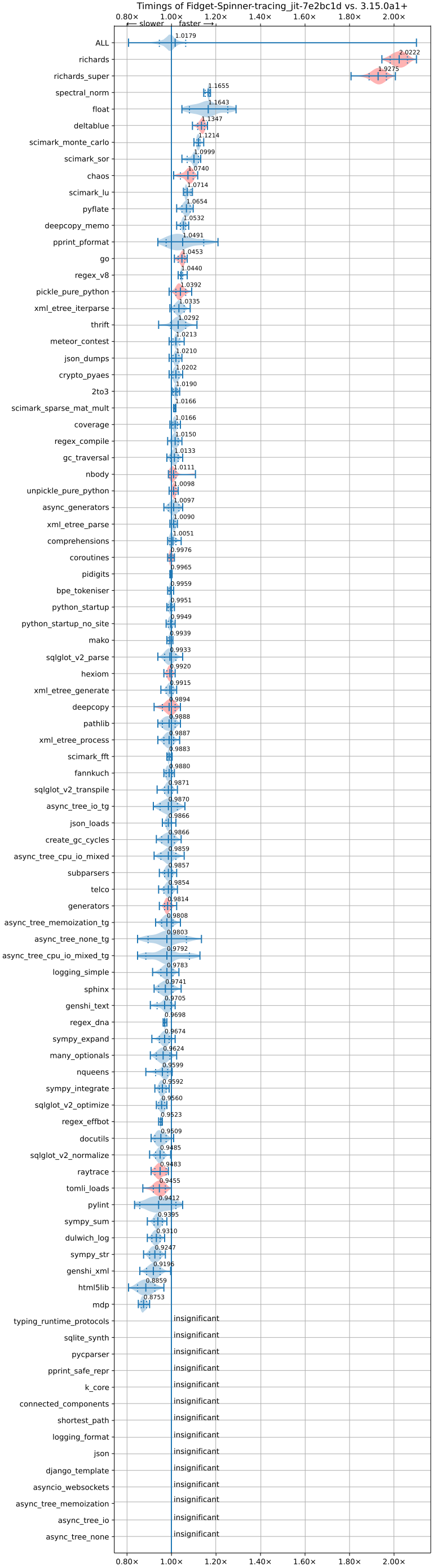
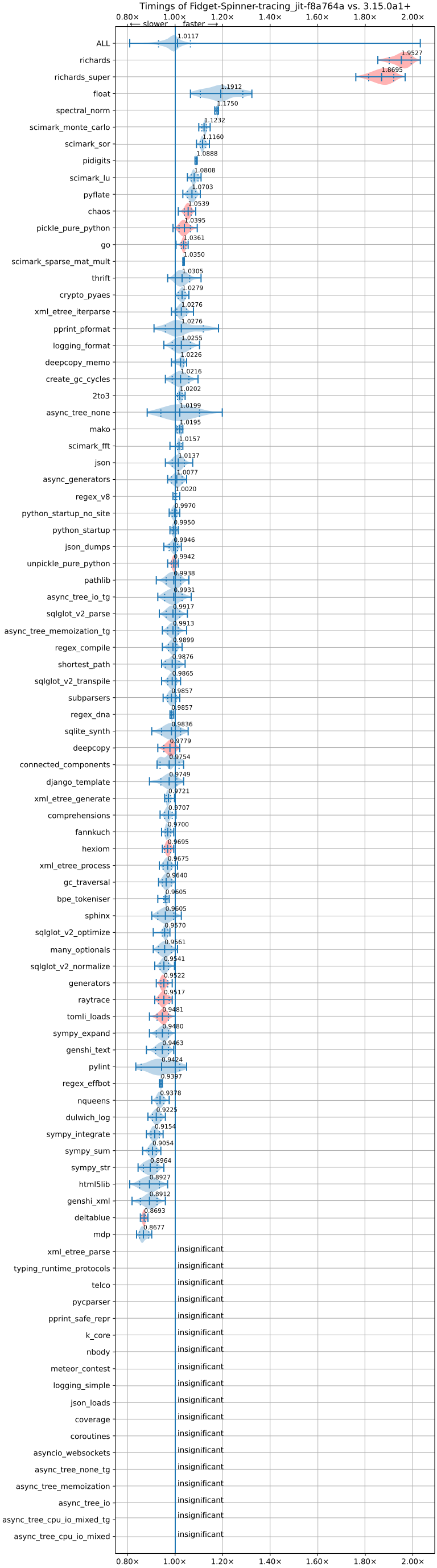
This PR changes the current JIT model from trace projection to trace recording. Benchmarking: better pyperformance (about 1.7% overall) geomean versus current https://raw.githubusercontent.com/facebookexperimental/free-threading-benchmarking/refs/heads/main/results/bm-20251108-3.15.0a1%2B-7e2bc1d-JIT/bm-20251108-vultr-x86_64-Fidget%252dSpinner-tracing_jit-3.15.0a1%2B-7e2bc1d-vs-base.svg, 100% faster Richards on the most improved benchmark versus the current JIT. Slowdown of about 10-15% on the worst benchmark versus the current JIT. **Note: the fastest version isn't the one merged, as it relies on fixing bugs in the specializing interpreter, which is left to another PR**. The speedup in the merged version is about 1.1%. https://raw.githubusercontent.com/facebookexperimental/free-threading-benchmarking/refs/heads/main/results/bm-20251112-3.15.0a1%2B-f8a764a-JIT/bm-20251112-vultr-x86_64-Fidget%252dSpinner-tracing_jit-3.15.0a1%2B-f8a764a-vs-base.svg

Stats: 50% more uops executed, 30% more traces entered the last time we ran them. It also suggests our trace lengths for a real trace recording JIT are too short, as a lot of trace too long aborts https://github.com/facebookexperimental/free-threading-benchmarking/blob/main/results/bm-20251023-3.15.0a1%2B-eb73378-CLANG%2CJIT/bm-20251023-vultr-x86_64-Fidget%252dSpinner-tracing_jit-3.15.0a1%2B-eb73378-pystats-vs-base.md .

This new JIT frontend is already able to record/execute significantly more instructions than the previous JIT frontend. In this PR, we are now able to record through custom dunders, simple object creation, generators, etc. None of these were done by the old JIT frontend. Some custom dunders uops were discovered to be broken as part of this work gh-140277

The optimizer stack space check is disabled, as it's no longer valid to deal with underflow.

Pros:
* Ignoring the generated tracer code as it's automatically created, this is only additional 1k lines of code. The maintenance burden is handled by the DSL and code generator.
* `optimizer.c` is now significantly simpler, as we don't have to do strange things to recover the bytecode from a trace.
* The new JIT frontend is able to handle a lot more control-flow than the old one.
* Tracing is very low overhead. We use the tail calling interpreter/computed goto interpreter to switch between tracing mode and non-tracing mode. I call this mechanism dual dispatch, as we have two dispatch tables dispatching to each other. Specialization is still enabled while tracing.
* Better handling of polymorphism. We leverage the specializing interpreter for this.

Cons:
* (For now) requires tail calling interpreter or computed gotos. This means no Windows JIT for now :(. Not to fret, tail calling is coming soon to Windows though https://github.com/python/cpython/pull/139962

Design:
* After each instruction, the `record_previous_inst` function/label is executed. This does as the name suggests.
* The tracing interpreter lowers bytecode to uops directly so that it can obtain "fresh" values at the point of lowering.
* The tracing version behaves nearly identical to the normal interpreter, in fact it even has specialization! This allows it to run without much of a slowdown when tracing. The actual cost of tracing is only a function call and writes to memory.
* The tracing interpreter uses the specializing interpreter's deopt to naturally form the side exit chains. This allows it to side exit chain effectively, without repeating much code. We force a re-specializing when tracing a deopt.
* The tracing interpreter can even handle goto errors/exceptions, but I chose to disable them for now as it's not tested.
* Because we do not share interpreter dispatch, there is should be no significant slowdown to the original specializing interpreter on tailcall and computed got with JIT disabled. With JIT enabled, there might be a slowdown in the form of the JIT trying to trace.
* Things that could have dynamic instruction pointer effects are guarded on. The guard deopts to a new instruction --- `_DYNAMIC_EXIT`.
552 lines
18 KiB
C
552 lines
18 KiB
C
#ifdef _Py_TIER2
|
|
|
|
/*
|
|
* This file contains the support code for CPython's uops optimizer.
|
|
* It also performs some simple optimizations.
|
|
* It performs a traditional data-flow analysis[1] over the trace of uops.
|
|
* Using the information gained, it chooses to emit, or skip certain instructions
|
|
* if possible.
|
|
*
|
|
* [1] For information on data-flow analysis, please see
|
|
* https://clang.llvm.org/docs/DataFlowAnalysisIntro.html
|
|
*
|
|
* */
|
|
#include "Python.h"
|
|
#include "opcode.h"
|
|
#include "pycore_dict.h"
|
|
#include "pycore_interp.h"
|
|
#include "pycore_opcode_metadata.h"
|
|
#include "pycore_opcode_utils.h"
|
|
#include "pycore_pystate.h" // _PyInterpreterState_GET()
|
|
#include "pycore_uop_metadata.h"
|
|
#include "pycore_long.h"
|
|
#include "pycore_interpframe.h" // _PyFrame_GetCode
|
|
#include "pycore_optimizer.h"
|
|
#include "pycore_object.h"
|
|
#include "pycore_function.h"
|
|
#include "pycore_uop_ids.h"
|
|
#include "pycore_range.h"
|
|
#include "pycore_unicodeobject.h"
|
|
#include "pycore_ceval.h"
|
|
#include "pycore_floatobject.h"
|
|
|
|
#include <stdarg.h>
|
|
#include <stdbool.h>
|
|
#include <stdint.h>
|
|
#include <stddef.h>
|
|
|
|
#ifdef Py_DEBUG
|
|
extern const char *_PyUOpName(int index);
|
|
extern void _PyUOpPrint(const _PyUOpInstruction *uop);
|
|
static const char *const DEBUG_ENV = "PYTHON_OPT_DEBUG";
|
|
static inline int get_lltrace(void) {
|
|
char *uop_debug = Py_GETENV(DEBUG_ENV);
|
|
int lltrace = 0;
|
|
if (uop_debug != NULL && *uop_debug >= '0') {
|
|
lltrace = *uop_debug - '0'; // TODO: Parse an int and all that
|
|
}
|
|
return lltrace;
|
|
}
|
|
#define DPRINTF(level, ...) \
|
|
if (get_lltrace() >= (level)) { printf(__VA_ARGS__); }
|
|
#else
|
|
#define DPRINTF(level, ...)
|
|
#endif
|
|
|
|
static int
|
|
get_mutations(PyObject* dict) {
|
|
assert(PyDict_CheckExact(dict));
|
|
PyDictObject *d = (PyDictObject *)dict;
|
|
return (d->_ma_watcher_tag >> DICT_MAX_WATCHERS) & ((1 << DICT_WATCHED_MUTATION_BITS)-1);
|
|
}
|
|
|
|
static void
|
|
increment_mutations(PyObject* dict) {
|
|
assert(PyDict_CheckExact(dict));
|
|
PyDictObject *d = (PyDictObject *)dict;
|
|
d->_ma_watcher_tag += (1 << DICT_MAX_WATCHERS);
|
|
}
|
|
|
|
/* The first two dict watcher IDs are reserved for CPython,
|
|
* so we don't need to check that they haven't been used */
|
|
#define BUILTINS_WATCHER_ID 0
|
|
#define GLOBALS_WATCHER_ID 1
|
|
#define TYPE_WATCHER_ID 0
|
|
|
|
static int
|
|
globals_watcher_callback(PyDict_WatchEvent event, PyObject* dict,
|
|
PyObject* key, PyObject* new_value)
|
|
{
|
|
RARE_EVENT_STAT_INC(watched_globals_modification);
|
|
assert(get_mutations(dict) < _Py_MAX_ALLOWED_GLOBALS_MODIFICATIONS);
|
|
_Py_Executors_InvalidateDependency(_PyInterpreterState_GET(), dict, 1);
|
|
increment_mutations(dict);
|
|
PyDict_Unwatch(GLOBALS_WATCHER_ID, dict);
|
|
return 0;
|
|
}
|
|
|
|
static int
|
|
type_watcher_callback(PyTypeObject* type)
|
|
{
|
|
_Py_Executors_InvalidateDependency(_PyInterpreterState_GET(), type, 1);
|
|
PyType_Unwatch(TYPE_WATCHER_ID, (PyObject *)type);
|
|
return 0;
|
|
}
|
|
|
|
static PyObject *
|
|
convert_global_to_const(_PyUOpInstruction *inst, PyObject *obj, bool pop)
|
|
{
|
|
assert(inst->opcode == _LOAD_GLOBAL_MODULE || inst->opcode == _LOAD_GLOBAL_BUILTINS || inst->opcode == _LOAD_ATTR_MODULE);
|
|
assert(PyDict_CheckExact(obj));
|
|
PyDictObject *dict = (PyDictObject *)obj;
|
|
assert(dict->ma_keys->dk_kind == DICT_KEYS_UNICODE);
|
|
PyDictUnicodeEntry *entries = DK_UNICODE_ENTRIES(dict->ma_keys);
|
|
int64_t index = inst->operand1;
|
|
assert(index <= UINT16_MAX);
|
|
if ((int)index >= dict->ma_keys->dk_nentries) {
|
|
return NULL;
|
|
}
|
|
PyDictKeysObject *keys = dict->ma_keys;
|
|
if (keys->dk_version != inst->operand0) {
|
|
return NULL;
|
|
}
|
|
PyObject *res = entries[index].me_value;
|
|
if (res == NULL) {
|
|
return NULL;
|
|
}
|
|
if (_Py_IsImmortal(res)) {
|
|
inst->opcode = pop ? _POP_TOP_LOAD_CONST_INLINE_BORROW : _LOAD_CONST_INLINE_BORROW;
|
|
}
|
|
else {
|
|
inst->opcode = pop ? _POP_TOP_LOAD_CONST_INLINE : _LOAD_CONST_INLINE;
|
|
}
|
|
if (inst->oparg & 1) {
|
|
assert(inst[1].opcode == _PUSH_NULL_CONDITIONAL);
|
|
assert(inst[1].oparg & 1);
|
|
}
|
|
inst->operand0 = (uint64_t)res;
|
|
return res;
|
|
}
|
|
|
|
static bool
|
|
incorrect_keys(PyObject *obj, uint32_t version)
|
|
{
|
|
if (!PyDict_CheckExact(obj)) {
|
|
return true;
|
|
}
|
|
PyDictObject *dict = (PyDictObject *)obj;
|
|
return dict->ma_keys->dk_version != version;
|
|
}
|
|
|
|
|
|
#define STACK_LEVEL() ((int)(stack_pointer - ctx->frame->stack))
|
|
#define STACK_SIZE() ((int)(ctx->frame->stack_len))
|
|
|
|
#define CURRENT_FRAME_IS_INIT_SHIM() (ctx->frame->code == ((PyCodeObject *)&_Py_InitCleanup))
|
|
|
|
#define WITHIN_STACK_BOUNDS() \
|
|
(CURRENT_FRAME_IS_INIT_SHIM() || (STACK_LEVEL() >= 0 && STACK_LEVEL() <= STACK_SIZE()))
|
|
|
|
|
|
#define GETLOCAL(idx) ((ctx->frame->locals[idx]))
|
|
|
|
#define REPLACE_OP(INST, OP, ARG, OPERAND) \
|
|
(INST)->opcode = OP; \
|
|
(INST)->oparg = ARG; \
|
|
(INST)->operand0 = OPERAND;
|
|
|
|
/* Shortened forms for convenience, used in optimizer_bytecodes.c */
|
|
#define sym_is_not_null _Py_uop_sym_is_not_null
|
|
#define sym_is_const _Py_uop_sym_is_const
|
|
#define sym_is_safe_const _Py_uop_sym_is_safe_const
|
|
#define sym_get_const _Py_uop_sym_get_const
|
|
#define sym_new_const_steal _Py_uop_sym_new_const_steal
|
|
#define sym_get_const_as_stackref _Py_uop_sym_get_const_as_stackref
|
|
#define sym_new_unknown _Py_uop_sym_new_unknown
|
|
#define sym_new_not_null _Py_uop_sym_new_not_null
|
|
#define sym_new_type _Py_uop_sym_new_type
|
|
#define sym_is_null _Py_uop_sym_is_null
|
|
#define sym_new_const _Py_uop_sym_new_const
|
|
#define sym_new_null _Py_uop_sym_new_null
|
|
#define sym_has_type _Py_uop_sym_has_type
|
|
#define sym_get_type _Py_uop_sym_get_type
|
|
#define sym_matches_type _Py_uop_sym_matches_type
|
|
#define sym_matches_type_version _Py_uop_sym_matches_type_version
|
|
#define sym_set_null(SYM) _Py_uop_sym_set_null(ctx, SYM)
|
|
#define sym_set_non_null(SYM) _Py_uop_sym_set_non_null(ctx, SYM)
|
|
#define sym_set_type(SYM, TYPE) _Py_uop_sym_set_type(ctx, SYM, TYPE)
|
|
#define sym_set_type_version(SYM, VERSION) _Py_uop_sym_set_type_version(ctx, SYM, VERSION)
|
|
#define sym_set_const(SYM, CNST) _Py_uop_sym_set_const(ctx, SYM, CNST)
|
|
#define sym_set_compact_int(SYM) _Py_uop_sym_set_compact_int(ctx, SYM)
|
|
#define sym_is_bottom _Py_uop_sym_is_bottom
|
|
#define sym_truthiness _Py_uop_sym_truthiness
|
|
#define frame_new _Py_uop_frame_new
|
|
#define frame_pop _Py_uop_frame_pop
|
|
#define sym_new_tuple _Py_uop_sym_new_tuple
|
|
#define sym_tuple_getitem _Py_uop_sym_tuple_getitem
|
|
#define sym_tuple_length _Py_uop_sym_tuple_length
|
|
#define sym_is_immortal _Py_uop_symbol_is_immortal
|
|
#define sym_is_compact_int _Py_uop_sym_is_compact_int
|
|
#define sym_new_compact_int _Py_uop_sym_new_compact_int
|
|
#define sym_new_truthiness _Py_uop_sym_new_truthiness
|
|
|
|
#define JUMP_TO_LABEL(label) goto label;
|
|
|
|
static int
|
|
optimize_to_bool(
|
|
_PyUOpInstruction *this_instr,
|
|
JitOptContext *ctx,
|
|
JitOptRef value,
|
|
JitOptRef *result_ptr)
|
|
{
|
|
if (sym_matches_type(value, &PyBool_Type)) {
|
|
REPLACE_OP(this_instr, _NOP, 0, 0);
|
|
*result_ptr = value;
|
|
return 1;
|
|
}
|
|
int truthiness = sym_truthiness(ctx, value);
|
|
if (truthiness >= 0) {
|
|
PyObject *load = truthiness ? Py_True : Py_False;
|
|
REPLACE_OP(this_instr, _POP_TOP_LOAD_CONST_INLINE_BORROW, 0, (uintptr_t)load);
|
|
*result_ptr = sym_new_const(ctx, load);
|
|
return 1;
|
|
}
|
|
return 0;
|
|
}
|
|
|
|
static void
|
|
eliminate_pop_guard(_PyUOpInstruction *this_instr, bool exit)
|
|
{
|
|
REPLACE_OP(this_instr, _POP_TOP, 0, 0);
|
|
if (exit) {
|
|
REPLACE_OP((this_instr+1), _EXIT_TRACE, 0, 0);
|
|
this_instr[1].target = this_instr->target;
|
|
}
|
|
}
|
|
|
|
static JitOptRef
|
|
lookup_attr(JitOptContext *ctx, _PyUOpInstruction *this_instr,
|
|
PyTypeObject *type, PyObject *name, uint16_t immortal,
|
|
uint16_t mortal)
|
|
{
|
|
// The cached value may be dead, so we need to do the lookup again... :(
|
|
if (type && PyType_Check(type)) {
|
|
PyObject *lookup = _PyType_Lookup(type, name);
|
|
if (lookup) {
|
|
int opcode = _Py_IsImmortal(lookup) ? immortal : mortal;
|
|
REPLACE_OP(this_instr, opcode, 0, (uintptr_t)lookup);
|
|
return sym_new_const(ctx, lookup);
|
|
}
|
|
}
|
|
return sym_new_not_null(ctx);
|
|
}
|
|
|
|
static PyCodeObject *
|
|
get_code_with_logging(_PyUOpInstruction *op)
|
|
{
|
|
PyCodeObject *co = NULL;
|
|
uint64_t push_operand = op->operand0;
|
|
if (push_operand & 1) {
|
|
co = (PyCodeObject *)(push_operand & ~1);
|
|
DPRINTF(3, "code=%p ", co);
|
|
assert(PyCode_Check(co));
|
|
}
|
|
else {
|
|
PyFunctionObject *func = (PyFunctionObject *)push_operand;
|
|
DPRINTF(3, "func=%p ", func);
|
|
if (func == NULL) {
|
|
DPRINTF(3, "\n");
|
|
DPRINTF(1, "Missing function\n");
|
|
return NULL;
|
|
}
|
|
co = (PyCodeObject *)func->func_code;
|
|
DPRINTF(3, "code=%p ", co);
|
|
}
|
|
return co;
|
|
}
|
|
|
|
static
|
|
PyCodeObject *
|
|
get_current_code_object(JitOptContext *ctx)
|
|
{
|
|
return (PyCodeObject *)ctx->frame->code;
|
|
}
|
|
|
|
static PyObject *
|
|
get_co_name(JitOptContext *ctx, int index)
|
|
{
|
|
return PyTuple_GET_ITEM(get_current_code_object(ctx)->co_names, index);
|
|
}
|
|
|
|
// TODO (gh-134584) generate most of this table automatically
|
|
const uint16_t op_without_decref_inputs[MAX_UOP_ID + 1] = {
|
|
[_BINARY_OP_MULTIPLY_FLOAT] = _BINARY_OP_MULTIPLY_FLOAT__NO_DECREF_INPUTS,
|
|
[_BINARY_OP_ADD_FLOAT] = _BINARY_OP_ADD_FLOAT__NO_DECREF_INPUTS,
|
|
[_BINARY_OP_SUBTRACT_FLOAT] = _BINARY_OP_SUBTRACT_FLOAT__NO_DECREF_INPUTS,
|
|
};
|
|
|
|
/* >0 (length) for success, 0 for not ready, clears all possible errors. */
|
|
static int
|
|
optimize_uops(
|
|
PyFunctionObject *func,
|
|
_PyUOpInstruction *trace,
|
|
int trace_len,
|
|
int curr_stacklen,
|
|
_PyBloomFilter *dependencies
|
|
)
|
|
{
|
|
assert(!PyErr_Occurred());
|
|
|
|
JitOptContext context;
|
|
JitOptContext *ctx = &context;
|
|
uint32_t opcode = UINT16_MAX;
|
|
|
|
// Make sure that watchers are set up
|
|
PyInterpreterState *interp = _PyInterpreterState_GET();
|
|
if (interp->dict_state.watchers[GLOBALS_WATCHER_ID] == NULL) {
|
|
interp->dict_state.watchers[GLOBALS_WATCHER_ID] = globals_watcher_callback;
|
|
interp->type_watchers[TYPE_WATCHER_ID] = type_watcher_callback;
|
|
}
|
|
|
|
_Py_uop_abstractcontext_init(ctx);
|
|
_Py_UOpsAbstractFrame *frame = _Py_uop_frame_new(ctx, (PyCodeObject *)func->func_code, curr_stacklen, NULL, 0);
|
|
if (frame == NULL) {
|
|
return 0;
|
|
}
|
|
frame->func = func;
|
|
ctx->curr_frame_depth++;
|
|
ctx->frame = frame;
|
|
|
|
_PyUOpInstruction *this_instr = NULL;
|
|
JitOptRef *stack_pointer = ctx->frame->stack_pointer;
|
|
|
|
for (int i = 0; !ctx->done; i++) {
|
|
assert(i < trace_len);
|
|
this_instr = &trace[i];
|
|
|
|
int oparg = this_instr->oparg;
|
|
opcode = this_instr->opcode;
|
|
|
|
if (!CURRENT_FRAME_IS_INIT_SHIM()) {
|
|
stack_pointer = ctx->frame->stack_pointer;
|
|
}
|
|
|
|
#ifdef Py_DEBUG
|
|
if (get_lltrace() >= 3) {
|
|
printf("%4d abs: ", (int)(this_instr - trace));
|
|
_PyUOpPrint(this_instr);
|
|
printf(" ");
|
|
}
|
|
#endif
|
|
|
|
switch (opcode) {
|
|
|
|
#include "optimizer_cases.c.h"
|
|
|
|
default:
|
|
DPRINTF(1, "\nUnknown opcode in abstract interpreter\n");
|
|
Py_UNREACHABLE();
|
|
}
|
|
assert(ctx->frame != NULL);
|
|
if (!CURRENT_FRAME_IS_INIT_SHIM()) {
|
|
DPRINTF(3, " stack_level %d\n", STACK_LEVEL());
|
|
ctx->frame->stack_pointer = stack_pointer;
|
|
assert(STACK_LEVEL() >= 0);
|
|
}
|
|
}
|
|
if (ctx->out_of_space) {
|
|
DPRINTF(3, "\n");
|
|
DPRINTF(1, "Out of space in abstract interpreter\n");
|
|
}
|
|
if (ctx->contradiction) {
|
|
// Attempted to push a "bottom" (contradiction) symbol onto the stack.
|
|
// This means that the abstract interpreter has optimized to trace
|
|
// to an unreachable estate.
|
|
// We *could* generate an _EXIT_TRACE or _FATAL_ERROR here, but hitting
|
|
// bottom usually indicates an optimizer bug, so we are probably better off
|
|
// retrying later.
|
|
DPRINTF(3, "\n");
|
|
DPRINTF(1, "Hit bottom in abstract interpreter\n");
|
|
_Py_uop_abstractcontext_fini(ctx);
|
|
OPT_STAT_INC(optimizer_contradiction);
|
|
return 0;
|
|
}
|
|
|
|
/* Either reached the end or cannot optimize further, but there
|
|
* would be no benefit in retrying later */
|
|
_Py_uop_abstractcontext_fini(ctx);
|
|
return trace_len;
|
|
|
|
error:
|
|
DPRINTF(3, "\n");
|
|
DPRINTF(1, "Encountered error in abstract interpreter\n");
|
|
if (opcode <= MAX_UOP_ID) {
|
|
OPT_ERROR_IN_OPCODE(opcode);
|
|
}
|
|
_Py_uop_abstractcontext_fini(ctx);
|
|
|
|
assert(PyErr_Occurred());
|
|
PyErr_Clear();
|
|
|
|
return 0;
|
|
|
|
}
|
|
|
|
const uint16_t op_without_push[MAX_UOP_ID + 1] = {
|
|
[_COPY] = _NOP,
|
|
[_LOAD_CONST_INLINE] = _NOP,
|
|
[_LOAD_CONST_INLINE_BORROW] = _NOP,
|
|
[_LOAD_CONST_UNDER_INLINE] = _POP_TOP_LOAD_CONST_INLINE,
|
|
[_LOAD_CONST_UNDER_INLINE_BORROW] = _POP_TOP_LOAD_CONST_INLINE_BORROW,
|
|
[_LOAD_FAST] = _NOP,
|
|
[_LOAD_FAST_BORROW] = _NOP,
|
|
[_LOAD_SMALL_INT] = _NOP,
|
|
[_POP_TOP_LOAD_CONST_INLINE] = _POP_TOP,
|
|
[_POP_TOP_LOAD_CONST_INLINE_BORROW] = _POP_TOP,
|
|
[_POP_TWO_LOAD_CONST_INLINE_BORROW] = _POP_TWO,
|
|
[_POP_CALL_TWO_LOAD_CONST_INLINE_BORROW] = _POP_CALL_TWO,
|
|
};
|
|
|
|
const bool op_skip[MAX_UOP_ID + 1] = {
|
|
[_NOP] = true,
|
|
[_CHECK_VALIDITY] = true,
|
|
[_CHECK_PERIODIC] = true,
|
|
[_SET_IP] = true,
|
|
};
|
|
|
|
const uint16_t op_without_pop[MAX_UOP_ID + 1] = {
|
|
[_POP_TOP] = _NOP,
|
|
[_POP_TOP_LOAD_CONST_INLINE] = _LOAD_CONST_INLINE,
|
|
[_POP_TOP_LOAD_CONST_INLINE_BORROW] = _LOAD_CONST_INLINE_BORROW,
|
|
[_POP_TWO] = _POP_TOP,
|
|
[_POP_TWO_LOAD_CONST_INLINE_BORROW] = _POP_TOP_LOAD_CONST_INLINE_BORROW,
|
|
[_POP_CALL_TWO_LOAD_CONST_INLINE_BORROW] = _POP_CALL_ONE_LOAD_CONST_INLINE_BORROW,
|
|
[_POP_CALL_ONE_LOAD_CONST_INLINE_BORROW] = _POP_CALL_LOAD_CONST_INLINE_BORROW,
|
|
[_POP_CALL_TWO] = _POP_CALL_ONE,
|
|
[_POP_CALL_ONE] = _POP_CALL,
|
|
};
|
|
|
|
const uint16_t op_without_pop_null[MAX_UOP_ID + 1] = {
|
|
[_POP_CALL] = _POP_TOP,
|
|
[_POP_CALL_LOAD_CONST_INLINE_BORROW] = _POP_TOP_LOAD_CONST_INLINE_BORROW,
|
|
};
|
|
|
|
|
|
static int
|
|
remove_unneeded_uops(_PyUOpInstruction *buffer, int buffer_size)
|
|
{
|
|
/* Remove _SET_IP and _CHECK_VALIDITY where possible.
|
|
* _SET_IP is needed if the following instruction escapes or
|
|
* could error. _CHECK_VALIDITY is needed if the previous
|
|
* instruction could have escaped. */
|
|
int last_set_ip = -1;
|
|
bool may_have_escaped = true;
|
|
for (int pc = 0; pc < buffer_size; pc++) {
|
|
int opcode = buffer[pc].opcode;
|
|
switch (opcode) {
|
|
case _START_EXECUTOR:
|
|
may_have_escaped = false;
|
|
break;
|
|
case _SET_IP:
|
|
buffer[pc].opcode = _NOP;
|
|
last_set_ip = pc;
|
|
break;
|
|
case _CHECK_VALIDITY:
|
|
if (may_have_escaped) {
|
|
may_have_escaped = false;
|
|
}
|
|
else {
|
|
buffer[pc].opcode = _NOP;
|
|
}
|
|
break;
|
|
case _EXIT_TRACE:
|
|
default:
|
|
{
|
|
// Cancel out pushes and pops, repeatedly. So:
|
|
// _LOAD_FAST + _POP_TWO_LOAD_CONST_INLINE_BORROW + _POP_TOP
|
|
// ...becomes:
|
|
// _NOP + _POP_TOP + _NOP
|
|
while (op_without_pop[opcode] || op_without_pop_null[opcode]) {
|
|
_PyUOpInstruction *last = &buffer[pc - 1];
|
|
while (op_skip[last->opcode]) {
|
|
last--;
|
|
}
|
|
if (op_without_push[last->opcode] && op_without_pop[opcode]) {
|
|
last->opcode = op_without_push[last->opcode];
|
|
opcode = buffer[pc].opcode = op_without_pop[opcode];
|
|
if (op_without_pop[last->opcode]) {
|
|
opcode = last->opcode;
|
|
pc = (int)(last - buffer);
|
|
}
|
|
}
|
|
else if (last->opcode == _PUSH_NULL) {
|
|
// Handle _POP_CALL and _POP_CALL_LOAD_CONST_INLINE_BORROW separately.
|
|
// This looks for a preceding _PUSH_NULL instruction and
|
|
// simplifies to _POP_TOP(_LOAD_CONST_INLINE_BORROW).
|
|
last->opcode = _NOP;
|
|
opcode = buffer[pc].opcode = op_without_pop_null[opcode];
|
|
assert(opcode);
|
|
}
|
|
else {
|
|
break;
|
|
}
|
|
}
|
|
/* _PUSH_FRAME doesn't escape or error, but it
|
|
* does need the IP for the return address */
|
|
bool needs_ip = (opcode == _PUSH_FRAME || opcode == _YIELD_VALUE || opcode == _DYNAMIC_EXIT || opcode == _EXIT_TRACE);
|
|
if (_PyUop_Flags[opcode] & HAS_ESCAPES_FLAG) {
|
|
needs_ip = true;
|
|
may_have_escaped = true;
|
|
}
|
|
if (needs_ip && last_set_ip >= 0) {
|
|
assert(buffer[last_set_ip].opcode == _NOP);
|
|
buffer[last_set_ip].opcode = _SET_IP;
|
|
last_set_ip = -1;
|
|
}
|
|
if (opcode == _EXIT_TRACE) {
|
|
return pc + 1;
|
|
}
|
|
break;
|
|
}
|
|
case _JUMP_TO_TOP:
|
|
case _DYNAMIC_EXIT:
|
|
case _DEOPT:
|
|
return pc + 1;
|
|
}
|
|
}
|
|
Py_UNREACHABLE();
|
|
}
|
|
|
|
// 0 - failure, no error raised, just fall back to Tier 1
|
|
// -1 - failure, and raise error
|
|
// > 0 - length of optimized trace
|
|
int
|
|
_Py_uop_analyze_and_optimize(
|
|
PyFunctionObject *func,
|
|
_PyUOpInstruction *buffer,
|
|
int length,
|
|
int curr_stacklen,
|
|
_PyBloomFilter *dependencies
|
|
)
|
|
{
|
|
OPT_STAT_INC(optimizer_attempts);
|
|
|
|
length = optimize_uops(
|
|
func, buffer,
|
|
length, curr_stacklen, dependencies);
|
|
|
|
if (length == 0) {
|
|
return length;
|
|
}
|
|
|
|
assert(length > 0);
|
|
|
|
length = remove_unneeded_uops(buffer, length);
|
|
assert(length > 0);
|
|
|
|
OPT_STAT_INC(optimizer_successes);
|
|
return length;
|
|
}
|
|
|
|
#endif /* _Py_TIER2 */
|