 4fa80ce74c
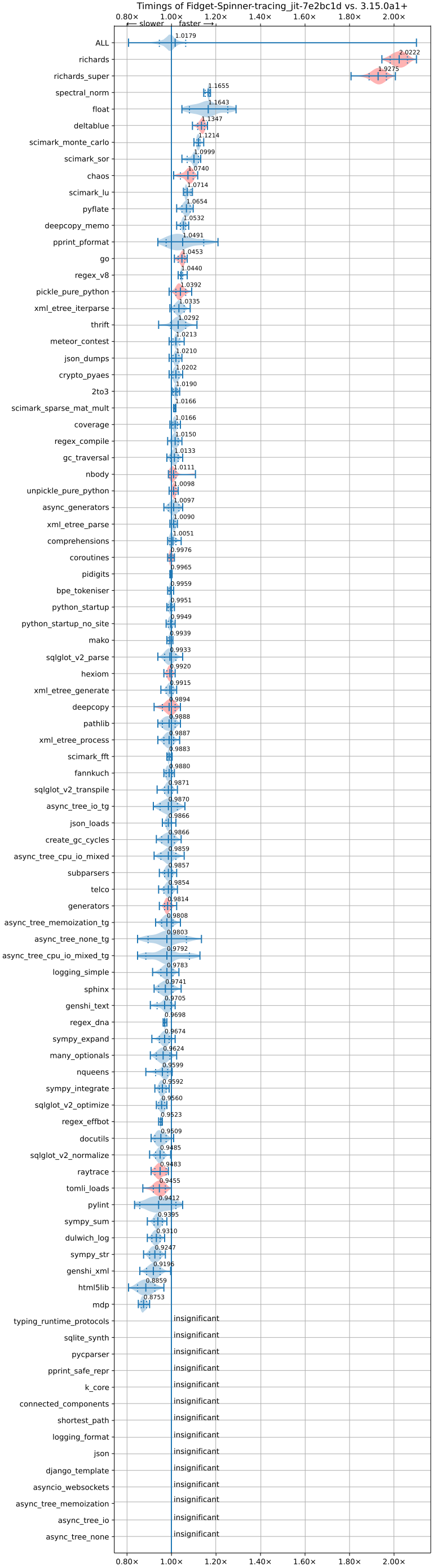
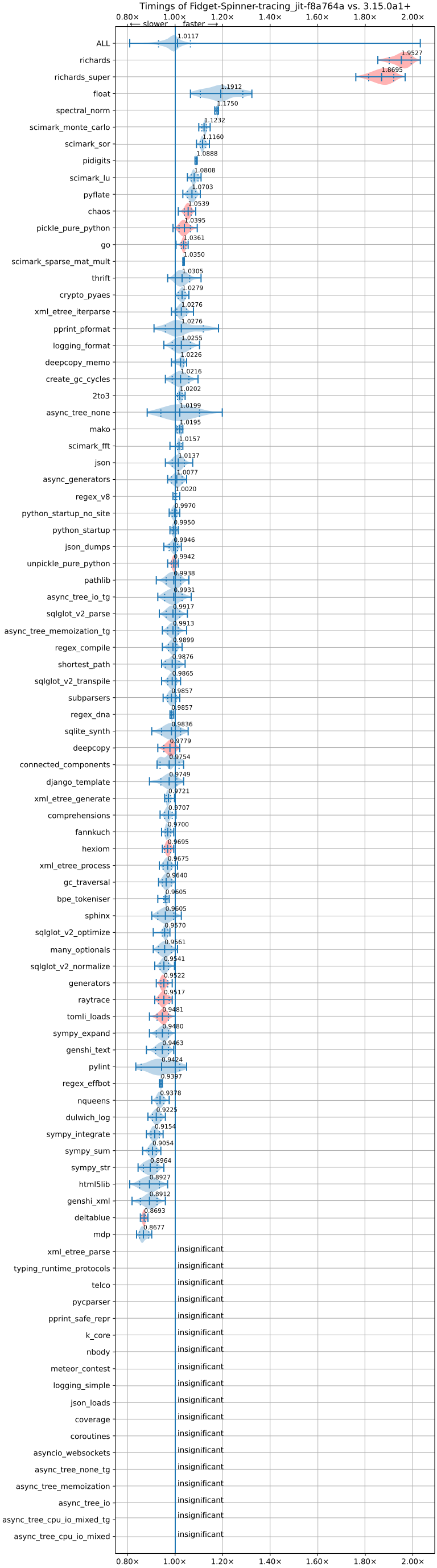
This PR changes the current JIT model from trace projection to trace recording. Benchmarking: better pyperformance (about 1.7% overall) geomean versus current https://raw.githubusercontent.com/facebookexperimental/free-threading-benchmarking/refs/heads/main/results/bm-20251108-3.15.0a1%2B-7e2bc1d-JIT/bm-20251108-vultr-x86_64-Fidget%252dSpinner-tracing_jit-3.15.0a1%2B-7e2bc1d-vs-base.svg, 100% faster Richards on the most improved benchmark versus the current JIT. Slowdown of about 10-15% on the worst benchmark versus the current JIT. **Note: the fastest version isn't the one merged, as it relies on fixing bugs in the specializing interpreter, which is left to another PR**. The speedup in the merged version is about 1.1%. https://raw.githubusercontent.com/facebookexperimental/free-threading-benchmarking/refs/heads/main/results/bm-20251112-3.15.0a1%2B-f8a764a-JIT/bm-20251112-vultr-x86_64-Fidget%252dSpinner-tracing_jit-3.15.0a1%2B-f8a764a-vs-base.svg

Stats: 50% more uops executed, 30% more traces entered the last time we ran them. It also suggests our trace lengths for a real trace recording JIT are too short, as a lot of trace too long aborts https://github.com/facebookexperimental/free-threading-benchmarking/blob/main/results/bm-20251023-3.15.0a1%2B-eb73378-CLANG%2CJIT/bm-20251023-vultr-x86_64-Fidget%252dSpinner-tracing_jit-3.15.0a1%2B-eb73378-pystats-vs-base.md .

This new JIT frontend is already able to record/execute significantly more instructions than the previous JIT frontend. In this PR, we are now able to record through custom dunders, simple object creation, generators, etc. None of these were done by the old JIT frontend. Some custom dunders uops were discovered to be broken as part of this work gh-140277

The optimizer stack space check is disabled, as it's no longer valid to deal with underflow.

Pros:
* Ignoring the generated tracer code as it's automatically created, this is only additional 1k lines of code. The maintenance burden is handled by the DSL and code generator.
* `optimizer.c` is now significantly simpler, as we don't have to do strange things to recover the bytecode from a trace.
* The new JIT frontend is able to handle a lot more control-flow than the old one.
* Tracing is very low overhead. We use the tail calling interpreter/computed goto interpreter to switch between tracing mode and non-tracing mode. I call this mechanism dual dispatch, as we have two dispatch tables dispatching to each other. Specialization is still enabled while tracing.
* Better handling of polymorphism. We leverage the specializing interpreter for this.

Cons:
* (For now) requires tail calling interpreter or computed gotos. This means no Windows JIT for now :(. Not to fret, tail calling is coming soon to Windows though https://github.com/python/cpython/pull/139962

Design:
* After each instruction, the `record_previous_inst` function/label is executed. This does as the name suggests.
* The tracing interpreter lowers bytecode to uops directly so that it can obtain "fresh" values at the point of lowering.
* The tracing version behaves nearly identical to the normal interpreter, in fact it even has specialization! This allows it to run without much of a slowdown when tracing. The actual cost of tracing is only a function call and writes to memory.
* The tracing interpreter uses the specializing interpreter's deopt to naturally form the side exit chains. This allows it to side exit chain effectively, without repeating much code. We force a re-specializing when tracing a deopt.
* The tracing interpreter can even handle goto errors/exceptions, but I chose to disable them for now as it's not tested.
* Because we do not share interpreter dispatch, there is should be no significant slowdown to the original specializing interpreter on tailcall and computed got with JIT disabled. With JIT enabled, there might be a slowdown in the form of the JIT trying to trace.
* Things that could have dynamic instruction pointer effects are guarded on. The guard deopts to a new instruction --- `_DYNAMIC_EXIT`.
381 lines
11 KiB
C
381 lines
11 KiB
C
#ifndef Py_INTERNAL_OPTIMIZER_H
|
|
#define Py_INTERNAL_OPTIMIZER_H
|
|
#ifdef __cplusplus
|
|
extern "C" {
|
|
#endif
|
|
|
|
#ifndef Py_BUILD_CORE
|
|
# error "this header requires Py_BUILD_CORE define"
|
|
#endif
|
|
|
|
#include "pycore_typedefs.h" // _PyInterpreterFrame
|
|
#include "pycore_uop.h" // _PyUOpInstruction
|
|
#include "pycore_uop_ids.h"
|
|
#include "pycore_stackref.h" // _PyStackRef
|
|
#include <stdbool.h>
|
|
|
|
|
|
typedef struct _PyExecutorLinkListNode {
|
|
struct _PyExecutorObject *next;
|
|
struct _PyExecutorObject *previous;
|
|
} _PyExecutorLinkListNode;
|
|
|
|
|
|
typedef struct {
|
|
uint8_t opcode;
|
|
uint8_t oparg;
|
|
uint8_t valid:1;
|
|
uint8_t linked:1;
|
|
uint8_t chain_depth:6; // Must be big enough for MAX_CHAIN_DEPTH - 1.
|
|
bool warm;
|
|
int index; // Index of ENTER_EXECUTOR (if code isn't NULL, below).
|
|
_PyBloomFilter bloom;
|
|
_PyExecutorLinkListNode links;
|
|
PyCodeObject *code; // Weak (NULL if no corresponding ENTER_EXECUTOR).
|
|
} _PyVMData;
|
|
|
|
typedef struct _PyExitData {
|
|
uint32_t target;
|
|
uint16_t index:14;
|
|
uint16_t is_dynamic:1;
|
|
uint16_t is_control_flow:1;
|
|
_Py_BackoffCounter temperature;
|
|
struct _PyExecutorObject *executor;
|
|
} _PyExitData;
|
|
|
|
typedef struct _PyExecutorObject {
|
|
PyObject_VAR_HEAD
|
|
const _PyUOpInstruction *trace;
|
|
_PyVMData vm_data; /* Used by the VM, but opaque to the optimizer */
|
|
uint32_t exit_count;
|
|
uint32_t code_size;
|
|
size_t jit_size;
|
|
void *jit_code;
|
|
_PyExitData exits[1];
|
|
} _PyExecutorObject;
|
|
|
|
/* If pending deletion list gets large enough, then scan,
|
|
* and free any executors that aren't executing
|
|
* i.e. any that aren't a thread's current_executor. */
|
|
#define EXECUTOR_DELETE_LIST_MAX 100
|
|
|
|
// Export for '_opcode' shared extension (JIT compiler).
|
|
PyAPI_FUNC(_PyExecutorObject*) _Py_GetExecutor(PyCodeObject *code, int offset);
|
|
|
|
void _Py_ExecutorInit(_PyExecutorObject *, const _PyBloomFilter *);
|
|
void _Py_ExecutorDetach(_PyExecutorObject *);
|
|
void _Py_BloomFilter_Init(_PyBloomFilter *);
|
|
void _Py_BloomFilter_Add(_PyBloomFilter *bloom, void *obj);
|
|
PyAPI_FUNC(void) _Py_Executor_DependsOn(_PyExecutorObject *executor, void *obj);
|
|
|
|
#define _Py_MAX_ALLOWED_BUILTINS_MODIFICATIONS 3
|
|
#define _Py_MAX_ALLOWED_GLOBALS_MODIFICATIONS 6
|
|
|
|
#ifdef _Py_TIER2
|
|
PyAPI_FUNC(void) _Py_Executors_InvalidateDependency(PyInterpreterState *interp, void *obj, int is_invalidation);
|
|
PyAPI_FUNC(void) _Py_Executors_InvalidateAll(PyInterpreterState *interp, int is_invalidation);
|
|
PyAPI_FUNC(void) _Py_Executors_InvalidateCold(PyInterpreterState *interp);
|
|
|
|
#else
|
|
# define _Py_Executors_InvalidateDependency(A, B, C) ((void)0)
|
|
# define _Py_Executors_InvalidateAll(A, B) ((void)0)
|
|
# define _Py_Executors_InvalidateCold(A) ((void)0)
|
|
|
|
#endif
|
|
|
|
// Used as the threshold to trigger executor invalidation when
|
|
// executor_creation_counter is greater than this value.
|
|
// This value is arbitrary and was not optimized.
|
|
#define JIT_CLEANUP_THRESHOLD 1000
|
|
|
|
int _Py_uop_analyze_and_optimize(
|
|
PyFunctionObject *func,
|
|
_PyUOpInstruction *trace, int trace_len, int curr_stackentries,
|
|
_PyBloomFilter *dependencies);
|
|
|
|
extern PyTypeObject _PyUOpExecutor_Type;
|
|
|
|
|
|
#define UOP_FORMAT_TARGET 0
|
|
#define UOP_FORMAT_JUMP 1
|
|
|
|
static inline uint32_t uop_get_target(const _PyUOpInstruction *inst)
|
|
{
|
|
assert(inst->format == UOP_FORMAT_TARGET);
|
|
return inst->target;
|
|
}
|
|
|
|
static inline uint16_t uop_get_jump_target(const _PyUOpInstruction *inst)
|
|
{
|
|
assert(inst->format == UOP_FORMAT_JUMP);
|
|
return inst->jump_target;
|
|
}
|
|
|
|
static inline uint16_t uop_get_error_target(const _PyUOpInstruction *inst)
|
|
{
|
|
assert(inst->format != UOP_FORMAT_TARGET);
|
|
return inst->error_target;
|
|
}
|
|
|
|
// Holds locals, stack, locals, stack ... co_consts (in that order)
|
|
#define MAX_ABSTRACT_INTERP_SIZE 4096
|
|
|
|
#define TY_ARENA_SIZE (UOP_MAX_TRACE_LENGTH * 5)
|
|
|
|
// Need extras for root frame and for overflow frame (see TRACE_STACK_PUSH())
|
|
#define MAX_ABSTRACT_FRAME_DEPTH (16)
|
|
|
|
// The maximum number of side exits that we can take before requiring forward
|
|
// progress (and inserting a new ENTER_EXECUTOR instruction). In practice, this
|
|
// is the "maximum amount of polymorphism" that an isolated trace tree can
|
|
// handle before rejoining the rest of the program.
|
|
#define MAX_CHAIN_DEPTH 4
|
|
|
|
/* Symbols */
|
|
/* See explanation in optimizer_symbols.c */
|
|
|
|
|
|
typedef enum _JitSymType {
|
|
JIT_SYM_UNKNOWN_TAG = 1,
|
|
JIT_SYM_NULL_TAG = 2,
|
|
JIT_SYM_NON_NULL_TAG = 3,
|
|
JIT_SYM_BOTTOM_TAG = 4,
|
|
JIT_SYM_TYPE_VERSION_TAG = 5,
|
|
JIT_SYM_KNOWN_CLASS_TAG = 6,
|
|
JIT_SYM_KNOWN_VALUE_TAG = 7,
|
|
JIT_SYM_TUPLE_TAG = 8,
|
|
JIT_SYM_TRUTHINESS_TAG = 9,
|
|
JIT_SYM_COMPACT_INT = 10,
|
|
} JitSymType;
|
|
|
|
typedef struct _jit_opt_known_class {
|
|
uint8_t tag;
|
|
uint32_t version;
|
|
PyTypeObject *type;
|
|
} JitOptKnownClass;
|
|
|
|
typedef struct _jit_opt_known_version {
|
|
uint8_t tag;
|
|
uint32_t version;
|
|
} JitOptKnownVersion;
|
|
|
|
typedef struct _jit_opt_known_value {
|
|
uint8_t tag;
|
|
PyObject *value;
|
|
} JitOptKnownValue;
|
|
|
|
#define MAX_SYMBOLIC_TUPLE_SIZE 7
|
|
|
|
typedef struct _jit_opt_tuple {
|
|
uint8_t tag;
|
|
uint8_t length;
|
|
uint16_t items[MAX_SYMBOLIC_TUPLE_SIZE];
|
|
} JitOptTuple;
|
|
|
|
typedef struct {
|
|
uint8_t tag;
|
|
bool invert;
|
|
uint16_t value;
|
|
} JitOptTruthiness;
|
|
|
|
typedef struct {
|
|
uint8_t tag;
|
|
} JitOptCompactInt;
|
|
|
|
typedef union _jit_opt_symbol {
|
|
uint8_t tag;
|
|
JitOptKnownClass cls;
|
|
JitOptKnownValue value;
|
|
JitOptKnownVersion version;
|
|
JitOptTuple tuple;
|
|
JitOptTruthiness truthiness;
|
|
JitOptCompactInt compact;
|
|
} JitOptSymbol;
|
|
|
|
|
|
// This mimics the _PyStackRef API
|
|
typedef union {
|
|
uintptr_t bits;
|
|
} JitOptRef;
|
|
|
|
#define REF_IS_BORROWED 1
|
|
|
|
#define JIT_BITS_TO_PTR_MASKED(REF) ((JitOptSymbol *)(((REF).bits) & (~REF_IS_BORROWED)))
|
|
|
|
static inline JitOptSymbol *
|
|
PyJitRef_Unwrap(JitOptRef ref)
|
|
{
|
|
return JIT_BITS_TO_PTR_MASKED(ref);
|
|
}
|
|
|
|
bool _Py_uop_symbol_is_immortal(JitOptSymbol *sym);
|
|
|
|
|
|
static inline JitOptRef
|
|
PyJitRef_Wrap(JitOptSymbol *sym)
|
|
{
|
|
return (JitOptRef){.bits=(uintptr_t)sym};
|
|
}
|
|
|
|
static inline JitOptRef
|
|
PyJitRef_StripReferenceInfo(JitOptRef ref)
|
|
{
|
|
return PyJitRef_Wrap(PyJitRef_Unwrap(ref));
|
|
}
|
|
|
|
static inline JitOptRef
|
|
PyJitRef_Borrow(JitOptRef ref)
|
|
{
|
|
return (JitOptRef){ .bits = ref.bits | REF_IS_BORROWED };
|
|
}
|
|
|
|
static const JitOptRef PyJitRef_NULL = {.bits = REF_IS_BORROWED};
|
|
|
|
static inline bool
|
|
PyJitRef_IsNull(JitOptRef ref)
|
|
{
|
|
return ref.bits == PyJitRef_NULL.bits;
|
|
}
|
|
|
|
static inline int
|
|
PyJitRef_IsBorrowed(JitOptRef ref)
|
|
{
|
|
return (ref.bits & REF_IS_BORROWED) == REF_IS_BORROWED;
|
|
}
|
|
|
|
struct _Py_UOpsAbstractFrame {
|
|
bool globals_watched;
|
|
// The version number of the globals dicts, once checked. 0 if unchecked.
|
|
uint32_t globals_checked_version;
|
|
// Max stacklen
|
|
int stack_len;
|
|
int locals_len;
|
|
PyFunctionObject *func;
|
|
PyCodeObject *code;
|
|
|
|
JitOptRef *stack_pointer;
|
|
JitOptRef *stack;
|
|
JitOptRef *locals;
|
|
};
|
|
|
|
typedef struct _Py_UOpsAbstractFrame _Py_UOpsAbstractFrame;
|
|
|
|
typedef struct ty_arena {
|
|
int ty_curr_number;
|
|
int ty_max_number;
|
|
JitOptSymbol arena[TY_ARENA_SIZE];
|
|
} ty_arena;
|
|
|
|
typedef struct _JitOptContext {
|
|
char done;
|
|
char out_of_space;
|
|
bool contradiction;
|
|
// Has the builtins dict been watched?
|
|
bool builtins_watched;
|
|
// The current "executing" frame.
|
|
_Py_UOpsAbstractFrame *frame;
|
|
_Py_UOpsAbstractFrame frames[MAX_ABSTRACT_FRAME_DEPTH];
|
|
int curr_frame_depth;
|
|
|
|
// Arena for the symbolic types.
|
|
ty_arena t_arena;
|
|
|
|
JitOptRef *n_consumed;
|
|
JitOptRef *limit;
|
|
JitOptRef locals_and_stack[MAX_ABSTRACT_INTERP_SIZE];
|
|
} JitOptContext;
|
|
|
|
extern bool _Py_uop_sym_is_null(JitOptRef sym);
|
|
extern bool _Py_uop_sym_is_not_null(JitOptRef sym);
|
|
extern bool _Py_uop_sym_is_const(JitOptContext *ctx, JitOptRef sym);
|
|
extern PyObject *_Py_uop_sym_get_const(JitOptContext *ctx, JitOptRef sym);
|
|
extern JitOptRef _Py_uop_sym_new_unknown(JitOptContext *ctx);
|
|
extern JitOptRef _Py_uop_sym_new_not_null(JitOptContext *ctx);
|
|
extern JitOptRef _Py_uop_sym_new_type(
|
|
JitOptContext *ctx, PyTypeObject *typ);
|
|
|
|
extern JitOptRef _Py_uop_sym_new_const(JitOptContext *ctx, PyObject *const_val);
|
|
extern JitOptRef _Py_uop_sym_new_const_steal(JitOptContext *ctx, PyObject *const_val);
|
|
bool _Py_uop_sym_is_safe_const(JitOptContext *ctx, JitOptRef sym);
|
|
_PyStackRef _Py_uop_sym_get_const_as_stackref(JitOptContext *ctx, JitOptRef sym);
|
|
extern JitOptRef _Py_uop_sym_new_null(JitOptContext *ctx);
|
|
extern bool _Py_uop_sym_has_type(JitOptRef sym);
|
|
extern bool _Py_uop_sym_matches_type(JitOptRef sym, PyTypeObject *typ);
|
|
extern bool _Py_uop_sym_matches_type_version(JitOptRef sym, unsigned int version);
|
|
extern void _Py_uop_sym_set_null(JitOptContext *ctx, JitOptRef sym);
|
|
extern void _Py_uop_sym_set_non_null(JitOptContext *ctx, JitOptRef sym);
|
|
extern void _Py_uop_sym_set_type(JitOptContext *ctx, JitOptRef sym, PyTypeObject *typ);
|
|
extern bool _Py_uop_sym_set_type_version(JitOptContext *ctx, JitOptRef sym, unsigned int version);
|
|
extern void _Py_uop_sym_set_const(JitOptContext *ctx, JitOptRef sym, PyObject *const_val);
|
|
extern bool _Py_uop_sym_is_bottom(JitOptRef sym);
|
|
extern int _Py_uop_sym_truthiness(JitOptContext *ctx, JitOptRef sym);
|
|
extern PyTypeObject *_Py_uop_sym_get_type(JitOptRef sym);
|
|
extern JitOptRef _Py_uop_sym_new_tuple(JitOptContext *ctx, int size, JitOptRef *args);
|
|
extern JitOptRef _Py_uop_sym_tuple_getitem(JitOptContext *ctx, JitOptRef sym, Py_ssize_t item);
|
|
extern Py_ssize_t _Py_uop_sym_tuple_length(JitOptRef sym);
|
|
extern JitOptRef _Py_uop_sym_new_truthiness(JitOptContext *ctx, JitOptRef value, bool truthy);
|
|
extern bool _Py_uop_sym_is_compact_int(JitOptRef sym);
|
|
extern JitOptRef _Py_uop_sym_new_compact_int(JitOptContext *ctx);
|
|
extern void _Py_uop_sym_set_compact_int(JitOptContext *ctx, JitOptRef sym);
|
|
|
|
extern void _Py_uop_abstractcontext_init(JitOptContext *ctx);
|
|
extern void _Py_uop_abstractcontext_fini(JitOptContext *ctx);
|
|
|
|
extern _Py_UOpsAbstractFrame *_Py_uop_frame_new(
|
|
JitOptContext *ctx,
|
|
PyCodeObject *co,
|
|
int curr_stackentries,
|
|
JitOptRef *args,
|
|
int arg_len);
|
|
extern int _Py_uop_frame_pop(JitOptContext *ctx, PyCodeObject *co, int curr_stackentries);
|
|
|
|
PyAPI_FUNC(PyObject *) _Py_uop_symbols_test(PyObject *self, PyObject *ignored);
|
|
|
|
PyAPI_FUNC(int) _PyOptimizer_Optimize(_PyInterpreterFrame *frame, PyThreadState *tstate);
|
|
|
|
static inline _PyExecutorObject *_PyExecutor_FromExit(_PyExitData *exit)
|
|
{
|
|
_PyExitData *exit0 = exit - exit->index;
|
|
return (_PyExecutorObject *)(((char *)exit0) - offsetof(_PyExecutorObject, exits));
|
|
}
|
|
|
|
extern _PyExecutorObject *_PyExecutor_GetColdExecutor(void);
|
|
extern _PyExecutorObject *_PyExecutor_GetColdDynamicExecutor(void);
|
|
|
|
PyAPI_FUNC(void) _PyExecutor_ClearExit(_PyExitData *exit);
|
|
|
|
static inline int is_terminator(const _PyUOpInstruction *uop)
|
|
{
|
|
int opcode = uop->opcode;
|
|
return (
|
|
opcode == _EXIT_TRACE ||
|
|
opcode == _DEOPT ||
|
|
opcode == _JUMP_TO_TOP ||
|
|
opcode == _DYNAMIC_EXIT
|
|
);
|
|
}
|
|
|
|
extern void _PyExecutor_Free(_PyExecutorObject *self);
|
|
|
|
PyAPI_FUNC(int) _PyDumpExecutors(FILE *out);
|
|
#ifdef _Py_TIER2
|
|
extern void _Py_ClearExecutorDeletionList(PyInterpreterState *interp);
|
|
#endif
|
|
|
|
int _PyJit_translate_single_bytecode_to_trace(PyThreadState *tstate, _PyInterpreterFrame *frame, _Py_CODEUNIT *next_instr, bool stop_tracing);
|
|
|
|
int
|
|
_PyJit_TryInitializeTracing(PyThreadState *tstate, _PyInterpreterFrame *frame,
|
|
_Py_CODEUNIT *curr_instr, _Py_CODEUNIT *start_instr,
|
|
_Py_CODEUNIT *close_loop_instr, int curr_stackdepth, int chain_depth, _PyExitData *exit,
|
|
int oparg);
|
|
|
|
void _PyJit_FinalizeTracing(PyThreadState *tstate);
|
|
|
|
void _PyJit_Tracer_InvalidateDependency(PyThreadState *old_tstate, void *obj);
|
|
|
|
#ifdef __cplusplus
|
|
}
|
|
#endif
|
|
#endif /* !Py_INTERNAL_OPTIMIZER_H */
|