 4fa80ce74c
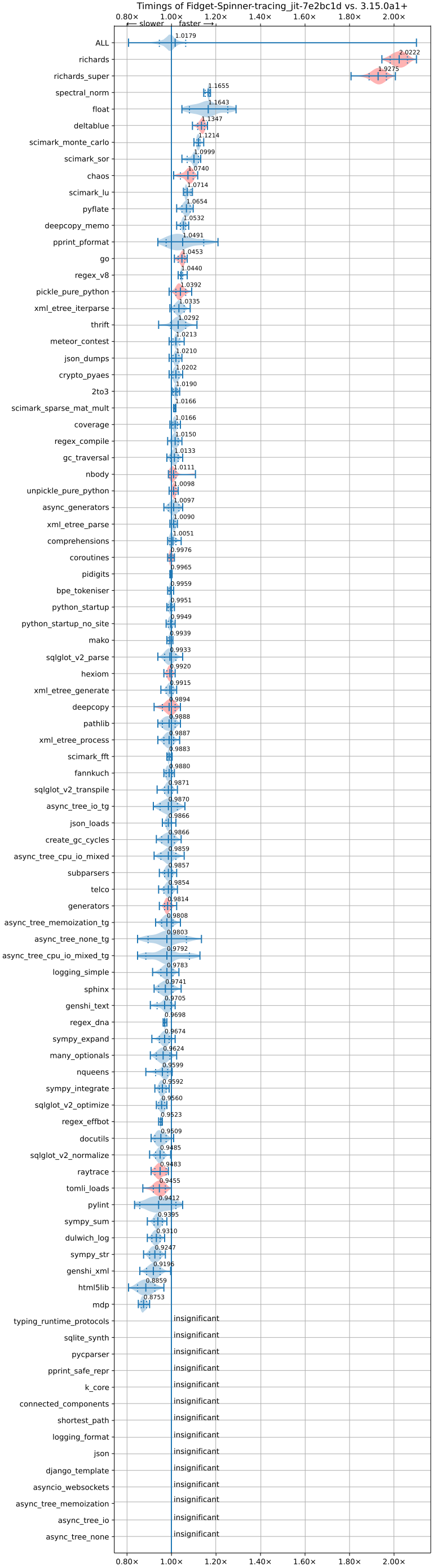
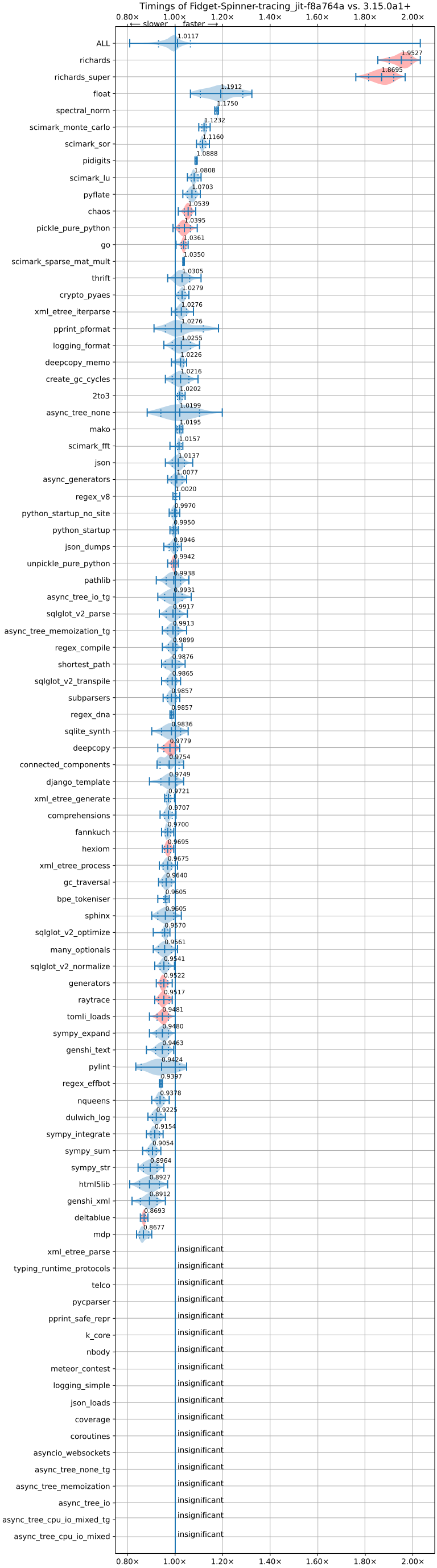
This PR changes the current JIT model from trace projection to trace recording. Benchmarking: better pyperformance (about 1.7% overall) geomean versus current https://raw.githubusercontent.com/facebookexperimental/free-threading-benchmarking/refs/heads/main/results/bm-20251108-3.15.0a1%2B-7e2bc1d-JIT/bm-20251108-vultr-x86_64-Fidget%252dSpinner-tracing_jit-3.15.0a1%2B-7e2bc1d-vs-base.svg, 100% faster Richards on the most improved benchmark versus the current JIT. Slowdown of about 10-15% on the worst benchmark versus the current JIT. **Note: the fastest version isn't the one merged, as it relies on fixing bugs in the specializing interpreter, which is left to another PR**. The speedup in the merged version is about 1.1%. https://raw.githubusercontent.com/facebookexperimental/free-threading-benchmarking/refs/heads/main/results/bm-20251112-3.15.0a1%2B-f8a764a-JIT/bm-20251112-vultr-x86_64-Fidget%252dSpinner-tracing_jit-3.15.0a1%2B-f8a764a-vs-base.svg

Stats: 50% more uops executed, 30% more traces entered the last time we ran them. It also suggests our trace lengths for a real trace recording JIT are too short, as a lot of trace too long aborts https://github.com/facebookexperimental/free-threading-benchmarking/blob/main/results/bm-20251023-3.15.0a1%2B-eb73378-CLANG%2CJIT/bm-20251023-vultr-x86_64-Fidget%252dSpinner-tracing_jit-3.15.0a1%2B-eb73378-pystats-vs-base.md .

This new JIT frontend is already able to record/execute significantly more instructions than the previous JIT frontend. In this PR, we are now able to record through custom dunders, simple object creation, generators, etc. None of these were done by the old JIT frontend. Some custom dunders uops were discovered to be broken as part of this work gh-140277

The optimizer stack space check is disabled, as it's no longer valid to deal with underflow.

Pros:
* Ignoring the generated tracer code as it's automatically created, this is only additional 1k lines of code. The maintenance burden is handled by the DSL and code generator.
* `optimizer.c` is now significantly simpler, as we don't have to do strange things to recover the bytecode from a trace.
* The new JIT frontend is able to handle a lot more control-flow than the old one.
* Tracing is very low overhead. We use the tail calling interpreter/computed goto interpreter to switch between tracing mode and non-tracing mode. I call this mechanism dual dispatch, as we have two dispatch tables dispatching to each other. Specialization is still enabled while tracing.
* Better handling of polymorphism. We leverage the specializing interpreter for this.

Cons:
* (For now) requires tail calling interpreter or computed gotos. This means no Windows JIT for now :(. Not to fret, tail calling is coming soon to Windows though https://github.com/python/cpython/pull/139962

Design:
* After each instruction, the `record_previous_inst` function/label is executed. This does as the name suggests.
* The tracing interpreter lowers bytecode to uops directly so that it can obtain "fresh" values at the point of lowering.
* The tracing version behaves nearly identical to the normal interpreter, in fact it even has specialization! This allows it to run without much of a slowdown when tracing. The actual cost of tracing is only a function call and writes to memory.
* The tracing interpreter uses the specializing interpreter's deopt to naturally form the side exit chains. This allows it to side exit chain effectively, without repeating much code. We force a re-specializing when tracing a deopt.
* The tracing interpreter can even handle goto errors/exceptions, but I chose to disable them for now as it's not tested.
* Because we do not share interpreter dispatch, there is should be no significant slowdown to the original specializing interpreter on tailcall and computed got with JIT disabled. With JIT enabled, there might be a slowdown in the form of the JIT trying to trace.
* Things that could have dynamic instruction pointer effects are guarded on. The guard deopts to a new instruction --- `_DYNAMIC_EXIT`.
745 lines
23 KiB
Python
745 lines
23 KiB
Python
from pathlib import Path
|
|
|
|
from analyzer import (
|
|
Instruction,
|
|
Properties,
|
|
StackItem,
|
|
analysis_error,
|
|
Label,
|
|
CodeSection,
|
|
Uop,
|
|
)
|
|
from cwriter import CWriter
|
|
from typing import Callable, TextIO, Iterator, Iterable
|
|
from lexer import Token
|
|
from stack import Storage, StackError
|
|
from parser import Stmt, SimpleStmt, BlockStmt, IfStmt, ForStmt, WhileStmt, MacroIfStmt
|
|
from stack import PRINT_STACKS
|
|
DEBUG = False
|
|
|
|
class TokenIterator:
|
|
|
|
look_ahead: Token | None
|
|
iterator: Iterator[Token]
|
|
|
|
def __init__(self, tkns: Iterable[Token]):
|
|
self.iterator = iter(tkns)
|
|
self.look_ahead = None
|
|
|
|
def __iter__(self) -> "TokenIterator":
|
|
return self
|
|
|
|
def __next__(self) -> Token:
|
|
if self.look_ahead is None:
|
|
return next(self.iterator)
|
|
else:
|
|
res = self.look_ahead
|
|
self.look_ahead = None
|
|
return res
|
|
|
|
def peek(self) -> Token | None:
|
|
if self.look_ahead is None:
|
|
for tkn in self.iterator:
|
|
self.look_ahead = tkn
|
|
break
|
|
return self.look_ahead
|
|
|
|
ROOT = Path(__file__).parent.parent.parent.resolve()
|
|
DEFAULT_INPUT = (ROOT / "Python/bytecodes.c").as_posix()
|
|
|
|
|
|
def root_relative_path(filename: str) -> str:
|
|
try:
|
|
return Path(filename).resolve().relative_to(ROOT).as_posix()
|
|
except ValueError:
|
|
# Not relative to root, just return original path.
|
|
return filename
|
|
|
|
|
|
def type_and_null(var: StackItem) -> tuple[str, str]:
|
|
if var.is_array():
|
|
return "_PyStackRef *", "NULL"
|
|
else:
|
|
return "_PyStackRef", "PyStackRef_NULL"
|
|
|
|
|
|
def write_header(
|
|
generator: str, sources: list[str], outfile: TextIO, comment: str = "//"
|
|
) -> None:
|
|
outfile.write(
|
|
f"""{comment} This file is generated by {root_relative_path(generator)}
|
|
{comment} from:
|
|
{comment} {", ".join(root_relative_path(src) for src in sources)}
|
|
{comment} Do not edit!
|
|
"""
|
|
)
|
|
|
|
|
|
def emit_to(out: CWriter, tkn_iter: TokenIterator, end: str) -> Token:
|
|
parens = 0
|
|
for tkn in tkn_iter:
|
|
if tkn.kind == end and parens == 0:
|
|
return tkn
|
|
if tkn.kind == "LPAREN":
|
|
parens += 1
|
|
if tkn.kind == "RPAREN":
|
|
parens -= 1
|
|
out.emit(tkn)
|
|
raise analysis_error(f"Expecting {end}. Reached end of file", tkn)
|
|
|
|
|
|
ReplacementFunctionType = Callable[
|
|
[Token, TokenIterator, CodeSection, Storage, Instruction | None], bool
|
|
]
|
|
|
|
def always_true(tkn: Token | None) -> bool:
|
|
if tkn is None:
|
|
return False
|
|
return tkn.text in {"true", "1"}
|
|
|
|
NON_ESCAPING_DEALLOCS = {
|
|
"_PyFloat_ExactDealloc",
|
|
"_PyLong_ExactDealloc",
|
|
"_PyUnicode_ExactDealloc",
|
|
}
|
|
|
|
class Emitter:
|
|
out: CWriter
|
|
labels: dict[str, Label]
|
|
_replacers: dict[str, ReplacementFunctionType]
|
|
cannot_escape: bool
|
|
jump_prefix: str
|
|
|
|
def __init__(self, out: CWriter, labels: dict[str, Label], cannot_escape: bool = False, jump_prefix: str = ""):
|
|
self._replacers = {
|
|
"EXIT_IF": self.exit_if,
|
|
"AT_END_EXIT_IF": self.exit_if_after,
|
|
"DEOPT_IF": self.deopt_if,
|
|
"HANDLE_PENDING_AND_DEOPT_IF": self.periodic_if,
|
|
"ERROR_IF": self.error_if,
|
|
"ERROR_NO_POP": self.error_no_pop,
|
|
"DECREF_INPUTS": self.decref_inputs,
|
|
"DEAD": self.kill,
|
|
"INPUTS_DEAD": self.kill_inputs,
|
|
"SYNC_SP": self.sync_sp,
|
|
"SAVE_STACK": self.save_stack,
|
|
"RELOAD_STACK": self.reload_stack,
|
|
"PyStackRef_CLOSE_SPECIALIZED": self.stackref_close_specialized,
|
|
"PyStackRef_AsPyObjectSteal": self.stackref_steal,
|
|
"DISPATCH": self.dispatch,
|
|
"INSTRUCTION_SIZE": self.instruction_size,
|
|
"stack_pointer": self.stack_pointer,
|
|
}
|
|
self.out = out
|
|
self.labels = labels
|
|
self.cannot_escape = cannot_escape
|
|
self.jump_prefix = jump_prefix
|
|
|
|
def dispatch(
|
|
self,
|
|
tkn: Token,
|
|
tkn_iter: TokenIterator,
|
|
uop: CodeSection,
|
|
storage: Storage,
|
|
inst: Instruction | None,
|
|
) -> bool:
|
|
if storage.spilled:
|
|
raise analysis_error("stack_pointer needs reloading before dispatch", tkn)
|
|
storage.stack.flush(self.out)
|
|
self.emit(tkn)
|
|
return False
|
|
|
|
def deopt_if(
|
|
self,
|
|
tkn: Token,
|
|
tkn_iter: TokenIterator,
|
|
uop: CodeSection,
|
|
storage: Storage,
|
|
inst: Instruction | None,
|
|
) -> bool:
|
|
self.out.start_line()
|
|
self.out.emit("if (")
|
|
lparen = next(tkn_iter)
|
|
assert lparen.kind == "LPAREN"
|
|
first_tkn = tkn_iter.peek()
|
|
emit_to(self.out, tkn_iter, "RPAREN")
|
|
self.emit(") {\n")
|
|
next(tkn_iter) # Semi colon
|
|
assert inst is not None
|
|
assert inst.family is not None
|
|
family_name = inst.family.name
|
|
self.emit(f"UPDATE_MISS_STATS({family_name});\n")
|
|
self.emit(f"assert(_PyOpcode_Deopt[opcode] == ({family_name}));\n")
|
|
self.emit(f"JUMP_TO_PREDICTED({self.jump_prefix}{family_name});\n")
|
|
self.emit("}\n")
|
|
return not always_true(first_tkn)
|
|
|
|
exit_if = deopt_if
|
|
|
|
def periodic_if(
|
|
self,
|
|
tkn: Token,
|
|
tkn_iter: TokenIterator,
|
|
uop: CodeSection,
|
|
storage: Storage,
|
|
inst: Instruction | None,
|
|
) -> bool:
|
|
raise NotImplementedError("HANDLE_PENDING_AND_DEOPT_IF not support in tier 1")
|
|
|
|
def exit_if_after(
|
|
self,
|
|
tkn: Token,
|
|
tkn_iter: TokenIterator,
|
|
uop: CodeSection,
|
|
storage: Storage,
|
|
inst: Instruction | None,
|
|
) -> bool:
|
|
storage.clear_inputs("in AT_END_EXIT_IF")
|
|
storage.flush(self.out)
|
|
storage.stack.clear(self.out)
|
|
return self.exit_if(tkn, tkn_iter, uop, storage, inst)
|
|
|
|
def goto_error(self, offset: int, storage: Storage) -> str:
|
|
if offset > 0:
|
|
return f"{self.jump_prefix}JUMP_TO_LABEL(pop_{offset}_error);"
|
|
if offset < 0:
|
|
storage.copy().flush(self.out)
|
|
return f"{self.jump_prefix}JUMP_TO_LABEL(error);"
|
|
|
|
def error_if(
|
|
self,
|
|
tkn: Token,
|
|
tkn_iter: TokenIterator,
|
|
uop: CodeSection,
|
|
storage: Storage,
|
|
inst: Instruction | None,
|
|
) -> bool:
|
|
lparen = next(tkn_iter)
|
|
assert lparen.kind == "LPAREN"
|
|
first_tkn = tkn_iter.peek()
|
|
unconditional = always_true(first_tkn)
|
|
if unconditional:
|
|
next(tkn_iter)
|
|
next(tkn_iter) # RPAREN
|
|
self.out.start_line()
|
|
else:
|
|
self.out.emit_at("if ", tkn)
|
|
self.emit(lparen)
|
|
emit_to(self.out, tkn_iter, "RPAREN")
|
|
self.out.emit(") {\n")
|
|
next(tkn_iter) # Semi colon
|
|
storage.clear_inputs("at ERROR_IF")
|
|
|
|
c_offset = storage.stack.sp_offset()
|
|
try:
|
|
offset = int(c_offset)
|
|
except ValueError:
|
|
offset = -1
|
|
self.out.emit(self.goto_error(offset, storage))
|
|
self.out.emit("\n")
|
|
if not unconditional:
|
|
self.out.emit("}\n")
|
|
return not unconditional
|
|
|
|
def error_no_pop(
|
|
self,
|
|
tkn: Token,
|
|
tkn_iter: TokenIterator,
|
|
uop: CodeSection,
|
|
storage: Storage,
|
|
inst: Instruction | None,
|
|
) -> bool:
|
|
next(tkn_iter) # LPAREN
|
|
next(tkn_iter) # RPAREN
|
|
next(tkn_iter) # Semi colon
|
|
self.out.emit_at(self.goto_error(0, storage), tkn)
|
|
return False
|
|
|
|
def decref_inputs(
|
|
self,
|
|
tkn: Token,
|
|
tkn_iter: TokenIterator,
|
|
uop: CodeSection,
|
|
storage: Storage,
|
|
inst: Instruction | None,
|
|
) -> bool:
|
|
next(tkn_iter)
|
|
next(tkn_iter)
|
|
next(tkn_iter)
|
|
self._print_storage("DECREF_INPUTS", storage)
|
|
try:
|
|
if not self.cannot_escape:
|
|
storage.close_inputs(self.out)
|
|
except StackError as ex:
|
|
raise analysis_error(ex.args[0], tkn)
|
|
except Exception as ex:
|
|
ex.args = (ex.args[0] + str(tkn),)
|
|
raise
|
|
return True
|
|
|
|
def kill_inputs(
|
|
self,
|
|
tkn: Token,
|
|
tkn_iter: TokenIterator,
|
|
uop: CodeSection,
|
|
storage: Storage,
|
|
inst: Instruction | None,
|
|
) -> bool:
|
|
next(tkn_iter)
|
|
next(tkn_iter)
|
|
next(tkn_iter)
|
|
for var in storage.inputs:
|
|
var.kill()
|
|
return True
|
|
|
|
def kill(
|
|
self,
|
|
tkn: Token,
|
|
tkn_iter: TokenIterator,
|
|
uop: CodeSection,
|
|
storage: Storage,
|
|
inst: Instruction | None,
|
|
) -> bool:
|
|
next(tkn_iter)
|
|
name_tkn = next(tkn_iter)
|
|
name = name_tkn.text
|
|
next(tkn_iter)
|
|
next(tkn_iter)
|
|
for var in storage.inputs:
|
|
if var.name == name:
|
|
var.kill()
|
|
break
|
|
else:
|
|
raise analysis_error(
|
|
f"'{name}' is not a live input-only variable", name_tkn
|
|
)
|
|
return True
|
|
|
|
def stackref_kill(
|
|
self,
|
|
name: Token,
|
|
storage: Storage,
|
|
escapes: bool
|
|
) -> bool:
|
|
live = ""
|
|
for var in reversed(storage.inputs):
|
|
if var.name == name.text:
|
|
if live and escapes:
|
|
raise analysis_error(
|
|
f"Cannot close '{name.text}' when "
|
|
f"'{live}' is still live", name)
|
|
var.kill()
|
|
break
|
|
if var.in_local:
|
|
live = var.name
|
|
return True
|
|
|
|
def stackref_close_specialized(
|
|
self,
|
|
tkn: Token,
|
|
tkn_iter: TokenIterator,
|
|
uop: CodeSection,
|
|
storage: Storage,
|
|
inst: Instruction | None,
|
|
) -> bool:
|
|
|
|
self.out.emit(tkn)
|
|
tkn = next(tkn_iter)
|
|
assert tkn.kind == "LPAREN"
|
|
self.out.emit(tkn)
|
|
name = next(tkn_iter)
|
|
self.out.emit(name)
|
|
comma = next(tkn_iter)
|
|
if comma.kind != "COMMA":
|
|
raise analysis_error("Expected comma", comma)
|
|
self.out.emit(comma)
|
|
dealloc = next(tkn_iter)
|
|
if dealloc.kind != "IDENTIFIER":
|
|
raise analysis_error("Expected identifier", dealloc)
|
|
self.out.emit(dealloc)
|
|
if name.kind == "IDENTIFIER":
|
|
escapes = dealloc.text not in NON_ESCAPING_DEALLOCS
|
|
return self.stackref_kill(name, storage, escapes)
|
|
rparen = emit_to(self.out, tkn_iter, "RPAREN")
|
|
self.emit(rparen)
|
|
return True
|
|
|
|
def stackref_steal(
|
|
self,
|
|
tkn: Token,
|
|
tkn_iter: TokenIterator,
|
|
uop: CodeSection,
|
|
storage: Storage,
|
|
inst: Instruction | None,
|
|
) -> bool:
|
|
self.out.emit(tkn)
|
|
tkn = next(tkn_iter)
|
|
assert tkn.kind == "LPAREN"
|
|
self.out.emit(tkn)
|
|
name = next(tkn_iter)
|
|
self.out.emit(name)
|
|
if name.kind == "IDENTIFIER":
|
|
return self.stackref_kill(name, storage, False)
|
|
rparen = emit_to(self.out, tkn_iter, "RPAREN")
|
|
self.emit(rparen)
|
|
return True
|
|
|
|
def sync_sp(
|
|
self,
|
|
tkn: Token,
|
|
tkn_iter: TokenIterator,
|
|
uop: CodeSection,
|
|
storage: Storage,
|
|
inst: Instruction | None,
|
|
) -> bool:
|
|
next(tkn_iter)
|
|
next(tkn_iter)
|
|
next(tkn_iter)
|
|
storage.clear_inputs("when syncing stack")
|
|
storage.flush(self.out)
|
|
storage.stack.clear(self.out)
|
|
return True
|
|
|
|
def stack_pointer(
|
|
self,
|
|
tkn: Token,
|
|
tkn_iter: TokenIterator,
|
|
uop: CodeSection,
|
|
storage: Storage,
|
|
inst: Instruction | None,
|
|
) -> bool:
|
|
if storage.spilled:
|
|
raise analysis_error("stack_pointer is invalid when stack is spilled to memory", tkn)
|
|
self.emit(tkn)
|
|
return True
|
|
|
|
def goto_label(self, goto: Token, label: Token, storage: Storage) -> None:
|
|
if label.text not in self.labels:
|
|
print(self.labels.keys())
|
|
raise analysis_error(f"Label '{label.text}' does not exist", label)
|
|
label_node = self.labels[label.text]
|
|
if label_node.spilled:
|
|
if not storage.spilled:
|
|
self.emit_save(storage)
|
|
elif storage.spilled:
|
|
raise analysis_error("Cannot jump from spilled label without reloading the stack pointer", goto)
|
|
self.out.start_line()
|
|
self.out.emit(f"{self.jump_prefix}JUMP_TO_LABEL(")
|
|
self.out.emit(label)
|
|
self.out.emit(")")
|
|
|
|
def emit_save(self, storage: Storage) -> None:
|
|
storage.flush(self.out)
|
|
storage.save(self.out)
|
|
|
|
def save_stack(
|
|
self,
|
|
tkn: Token,
|
|
tkn_iter: TokenIterator,
|
|
uop: CodeSection,
|
|
storage: Storage,
|
|
inst: Instruction | None,
|
|
) -> bool:
|
|
next(tkn_iter)
|
|
next(tkn_iter)
|
|
next(tkn_iter)
|
|
self.emit_save(storage)
|
|
return True
|
|
|
|
def emit_reload(self, storage: Storage) -> None:
|
|
storage.reload(self.out)
|
|
|
|
def reload_stack(
|
|
self,
|
|
tkn: Token,
|
|
tkn_iter: TokenIterator,
|
|
uop: CodeSection,
|
|
storage: Storage,
|
|
inst: Instruction | None,
|
|
) -> bool:
|
|
next(tkn_iter)
|
|
next(tkn_iter)
|
|
next(tkn_iter)
|
|
self.emit_reload(storage)
|
|
return True
|
|
|
|
def instruction_size(self,
|
|
tkn: Token,
|
|
tkn_iter: TokenIterator,
|
|
uop: CodeSection,
|
|
storage: Storage,
|
|
inst: Instruction | None,
|
|
) -> bool:
|
|
"""Replace the INSTRUCTION_SIZE macro with the size of the current instruction."""
|
|
if uop.instruction_size is None:
|
|
raise analysis_error("The INSTRUCTION_SIZE macro requires uop.instruction_size to be set", tkn)
|
|
self.out.emit(f" {uop.instruction_size}u ")
|
|
return True
|
|
|
|
def _print_storage(self, reason:str, storage: Storage) -> None:
|
|
if DEBUG:
|
|
self.out.start_line()
|
|
self.emit(f"/* {reason} */\n")
|
|
self.emit(storage.as_comment())
|
|
self.out.start_line()
|
|
|
|
def _emit_stmt(
|
|
self,
|
|
stmt: Stmt,
|
|
uop: CodeSection,
|
|
storage: Storage,
|
|
inst: Instruction | None,
|
|
) -> tuple[bool, Token | None, Storage]:
|
|
method_name = "emit_" + stmt.__class__.__name__
|
|
method = getattr(self, method_name, None)
|
|
if method is None:
|
|
raise NotImplementedError
|
|
return method(stmt, uop, storage, inst) # type: ignore[no-any-return]
|
|
|
|
def emit_SimpleStmt(
|
|
self,
|
|
stmt: SimpleStmt,
|
|
uop: CodeSection,
|
|
storage: Storage,
|
|
inst: Instruction | None,
|
|
) -> tuple[bool, Token | None, Storage]:
|
|
local_stores = set(uop.local_stores)
|
|
reachable = True
|
|
tkn = stmt.contents[-1]
|
|
try:
|
|
if stmt in uop.properties.escaping_calls and not self.cannot_escape:
|
|
escape = uop.properties.escaping_calls[stmt]
|
|
if escape.kills is not None:
|
|
self.stackref_kill(escape.kills, storage, True)
|
|
self.emit_save(storage)
|
|
tkn_iter = TokenIterator(stmt.contents)
|
|
for tkn in tkn_iter:
|
|
if tkn.kind == "GOTO":
|
|
label_tkn = next(tkn_iter)
|
|
self.goto_label(tkn, label_tkn, storage)
|
|
reachable = False
|
|
elif tkn.kind == "RETURN":
|
|
self.emit(tkn)
|
|
semicolon = emit_to(self.out, tkn_iter, "SEMI")
|
|
self.emit(semicolon)
|
|
reachable = False
|
|
elif tkn.kind == "IDENTIFIER":
|
|
if tkn.text in self._replacers:
|
|
if not self._replacers[tkn.text](tkn, tkn_iter, uop, storage, inst):
|
|
reachable = False
|
|
else:
|
|
if tkn in local_stores:
|
|
for var in storage.inputs:
|
|
if var.name == tkn.text:
|
|
var.in_local = True
|
|
var.memory_offset = None
|
|
break
|
|
for var in storage.outputs:
|
|
if var.name == tkn.text:
|
|
var.in_local = True
|
|
var.memory_offset = None
|
|
break
|
|
if tkn.text.startswith("DISPATCH"):
|
|
reachable = False
|
|
self.out.emit(tkn)
|
|
else:
|
|
self.out.emit(tkn)
|
|
if stmt in uop.properties.escaping_calls and not self.cannot_escape:
|
|
self.emit_reload(storage)
|
|
return reachable, None, storage
|
|
except StackError as ex:
|
|
raise analysis_error(ex.args[0], tkn) #from None
|
|
|
|
|
|
def emit_MacroIfStmt(
|
|
self,
|
|
stmt: MacroIfStmt,
|
|
uop: CodeSection,
|
|
storage: Storage,
|
|
inst: Instruction | None,
|
|
) -> tuple[bool, Token | None, Storage]:
|
|
self.out.emit(stmt.condition)
|
|
branch = stmt.else_ is not None
|
|
reachable = True
|
|
if branch:
|
|
else_storage = storage.copy()
|
|
for s in stmt.body:
|
|
r, tkn, storage = self._emit_stmt(s, uop, storage, inst)
|
|
if tkn is not None:
|
|
self.out.emit(tkn)
|
|
if not r:
|
|
reachable = False
|
|
if branch:
|
|
assert stmt.else_ is not None
|
|
self.out.emit(stmt.else_)
|
|
assert stmt.else_body is not None
|
|
for s in stmt.else_body:
|
|
r, tkn, else_storage = self._emit_stmt(s, uop, else_storage, inst)
|
|
if tkn is not None:
|
|
self.out.emit(tkn)
|
|
if not r:
|
|
reachable = False
|
|
else_storage.merge(storage, self.out) # type: ignore[possibly-undefined]
|
|
storage = else_storage
|
|
self.out.emit(stmt.endif)
|
|
return reachable, None, storage
|
|
|
|
|
|
def emit_IfStmt(
|
|
self,
|
|
stmt: IfStmt,
|
|
uop: CodeSection,
|
|
storage: Storage,
|
|
inst: Instruction | None,
|
|
) -> tuple[bool, Token | None, Storage]:
|
|
self.out.emit(stmt.if_)
|
|
for tkn in stmt.condition:
|
|
self.out.emit(tkn)
|
|
if_storage = storage.copy()
|
|
rbrace: Token | None = stmt.if_
|
|
try:
|
|
reachable, rbrace, if_storage = self._emit_stmt(stmt.body, uop, if_storage, inst)
|
|
if stmt.else_ is not None:
|
|
assert rbrace is not None
|
|
self.out.emit(rbrace)
|
|
self.out.emit(stmt.else_)
|
|
if stmt.else_body is not None:
|
|
else_reachable, rbrace, else_storage = self._emit_stmt(stmt.else_body, uop, storage, inst)
|
|
if not reachable:
|
|
reachable, storage = else_reachable, else_storage
|
|
elif not else_reachable:
|
|
# Discard the else storage
|
|
storage = if_storage
|
|
else:
|
|
#Both reachable
|
|
else_storage.merge(if_storage, self.out)
|
|
storage = else_storage
|
|
else:
|
|
if reachable:
|
|
if_storage.merge(storage, self.out)
|
|
storage = if_storage
|
|
else:
|
|
# Discard the if storage
|
|
reachable = True
|
|
return reachable, rbrace, storage
|
|
except StackError as ex:
|
|
assert rbrace is not None
|
|
raise analysis_error(ex.args[0], rbrace) from None
|
|
|
|
def emit_BlockStmt(
|
|
self,
|
|
stmt: BlockStmt,
|
|
uop: CodeSection,
|
|
storage: Storage,
|
|
inst: Instruction | None,
|
|
emit_braces: bool = True,
|
|
) -> tuple[bool, Token | None, Storage]:
|
|
""" Returns (reachable?, closing '}', stack)."""
|
|
tkn: Token | None = None
|
|
try:
|
|
if emit_braces:
|
|
self.out.emit(stmt.open)
|
|
reachable = True
|
|
for s in stmt.body:
|
|
reachable, tkn, storage = self._emit_stmt(s, uop, storage, inst)
|
|
if tkn is not None:
|
|
self.out.emit(tkn)
|
|
if not reachable:
|
|
break
|
|
return reachable, stmt.close, storage
|
|
except StackError as ex:
|
|
if tkn is None:
|
|
tkn = stmt.close
|
|
raise analysis_error(ex.args[0], tkn) from None
|
|
|
|
def emit_ForStmt(
|
|
self,
|
|
stmt: ForStmt,
|
|
uop: CodeSection,
|
|
storage: Storage,
|
|
inst: Instruction | None,
|
|
) -> tuple[bool, Token | None, Storage]:
|
|
""" Returns (reachable?, closing '}', stack)."""
|
|
self.out.emit(stmt.for_)
|
|
for tkn in stmt.header:
|
|
self.out.emit(tkn)
|
|
return self._emit_stmt(stmt.body, uop, storage, inst)
|
|
|
|
def emit_WhileStmt(
|
|
self,
|
|
stmt: WhileStmt,
|
|
uop: CodeSection,
|
|
storage: Storage,
|
|
inst: Instruction | None,
|
|
) -> tuple[bool, Token | None, Storage]:
|
|
""" Returns (reachable?, closing '}', stack)."""
|
|
self.out.emit(stmt.while_)
|
|
for tkn in stmt.condition:
|
|
self.out.emit(tkn)
|
|
return self._emit_stmt(stmt.body, uop, storage, inst)
|
|
|
|
|
|
def emit_tokens(
|
|
self,
|
|
code: CodeSection,
|
|
storage: Storage,
|
|
inst: Instruction | None,
|
|
emit_braces: bool = True
|
|
) -> tuple[bool, Storage]:
|
|
self.out.start_line()
|
|
reachable, tkn, storage = self.emit_BlockStmt(code.body, code, storage, inst, emit_braces)
|
|
assert tkn is not None
|
|
try:
|
|
if reachable:
|
|
storage.push_outputs()
|
|
if emit_braces:
|
|
self.out.emit(tkn)
|
|
except StackError as ex:
|
|
raise analysis_error(ex.args[0], tkn) from None
|
|
return reachable, storage
|
|
|
|
def emit(self, txt: str | Token) -> None:
|
|
self.out.emit(txt)
|
|
|
|
|
|
def cflags(p: Properties) -> str:
|
|
flags: list[str] = []
|
|
if p.oparg:
|
|
flags.append("HAS_ARG_FLAG")
|
|
if p.uses_co_consts:
|
|
flags.append("HAS_CONST_FLAG")
|
|
if p.uses_co_names:
|
|
flags.append("HAS_NAME_FLAG")
|
|
if p.jumps:
|
|
flags.append("HAS_JUMP_FLAG")
|
|
if p.has_free:
|
|
flags.append("HAS_FREE_FLAG")
|
|
if p.uses_locals:
|
|
flags.append("HAS_LOCAL_FLAG")
|
|
if p.eval_breaker:
|
|
flags.append("HAS_EVAL_BREAK_FLAG")
|
|
if p.deopts:
|
|
flags.append("HAS_DEOPT_FLAG")
|
|
if p.deopts_periodic:
|
|
flags.append("HAS_PERIODIC_FLAG")
|
|
if p.side_exit:
|
|
flags.append("HAS_EXIT_FLAG")
|
|
if not p.infallible:
|
|
flags.append("HAS_ERROR_FLAG")
|
|
if p.error_without_pop:
|
|
flags.append("HAS_ERROR_NO_POP_FLAG")
|
|
if p.escapes:
|
|
flags.append("HAS_ESCAPES_FLAG")
|
|
if p.pure:
|
|
flags.append("HAS_PURE_FLAG")
|
|
if p.no_save_ip:
|
|
flags.append("HAS_NO_SAVE_IP_FLAG")
|
|
if p.unpredictable_jump:
|
|
flags.append("HAS_UNPREDICTABLE_JUMP_FLAG")
|
|
if p.needs_guard_ip:
|
|
flags.append("HAS_NEEDS_GUARD_IP_FLAG")
|
|
if flags:
|
|
return " | ".join(flags)
|
|
else:
|
|
return "0"
|